Spectator Life

Spectator Life

An intelligent mix of culture, style, travel, food and property, as well as where to go and what to see.

Japanese service is stiflingly polite

One thing you can be sure of on a visit to Japan is that the service will be at the very least good, and quite often superb. The chances of being short-changed, snubbed, or slighted are virtually zero and truly bad service is so rare I almost, after 24 years in Tokyo, crave it now and again to break the monotony. ‘The customer is God’ as the Japanese say, and sometimes this exhortation to staff feels like only a slight exaggeration. I once witnessed a sad scene where an old lady tried to engage the cashier in a supermarket in casual conversation At its best, Japanese service can be glorious to behold. I once saw a customer drop money from her purse in the crowded food hall of Isetan (Japan’s version of Harrods). At the first tinkle of the coins, staff leapt into action.

Would you drink fermented horse milk?

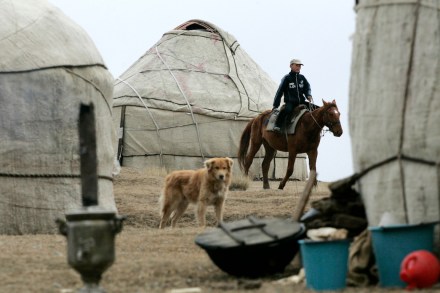
To my great disappointment, I was never (knowingly) fed qarta – a popular dish of boiled and pan-fried horse anus served without sauce or spices. I did, however, get to try the next best thing – kymyz, mares’ milk fermented in a goatskin. It was the second day of a horse trek in Kyrgyzstan and it had begun to hail. Not exactly golf ball-sized, but close enough to the golf ball sweets you bite into to find bubble gum. The horses coped, perhaps because getting pelted with hail is a fair trade for not being on a Kyrgyz menu. We stopped under a tree and our guide’s blank stares gave no indication of whether the weather was normal or not. The following two hailstorms suggested it was.

The miserable rise of the childless wedding

Since becoming a mother, I have come to dread weddings. Children are often no longer welcome at nuptials. My children have been banned from several already, and we have attended several others where they might as well have been, so inhospitable were they to young families. I find it indescribably depressing and utterly baffling that small children would be unwelcome at such a momentous family celebration. The concept seems to contradict the very purpose of a wedding – to bring two families together for the creation of another. Perhaps as a result of the decline of religion, weddings are no longer for families – they are essentially very, very expensive dance parties for the couple’s young social group.

The importance of London’s lost cinema

King’s Cross in the eighties was the scabbiest, dodgiest, scariest and most alternative place in central London – and the crumbling Scala cinema was its beating heart. Memories of this long-shut venue are being revived by the imminent release of a feature-length documentary tracing its brief, colourful history. The film is named after the cinema but its lengthy subtitle signals the kind of material it depicts: Scala!!! Or, the incredibly strange rise and fall of the world’s wildest cinema and how it influenced a mixed-up generation of weirdos and misfits. I’ve been back to The Scala to see bands there since. But it’s a different beast now This sounds an extravagant claim but it clearly was influential in the film world.

Why are so many young people single?

An increasing number of young Brits are single. Many of these people don’t want to be single. They want to be in a relationship. But, for some reason or other, they’re having no luck. Why? What’s holding them back? A recent study shed light on the factors that contribute to involuntary singlehood in Britain and beyond. The researchers, two psychologists based in Cyprus, explored the impact of sexual functioning, body weight, and whether or not an individual had children from a previous relationship, and how all three affect a person’s relationship status. The findings were published in Evolutionary Psychological Science.

What’s more trendy than space travel? Banning it

In bedrooms across the country, women are wearing £145 sexy silk chemises emblazoned with jewels spelling out the words ‘Ban Space Travel’. This isn’t just a bit tacky or part of a new kink. It’s a sign of growing cynicism around space exploration. (Another item in the same collection, sold by luxury underwear company Bluebella, casually calls for ‘world peace,’ as though the two issues are akin.) Bluebella’s CEO Emily Bendell says the garment, designed by Ashish Gupta, is a ‘cultural statement’. ‘With so many problems here on earth, we have to hold billionaires focused on space exploration to account,’ she says. It is unclear exactly how much holding to account exactly lace-trimmed camisoles can do. But this movement goes far beyond the bedroom.

Leuven: Belgium’s most underrated city

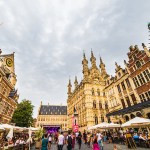
From the vertiginous belltower of Leuven’s university library, you get a great view across the mottled rooftops of Belgium’s most underrated city. Leuven isn’t swarming with sightseers, like Bruges. It isn’t choked with commuter traffic, like Brussels. It’s lively and compact, ideal for a weekend away – so why have most British travellers never even heard of it? Search me. I’ve just spent three days here and I had a great time. I can’t wait to go again. One of the best things about Leuven is, it’s so easy to get here: two hours via Eurostar from London St Pancras to Brussels, and then a local train to Leuven from the same station. Trains leave every ten minutes at peak times and take around half an hour.

I’m sick of streaming. Films were better on Blu-ray

The digital world, I’m realising, is a bit of a racket. Recently most of my iTunes library disappeared from my iPhone, and I just don’t know if I can be bothered to go through all the different hoops, portals, queueing systems and long forgotten passwords to get them back again. I’ve also had the repeated experience of trying to view a film I’ve downloaded on Amazon, only to get that little square in the middle of the screen telling me that the player’s having issues at the moment, and would I, could I try again later? Meanwhile, the CDs and DVDs reproach me from my shelves like an abandoned spouse. ‘We were once your rock,’ they remind me, ‘And you traded us for tech-tinsel, a piece of cyber-skirt. How are you feeling now?

Gorillas in the mix: in search of Rwanda’s silverbacks

Two hours into a muddy hike through Rwanda’s Nyungwe rainforest and though I’ve been barked at by a baboon, crossed rivers of fire ants and stepped over a foot-long centipede, I have yet to see any chimpanzees, which is the reason I’m here.  My guide and our team of trackers are on the path ahead, armed with machetes, rifles and a walkie talkie. We’re looking for an alpha male called Kuyu. His morning calls echo in the distance and my guide tells me we’re not far from him. I hope he’s right. I am covered in Mosquito repellent clothing, I’m hot, tired and my enthusiasm is waning.  ‘Look up,’ says my guide, and he gestures at a dark shadow that glides across the tree canopy above. We’ve found them!

Two tips for the Paddy Power Gold Cup

Richard Hobson is a trainer that I have a lot of time for. He always gets the best out of his small string and he is always willing to share information with journalists about the well-being of his horses and their big-race targets. He places his horses well too, even if it means going to the other side of the English Channel in search of better prize money. Hobson’s stable star FUGITIF is due to make his seasonal debut a week from tomorrow in the highly-competitive Paddy Power Gold Cup at Cheltenham’s November meeting. This eight-year-old gelding ticks a lot of boxes for this contest, notably he has strong form over the course and distance of the race.

Are party holidays ever that fun?

Forget GCSEs or landing your first part-time job. Nothing screamed growing up in Britain like embarking on your first European party holiday, armed with an alarming lack of SPF or common sense but a suitcase packed full of skimpy outfits and condoms. Every summer, thousands of young Britons would jet off to Greece, Cyprus or Spain, having signed up for a week of raucous hedonism provided by travel companies like Club 18-30. They’re getting steadily less popular – Gen Z don’t really drink, after all – but the themes explored in Molly Manning-Walker’s new film, How to Have Sex, remain universal. Set in the Greek resort of Malia, Crete, Manning-Walker’s debut feature won the Un Certain Regard prize at this year’s Cannes.

Britain’s electric vehicle mandates don’t make sense

It is now four years since I bought my first electric car. At the time, I wished I hadn’t. The car, though solid, swift and fun, had the slight problem that it could explode at any time.  In 2019, a tranche of electric cars were sold to ingenues such as myself, only to be recalled so that their batteries could be replaced with ones which might not spontaneously combust. Once replaced, it was fine, but my home needed an upgrade, too – every fuse in the house blew when I first tried to recharge the car and boil a kettle at the same time. Being an EV pioneer (I was the first person in my French village to have one) came with hardship. Road trips were experiences of anxiety, despair and finally anger, as autoroute charging in France was primitive.

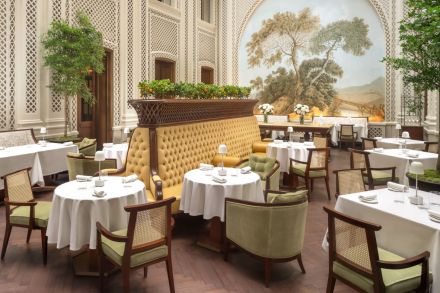
‘The food is as good as you will find in London’: Saison at Raffles London, reviewed

The Old War Office (bad acronym OWO) on Whitehall is now a Raffles hotel: you can stay in Winston Churchill’s office if that helps you sleep at night. I’m not sure I could, but this is the rational endgame of privatisation: you can sleep inside British history, which is quite close to sleeping through it. War isn’t the jolly marketing riff it was five weeks ago, and the atmosphere in the OWO reflects this. Even so, you need the money of a (fleeing) Tory donor to stay here, and perhaps they won’t notice that pre-war is outside their door in the form of children setting off fireworks and picking fights with the police during marches ‘for’ Palestine.

Celebrity owners are ruining football

Tom Brady must get bored easily. After America’s superstar quarterback retired (for a second time) in March, he invested in a Las Vegas women’s basketball team, sorted out his divorce, bought a racing boat team with Rafael Nadal and, this summer, became a minority owner of Birmingham City. A few weeks ago, it was announced that he’d had a meaningful chat with Wayne Rooney, the club’s new manager. ‘It’s important for the players to see Tom Brady have an involvement. It’s very clear that Tom is fully involved in the club’ said Rooney, clearly aware that fans might be sceptical. Brady is just one of several American celebrities who have invested in British football over the past few years.

Nothing beats the Great British caravan holiday

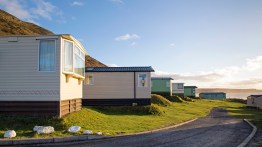
Air travel isn’t what it used to be. I think we can all admit that. Those of us who don’t fly British Airways on a regular basis understand the true pandemonium of trying to get to Luton Airport at 3am with an Uber driver half asleep at the wheel. We understand what it means to sit on the tarmac for two hours with the smell of faecal matter and burp being pumped around by a broken air-conditioning unit. We understand what it is to pay £10 for a bath-warm Coke and a pressurised packet of pringles that will inevitably explode into the aisle.  So, what can we do about it? Well, without the dosh, I’m afraid not very much, Son. Though we can look inwards.  Enter the caravan holiday.

Flavour of the month: November – Celebrity homes, the Tube and Disney romance

This month’s crop of trivia includes a secret about the Tube map, the US state that’s named after Elizabeth I and something Jimi Hendrix had in common with Winston Churchill…  1 November 1947 – birth of Nick Owen. The television presenter and Luton Town fan has a lounge named after him at the club’s ground – to which he was once refused entry. ‘You can’t go in,’ said a steward. ‘It’s packed.’ Not being a ‘don’t you know who I am?’ type, Owen simply walked away. He heard someone say to the steward: ‘Don’t you know who that is?’ ‘Haven’t a clue,’ came the reply. ‘His name,’ the steward was told, ‘is in bloody great capitals above your head.’ 2 November 1889 – North and South Dakota are granted statehood in the US.

The vanity of Just Stop Oil

Just Stop Oil have spent the past year vandalising their way through the National Gallery in the over-orchestrated manner of a Cluedo suspect. Once it was Constable’s Hay Wain in Room 34 with a bit of glue. Then van Gogh’s Sunflowers in Room 43 with a Warholian can of tomato soup. The newest casualty is Velázquez’s seventeenth-century Rokeby Venus, its protective glass smashed in several places by miniature safety hammers. Readers may at this point catch onto a sense of déjà vu. The nude Venus had already been victimised in 1914 by suffragette Mary Richardson in the National Gallery with a meat cleaver.

The glamour of a Dunhill Rollagas lighter

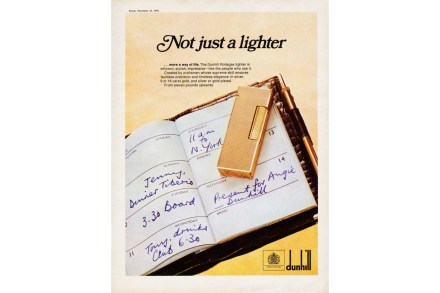
Sometimes a small purchase gives an outsize amount of pleasure. I have felt this recently with a particularly robust pair of replacement boot laces and an especially bobbly, Italianate lemon. But most satisfying amongst all these small pleasures has been a lighter. Specifically, a Dunhill Rollagas lighter from eBay. Clearly an object of the 1960s, they are about £1,000 when new. This is far too much for me. However, they retail second hand for between roughly £25 and £200. Of course, even £25 is obviously a great deal for a lighter. But, for this investment, you receive a fantastically luxurious object. The pleasure is very like that which I imagine comes with a classic car. It has art deco lines, being made of only two shapes: a cylinder set in a rectangle.

Why should my cricket club have to tackle climate change?

Is there anything left which hasn’t been overtaken by climate change drivel? In my spare time I serve as chairman of a village cricket club in East Anglia: a club which I and others, against the grain of the contracting world of village cricket, have succeeded in setting up from scratch over the past dozen years. From what was a wheat field as recently as 2010, we now have a cricket ground which is used not only by our own club but also another local club. In all, we had nearly 40 fixtures on the ground this past season. All this, needless to say, takes money, both to set up the facilities and to maintain them. Some of this comes from match fees and private donations but, in common with just about every amateur sports club in the country, we also tap into the many grants available.

We need an international University Challenge

As the autumn nights close in and the heating goes, there are few pleasures so improving for body and soul than half an hour spent in the company of University Challenge. Not only do you learn a bit (well, until you forget it) but nothing makes a middle-aged man or woman of a certain disposition quite so happy as knowing that they can still best a bunch of 19-year-olds when it comes to elite trivia. So here’s a thought – why do we keep this beloved split-screen televisual wunder-quiz to ourselves? Why do we hoard it? After all, we were gracious enough to give the world the blessing of football. We gave them golf. We gave them rugby. We birthed the modern Olympics. We even gave the world badminton.

Confessions of a speeding granny

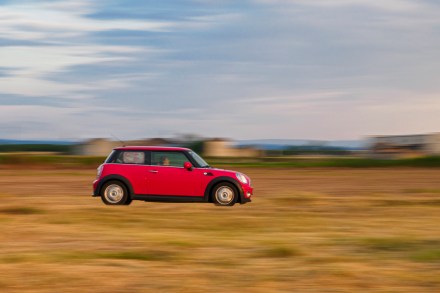
I suppose it was going to happen. But not inevitably. After 66 years behind the wheel, I’ve finally gotten a speeding ticket. In France. During those years, I’ve put the pedal to the metal in an Alfa Romeo (Spider Veloce with Weber carburetors), a zippy MG (my mother’s), a 375HP Corvette Stingray (my first husband’s), occasionally an e-type belonging to a friend and a swanky but stodgy Mercedes. A French camera finally caught up with me as I was ripping up a Burgundian country road from Nolay to Autun, going 105 kph in a 90 kph zone in my new (to me) Mini Cooper. My grandchildren have begun to love ‘Puddle’ as much as (or more than) they love me.

The Welsh Marches: England’s foodie frontier

I’m in a car embarking on a road trip through one of the great foodie regions of the world, charged with the onerous task of scoffing and boozing my way through five days of epicurean heaven. But where am I? Trundling along the Rhone valley from Lyon to Provence? Barrelling down the autostrada to Bologna? No, I’m on the A458 just outside Shrewsbury. Because this is a tour of the Welsh Marches, England’s foodie frontier, from Shropshire through Herefordshire to Gloucestershire, where a food and drink revival over the last three decades has turned this lush, fertile, famously green corner of Britain into a gastro-destination as good as any in Europe. My first stop is the Haughmond, a hotel/gastropub with a cute attached bakery, in the village of Upton Magna.

Against all odds, I’ve started to like Phil Collins

This isn’t easy for me. In fact, it is perhaps the most difficult public admission I’ve ever made. I’m worried about how people will react, how friends and colleagues might reconsider their opinion of me after reading this. But I can’t keep it locked up secretly inside me any longer. I have to admit it. I’m starting to quite like Phil Collins. This isn’t a fully fledged commitment – it’s not something I’d die on a hill for. But I’m unmistakably starting to warm to the chirpy, balding balladeer. This is particularly shocking because for at least a decade, from the early eighties to early nineties, he was, for me, the personification of everything that was wrong with the world.

Ignore the food bores 

I like the Art Deco apartment block where I live; the building is beautiful and the neighbours are nice. Just one thing; they keep having their old kitchens torn out and new ones installed – two of the three nearest flats to me have done this in the space of six months.  I don’t complain about the noise as I’ve been a very noisy neighbour in my time, but this architectural fetish has made me realise how out of step I am with the national psyche. For I would no sooner have a new kitchen installed than have a minaret erected atop of my building. My flat has its original tiny galley kitchen; like many of the swanky 1930s apartment buildings in Brighton & Hove, it once had a restaurant in the basement – Marine Gate along the seafront even had its own off-licence.

Two tips for the Grand Sefton at Aintree

The jumps season is well under way and I am delighted to be tipping chasers and hurdlers again for the first time in six months. I particularly enjoy backing course specialists over the Grand National fences at Aintree and so the Boylesport Grand Sefton Handicap Chase is just up my street. In last year’s contest only 14 horses lined up for the race which was won by Al Dancer. Sam Thomas’s gelding is, according to his handler, unlikely to defend his crown but the two horses closest to him that day, Gesskille and Percussion, are likely to take part in the race. Geskille is favourite in most books for this two miles and five furlongs contest and he will have every chance if running to his best form last season.

Meet the body-hacking, pill-popping, blood-swapping man who never wants to die

Some see Bryan Johnson as a human guinea pig with the charisma of ChatGPT. Others, meanwhile, see him as a man on a very important mission. He’s not just in it for himself, they say, he’s in it for the betterment of humanity. For the uninitiated, Johnson is officially the world’s most measured human. As per the 46-year-old’s YouTube channel, which boasts 548,000 subscribers, ‘Johnson has achieved metabolic health equal to the top 1.5 per cent of 18 year olds, inflammation 66 per cent lower than the average 10 year old, and reduced his speed of aging by the equivalent of 31 years.’ Worth an estimated $400 million, Johnson is, by his own admission, an odd individual. Every morning, without fail, he rises at the ungodly hour of 4.30am.

Forget grim British cider, and go to Spain for some ‘sidra’

I always thought drinking cider was a bit lame. But then I did a Camino pilgrimage that took me through Spain’s northern Asturias region. I now think cider is cool.  Cider is a phenomenon in Asturias, where the art of imbibing sidra, as it is called, is elevated to a ceremonial form. We have the Trooping the Colour; they have sidra pouring.  When the barman pours the sidra bottle from above his head, the glass down at knee level, while looking dead ahead with the subsequent mini waterfall hitting the glass through dead reckoning: that’s not lame. The pourer even tilts the glass away from him, dramatically shrinking the ‘aperture’ available at the top of the glass.

Inside Jerome K Jerome’s nine-bedroom Oxfordshire house

Jerome K Jerome’s Three Men in a Boat – a tale of three hapless, hypochondriac London clerks who take a trip along the River Thames in the hope of curing their ailments – became an instant bestseller when it was published in 1889, and hasn’t been out of print since. Bruce Chatwin, Paul Theroux and Bill Bryson all owe it to Jerome.  The book’s success meant that in 1895, Walsall-born Jerome (then in his mid thirties) could make a move to a rambling Oxfordshire house, built in the 1820s on the site of an ancient monastery.  Although he clearly had a fondness for the Thames, the home he chose wasn’t quite on the waterfront. It was, however, in a glorious rural spot in the village of Ewelme, part of what is now the Chiltern Hills Area of Outstanding Natural Beauty.

How Vegemite took over the world

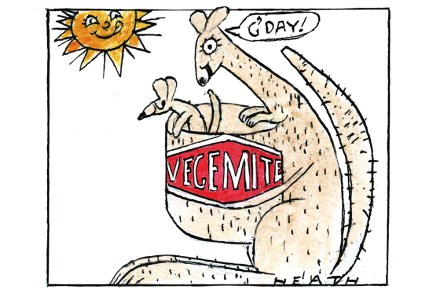
Vegemite is 100 years old. The first yeast paste, Marmite, was introduced in the UK in 1902, named after the French cooking pot; New Zealand Marmite, currently a quite different product, emerged in 1919. The mite suffix had nothing to do with might, but the association was irresistible, and Vegemite was created in Australia in 1923, to take up an apparently indelible, salty place in its nation’s dreams. The economic logic of producing and selling yeast pastes was compelling. The German chemist Justus von Liebig had discovered that waste yeast from brewing could be turned into an edible paste. If people could be made to like it – strange to say, some people still don’t – a by-product could be utilised and fortunes could be made.