Spectator Life

Spectator Life

An intelligent mix of culture, style, travel, food and property, as well as where to go and what to see.

Join the Royal British Legion!

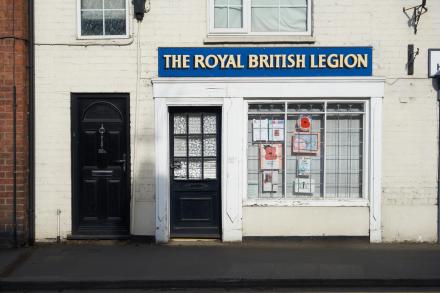
One of the things I really regret is that I didn’t spend more time down the British Legion with my dad. I was a bit snooty about it, I suppose. All those ex-squaddies talking about the army and playing darts and having a pint or two.I was an indie-kid, heading to university to read English. I preferred Camden to Greenford. But now I’d choose the Legion any day. And if more us don’t then you might see your local club closing as a result of the cheap pints at a local Wetherspoons. I realise now that the old British Legion clubs and the Legion itself is of such importance that we need a national drive to support it. To get into one of the clubs you need a membership, but that’s not difficult. Everyone is welcome, even with no connection to the military at all.

Why British women are so unhappy

I must admit to being somewhat taken aback on reading – in a new survey by the Hologic Global Women’s Health Index, whatever that is when it’s at home – that we women of Blighty are sadder and more ‘stressed’ than our sisters on the European mainland. Odd because I’ve always found us a cheerful bunch; after all, we were churning out the Carry On films, graced with Babs Windsor’s lusty chuckle, while French, Italian and Scandinavian film actresses were all looking like they’d lost a fiver and found a euro.

AI is coming for artists

It’s a famous theme in science fiction: the idea that, one day, humanity and the thinking machines will somehow go to war. It’s the narrative spine of The Terminator films. It’s implied in 2001, A Space Odyssey. You can find it in Neuromancer, The Hyperian Cantos, Ex Machina, The Creator and I, Robot (the Asimov stories and subsequent film). In one of the fundamental texts of sci-fi, Frank Herbert’s Dune, this apocalyptic conflict is given a name: the ‘Butlerian Jihad’. Personally, I’ve always dismissed the concept of Butlerian Jihad as fanciful, even as I accept that Artificial General Intelligence – machines as smart as the best of us – is coming at us fast. And yet in recent weeks I’ve started to wonder.

There is nothing common about the northern lights

It was 10.45pm and our film had just finished. I checked my phone and saw a friend claiming he had just seen the northern lights — in Wembley. It had been trailed as a possibility, but I hadn't given it much credence. Not with the light pollution inside the M25, surely. You’d need to head up to the Chilterns at least, and even then be incredibly lucky.   But I dashed to the back garden anyway. The night sky certainly had an unusual clarity, almost shimmering, and you could clearly make out the whole of the moon behind the shining crescent. But no colours. My Wembley pal must have mistaken the glow of an all-night garage for the celestial cosmos.  I went back inside and poured another glass of wine.

Four bets at Chester and Ascot

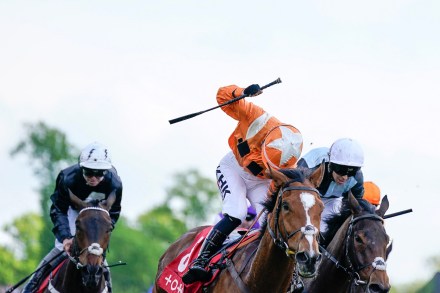
There is so much to like about Chester’s three-day May meeting ending today: a unique course with an atmosphere to match, quality racehorses, highly-competitive contests every day and much more besides. If you have never been to the Cheshire track situated on the outskirts of this cathedral city on the River Dee, put it on your to-do list now because it will not disappoint. I have already put up one tip for today’s big race: the Chester Cup (3.40 p.m.). Zoffee, suggested at 16-1 a week ago, is less than half that price now and, in theory, he should benefit from his number one draw.  However, he tends to be held up so the danger is he may get stuck behind a wall of horses coming into the straight.

Women will be disappointed by the Garrick Club

Perhaps it was the anachronistic use of the term ‘gentlemen’ that finally put paid to the idea of the gentlemen’s club. If only these illustrious institutions had thought to rename themselves ‘cis-male inner-city safe spaces’, we probably wouldn’t be looking on aghast as another centuries old tradition is summarily flushed down the memory hole.

My mother’s peculiar approach to death

Back in February, a friend forwarded me a profound and joyous article written by Simon Boas about his terminal cancer diagnosis. (I knew Simon a little at university, where he was both much cleverer and much cooler than me). Originally published in the Jersey Evening Post, it’s since been reproduced here, and seems to have, as they say, gone viral. In the age of mindless clickbait, where cute animal memes and chest-feeding men dominate the internet, it’s reassuring that something so beautiful, which mines the fundamentals of human existence, still resonates. And does it with such humour and grace and intelligence and warmth that while Simon is devoid of bitterness, it’s hard for the rest of us not to feel aggrieved.

The paradox of a novelty doughnut

There are moments when you realise the world is a more complicated place than you had previously thought. I had such moment earlier this week when I saw a new doughnut at a concession stand in Hammersmith station: a Krispy Kreme x Pretty Little Thing doughnut. Sure, you could probably get one in a town the size of Padstow. But invent it? The only possible connection between the two companies I can think of is that their lines of business often invite the same prefix: fast food and fast fashion. Beyond that, I’m at a loss. And yet there the doughnut sat, a pink ring with swirly purple bumps and a unicorn horn. It looked like Kandinsky had tried his hand at illustrating a gynaecology textbook.

My vote winner? Banning ‘fun’ runs

One of us must once have told a political pollster: ‘I really have no idea at all who I’m going to vote for.’ A moment of mild exasperation put us down as ‘Don’t knows’. Forever afterwards, the prospect of an election, whether for Wandsworth council, the Mayor of London or the Battersea parliamentary constituency, brings them out. The doorbell goes, and there is a bright-faced, footsore, ill-dressed but dedicated party activist, clutching a clipboard. Without exception, each is firmly convinced that he knows what you are going to complain about. ‘Why do runners need compulsory declarations that something is “fun”, and amplification, and techno?’ ‘Do you have any concerns about your neighbourhood?’ a Labour canvasser once asked.

How to solve ‘range anxiety’

In ‘The Adventure of Silver Blaze’, Sherlock Holmes mentions ‘the curious incident of the dog in the night-time’. ‘But the dog did nothing in the night-time,’ argues Inspector Gregory. ‘That was the curious incident,’ replies Holmes. You never hear anyone say: ‘We finally stumbled across a charming little petrol station nestling among the trees’ Along with Donald Rumsfeld’s ‘Unknown unknowns’, this is perhaps the most famous example of what you might call ‘perceptual asymmetry’. We mostly act instinctively based on what is salient, giving little thought to what is easily overlooked. It is hence surprisingly easy to change what people do simply by changing what they pay attention to.

How to become an old soak

Drink and longevity: there seems to have been a successful counter-attack against the puritans, prohibitionists and other health faddists. Indeed, there is virtually a consensus that red wine has almost medicinal properties. That said, a confusion about so-called units remains. When the measurement was explained to me, I said that it sounded adequate. ‘Really?’ ‘Yes, that ought to be more or less enough.’ Then the cross-purposes were unscrambled. The 98 units or whatever – a figure clearly designed to give a bogus authority to the calculation – was a weekly total, not a daily one.

A bloke’s guide to aftershave

In 2020, the year of coronavirus, I came to a fork in the road. I’d just turned 50, a moment of looking back over your life, realising what you’ve failed to achieve, and accepting there’s only a finite number of years left to you. It was clearly a time for making a change of some sort, something fundamental and radical, and I duly made one. I faced reality, took myself in hand, and decided to switch to a new aftershave.  Until then, it had been Dunhill Edition all the way. Launched in 1984, it had caught me in my mid-teens, was my first taste of adult sophistication (Jeremy Irons wore it!) and it hadn’t really occurred to me in the intervening decades to wear anything else.

C.J. Sansom’s Tudor England is a mirror of our divided world

Among the many appreciations of C.J. Sansom, the author of bestselling historical mysteries who died last week aged 71, one of the most eloquent came from Rear Admiral John Lippiett. A friend since Sansom first researched the sinking of Henry VIII’s flagship the Mary Rose (Lippiett headed the Mary Rose Trust in Portsmouth after he retired), the admiral recalled ‘a very remarkable man, private and modest, fascinating in his conversations, caring about individuals, generous in the issues that moved him’. Sansom, he acknowledged, was a ‘card-carrying socialist’ who wobbled during the Corbyn years but ‘remained true to Labour’s overall policies’.

The beauty of Atrani, now ruined by Netflix

Some time in the Noughties I sat next to a guy at work who told me he’d just had a holiday in a village on the outskirts of Amalfi. The village was called Atrani – quite unknown then, but now swooned over as the setting for the ominous but dreamy black-and-white Netflix adaptation Ripley. That year, I had no plans for the summer and decided to replicate his trip, with my two daughters, aged 13 and 10. There was no hotel in the village, rather a series of rooms rented out by a lawyer called Filippo. I contacted him to book and he replied: ‘I’m sure it will be fine, just turn up.’ This didn’t over-fill me with confidence but I went ahead. We flew into in Naples late one evening and got to the hotel I’d found in the Rough Guide.

The great posh food con

I had taken a friend out for a significant birthday, to a high-end French joint in London. We ordered the tasting menu, an eight course extravaganza with wine pairings. It was not a cheap date, but a special occasion. The third course was a tiny bowl of herb risotto, and as it was served, a waiter appeared holding a large white truffle and a tiny grater, asking if we would like some shavings from the magnificent looking beast. I politely declined, but my friend answered, ‘Of course, why not?’ Please do not confuse me with the likes of Jack Monroe Why had I turned down this luxurious offering?

My strange hobby: a life in search of death

As George Orwell astutely observed, England is a nation of hobbyists – and their sometimes eccentric private pursuits are one of the reasons that this country did not follow the rest of Europe into totalitarian dictatorship during the 20th century. A people bent on taking a fishing rod to stream or canal every weekend, or hanging around railway platforms to note the numbers of passing trains, or laboriously sticking stamps into albums, are unlikely to have the time or temptation to fall for political extremes. The English devoted their leisure time to hobbies, though it should also be noted that such peaceable pastimes are mostly the preserve of men.

The desperate world of babytech

In the penumbra cast by the light of my phone, I can dimly see the wreckage of a night with a newborn baby: half-drunk bottles of milk, the tangled cord of the monitor, muslins strewn across the bed. It is 3 a.m. and the baby has gone back to sleep. I, however, am wide awake. Or rather, the consumer in me is wide awake. I decide to buy a Dreamland Baby weighted sleep sack costing £79. Its promises are seductive, outrageous even, to my crazed mind: ‘Our mission is to help your baby feel calm, fall asleep faster & stay asleep longer, so your whole family can get the sound sleep they deserve!’ The sleep they deserve. Yes, I think, we are owed sleep and I’m prepared to pay over the odds for it.

Harry and Meghan’s desperate rebrand

Harry and Meghan are at it again – launching themselves into another rebrand – this time embarking on a faux-royal tour to Nigeria, hiring new PR staff in the UK, promoting strawberry jam on Instagram and – good grief! – touting Netflix shows about friendship and polo. There’s a certain sadness about this latest effort, since the Sussexes’s entire past year has been spent branding and rebranding themselves with practically no effect, and the whiff of desperation now hovers over them. You’d feel sorry for the couple if they responded to their misfortune with some degree of humility Their annus horribilis of branding mishaps and misfortunes kicked off last April when Meghan signed up with the glitziest of the Hollywood PR giants – William Morris Endeavor.

How snooker snookered itself

Anyone who flicks through their television channels this Bank Holiday weekend will almost certainly glimpse the final of the World Snooker Championship. Played over Sunday and Monday at Sheffield’s Crucible, the 35-frame marathon is snooker’s answer to Test Cricket. And as one of the few sporting events the Beeb still has the rights to, it still gets blanket coverage – if only on graveyard slots on BBC2. A glimpse, though, is about as much as many people bother with these days. Snooker is a long way from its mid-1980s heyday, when 18 million Brits tuned in to watch Dennis Taylor beat Steve Davis in the 1985 Crucible showdown. I am indeed one of those sad middle-aged men you see in live snooker audiences Indeed, those battling it out this weekend are hardly household names.

Why are the Japanese so bad at English?

Tokyo, Japan ‘Shhh! Now on face to respectable great eels life’. How’s that for the first line of an article? I spotted this gem written on a sign in the window of a seafood restaurant in the Hibiya Midtown shopping centre in Tokyo recently. I was delighted. I’ve spent 25 years in Japan and have always enjoyed a good bit of mangled Japanese English. I had been dismayed of late by an apparent improvement in the quality of English on signs and noticeboards around Tokyo. But this was the old stuff. This was ‘Engrish’. Why would a people usually so meticulous about every aspect of life be so seemingly careless about the correct use of a foreign language?

I’m proud I squandered my wealth

I don’t have much in common with Charlotte Church (I support the ancient state of Israel, whereas she supports Narnia; she’s still relatively young and cute, whereas this ancient mariner’s ship has sailed) but something we do share is a lifetime of extreme generosity verging on the profligate, often to people who do not deserve it. As Katie Hind’s headline in the Mail squealed recently: ‘I watched aghast as Charlotte Church's freeloading posse fleeced her in a nightclub when she was just 18 – I'm not surprised she's burned through her £25 million fortune!’  The money I spent always had the air of Monopoly money I never had £25 million, but I earned masses of money for a couple of decades in the 20th century and was a cash millionaire for a few years in the 21st.

Why unorthodox thinkers are embracing Christianity

Russell Brand was baptised on Sunday, he says – in the River Thames, despite his tongue-in-cheek fear of catching a virus – and he’s thrilled about it. He thanked those who embraced his decision, while expressing understanding of those who are cynical. He’s not perfect, he explains; he knows he’s going to make mistakes, but ‘this is my path now,’ he says. ‘I’m so grateful to be surrendered in Christ.’ Speaking as a Catholic, this writer can’t but consider the advantages of baptism in church: waters freed from viruses and demons through exorcism, holy oils, and proper storage, might have been preferable.

Welcoming the flat season with three bets

If City of Troy is as brilliant as his trainer Aidan O’Brien thinks he is and he runs to his best form, then he will win the first Classic of the flat season at Newmarket tomorrow. The three-year-old colt is not just a ‘talking horse’: his record on the racetrack last season was sensationally good, namely when destroying a decent field in the Group 1 Dewhurst Stakes in October. Similarly, if Rosallion is as talented as his trainer Richard Hannon thinks and runs to his best, then he should finish second to City of Troy in the Qipco 2000 Guineas (Newmarket 3.35 p.m.).

In praise of the 1/3 pint

The worst thing that happened to me over the pandemic was I got ‘really into beer’. I was already into it in the most straightforward way: I liked drinking it and I liked getting drunk. I liked the ceremony of it: walking into the pub, ideally at noon on a balmy Saturday, inhaling that rich carpeted smell, ordering a simple fizzing lager and taking that first perfect big sip. Ah! But then I got into buying expensive boxes of IPAs and NEIPAs, things that self-describe as ‘hazy’, and huge heavy stouts with double-digit ABVs. I’d prowl the length of the taps, head low like a predator, asking: ‘Sorry could I just – yeah sorry could I just get a little taste of that?’ Then I’d just order the first one I tried. This started to affect my friendships.

‘Vital but fraying’: Five Guys reviewed

Five Guys is a burger house from Arlington, Virginia, based on the premise that if you can serve a drink, cut a fringe, or make a hamburger, you will always make money in America. Thirty years and 1,700 restaurants later, it sits on Coventry Street off Piccadilly, soaking up the alcohol of a thousand British stomachs. If central London is a strip-lit bin alley between palaces, this is its restaurant: vital but fraying. I am here because I will not eat at McDonald’s, even when I am sad. I do not think my McDonald’s burger is all from the same cow, and this disturbs me: I can eat one cow happily, but a multitude frightens me. McDonald’s doesn’t fill you either, no matter what you eat: is it just an idea?

How to make ham and parsley sauce

Poor old parsley sauce. As someone who writes regularly about old-fashioned food, it often feels that we are living through a golden revival of vintage dishes. You can’t move for cookbook concepts pinned on comfort and nostalgia, or restaurants attempting to take the diner on some kind of Proustian journey. Whether it’s nursery food, school dinners, classical bistro French cooking, hyper-regional food, or the polarising ‘reinvention’ of any of the above, old-fashioned ingredients are in vogue again. In trendy restaurants menus are littered with rabbit, offal, marmalade, boozy prunes; with steamed suet puddings (sweet and savoury), duck à l’orange, prawn cocktails, rice pudding, hand-raised pies… Ten years ago, devilled eggs were naff. Not now.

The strikers giving Southgate a headache

Poor Gareth Southgate. Having three outstanding finishers is giving him a thumping headache ahead of the European Championship. Harry Kane, Jude Bellingham and Phil Foden are thrilling football crowds with their goal-scoring talents in three of the best domestic leagues in the world. Most national team managers would welcome such a golden trio: but for Southgate it is a case of pass the paracetamol. He must wish the quality in his squad was more evenly spread so he didn’t have to keep picking Harry Maguire as the central defender when he has the turning circle of a small ocean-going liner. Kane is the only one of the trio who’s an out-and-out striker; and of the three, City’s Foden is clearly the problem for Southgate.

Are antidepressants making you asexual?

Gen Z is often described as a sexless generation. We are having less sex than previous generations did at the same age. We are less likely to have been on a date. More of us identify as asexual. In fact, according to this Stonewall report, more Gen Z Brits identify as asexual (5 per cent) than gay (2 per cent) or lesbian (3 per cent). All kinds of cultural and social influences could explain this. Early exposure and addiction to online porn might be one. I’ve written about risk-aversion and fear of rejection as another. Increased awareness of asexuality too. But there is also, I think, a medical explanation. More specifically: the widespread use of SSRIs and their sexual side-effects. This is more than just low libido.