Jane Stannus

Jane Stannus

Jane Stannus is a Canadian journalist and translator.

Will Canada kill its mentally ill?

Euthanasia for the mentally ill has been one of the most contentious aspects of the Trudeau government’s legacy. Though the entire assisted suicide program is frighteningly dystopian, the idea of euthanizing mentally vulnerable people is in a class of its own. Now, in a rare moment of lucidity, the Carney government may be preparing to halt the expansion – or so the Globe and Mail reported, citing unnamed sources within the government. A parliamentary committee has been tasked with evaluating Canada’s readiness for euthanizing the mentally ill. Originally announced for March 2023, the expansion has been delayed twice, and is currently scheduled for March 17, 2027. That is, unless the parliamentary committee recommends otherwise.

Canadian flag arranged on the side of a hill for Remembrance Day at a local Nova Scotia gravesite for a veteran who served in the Canadian Armed Forces.

Farewell to America’s artificial food dyes

Start saying your goodbyes, America. Tartrazine-tinted pickles, oranges with a Citrus Red No. 2 spray tan and maraschino cherries glowing with erythrosine – all are on the way out the door, thanks to Robert F. Kennedy Jr.’s crusade against artificial food colorants. And if you’ve got any tears left to cry, here’s another emotional hit: Target just announced it is pulling cereals containing petroleum-based dyes from its shelves by the end of May. Loving you was red, Froot Loops. Critics jeered that a voluntary program would never get anywhere, but Kennedy has been fairly successful That Taylor Swift song really fits the bill on RFK’s anti-dye crusade. Losing them will be blue like we’ve never known: MAHA-friendly foods will have to swap Blue No.

Does Mark Carney believe in democracy?

Mark Carney is swaggering about Canada with his new majority government, acting as if he’d just received a landslide mandate from the electorate. The truth is he acquired his precious majority not by climbing up on his soapbox and convincing voters, but by whispering sweet nothings to five MPs from other parties, upon which they mysteriously lost their political principles and crossed the floor. Does Carney believe in democracy? It’s hard to be sure. Yes, his party did just win three special elections. But only one of those counted (the other two were held by Liberals already and in safe Liberal ridings, so made no difference to the number of seats the party held). Without the floor-crossings, Carney would be stuck with the minority he won last April.

mark Carney

Has Canada’s bilingualism gone too far?

From our UK edition

Two young Canadian pilots were killed in a tragic accident on 22 March. What should have been an occasion for sober reflection, compassion and prayer, has regrettably turned into an undignified dispute about bilingualism. Captain Antoine Forest, 30, and First Officer Mackenzie Gunther, 24, died when a fire engine crossed the runway in front of them as they landed at LaGuardia Airport in New York City. The nose of the plane took the brunt of the impact and both pilots were killed. Grateful passengers credited the two young men with saving the lives of everyone else on board by doing their utmost to slow the plane down in the last instants before the collision. The occupants of the fire engine were injured but survived.

The joy of spring greens

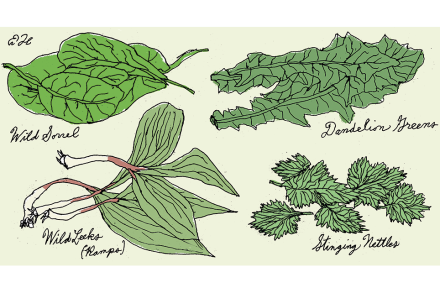
Many of us, if told we must live by foraging in the wild, would quickly go toes up – from fear, not malnourishment, like the birds in Ol’ Paul the Mighty Logger, who saw snowy white popcorn bits flurrying through the air as the giant Bunyan munched, figured winter was back, and promptly froze to death. But there’s no need to die of fear at the idea of picking spring greens. True, we love our washed and bagged “spring mixes” of baby lettuce and we tremble at the thought of dandelion greens plucked from the meadow by our own inexpert hands, uncurated by the all-wise authorities of the food industry. But vegetables do, after all, grow out of the ground, and were edible before refrigeration and produce regulatory boards existed.

spring greens

Canada wants to make quoting the Bible illegal

Easter is almost here – and Canada’s Liberal government has chosen this sacred season to display its utter contempt for Christianity. It is currently forcing through the outrageous Bill C-9, which could make it a hate crime to quote from sections of the Bible. The Liberal government has laid the foundations for religious persecutionca More than 40 civil and religious groups had asked that for the Bill’s language be clarified and its scope more carefully defined so that religious texts would not be subject to hate crime legislation. But all in vain. After a hot debate in the House of Commons, the Liberals highhandedly ended a Conservative filibuster and fast-tracked the bill.

How Mark Carney sold Canada to China

As Can Force One moved toward Chinese airspace, the delegation’s electronic devices were powered down and secured in signal-blocking bags. Burner phones were passed out: the only machines the public servants, staff and journalists would be allowed to use for the duration of their stay. The Canadian Prime Minister’s security team was taking no risks. But Mark Carney himself was on his way to do something many back home would consider very risky indeed: signing agreements with Chinese President Xi Jinping on trade, global governance, energy, media access and law enforcement.

Carney

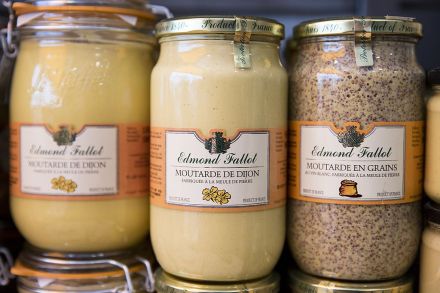
The glorious versatility of Dijon mustard

Not just salami, air conditioning and dental fillings: among their many contributions to civilization, the Romans also gave us Dijon mustard. Somewhere about the 4th century, it seems, the vinegar makers of Dijon were granted the right to use the exclusive mustard recipe composed by Palladius, son of Exuperantius, Prefect of the Gauls (or so Samuel Chamberlain informs us in his Bouquet de France of 1952). Palladius was one of those fascinating Roman gentleman-farmers who are also poets and scientists. He owned farms in Italy and Sardinia and had a particular interest in fruit trees. He penned a popular treatise on agriculture that stayed on the best-seller (or at least most-read) list until well into the Middle Ages.

Why was Canada so afraid of misgendering a trans shooter?

A horrible and incredibly sad tragedy unfolded on 10 February in the small town of Tumbler Ridge in British Columbia, Canada. An 18-year-old, Jesse Van Rootselaar, also known as Jesse Strang,  turned a gun first on his mother and stepbrother, then on young students and a teacher at his former high school, and finally on himself – with nine reported dead, including the shooter, and at least 25 injured. Waves of shock, grief and horror have rippled across the nation. This was one of Canada’s worst school shootings, the deadliest in 37 years. It seemed especially cruel because Tumbler Ridge is such a tightly knit community, with only about 2,400 inhabitants.

Criminal gangs have developed a taste for snails and seafood

It was a dark night in November that the criminals stole softly upon the sleeping snails. They snipped away the fencing, pried open the door with a crowbar and knocked out the security lights. Then, they advanced upon their victims, who were lying, defenseless, in cold storage. No use for the snails to flee; heliciculturists breed them for flavor, not speed. The hapless gastropods could only pull in their horns, make themselves as small as possible inside their shells, and wait. The crooks worked with merciless efficiency. Some 450 kilos of snails soon found themselves shivering in the getaway vehicle as it sped off down a route départementale in northeastern France (where else?

snails

South Asian gangs are out of control in Canada

From our UK edition

South Asian communities across Canada are being terrorised by gangs – and city officials in Surrey, BC are calling on the federal government to declare a national state of emergency. The crimes follow a distinctive pattern. South Asian gangs demand money from members of their own communities. Intimidation, threats and even shootings follow. Gang members drive to someone’s home or business, and video themselves shooting at buildings and vehicles. They then post the recording online or send it to the target, with threats of worse to come if payment is not made. The gangs are expert at exploiting the weaknesses in Canadian immigration policy The city of Surrey has seen a drastic uptick in these crimes, with police reporting 35 extortion attempts since the beginning of January.

Quebec is trying to ban Jesus from Christmas

From our UK edition

It’s the most wonderful time of the year – but not, sadly, in Quebec. Or at least that’s what the provincial government would have us believe. As the region’s secularism minister Jean-François Roberge explained: ‘We can wish someone merry Christmas. We can sing Christmas songs. This is nothing but tradition. But we shouldn’t make any references to the birth of baby Jesus... When we wish someone merry Christmas, we can think of Santa Claus and his elves, but nothing Catholic.’ Generously, Christmas parties are permitted in schools and daycares as long as ‘there is no attempt to transmit religious values’ Roberge was describing the workings of Bill 9, an attempt to expand the region’s secularism laws.

How to make an unforgettable Christmas dinner

In the early 1970s, celebrity chef Jacques Pépin and his wife bought a dilapidated house in the Catskills so they could go skiing on the weekends. It was a real fixer-upper. Groups of friends would come up from New York City and pitch in on the renovation effort, and Pépin would serve dinner at the end of the day. These weekends were so much fun Pépin decided to memorialize them by hand-lettering and painting special menus. How Pépin convinced his friends to let him sit in the kitchen sketching petits poissons and heads of broccoli while they slaved away at framing and drywalling his winter getaway is, admittedly, mysterious.

Christmas

The downfall of Canada’s most influential ‘indigenous’ man

It’s an awkward time in the upper echelons of the Canadian cultural establishment. It’s come to light that influential indigenous author and former broadcaster Thomas King, isn’t actually indigenous at all. It matters, because King has spent much of his 82 years claiming to speak on behalf of the indigenous peoples of North America, and his role in shaping Canadian perception of their First Nations has been enormous. His books have served as standard texts in Canadian schools and universities for over 20 years. When King came to Canada, he was able not only to dine out on his purported indigenous background, but to make it the central facet of a lucrative career Born in the US, King came to Canada in 1980 to teach native studies at the University of Lethbridge.

The unbearable wokeness of the Canadian military

“I think the question that needs to be asked is: what kind of military does Canada even want?” Dallas Alexander has been all country-star cool until I ask about his former employer. Now his voice takes on a more earnest tone. We’ve talked about the song the veteran-turned-singer considers his best – “Child of this Land,” a ballad about growing up in the remote Fishing Lake Métis Settlement in northern Alberta – and we’ve discussed which is the fan favorite: same, he says, or maybe the more upbeat “Can’t Blame My Bloodline.” To my mild surprise he doesn’t mention “Adios Amigo.” The song, with its catchy (and ominous) refrain, references the record-breaking sniper shot taken by Alexander’s team in 2017.

Dallas Alexander (Dallas Alexander) canada
kitchen mishap

Anne of Green Gables perfected the kitchen mishap

There’s something wickedly entertaining in reading about other people’s kitchen debacles, whether actual or fictional. They’re just so relatable. The jelly that won’t jell in Louisa May Alcott’s Good Wives is cruelly hilarious, but the best culinary catastrophe in classic fiction, for my money, is in Anne of Green Gables. Stylish guests, including the upper-crust Mrs. Chester Ross, are dining at Green Gables and our ebullient Anne is on her very best behavior. All goes well until Marilla arrives with the pudding and a pitcher of pudding sauce. On spotting the pudding sauce, our heroine’s eyes grow wide and terrified.

Why bother banning US booze in Canada?

You know what they say about America: beautiful for spacious skies, for amber waves of grain and purple mountain majesties above the fruited plain. But its fruited plains – specifically its vineyards – and amber waves of grain aren’t doing her neighbor to the north much good at the moment – at least not in the beverage department. In the Loyalist province of Ontario, just as in la belle province of Québec, no California wines have graced the store shelves for more than half a year. American tipple is out. As far as eastern Canada is concerned, the minions of Francis Ford Coppola crush grapes in vain, all is quiet along the Yakima and it matters not whether pinot noir still reigns supreme in the Willamette Valley. Ask not for whom the Napa flows; it’s not for thee.

alcohol

The Freedom Convoy trial has disgraced Canada’s justice system

In a disgraceful conclusion to a disgraceful trial, Freedom Convoy organizers Tamara Lich and Chris Barber have been sentenced to 12 months of house arrest and 6 months of curfew (with credit for the 49 days Lich has already spent in jail) – plus 100 hours of community service. An ironic addendum. For in the packed courtroom on October 7, there was likely not one person who has served the community with greater generosity than the two defendants. Tamara Lich and Chris Barber, organizers of the most successful protest in Canadian history, kept their cool, kept the peace and brought national unity, patriotism and common sense back to Canada after the pandemic – this, despite the sustained efforts of the most aggressively controlling, divisive government the nation has ever had.

There’s more to pumpkins than you might think

There’s a famously untranslatable expression in Virgil’s Aeneid: lacrimae rerum. Latin scholars, always fond of threshing things out, have devoted reams of analysis to proving just how untranslatable it is. As is typical of academics, however, they go to lots of trouble to establish its utter untranslatability – and then turn around and translate it anyway. When pumpkins aren’t being cozy, they generally denote a sense of emptiness or artifice Word for word, lacrimae rerum means “The tears of things” (or, depending on your school of thought, “The tears for things.”) But each scholar has his slant on the sadness.

pumpkins

Robert Munsch’s license to die

Once upon a time, there was a hugely successful children’s author named Robert Munsch. His books (more than 70!) sold in many, many copies; he became famous, and people gave him top awards like the Juno and the Order of Canada. They even named schools after him. More gloriously yet, he became the most stolen author in the Toronto Public Library. He was in high demand as a storyteller, and children from everywhere used to write him letters. And he would write back, often with personalized stories (which they loved) featuring them and their classmates. Like all of us, he had his sorrows. He and his wife lost two children, which led him to write one of his best-known works, Love You Forever. Eventually they became adoptive parents of three.

Robert Munsch