Spectator Life

Spectator Life

An intelligent mix of culture, style, travel, food and property, as well as where to go and what to see.

Smart meters could soon cost you a whole lot more

What remarkable power climate change has to turn the usual rules of fairness on their head. The poor pay the taxes and the wealthy get subsidised. It has happened with electric cars, where well-off early adopters were handed grants of £4,000 to buy a new vehicle – as well as being excused fuel duty and road tax, essentially freeing them from having to make any contribution to the upkeep of roads. It has happened with heat pumps – whose owners have enjoyed years of subsidies, the latest manifestation of which is £7,500 in upfront grants. Surge pricing is a desperate solution to manage demand rather than maintain supply The next phase will be even more painful for the poor and even more rewarding for the wealthy.

Life lessons from the oldest people in the world

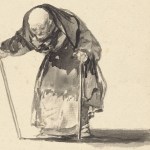
María Branyas Morera, aged 117, is the oldest person in the world. She was born in California on 4 March 1907 to Spanish parents who decided to return home in 1915. The voyage was an early lesson in adversity: her father died and María lost the hearing in one ear after she fell from the upper deck. The family settled in Catalonia and María worked as a nurse during the Spanish Civil War. After contracting pneumonia in 1993, she moved into a nursing home in Olot, some 70 miles north of Barcelona. There she played the piano until she was 108 and recovered from Covid-19 in 2020. A resilient, pragmatic approach to adversity and rapidly changing circumstances also helps María is one of about 20,000 centenarians in Spain.

The lost America of Palm Springs

California was once home to a certain vision of the American dream; Mamas & the Papas records, grinning surfers, chrome bumpers. Now LA and San Francisco are full of glass and steel and petty criminals. Escape their sketchy downtowns and you’ll find huge copy-and-paste estates of identical homes. Urban sprawl has choked off California’s charm in everywhere but Palm Springs, a desert valley city to the east of Los Angeles.  Kirk Douglas lived here, alongside Rock Hudson, Janet Gaynor and Frank Sinatra. Elvis and Priscilla Presley honeymooned in the city for the whole of 1967. Producers would often oblige their stars to remain within a two-hours drive of their LA studios. Meanwhile, paparazzi were only reimbursed for travel within 100 miles of LA.

My old friend went viral for all the wrong reasons

Last week, an old acquaintance went viral. Charles Withers had, according to his pregnant wife, disappeared around a year ago, leaving her to bring up one young child alone with another on the way. The pretty Massachusetts blonde posted a plea for information on Facebook. It was, she wrote, surprisingly difficult to divorce someone who refused to return your calls.  In an age of near-constant surveillance, how does it feel when the choice to disappear is taken from you? Not long after the story surfaced, I received a message from a friend. ‘Do you remember Charlie Withers?’ he asked. I did. He had been part of our wider social circle, one of the boys at the neighbouring school.

Italian food purists need to calm down

Last year, a large group of young people gathered outside the Trevi Fountain, one of Rome’s most popular attractions, to protest against ‘food crimes’ committed by tourists in Italy. Armed with signs reading ‘No more cream in carbonara’, ‘No more cappuccino with pasta’, and ‘Putting chicken in pasta is a crime in Italy’, they drew the attention of a large crowd of tourists. The protest was sparked by complaints from a number of the city’s restaurant owners about non-Italians (Americans in particular) asking for unorthodox ingredients to be added to the classics.

The Third Man fan’s guide to Vienna

The greatest movie ever made celebrates its 75th anniversary this year and I’ll be watching it – for the umpteenth time – with appropriately fine fizz at hand. Sorry, what? Oh, come on, I’m talking about The Third Man. There’s no finer film. I thought everyone knew that. You know, written by Graham Greene, directed by Carol Reed and set in a battered, broken, postwar Vienna. It stars Joseph Cotten as Holly Martins and Orson Welles as Harry Lime and there’s sterling support from Alida Valli, Trevor Howard, Bernard Lee and Wilfrid Hyde-White, whose comic cameo almost steals the show.

Britain’s roads are becoming a Soviet nightmare

In the dog days of 2021, I spent a grey Sunday afternoon driving around a part of London with a view to an eventual flat move. Why take the car? Because the bus routes didn’t match where I planned to go, I wanted to stay over ground, and I would be able to cover more territory than on foot. It seemed an innocent enough way of spending my time, and the traffic was blissfully light.  So I was surprised to receive – with remarkable speed – a Penalty Charge Notice for using what was called a prohibited road. The notice was supported by two photos of my car, which I am happy to report was perfectly positioned on said road, not encroaching by so much as a millimetre into the bus lane.

Why is Latin America so violent?

As locations go, they don’t get more humdrum than the address ‘Carrera 79B, #45D/94’. It is so anonymous it sounds encrypted. Nor, in reality, does it look like anything special: a flat roof, next to a shuttered language school, above a wall of graffiti, in a lower middle-class suburb of another Spanish speaking city. But then you notice the razorwire surrounding the nearby boutique. The armed guard outside the local bank. And you remember why this address, in the inner suburbs of Medellin Colombia, is notorious: this is where fugitive cocaine warlord Pablo Escobar was finally shot by cops in 1993 as he tried to flee across that roof.  Native American empires were bizarrely cruel – even before the Europeans arrived Knowing that, everything looks different.

What next for the world of watches?

Every year, the world’s greatest watch companies and their biggest fans head to Geneva for an orgy of horological spectacle: Watches & Wonders. Here, companies pull out their latest, newest, most impressive goods, showing off the main products they intend to launch and the fans salivate and loosen their already pummelled wallets. It’s not a cheap hobby to be a watch lover.  The whole industry is in an odd place – and this was reflected in the watches displayed. In 2020 and 2021, the crypto and stock rush birthed lots of new-money millionaires who were eager to burn it all quickly, and Rolex, Patek and Audemars were happy to do the honours. Daytonas were sold out long before they made it to shelves and soon resold for many multiples of their RRP, with waitlists lasting years.

The plastic feminism of Barbie

Colombian pop singer Shakira caused quite the stir earlier this month when she revealed that her sons ‘absolutely hated’ the Barbie movie, which had a major cultural moment last year. Hot pink came back in fashion, people were hosting Barbie-themed parties and everyone was obsessing over lead Margot Robbie’s vintage Barbie-inspired clothing on the movie’s press tour. It was Barbie-mania, and the film earned $1.4 billion worldwide. Shakira’s family, though, weren’t fans of the global phenomenon. She said her nine- and 11-year-old sons didn’t enjoy the movie because they found it to be ‘emasculating’. And, she added, ‘I agree, to a certain extent’.

Four bets for Aintree and beyond

My suggested ante-post bets for tomorrow’s Randox Grand National (4 p.m.) have featured prominently in this column for several weeks now. The good news is that these wagers are looking promising. My three long-term tips for the big Aintree spectacle were all put up at juicy prices that are long gone. My fourth Grand National bet, Desertmore House has – as I feared – narrowly failed to make the cut but that was NRNB (Non Runner No Bet), so there is no harm to anyone’s bank balance. So what of the chances of my three selections tomorrow now that the ground is likely to ride very soft?

Why we pity beautiful women

What do we talk about when we talk about Marilyn Monroe? Sex, death and everything in between. Unlike other legendary film stars from Garbo to Bardot, Monroe has become (to use that awful and over-popular word) ‘iconic’ – which is ‘problematic’ in itself. Being recognisable as a hank of blonde hair and a white dress failing to preserve her dignity dehumanises Marilyn – and we know that being treated as a ‘thing’ contributed towards her terminal sorrow. We want to have our cheesecake and eat it, without adding the heavy weight of posthumous complicity in the death of this likeable young woman – which is what Monroe was, beneath all the glamour and the pain.

The scrambling of Scrabble

When you’re playing a word game, don't you sometimes feel how horribly unfair it is that players who know more words prosper? Wouldn’t it be better to have word games that didn’t rely so heavily on knowledge of the dictionary, that weren’t so, y’know, wordy? And, come to that, wouldn’t a kindler, gentler sort of word game be, like, collaborative – so that players helped each-other to celebrate their diversity rather than competing to, ugh, ‘win’?  This upside-down is a game which will bear the same relationship to Scrabble that tennis does to Junior Bake-Off Mattel has you covered. The company has announced that Scrabble sets will now have double-sided boards.

The glory of German wines

I have had three recent conversations, all lively if unrelated – and all well lubricated. The first concerned Anglo-Saxon England around ad 700. Recent discoveries of coin hoards suggested that economic activity during that period of the Dark Ages was more extensive than had been supposed. Without damaging the coins, it had been possible to establish that some of their silver content had come from Byzantium. Every timeI drink a German wine I am convinced that one should do so more often The main discussants were a couple of academics who had been disciples and friends of Philip Grierson, one of the greatest numismatists of all time: a scholar, collector and major benefactor of the Fitzwilliam in Cambridge. That reminded me of an embarrassing meeting.

Women don’t want women-only clubs

In my experience, men offer this infuriating comeback when challenged about the continuing exclusion of women from clubs such as the Garrick (for now at least – the Garrick is voting on 7 May on the admission of women as members). ‘But why don’t you set up your own women-only clubs,’ they sulk, ‘and leave us alone?’ My interlocutors are often members of not one but multiple men-only clubs. My husband, father and brothers, for example, frequent a combination of White’s, the Beefsteak, Pratt’s (men-only until last year) and the Garrick. Two of my siblings à l’époque graced the Bullingdon at Oxford.

My life of genteel poverty

Every year at the beginning of April, I tell myself I must top up my Isa before the 5 April deadline. And all my friends tell me I must. My financial adviser tells me I must. Articles in the press and adverts on social media tell me I must. And every year on 6 April I ask myself: why didn’t I top up my Isa? Yes, I know investing in an Isa is the smart, sensible thing to do – so why haven’t I done it for the past ten years? Every year I have an excuse. Capitalism is about to collapse; it’s government-sanctioned tax avoidance; I should give the money to some worthy group of activists. But the real reason is fear. I can face almost anything – childhood trauma, root canal work, prostate examinations – but when it comes to personal finances, I’m a coward.

The problem with MrBeast

Jimmy Donaldson, more commonly known as MrBeast, is the world’s most successful YouTuber. More than 250 million people follow his channel. His videos are mostly absurd challenges involving obscene amounts of cash generated from his YouTube advertising revenue. In one video, he eats $100,000 worth of gold leaf ice cream; in another, he pays a participant $10,000 a day to see how long they’re willing to live in a supermarket. His most popular video, a remake of the Korean survival horror TV show Squid Game, has over half a billion views.

Confessions of an egg snatcher

April is nesting season and with it comes egg collectors, an illegal band of very specialised and, in some ways, very British of criminals. Many would consider themselves wildlife enthusiasts. Most see their crime as a hobby, ignoring the effects of stealing a clutch of eggs and thus accelerating the species decline in a particular location. The thieves are certainly expert birders; they are able to recognise the nests of particular birds and know when to attempt their raids and where best to launch their raids. Older egg snatchers know not to exhibit their collections But though knowledgeable, they are despised across the birding community. The thieves themselves are not just ornithological anoraks.

Thank goodness pubs shut at 11

A group of four stagger out of a pub in Britain at around 11.20 on a Thursday night. The search begins for somewhere to have one more drink without a £20 entry fee. Men on doors say no by shaking their heads. Pubs show their appetite for more visitors by turning their lights up a little brighter than an exploding sun. There are bars open, but the mark-up on a glass of white seems out of sync with the occasion and the bank balance. Half an hour’s increasingly muted search ends halfway across the other side of town. Nothing is open. Google maps is opened. Everyone mutters goodbye. If we were given late-night pubs, it would be carnage for two weeks, and then we would shun them Some of us younger Brits have become agitated at how early everything shuts.

My loveless nights in post-Soviet hostels

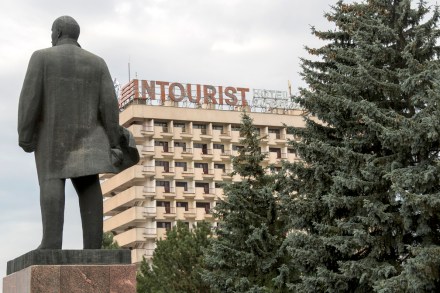
I suppose there are people who stay in four or five-star hotels all their lives and become a kind of expert in them, turning their noses up at rooms I would regard as the acme of comfort, but since my parents stopped paying, I never have. In adulthood my standards have plummeted and, as a traveller, I’ve stayed in any number of grotty places. I’m not complaining either – you have much more fun in life when there’s nothing to protect you from what Maxim Gorky, in a lyrical moment, called the ‘lower depths.’  None of this was erotic in any way but had a kind of anthropological edge to it My real travels started when I moved to Estonia at 26.

My strange and wonderful tenants

You might find it a bit rum to open your front door to a stranger and hand over your door keys and alarm code as they head for an upper bedroom. Around a third of erstwhile landlords would now agree with you and have ceased renting, while the call for such affordable room at the inn continues to grow. Now we and our crumbling pile are getting increasingly ancient Half a century ago, we answered a tap at the door to a beautiful woman, standing in the snow in kitten heels. She was a Maori, a chieftaness no less, having slaughtered her first sheep on the family North Island farm at the age of eight. She lingered, getting married two years later in our back garden, and even produced what became a second-generation lodger.

Euro 2024: a guide to Germany’s cities

Here’s a question for Spectator football fans: what’s the most memorable match you’ve ever seen? I don’t mean on television. I mean in an actual stadium, the way football should be seen. For me it was in 1996, seeing England play Germany at Wembley, in the semi-finals of the Euros. England were the better team over 90 minutes, and also during extra time, but with the game tied at 1-1 it came down to penalties. The first five players on both sides all scored. Then Andreas Köpke saved from Gareth Southgate (I wonder what became of him?) and Andreas Möller stepped up and scored the winner. England were out. A few days later the Germans returned to Wembley where they beat the Czechs in the final, and English hearts were broken – yet again.

A beginner’s guide to finding a good nanny

When an au pair or nanny writes ‘I was wondering if I could talk to you this evening,’ it is rarely good news. At best, it is to ask for a pay rise; at worst, to give notice of a departure. ‘I’d like to go to Madrid,’ said our beloved au pair one evening, confirming our worst fears, and so began the quest for a new live-in nanny. We decided not to confront her with this discovery, and she proved a superb au pair Finding a good au pair or nanny is so fraught with peril that specialist agencies exist to reduce the burden, with some charging thousands of pounds for the service. Even with an agency, the family will need to meet the prospective recruit for an interview. Sometimes, a character flaw is obvious from the outset.

Golf keeps getting weirder

Golf has never been weirder or better. In 2022, the upstart LIV Golf, funded by Saudi Arabia’s $700 billion sovereign wealth fund, took on PGA Tour, poaching stars including Phil Mickelson, Dustin Johnson and Brooks Koepka. Mohammed bin Salman’s regime lured them by shovelling oil money into their pockets, with Mickelson signing for a reported $200 million. A graying, 42-year-old Sergio Garcia, with PGA Tour earnings of $54 million in his 23 years as a pro, got an instant $40 million to lose LIV tournaments to younger, better players. Sure enough, the suits in the PGA Tour’s executive suites soon brokered a secret deal with the Saudis Golf pundits like me predicted a quick death for LIV. Donald Trump disagreed.

Why celebrity restaurants so often fail

London has seen a string of celebrity restaurants, mostly with disappointing results. David Beckham and Guy Ritchie opened a pub in 2018 – the Walmer Castle – but it didn’t last. They handed it on in 2022 and the pub has changed hands three times since its opening. Ed Sheeran set up his grastropub, ‘Bertie Blossoms’ just two months before the pandemic, and while it is still open, Sheeran has admitted that it's not gone smoothly. He’s learned that unless you have a large chain, making money off a restaurant is very difficult. Lewis Hamilton and Leonardo DiCaprio have tried the chain business model, opening eight locations of their plant-based ‘Neat Burger’ in London and one each in Dubai, New York and Milan – but it doesn’t look like its working wither.

Three big priced ante-post bets for April

Max McNeill and his family, who own THREEUNDERTHRUFIVE, have been hoping for months that their horse would line up for next weekend’s Randox Grand National. However, they listened to the man who knows the horse best, 14-times champion trainer Paul Nicholls. He persuaded them that their nine-year-old gelding would be better suited to the challenges of the bet365 Gold Cup instead. This advice led to Threeunderthrufive swerving Aintree and instead being on target for Sandown on 27 April where he will have a really good chance of landing the £95,000-plus first prize. Threeunderthrufive ticks a lot of boxes for this race: he stays well, he jumps well, he goes on pretty much any ground and he goes well right-handed (we know this after he won so well at Ascot last time out).

Kurt Cobain’s life was an American morality tale

The Peaceable Kingdom probably isn’t the first place you would have looked for Kurt Cobain. Of all the ironies and confusions of his brief life, perhaps none was as pointed as his choosing to kill himself in a room overlooking that sign, announcing Seattle’s upscale Leschi neighbourhood, with its views of Lake Washington and the snow-capped mountains beyond. It was here that, one morning in April 1994, Cobain – then in the third year of his marriage to his fellow musician Courtney Love – first injected himself with heroin and then took a shotgun and blew his brains out.

The person who edited this will soon be redundant

Whenever I write about AI on The Spectator (which is a lot) I always get comments like ‘Yawn. Wake me up when AI actually does something’. And, to a point, these are fair comments. For all its remarkable feats, its photos of Shakespeare with weird fingers, its videos of dogs typing in spacesuits, the new wave of AI hasn’t really done something simultaneously concrete and astonishing, something where you can draw breath and say ‘Wow, that is definitely replacing this particular job’. In my experience, these AI chatbots respond better if you are polite, an uncanny fact Well, now I can address that.

The cult of Camille Paglia

There’s a spectre floating inside the head of a certain type of young woman. It’s the fast-talking, sex-realist American academic Camille Paglia. She was big in the 1990s but my parents haven’t heard of her. ‘Did she write Fear of Flying?’ asks my dad. On sections of the internet she has become a folk hero. She’s an ideological guiding force for the female hosts of Red Scare, an influential left-ish podcast which was described by the Cut as ‘a critique of feminism, and capitalism, from deep inside the culture they’ve spawned’. Paglia is equally popular among some conservative factions: a 2017 debate between Paglia and Jordan Peterson has amassed 3.5 million YouTube views.