Jane Robins

Jane Robins is a writer and author of the psychological thriller White Bodies.

The tao of TK Maxx

From our UK edition

I doubt that Sir Keir Starmer has ever been inside a TK Maxx. I don’t see him, even in his early parliamentary days, hunting and rummaging for designer fashion, or trying on dozens of duds in a bid to find ‘the one’. We know the Prime Minister loves swanky clothes at the lowest possible price – and that’s TK Maxx’s raison d’être. But I don’t think he has the attitude required for shopping there. It's a pity because, with the right approach, TK Maxx can deliver great rewards. It has for me – calming my nerves when my personal life turned frantic and distracting me when the entire world seemed insane. It works as a tonic, I think, because TK Maxx shopping is an all-embracing activity requiring total concentration and commitment.

In defence of true crime

From our UK edition

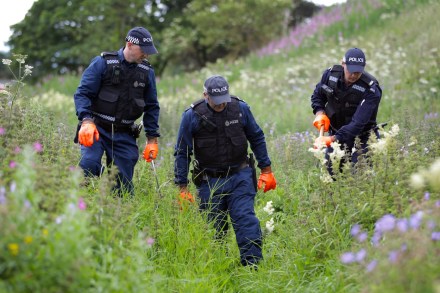
I recently listened to a 13-part podcast called Who Killed Emma?. It’s a gripping piece of work – a BBC investigation into the murder of 27-year-old Emma Caldwell in April 2005. Emma was a heroin addict and a prostitute on the streets of Glasgow. She was strangled and left for dead in a remote wood. Is it so terrible to be interested in these killers and their deeds? I don’t think so I’d recommend the podcast to any fan of true crime. And I’d also expect the scorn of those who deplore this highly successful genre. People who are inclined to say things like: ‘How can you be so voyeuristic? Why do you care about these monsters who kill? I want nothing to do with those despicable programmes and podcasts.

The Hundred is glorious anti-cricket

From our UK edition

When my son was young, around 8 or 9, we lived in north London. I’d pick him up from school and take him to Lords at tea-time when the entry price for adults was £5 and children were free. We saw all kinds of less popular matches – most memorably, a young Bangladesh Test side, which played with spirit and lost six wickets during our two-hour visit. This was old-style cricket – half-empty stands, occasional ripples of applause, everything charmingly sedate, with a few bursts of moderate excitement. The colour scheme was most definitely green and white. This, in truth, is my favourite kind of cricket.

The BBC doesn’t understand Wimbledon

From our UK edition

The tennis is great, but an equally impressive aspect of Wimbledon is how well it has managed tradition. When I visited last week, the first time in a decade, everything was beautifully and reassuringly familiar. The clean thwack of the rackets, the running of the ball boys, the military-style precision and bearing of the ball girls. The portly line judges peering over blue-striped bellies, hands splayed on white-trousered knees, exhibiting all the concentration and intensity of a surgeon about to make his first cut. Naturally, one was the spit of James Robertson Justice. When Wimbledon has had to embrace change, it has somehow managed it without causing offence How do they get the line judges so right?

Why I’ve turned to woo-woo medicine

From our UK edition

Michael Vaughan has been through hell, twice. The first time was well publicised. On thin grounds, the former England cricket captain was accused of racism and was then subjected to a brutal investigation by cricket’s overlords. Defending himself valiantly, he was exonerated. The second circle of awfulness, though, was just as bad – he became seriously ill. Last week, he talked to the Telegraph about the horrific symptoms that suddenly reared up, and of his search for a cure.

A paean to peonies

From our UK edition

It was a day typical of this year’s early summer. Raining. Cold. Miserable. I was about to crack and put the heating on when my sister arrived, carrying peonies. Over the coming hours, the rain rained harder, the cold got colder, and the peonies opened, becoming frothy balls of the palest powdery pink, touched by gold at the centre. Their unfurling seemed like an act of unbridled generosity. The arrival of peonies is a wonderful thing. They sit in the supermarkets, clustered near the checkouts; their fat, rounded buds, hinting pinkly of what is to come when you take them home, introduce them to water and prepare to be surprised.

Baby Reindeer has become meta entertainment

From our UK edition

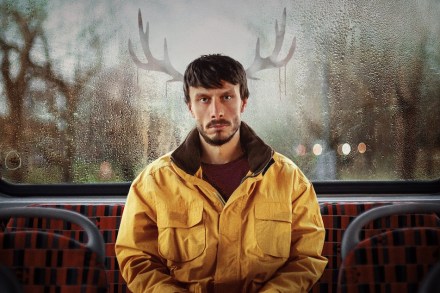
Fiona Harvey appears to be having the time of her life. She’s the ‘real Martha’ in the Netflix hit, Baby Reindeer, where she’s depicted as a convicted stalker with a rage problem. Denying almost everything, Harvey is suing Netflix for libel on a global scale, hoping to secure a tidy £133 million. Since the show aired, her story has become almost as sensational as the drama itself – it’s all over social media and is now playing out with particular ghoulishness and high-drama on YouTube.

Where to find history without the hectoring

From our UK edition

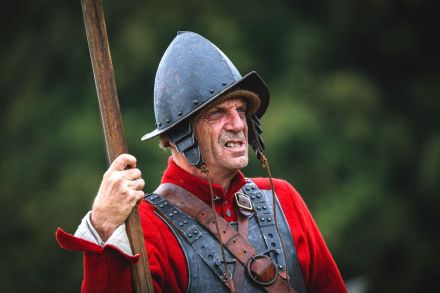
I recently had an encounter with Oliver Cromwell’s hat which, these days, rests on a bespoke hat-rest in the Cromwell Museum in Huntingdon. It’s an astonishing piece of craftsmanship being far wider than any normal hat at nearly three feet across. The perfectly horizontal brim is constructed from thick black felt and the central head-holding part is a cylinder that rises sharp and perpendicular, like a chimney pot from a roof.  What is absent from small museums like this, mercifully, is the over-bearing hand of a committee of arts graduates What a sight he must have been, wearing this extraordinary hat, at the dissolution of the Rump Parliament in 1653, railing at the politicians: Ye are a factious crew, and enemies to all good government.

Harry and Meghan’s desperate rebrand

From our UK edition

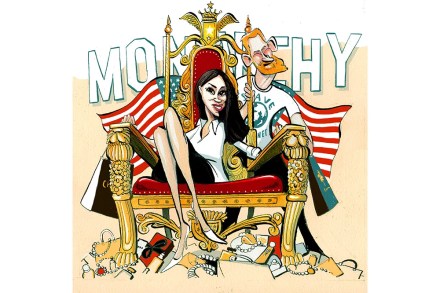
Harry and Meghan are at it again – launching themselves into another rebrand – this time embarking on a faux-royal tour to Nigeria, hiring new PR staff in the UK, promoting strawberry jam on Instagram and – good grief! – touting Netflix shows about friendship and polo. There’s a certain sadness about this latest effort, since the Sussexes’s entire past year has been spent branding and rebranding themselves with practically no effect, and the whiff of desperation now hovers over them. You’d feel sorry for the couple if they responded to their misfortune with some degree of humility Their annus horribilis of branding mishaps and misfortunes kicked off last April when Meghan signed up with the glitziest of the Hollywood PR giants – William Morris Endeavor.

Can’t sleep? Try a boring audiobook

From our UK edition

I’m sleeping with the actor Richard E. Grant at the minute and can highly recommend the experience. He’s reading Agatha Christie’s The Murder at the Vicarage to me and has the perfect voice for it, faintly lascivious but not disturbingly so. As for the content, it’s just what’s wanted – engaging but not too stimulating. Like so many of us, I’m nodding off to the sound of an audiobook. Crime novels work well, as long as they are not overly gruesome or suspenseful I was already enamoured of Richard E. Grant who’d, on other late nights, read me Iris Murdoch’s The Sea, The Sea. The plot unfolds at a gentle pace and nothing unduly dramatic or loud happens – there are no car chases or football chants.

Why we’ve come to love Camilla

From our UK edition

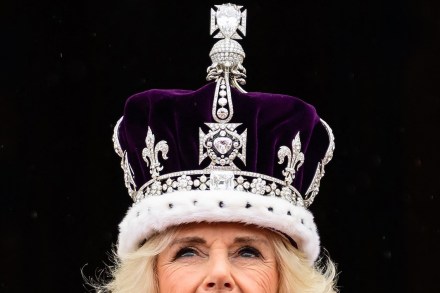
Could it be that Queen Camilla has quietly, after all these years, been accepted by the British people? We’ve watched her navigate the past turbulent days with dignity and grit, just ploughing on with her public duties and keeping the drama low. I suspect that her steady-Eddy style is going down well, particularly since it’s now clear that the woman is a grafter, and we like a grafter. How admirable her low-key style seems when compared to the antics of the Sussexes Looking back, we could see that she was a first-class trooper at the end of January when she opened a new Maggie Centre at the Royal Free Hospital in London; elegant in turquoise and smiling her broad toothy smile. The public didn’t yet know about Charles’s cancer diagnosis, but surely Camilla did.

I’m addicted to property programmes

From our UK edition

Holed up with Covid recently, I decided to binge on some undemanding TV and selected property programmes, knowing that the genre satisfied some basic human instincts – nosiness about other people’s lives, other people’s taste, other people’s money and other people’s dreams. I was happy with my choice – confident that property programmes were the chicken soup of television, gently nourishing me back into health. There really is something for every aspect of the human psyche in them – curiosity, aspiration, humour, voyeurism, escapism Apparently, there’s a whole world of people who appreciate these shows.

The mind-altering potential of fire walking

From our UK edition

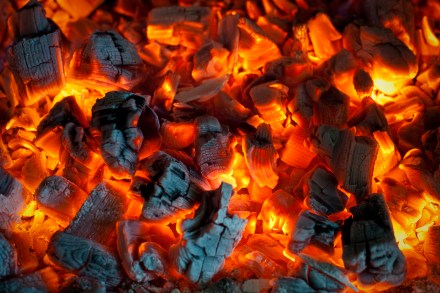
Thirty of us gathered in the upstairs room of a local hospice, subdued as we contemplated the imminent laying of our raw flesh onto fire. Steve from Peterborough arrived to give a pep talk to prepare us for what awaited us in the car park below. We sighed empathetically when Steve told us he had failed maths O-Level three times He was, he said, an expert fire walker, trained by the man who trained the most famous fire walker in the world – the American motivational guru Tony Robbins, an incredible-hulk of a man known for whipping people up into frenzies of self-belief and positivity. On YouTube you can see him booming, ‘Yes! Yes! Yes!’ as he steers a terrified Oprah Winfrey along a path of red-hot coals.