Spectator Life

Spectator Life

An intelligent mix of culture, style, travel, food and property, as well as where to go and what to see.

I’m driven mad by tailgaters

It’s the flash that shocks you first. It’s night and you’re driving in the outside lane of the motorway at a speed that isn’t exactly the national limit, but isn’t so wildly in excess that it would raise eyebrows. Suddenly your car floods with the light of a thousand suns. The flash in the rear-view mirror alone is enough to dazzle. It’s not a speed camera – you know from bitter experience that it’s too fast, too furious for that. Has Putin detonated a tactical nuke over the last junction? That would actually feel less threatening. The flash comes again, and as your eyes readjust the mirror shows a pair of headlights roughly ten feet behind your neck. Alarm shades into cold fury: you’re being tailgated.  Because it is usually a BMW, isn’t it?

Hate people? Visit Iceland

No-one seems to like tourists any more. This week Venice introduced its €5 entry charge – which merely buys you the right to go into the city and be ripped off by cafes and restaurants. On Tenerife, residents have been marching and daubing slogans on the walls ‘tourist – go home’. So much for free movement. Meanwhile, in Japan, a village near Mount Fuji is so fed up with Instagrammers that it is erecting a giant screen to hide the mountain. Happy holidays! It was a trudge over ash and glacial gravels – which make for surprisingly easy walking Not to worry. If you want to go somewhere where you won’t bother the locals you could always do as I did last summer and walk across Iceland. That is a 200 mile trek without a single local to offend.

Why the old are getting younger

Researchers at the Humboldt University of Berlin have discovered that we no longer consider ourselves old until we’re 74. What’s more, by the time you reach 74, you think old age begins at 77. Which is something to celebrate – just don’t tell the Department for Work and Pensions or they’ll get more bright ideas about pushing back the state retirement age still further (it’s already due to rise to 68 in the 2040s already, don’t forget). Sexual selection is increasing the prevalence of neoteny – that is the retention of juvenile traits As well as perceptions, of course, the facts about our ageing society speaks for themselves: when I was born in the 1970s the median age in Britain 30. Now it’s just over 40. There are now 15.

The problem with vets

A year or so ago my mum, 90, took her cat to the vet. She left an hour later, relieved of nearly £800. Her aged cat it appeared needed tests, a scan and various medicines. My mum lives in a poor area of London and is on a state pension. She has little spare money, but she loves that cat and when a vet says he needs tests, who was she to say no? Most of the other people using that vet are in similar circumstances. I was outraged so rang the HQ of the firm and got through to the medical director who told me he made no apologies for his company offering a ‘Rolls-Royce service’. I wonder in what world do regular moggies need an annual checkup? And there we have the problem with vets. Across the country, sole-trader vets have been swallowed up by a number of very big firms.

Conspicuous luxury looks cheap

Street robbery has become an epidemic. Horrible thugs are stealing luxury watches and jewellery in broad daylight. The number of luxury watches stolen almost doubled in England and Wales between 2015 and 2022 – with 25,802 stolen in 2022. The problem is particularly bad in London, where the Metropolitan Police have set up a special unit to tackle the problem. Even the greediest thief isn’t about to strip your suit off your back It's an unforgivable crime. Lock the muggers up and throw away the key. Of course people should be free to walk the streets, decked in gold and silver. Oh for the legendary days of medieval England when you could supposedly leave a bag of coins nailed to a tree for a year and no one would steal it.

The myth of trauma

Everything is trauma. From Barbie’s Oscars snub (very traumatic) to Taylor Swift’s new album (also deeply traumatic), profound emotional distress appears to be everywhere. According to the Diagnostic and Statistical Manual of Mental Disorders (DSM), trauma requires ‘actual or threatened death, serious injury, or sexual violence’. A horrific car crash, a terrorist attack, an armed robbery, these all fit the bill. An Oscar snub does not. Why, then, do so many people appear to think of themselves as traumatised? It’s certainly a clickbaity concept, but it's not a scientific one This raging fire of self pity is being fuelled by unqualified influencers who call themselves ‘trauma coaches’.

A boomer’s guide to Gen Z slang

I recently had the pleasure of spending some time with my two teenage grandsons, who live in Dorset – 16-year-old Dylan and Isaac, who is 14. Listening to them chatting with their friends, I slowly realised that, half the time, I hadn’t a clue what they were on about. Peculiar words I’d never heard before peppered their ‘convos’. What, I wondered, could be the definitions of ‘leng’ and ‘peng’? What was the meaning behind the mysterious expression ‘SN’? And why did they sometimes exclaim: ‘That’s beg!’ As is the way of the world, a whole new slang vocabulary has been created by their Gen Z. Ah, the groovy bygone days so fondly remembered by us hip Baby Boomers This was, of course, a case of history repeating itself.

Why are men so offended by my hair?

My annus horribilis was 1992. I was in fifth grade (aged ten) and had impulsively cut my hair short over the summer. I turned up to school with auburn ringlets billowing out and up from my head in a wavy sphere. Boy did it get the boys going: constant insults, including ‘Ronald McDonald’ (McDonalds’ clown mascot, known for his garish red hair), and heckling with the curiously racist insult ‘electric Afro woman’, shortened to ‘Zofro’. There was no laughing this off: it was a barrage, which came with volleys of burrs thrown at my hair and other projectiles. Only physical violence, months in, quietened it down: I had to kick a shrimpy but tenacious tormenter to the floor of the school bus. Have I ever brushed my hair? Ever washed it?

Inside the chaotic Household Cavalry stables

Churchill had his black dog tailing him around. I used to have black horses galloping through my head. They careered around out of control, rendering me so anxious that I couldn’t sleep the night before I was due to heave myself into the saddle as a civilian support rider for the Household Cavalry. So the sight of blood-spattered horses from the Household Regiment bolting through London this week dredged up some unwelcome memories. Red London buses and black taxi cabs flashed by in a blur. I really thought I was going to die For six months, I was a member of the coveted, informal club of civilians who got to exercise the horses of this exclusive regiment in Hyde Park.

Why we love hideous food

I’m sitting on a stone terrace in the winsome south Breton port of Sainte Marine, which oversees France’s prettiest river (the Odet), and I’m excitedly tucking into a dozen gleaming Morbihan oysters. I am doing this partly because I am writing about travel in Brittany and oysters are very much part of the package here – you come to Brittany, you must consume oysters (also cake, cider, biscuits, tinned sardines and chunky buckwheat crepes). But I’m also eating oysters because I really love oysters. The idea is bad, the texture is worse – slimy, crunchy feathers and bones At this point I imagine a reasonable percentage of Spectator readers will be wincing. Because oysters are a divisive issue.

The stupidity of the former footballer pundits

It was the most dramatic moment of the whole football season. Having trailed 3-0 to the millionaires of Manchester United in their FA Cup semi-final, lowly Coventry had bravely fought their way back to 3-3 and extra time. And now, in the last minute of that extra time, they had broken away to score an incredible winner. Or had they? Immediately after Victor Torp’s shot beat Onana, and the sky blue end of Wembley erupted into pandemonium, the ITV broadcast footage rewound to the critical moment – when the defence-splitting pass was made that led to the goal. So what did the designated expert think at this critical moment? ‘He’s onside,’ said Lee Dixon, assertively.

Farewell to the jump season with three bets

As the curtain falls on another jumps’ season tomorrow, the ups and downs of ante-post betting are all too apparent once again. Threeunderthrufive, put up three weeks ago at 20-1, is now 7-1 second favourite for the bet365 Gold Cup (tomorrow, 3.35 p.m.) at Sandown. With his favoured good ground almost guaranteed, he will have a live chance of defying top weight in the 20-runner contest. My second ante-post bet in the race, Desertmore House, had looked an even better proposition. Put up two weeks ago at 25-1, he was heavily backed into 7-1 second favourite. He, too, had his favoured good ground looming only for his trainer Martin Brassil to decide to skip Sandown in favour of a run in his native Ireland. Ouch.

The case for Churchillian drinking

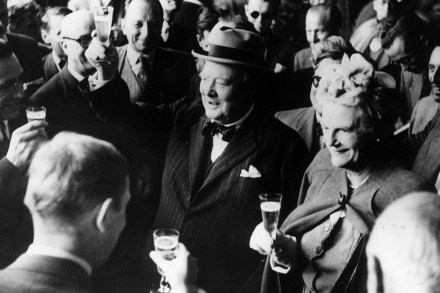
Churchill. No disrespect to Andrew Roberts’s more recent work, but I set out to look up a point about drink in Roy Jenkins’s biography and ended up rereading it. I think that it is Roy’s best book and extremely well written. There are also passages where he slips in points from his own experience of high office: never excessive, always illuminating. Although Churchill was rarely drunk, he was equally rarely sober I did not need to be reminded what an extraordinary figure Churchill was: the drama was so vivid. After the ‘fight on the beaches’ oration, Josiah Wedgwood, a Labour MP, said that it was the speech of a thousand years. Britain was menaced as never before; France was about to surrender.

Taylor Swift is the tortured voice of millennials

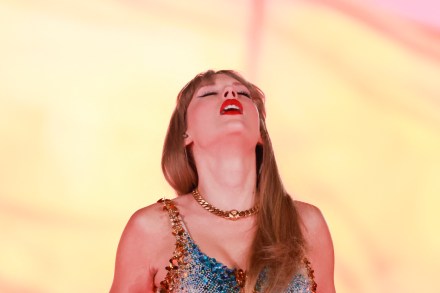
I gave Taylor Swift’s new album, The Tortured Poets Department (which I need to stop calling The Dead Poets Society) a cursory listen on Friday morning, a few hours after it was released. Maybe it was because I listened to half of the self-indulgent songs while walking my dog through a moody forest before I’d had any human contact that day, but for an hour and five minutes (I haven’t made it through the extended Anthology yet, which adds 15 extra songs), I was entranced. Tortured Poets poignantly captures the collective one-third-life crisis we millennials are experiencing together. What Swift doesn’t acknowledge though, is what we all really need: it isn’t more romance, but religion. Taylor Swift needs Jesus. I was prepared not to like the album.

Confessions of a competitive dog owner

Defeat stares me in the face every time I walk down my north London street. Decorating the knocker of a house a few doors along is a blue rosette announcing it’s home to the winners of the street dog show. Whenever I go past with my cockapoo Honey, she is nonchalant, barely bothering to stop for a sniff of the doorstep. I, on the other hand, am still seething – because until that sunny day almost two years ago, Honey had been undefeated. She was a champion, if not at Crufts, at least on the local dog show circuit where she has racked up certificates, rosettes and vast supplies of free dog chews, in everywhere from Hampstead Heath to Crouch End. Honey had seen off countless rivals, from cavapoos to bichon frisés, huskies to sausage dogs.

Writing a will isn’t easy

It’s generally considered sensible for adults of sound mind to make a will. Many don’t bother. It’s a nuisance. They’ve scribbled their straightforward wishes in a letter at home. They think they’re too young. They’ve told a confidant their final wishes. Or they believe they have nothing to leave, or make assumptions about who’ll automatically inherit their estate, rendering a will unnecessary. It’s not easy to convince a court to deviate from someone’s written last wishes The topic of making a will is sometimes taboo. But given humans’ mortality, even those with modest means and no family would be wise to write a will, if only to take control of what will become of their physical body or of where particular treasured possessions should go.

I was the NME’s squarest journalist

Before I went to medical school I had a hip alternative life. In the 1980s, as a 17 year-old schoolgirl, I wrote for the New Musical Express. My friends assume I had a great time with sex, drugs and rock ‘n’ roll, but the truth is I was such a cautious Carla that I didn’t touch the former two at all, and I scurried off home to be in bed immediately after each gig I reviewed. Each time they gave me a rolled up bank note and left me to snort in private, I blew Part of the reason was because I had strict parents. My dad was a benevolent patriarch who was older than many dads and had spent his youth as a cultured Persian immigrant in London, going to classical concerts and philosophy lectures.

The young are missing out on a proper breakfast

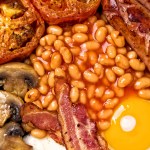
More proof, if it were needed, of the gastronomic generation gap. It seems one in ten young persons has never had a full English/Irish/whatever cooked breakfast and one in five only has it once a year. They are, of course, missing out on one of the pleasures of life. The cooked breakfast and afternoon tea are, with pudding, the great contribution of these islands to food. As to what constitutes a good breakfast, I refer you to what I consider the perfect cookery book: The Cookery Year, published by the Reader’s Digest in the 1970s. There, Theodora Fitzgibbon, a wonderful Irish food writer, briskly summarises it thus: Porridge or cornflakes may be followed by fried bacon and eggs, with sausage, tomatoes and mushrooms.

What happened to the London bus?

To understand Sadiq Khan’s tenure as Mayor of London, you need only ride one of his buses. Eight years of repeating that he is the ‘proud son of a bus driver’ have not yielded a single improvement to the experience of travelling by the famous red bus. In fact, many things are worse.  she suggested I couldn’t have lived in London for very long and then burst into tears Tap your card and find your way to one of few seats unsullied by chicken bones, unfinished soft drinks and disposed of vapes. Sit down and endure the tinny sounds your fellow passengers deem acceptable to broadcast from their handheld portals to hell. Request that they use headphones and risk being stabbed. Even if you can avoid all this, you can’t escape being infantilised by the recorded announcements.

A love letter to the Fiat 500

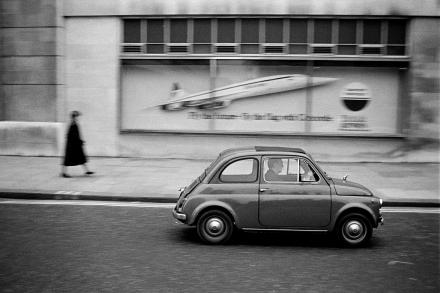
On visits to the continent as a child, what struck me was the strangeness of other European countries. Going to France or Italy, pre-internet, you cut off your connections to the outside world, and even got the British news a day or two late. People ate horse meat, tortellini in brodo or croque monsieurs, and the kids drank Orangina and watered down wine. The smell of black tobacco smoke – dignified and with a kind of ancient wisdom to it – seemed to permeate every public building. But what you also noticed was the cars – Renault 4s on the Riviera, Citroen DS-23s in Paris, and in Italy, overwhelmingly, the tiny, toy-like Fiat 500, a design classic thrumming with character and a part of postwar history.

What Beatles critics don’t get

Not everyone likes The Beatles. That said, trashing cultural icons is a modern phenomenon amplified by social media and done, largely, to attract attention. Yet whether you hate them or love them (yeah, yeah, yeah), their influence on pretty much everything pop music has offered since is, surely, undeniable. Sixty years ago they left an indelible imprint on both music and film that continues to this day. In April 1964, John Lennon and Paul McCartney sat down in a hotel room and wrote a song to accompany the title of the band’s first (and best) feature film, ‘A Hard Day’s Night’. The song itself is typical of their early output. A sugary song about love, less than three minutes long yet its significance cannot be underestimated.

Why we read crime fiction

An exhibition dedicated to 20th century British crime fiction has opened at Cambridge University Library. The artefacts on show range widely through the history of the genre, from items associated Charles Dickens, Wilkie Collins and Conan Doyle right up to modern exponents of the form, Val McDermid and Ian Rankin.  Lurking somewhere in many of us is the awful capacity to commit the worst of crimes What’s surprising about the exhibition in a way is that it’s so relatively unusual – when, after all, was the last time you heard of a show dedicated to crime fiction? It remains the biggest seller by genre and continues to inspire some of the most popular television and film.

Two bets for Ayr

There is plenty of competitive racing at Ayr over the next two days, quite apart from tomorrow’s Coral Scottish Grand National. With some decent prize money on offer too, it is not surprising that the quality of the cards is high. The Coral Scottish Champion Hurdle (tomorrow, 2.25 p.m.), unlike its English counterpart at the Cheltenham Festival, is a handicap and, as such, there are plenty of horses in with a chance of landing the £56,000-plus prize for the winner. Dan Skelton’s L’Eau du Sud is understandably at the top of the market after two big runs in his last two races, notably when runner-up last time out in the BetMGM County Handicap Hurdle at the Festival. However, odds of 4-1 or less are unappealing, especially as he is creeping up the handicap too.

An only child is a lonely child

Lonely children often grow up to be lonely, not to mention anxious and depressed. In one study, after factoring in profession, parenting style and relationship, sleep patterns, and dietary habits, only children were more likely to display symptoms associated with anxiety and depression than those with siblings. One, it seems, really is the loneliest number. Friendships come and go, and chances are our parents will leave this earth long before we do but, through it all, siblings are there by our sides The western world is already consumed by a loneliness epidemic. Our falling birth rate and the rise in single-child households likely makes this worse.

Confessions of a fortysomething brace face

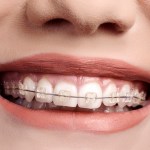
When I was a teenager, my grandmother would pick me up from school every week and drive me to the orthodontist, the aptly-named Mrs Crabbe, so she could stick more pieces of metal in my mouth, tighten something up, or twist some new jazzily-coloured elastic bands onto the brackets glued onto my teeth in a vain attempt to distract onlookers from the horror that was my metal-adorned smile.  Don’t expect me to be able to talk properly, and be prepared to be spat at A buck-toothed child, with overly large teeth for my mouth, I had years of orthodontic work, from the age of about 12 until I was 16 or 17, at which point the braces came off and suddenly I was able to smile with my mouth open – a total revelation.

How Linzer torte stood the test of time

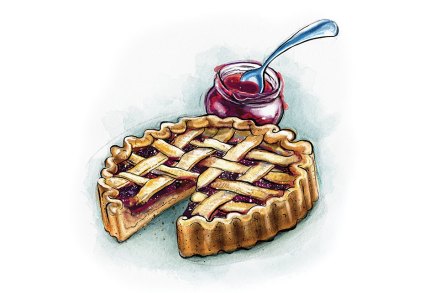
Linzer torte has quite the claim to fame: some assert that it’s the oldest cake in the world; others that it’s the oldest to be named after a place. It feels churlish to split hairs, but those two assertions are quite different, aren’t they? In any event, it’s certainly very old. For a long time it was thought it dated back to 1696, when it was mentioned in a recipe held in the Vienna City Library. But 20 years ago, an earlier reference was found by Waltraud Faißner, a Linzer torte historian, dating it to 1653 in the snappily titled Book of All Kinds of Home-Made Things, Such as Sweet Dishes, Spices, Cakes and also Every Kind of Fruit and Other Good and Useful Things etc.

‘Five stars, no notes’: Arlington reviewed

Arlington is named for the 1st Earl of Arlington and his street behind the Ritz Hotel. It used to be Le Caprice, which was opened in 1947 by the Italian Mario Gellati, who would not, by the new rules, get into Britain now, but this is not a column about pain. In 1981 Le Caprice was taken over by Chris Corbin and Jeremy King, and it became the most fashionable restaurant in London. Princess Diana dined here and when Jeffrey Archer was released from prison, he ate here. None ofthese dishes could be improved. Five stars, no notes After an interregnum from Richard Caring, under which Le Caprice closed in 2020 – it could not compete with Caring’s mad themed restaurants across Piccadilly – Jeremy King, who is more emotional and skilful than most restaurateurs, returned here.

It’s no wonder Manchester City are top of the league

Well it was fun while it lasted, the closest three-way race for the Premier League in history, a title challenge as exciting as anything you will see on Netflix. It’s not over yet but it certainly feels like it. With six games to play, there’s still many a slip... But deep down even their most ardent supporters find it hard to see Arsenal or Liverpool getting past the seemingly unstoppable Manchester City now. It’s amazing what you can do when you’re owned by one of the richest countries on the planet  City have another stage in their haul of silverware in their sights on Saturday with an FA Cup semi-final against Chelsea at Wembley. Chelsea could be brilliant or rubbish or anywhere in between. City are likely to field a second-string side, having bigger fish to fry.

The magic of Aintree

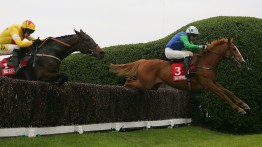
However hard some people try to make it a business, jump racing remains a sport and the Grand National its greatest race. Two fences out this year 20 horses were still in contention, ten still seemingly in with a serious chance of winning. As Ruby Walsh noted: ‘If that doesn’t convince people it’s a wonderful sport I’m not sure what will.’ Of the 32 starters 21 finished. Four horses unseated their riders and seven were pulled up but not one fell. The Grand Nationalwill remain a great race. But it is changing Still in the battle two out were the three ‘story horses’. Latenightpass was point to point trainer Tom Ellis’s first runner under Rules, owned by his mother and ridden by his wife Gina Andrews.