Spectator Life

Spectator Life

An intelligent mix of culture, style, travel, food and property, as well as where to go and what to see.

London is a great Eastern European city

When, after three years of living in Eastern Europe, I came back to the UK, I found myself acutely nostalgic for the post-communist world. Life over there had a charm and directness that London seemed to lack. Luckily, I discovered that even in the capital you can find the best of Eastern Europe all around you – if you know where to look. A lovely place to walk into on a winter afternoon, or to visit at Orthodox Easter, as people teem outside and priests scatter holy water about I was aware of course, even in my teens, of Polish London. There was the restaurant Daquise in South Kensington which, before its 2012 refit, was one of those places you couldn’t imagine the area without.

Royal Mail is a right royal mess

Benjamin Franklin famously said that there are only two certainties in life: death, and taxes. It turns out there is a third: Royal Mail not delivering post on time. I live in East Oxford, where Royal Mail has not met its target of delivering 91.5 per cent of all first-class mail by the next working day in over five years. The reality is much worse than that: my OX4 postcode seems to only receive letters somewhere between once every two weeks and once a month. This can be a minor inconvenience (it is a bit surreal receiving birthday cards in June when your birthday is in May), or it can be an administrative headache, like the time we received notification that our resident parking permit was about to expire weeks after it actually had.

Hunting for the lost blue plaques

Most people assume that once a blue plaque is installed, it's there to stay. That is not always the case. Around 50 of the over 1,000 official plaques are no longer in situ on their original building – almost always because that building has gone. Now English Heritage, the charity I work for, is asking for help from the public to track down any of the lost plaques that may have survived. In all likelihood, both early Byron plaques are completely lost – potentially somewhere within the foundations of John Lewis In 1867, the Society of Arts inaugurated its new memorial scheme with a plaque to Lord Byron, marking the poet’s supposed birthplace at number 24 Holles Street, near Cavendish Square. A little over 20 years later, number 24 was demolished and the plaque was lost with it.

Gutweed and bladderwrack? Yum!

Foraging has become a sign of status rather than a lack of it and seaweed is perhaps the most abundant wild food of all. The alternative is mushrooms, but I’ve always thought fungus-hunting a bit too wild; the possibility of a first-class risotto being offset by the risk of death or, worse, expanded consciousness. Rotting seaweed is disgusting. My local newspaper in Cornwall regularly publishes complaints from tourists Caroline Davey, who trained as a botanist before becoming a forager, assures me that only three species of seaweed are poisonous and they are found only in deep water. They might conceivably wash up on the shore, but the basic rule of seaweed foraging is to avoid the stuff at the high-water mark – that’s all dead and decomposing.

Obesity will soon be history

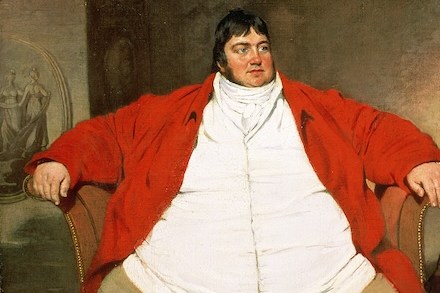
I’ve just seen a graph which surprised me only slightly less than one might which showed that the majority of people in the UK thought that Keir Starmer could be trusted to tell the truth about what he had for breakfast. It shows that US rates of obesity have started to fall. The reason, according to the Financial Times, which published the graph, is that one in eight Americans is now taking semaglutides, drugs like Ozempic and Wegovy. I’ll state right here that I’ve got flesh in the game – though a good deal less than I did before I encountered the wonderful world of semaglutides. I wrote here in the summer of 2023: I’ve had an interesting relationship with my weight. In my teens, I was so thin that my mother would cry when I went home to visit.

Euston station is the best of London

Euston Station has been in the news again, and that’s never good. After a summer of overcrowding and delays, public anger forced the Transport Secretary, Louise Haigh, to intervene last week, shutting down the monstrous, flashing digital advertising screen that spans the concourse and which has made passengers feel like battery hens trapped in a seizure-inducing neurological experiment. A ‘five-point plan’ of further improvements is promised, but no one believes it’ll work. This is Euston. It’s irredeemable. Everyone – just everyone – hates Euston. This has always been a station with its sleeves rolled up and serious work to do Well, I don’t. I hate what they’ve done to it, sure. I detest the lazy excuses, the neglect, and the tawdry retail outlets.

Our many signs of confusion

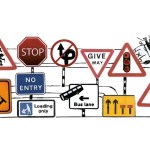
‘Buglers are operating in this area’ warns the Metropolitan Police sign, heralding the sound of trumpets perhaps. Aggravated burglary is often described as ‘a burglary gone wrong’, the planned effortless removal of domestic goods having met with some kind of ‘unforeseen’ opposition, the fireside poker taken up by the victim perhaps, or an XL Bully. I observed two signs, the first letting one know that this was a ‘Yellow Fever Centre’ and the other that it was advisable to ‘check with your dealer, as some supplies are impure’ Venturing out in London has become a little daunting. I was startled on a recent tube journey to hear over the intercom that one should ‘beware of unforeseen spillages’. What, one wonders, are foreseen spillages?

My electric car will be the death of me

Ask my friends and family and they’ll tell you: I am an electric car bore. I’m not a gushing enthusiast. I’m more the negative kind of EV dullard. I can’t stop telling people about the horror of driving these wretched things. I'm really not like this about other subjects, or indeed about life. I’m generally pretty positive and optimistic. But I have an EV. I rely on it to get me from A to B, at all hours, in all weather conditions, and perhaps, heaven forbid, even at short notice. You might not be surprised to hear that my electric car is sorely deficient in doing all these things. Let’s start at the dreaded beginning. I came upon my EV through the company car scheme at work.

AI drones are coming for dog owners

Béziers, France The most significant application to date of artificial intelligence and unmanned aerial aircraft has been unveiled: the Poopcopter. It does what it says on the tin. It scoops poop. No more plastic bags. No more furtive glances while out walking to see if Fido’s emissions have been observed by truculent neighbours. According to its inventor, the Poopcopter is the ‘world’s first self-guided dog poop removal system, using a drone, and 3D-printed pickup mechanism.’ The drone has real-time computer vision and machine learning algorithms. A cloud-based system receives footage from the drone’s built-in camera, examines it, and looks for any excrement in the surrounding area. https://www.youtube.com/watch?

An ode to Boden

Way back in the noughties, Charles Moore observed that the Conservatives could learn a lot from the Boden story. ‘An individualistic, non-hierarchical, girly, aspirational, southern, 40 per cent internet-based, middle-class business, laid back but hard-headed. Yet, at the same time, it is quite traditional [...] the way of life he is promoting is instinctively conservative’, Moore concluded.

The joy of tarte Tatin

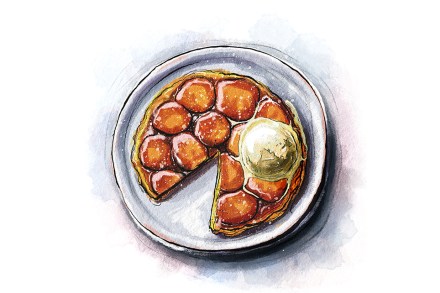
When it comes to traditional recipes, there are few things we love more than an unlikely origin story, ideally one born out of clumsiness or forgetfulness. The bigger the kitchen pratfall, the more delicious the product. Setting pancakes on fire? Accidental crêpe Suzette! Nothing in the restaurant apart from lettuce and some pantry ingredients? The Caesar salad is born! Muck up a cake you’ve made hundreds of times and end up with a squidgy mess? The St Louis gooey butter cake is even more popular than the original recipe! There are few bungling origin stories neater than that of the tarte Tatin But there are few bungling origin stories neater than that of tarte Tatin, the upside-down caramelised apple tart.

Bring back the stiffy!

The other day, clearing out boxes, I stumbled on a sheaf of invitations from childhood. Decorated with trains and fairies, they are very similar to those my children still (just about) receive today, except there’s usually a Thelwell pony instead of Elsa from Frozen. The handwritten addresses, the names of the houses and streets (Bluebell Cottage, Leeward Road) plunged me back to 1980s Sussex, sunlit gardens and pass the parcel (where only the winner got a prize, unlike now, when a Haribo lurks in every layer). It was a ritual. There was the pleasure of choosing the invitations (‘Darling, we had spaceships last year’), the thrill of doling them out and the tension of waiting for the RSVPs. It was also, though I knew it not at the time, social preparation.

Sorry, but you’ve got to love the Springboks

There may still be some poor benighted souls who regard the Springboks as the bane of rugby union. If you meet one, get ready to dispense a proper mauling. South Africa, for so long the Millwall of rugby, are playing an all-round game that is so breathtakingly attractive you have to love them. It may be hard for you, but tough. It would take a brave man to bet against them for the 2027 World Cup in Australia The scrum has always been irresistible, of course; relays of vast men who can shred opponents to bits: here’s hooker Malcolm Marx, accumulator of tries and the size of a terraced house but with added mobility; there’s Ox Nché, all 19.5st of him and the best prop in the world right now.

The joy of the early autumn Newmarket meetings

There’s no shrewder punter than J.P. McManus who likes to say: ‘There’d be many more fish in the sea if they could only learn to keep their mouths shut.’ Last year, clever young Emmet Mullins won the Cesarewitch with J.P.’s The Shunter but when Emmet let it be known that he was aiming for the other half of the Autumn Double, sending This Songisforyou to Newmarket for last Saturday’s Cambridgeshire, there was no way of keeping a lid on things. The money poured on him for days.

25 years on, no one compares to the Two Fat Ladies

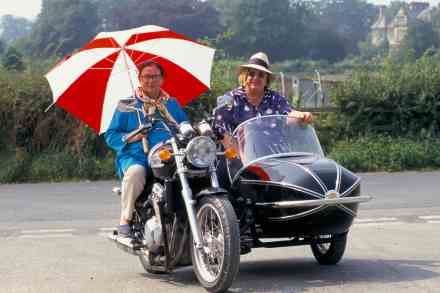
They were loud, vivacious and gloriously un-PC.  Sometimes they seemed to be learning how to cook as they went, barely one step ahead of the viewer. It didn’t matter. If anything, it only made the BBC's Two Fat Ladies more watchable. And 25 years on – the last of the two dozen episodes pairing Jennifer Paterson and Clarissa Dickson Wright aired on 28 September 1999 – I miss terribly their jaunty style of cooking, glass in hand. I don’t think I’m alone. Spectacularly and unexpectedly successful in their lifetimes – 70 million worldwide watched their programme over its four-year run, including many in the US – the internet has allowed them to find fresh admirers since their death.

If Spain doesn’t impress you, what will?

As a Brit who has lived in Spain for almost a decade, I must take issue with Zoe Strimpel’s recent article arguing that it’s the ‘worst country […] in western Europe’, at least as a holiday destination. My four years in Granada and almost five in Malaga have shown me that it’s the best place in western Europe to live – but not because of anything to do with ‘progressive’ politics or a Gen-Z dating trend. I find it hard to imagine what city would appear beautiful and romantic to someone who’s unmoved by Granada, Cordoba, or Seville The ‘buzzing terraces’ that Strimpel praises for distracting customers from horrible tapas aren’t just for tourists – they’re an integral part of the Spanish lifestyle.

It’s time to banish binge-watching

It’s Wednesday, which means my evening is booked up for Slow Horses. The usual protracted regime of children’s tea-bath-bed will be compressed into about 10 minutes (packet of crisps, cursory going-over with a wet wipe, withholding of bedtime story on thoroughly spurious grounds) before my husband and I leap onto the sofa like The Simpsons in the opening credits with a bottle of Malbec and a Charlie Bigham’s curry to watch the new episode on Apple TV+. (Gen Z readers: at the risk of lowering the birth rate even further, this is what fun looks like in your forties after three kids.

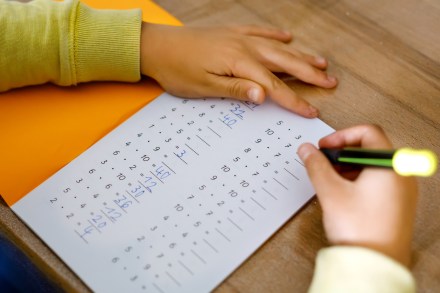
Maths is stressful. That’s why it’s necessary

In the weeks since the Labour government came to power, we’ve gone from debating compulsory teaching of maths until age 18 to entertaining the idea that the times tables may be too stressful for children to memorise. My resilience, my determination and my empathy are largely products of being bad at maths When I was at school in Poland in the 2000s and 2010s, the response to such a suggestion would have been an eye-roll, or the blowing of a loud raspberry. The comment that ‘if you can’t have what you like, then you must learn to like what you have’ was commonplace, and maths was taken by everyone until age 18. I was at the top of my class until, at age 15, I began to fall behind in maths.

What Robert Jenrick can learn from Oktoberfest

Sitting in a gigantic marquee on the green edge of Munich, surrounded by thousands of boozy Germans singing along to a Bavarian oompah band, I wonder how I got talked into coming to another Oktoberfest. Last time I came, ten years ago, I hated it and swore I’d never come again, but this time feels different. Maybe it’s the beer talking, but this year the atmosphere seems less manic, more relaxed. There are lots of couples, old and young, and hardly any stag parties. Amid the endless rows of trestle tables I see numerous families in traditional Bavarian dress (the women so alluring in their dirndls, the men faintly ridiculous in their lederhosen), tucking into huge hearty platters of carnivorous Bavarian grub.

Punk may be dead, but the Sex Pistols aren’t

Pull those ripped tartan trews on lads, the Sex Pistols are back! Well, kind of. Lead singer John Joseph Lydon, aka ‘Rotten’, is livid that the other three surviving members have decided to perform a couple of charity gigs without his consent. Really? Punks doing charity gigs? Sid Vicious must be turning in his Pennsylvanian grave. A throng of balding 67-year-olds were pogoing to ‘God Save the King’ while hurling £8 pints of lager at each other The feud goes back to the mid-1970s when Lydon, in typical muso style, vowed to stay true to the music while the other layabouts were more inclined to milk the legacy for all it was worth. More recently, he tried to prevent the band’s music from being used in a TV series directed by Danny Boyle.

The death of the war photographer

Hollywood has been good to war photographers this year. First came the dystopian blockbuster Civil War, with Kirsten Dunst as a veteran photojournalist touring America at war with itself. Now comes Lee, starring Kate Winslet as second world war legend Lee Miller, who captured the liberation of Paris and the horrors of Dachau. Both demonstrate the screen appeal of war correspondents, whose hell-raising, bullet-dodging image is tailor-made for the movies. Yet in an era with nearly as many frontlines as in Miller’s time – Ukraine, Gaza, and Sudan to name a few – ask yourself this question: can you name a single war photographer who’s doing the job today? My guess is probably not. And if you’re wondering why, try this test.

Disney’s betrayal of The Jungle Book

When Sven-Göran Eriksson’s coffin was being paraded through the streets of his home town, ahead of his funeral, it was followed by a marching jazz band playing ‘The Bare Necessities’. The song, from Disney’s The Jungle Book, was intended to honour the former England manager’s request that his send-off should be celebratory rather than mournful. But, despite a personal fondness for Sven – which I wrote about here in The Spectator – this choice left a sour note for me. This was because of a perhaps obscure but nevertheless deeply held dislike which I have developed for the fictional character associated with the song: Baloo, the bear. I cannot stand him. He is a classic feckless father figure who, for me, has been wrongly revered by film audiences for decades.

My final school run

Up and down they go, criss-crossing the country, cars packed full of stuff. Duvets, pillows, vapes, cuddly toys, packs of cheap pasta and rice, Aldi-brand vodka, clothes horses and apprehension. There are around 1.7 million undergraduates and a third of them, the freshers, are most probably leaving home for the first time.  Some are already at university, including my youngest, who I dropped off at the University of York last week after playing ‘spot the student car’ on the A1. She’ll be studying to become an educational psychologist over the next three years, getting an education herself and a high degree of debt – plus expertise in Pot Noodles.

Back a mudlark at Haydock

After a week of rain, the official ground conditions for tomorrow’s cards at Newmarket and Haydock both have ‘heavy’ in the description, with a little more of the wet stuff forecast too. If I have learnt only one thing from my decades as a punter, it is to bet with caution when the ground turns into a quagmire. Yes, of course, it is best to back horses that have won or run well on ground described as ‘heavy’ but it is not as simple as that, or even those with a basic knowledge of the form book would soon be rich. When the ground is really, really soft and the mud is flying, it is often accompanied by a series of unpredictable results.

How can we trust the National Trust?

A few weeks ago I felt it was my civic duty to draw attention to the many grammatical mistakes and spelling errors in the National Trust’s pronouncements. The abundance of howlers seemed to constitute something of an educational hazard: ‘How many impressionable schoolchildren will assume that the phrase “It’s [sic] location is unknown”, published by such an august body, must be correct?’ It’s hard to envisage the National Trust managing to reduce ‘unequal access to nature, beauty and history’ if it can’t correct elementary mistakes Since such mistakes can be corrected easily, at no cost and almost immediately, it seemed reasonable to think that they’d soon be gone.

What has Netflix got against Ireland?

Early in the first episode of Holding, an adaptation of Graham Norton’s novel of the same name, a young, ambitious, foul-tempered detective is called to a village in west Cork where human remains have been found. Before handing the investigation over and returning to the city, she spits out her contempt: ‘I’m not spending weeks down here in the arse end of nowhere.’ Similarly, in the first episode of Bodkin, a Netflix series released last year, a young, ambitious foul-tempered journalist is sent to investigate decades-old disappearances in the same region and forced to team up with an American podcaster and his researcher. ‘I’m stuck consulting on a true-crime podcast in the arse end of nowhere,’ she declares.

Life lessons from a 2,000-year-old plant

Iona, Angola East of the gulps of cormorants along the Skeleton Coast by the Ilha da Baia dos Tigres, Atlantic mists are rolling in across the Angolan desert. A red, alien sun dips towards the horizon and I’m crouching down on the sand, with my face close to the oldest living thing on our planet. If the oldest living thing in the world dies, that’s not a cheery message for the rest of the planet Some say the Welwitschia mirabilis plant, which can grow for 2,000 years, looks like an octopus, with its green leaves spreading like tentacles in a circle. In Afrikaans it’s apparently known as the ‘tweeblaarkanniedood’ – two leaves that will not die.

Nick Elliott and a life worth drinking to

The English language has immense resources, but the odd weakness. What, for instance, is the translation for ‘Auld lang syne’? We were discussing that profound topic while telling stories about absent friends, recalling the occasional bottle and thinking about Britain. Nick Elliott’s response to grim news was to open a bottle of Mouton Rothschild ’82 A fascinating fellow called Tim Spicer, who commanded a battalion of the Scots Guards, has written a book about an even more remarkable chap called Biffy Dunderdale. Biffy was the sort of man who helped to win our nation’s wars, including the (first) Cold War. In these pages a couple of weeks ago, Charles Moore brought a colleague of Biffy’s to memory.