Anna Richards

What Poland can teach the Internet Right

From our UK edition

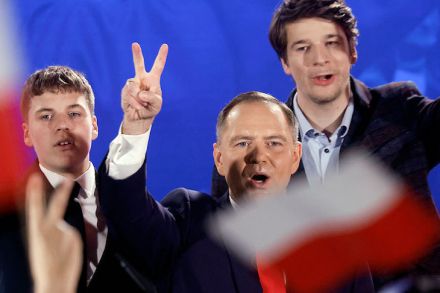
A change in politics is coming. Until now, the progressives were the ones with networks, stemming from Joe Biden's White House, to think tanks, and the legacy media. For the right, politics was not a fair fight. The internet has changed that. Karol Nawrocki’s win in Poland's presidential election marked a key moment in the translation of the new right from the internet to geographical reality. Donald Trump's backing was combined with that of Kristi Noem, the US Secretary of State for Homeland Security, at Poland’s first ever Conservative Political Action conference (CPAC). A change in politics is coming From the 1960s onwards, the progressives turned universities into a reproduction mechanism for their own political ideals in a 'long march through the institutions'.
Maths is stressful. That’s why it’s necessary

From our UK edition

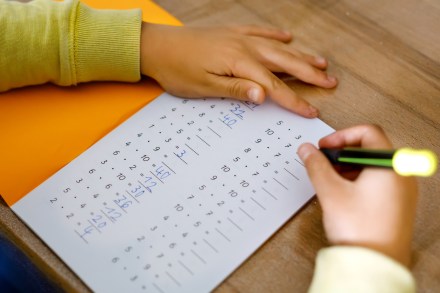
In the weeks since the Labour government came to power, we’ve gone from debating compulsory teaching of maths until age 18 to entertaining the idea that the times tables may be too stressful for children to memorise. My resilience, my determination and my empathy are largely products of being bad at maths When I was at school in Poland in the 2000s and 2010s, the response to such a suggestion would have been an eye-roll, or the blowing of a loud raspberry. The comment that ‘if you can’t have what you like, then you must learn to like what you have’ was commonplace, and maths was taken by everyone until age 18. I was at the top of my class until, at age 15, I began to fall behind in maths.

Poland’s MBA scandal has exposed our credentialling culture

From our UK edition

In February 2024, Poland’s Anti-Corruption Bureau opened an investigation into the ‘Collegium Humanum Warsaw Management University’, a ‘Private Management School’ opened in 2018 by a man now (for legal reasons) referred to only as Paweł C. That same month, Paweł C was detained by the Public Prosecutor’s Office on suspicion of issuing diplomas in exchange for personal financial gain. Today, the desire for the appearance of wisdom is often greater than the desire for wisdom itself. Poland has an interesting relationship with academic credentials. The Collegium Humanum website boasts of offering ‘prestigious degrees’, including cut-price three-month MBA programmes marketing themselves with the words ‘save 6,200 zlotys and almost a year of studies’.

Poland’s rejection of conservatism isn’t quite as it seems

From our UK edition

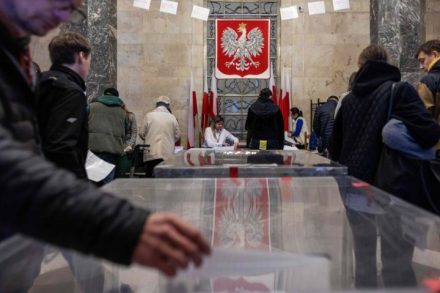
Poland looks set to head into a month of intense coalition-building. The exit poll for the country’s parliamentary election on Sunday showed Jarosław Kaczyński’s Law and Justice party with the single biggest result of 36.8 per cent, but it still fell short of being able to form a government by itself. Donald Tusk’s Civic Coalition gained 31.6 per cent of the vote, followed by the Third Way with 13 per cent, the Left with 8.6 per cent, and Konfederacja with 6.2 per cent of the vote, respectively. The late poll released around 8 a.m. Polish time, which took account of around half of the election’s overall result, remained broadly consistent with these results. The historic voter turnout of 72.9 per cent underscored the importance of this election to Poles.

Poland’s history will play a vital role in its election

From our UK edition

On 15 October, Poland goes to the polls. The Polish people must choose between two narratives for the country, each inspired by a different era of history. For the ruling Law and Justice party, the Second World War has become a key theme of its parliamentary election campaign. This came about after the question of German reparations was revived by an exhibition on Polish war losses presented in the British parliament last month. Discussing a recent Polish radio poll which revealed that 58 per cent of Poles support war reparations, Arkadiusz Mularczyk, the Polish Secretary of State for Europe maintained that Germany, the aggressor, was ‘given the privilege to choose to which victim states they provide compensation and how much’.

The strange intimacy of flat-sharing

From our UK edition

When I was younger, I dreamed of being a Jane Austen heroine. Nearly two decades on, in my late twenties, I am living in the guest room of a married older cousin in a leafy suburb of London, house-hunting in the middle of a housing crisis, waiting on a security clearance for a public-sector job, and wending my way through a dizzying array of balls, dinners, and public talks while I wait, observing a long-decaying society in the fullest bloom of its collapse. The 1990s dream of single professional womanhood, complete with uptown apartment, financial independence, and unlimited opportunity has been unmasked as an illusion, while the underlying realities of the world remain as they always were. Doing things alone is difficult.

Poland’s burgeoning alliance with Britain is bad for Putin

From our UK edition

Poland and the United Kingdom have been allies for years. But, since the outbreak of the Ukraine war, that union is becoming stronger. This week, the UK government announced up to £10 million in funding for a joint UK-Polish partnership to erect two purpose-built villages in Lviv and Poltava to shelter more than 700 of Ukraine’s most vulnerable displaced people. The UK-Polish partnership will also provide £2.6 million for power generators to serve some 450,000 people in schools, hospitals, and community centres in retaken and front-line areas, and up to £2.5 million distributed in partnership with the Red Cross to support those suffering under extreme weather conditions.

How Poland is reinventing Euroscepticism after Brexit

From our UK edition

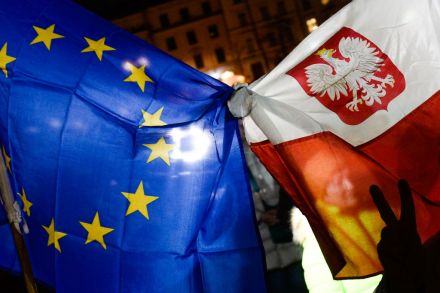
With Britain leaving the EU, Brussels is adopting a new assertiveness – but Poland and Hungary are fighting back. The two countries are plotting a strategy of vetoing the EU's latest budget because of a mechanism attached to it allowing the bloc to withhold money if a country falls short of its standards. Poland and Hungary fear that this measure could leave them vulnerable if Brussels doesn't like their domestic legislation. But this drama is about more than just money – it also shows the direction Euroscepticism is heading in after Brexit. Without Britain's influence, Euroscepticism is now beginning to take on a new form – more cultural, and less economic.