Spectator Life

Spectator Life

An intelligent mix of culture, style, travel, food and property, as well as where to go and what to see.

My teenage Interrailing adventures

Dante’s Beach, Ravenna In my life I have nearly killed myself mainly with cigarettes and alcohol and dangerous journeys into the night. I have experienced what awaits you in those places but it is not the sort of thing you can easily talk about or even put into words. It is perhaps too secret. I am also usually skint, so all in all I do not exactly fit the bill as a solid and reliable father figure who commands respect. Yet I have six children, aged nine to 21, who live with me and their Italian mother, Carla, and I try to do my best. We have been talking about whether we would allow two of our daughters Magdalena (16) and Rita (15) to travel round Europe alone for a month on Interrail tickets.


The wonder of wine from the Mosel

Conservatives used to be good at inspiring a mass membership, underpinned by organisations. Before the first world war, the Primrose League had a million members. Shortly after the second war, the party’s membership, including the Young Conservatives, reached three million. This is partly explained by the social mores of the day. The range of available leisure activities was much smaller, there was no television, and parents were happy for their daughters to join the YCs, the assumption being that the girl would meet a nice type of young man. It is easy to understand why German oenophiles insist Riesling is the greatest grape of all All that is redolent of a vanished age. But this has consequences. Traditionally, local associations, including YCs, were the party’s foot soldiers.

In praise of anachronisms

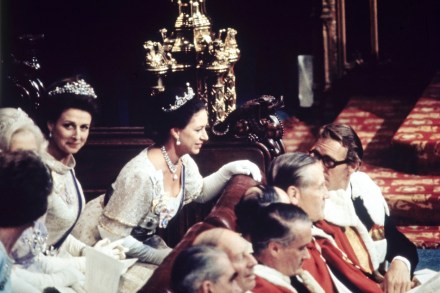
Do you know what an anachronism is? They’re very clear in cultural terms: Shakespeare’s clocks in Julius Caesar, for example. But in historical terms, it’s a different matter. When His Majesty King Charles III was crowned, the online scoffers were quick to mobilise themselves. One enthusiastic Jacobin tweeted that the enthroned, orbed and sceptred sovereign was ‘insane’, an ‘anachronism’. Out the scoffers troop, reliably, at every State Opening of Parliament. (And quite right too: mockery is a vital part of a successful polity). ‘How Ruritanian!’ they sneer (not quite grasping that the Ruritanians were copying us. And also, er, fictional.) The jeerers usually finish by wondering why we can’t be a grown-up country, like that entirely stable republic, France.

In defence of true crime

I recently listened to a 13-part podcast called Who Killed Emma?. It’s a gripping piece of work – a BBC investigation into the murder of 27-year-old Emma Caldwell in April 2005. Emma was a heroin addict and a prostitute on the streets of Glasgow. She was strangled and left for dead in a remote wood. Is it so terrible to be interested in these killers and their deeds? I don’t think so I’d recommend the podcast to any fan of true crime. And I’d also expect the scorn of those who deplore this highly successful genre. People who are inclined to say things like: ‘How can you be so voyeuristic? Why do you care about these monsters who kill? I want nothing to do with those despicable programmes and podcasts.

Why I adopted a retired guide dog

While ambling along a quiet beach with my husband near our home, our attention was caught by a water skier in the distance. As we stood watching him zip at high speed across the bay, we were interrupted by a gentle nuzzling at our legs. My husband and I were being greeted by a youngish black Labrador who then stood stock still, gazing up at us. Although we recognise many dogs in our area, we hadn’t seen this fine-looking companion before. Given his keenness to make our acquaintance, we said hello and patted him, trying to discern his message, before a woman arrived and apologised. No need, we said. The woman explained that the dog had – er – prematurely left Guide Dogs’ puppy school due to his – um – free spirit. We couldn’t help but laugh.

My battle with Alexa

My first brush with Artificial Intelligence was the Furby – that hideous speaking Gonk with eyes that blinked. You could hear the cogs turning. It felt basic, even for the 2000s. My techie ex got it for me as a birthday present. Like babies, this infant technology responded to clapping. It was weird and dull. Having exhausted its repertoire, I discarded it beside the sofa. One night, weeks later, we were sitting together and heard the whirr of its eyes opening, and it just said, the once, clearly in its strange little voice, ‘Boring’. We laughed. That was as good as it got. Alexa is not sexy like my old satnav, who sounded like Joanna Lumley as a bored dominatrix Alexa, though, is the real deal: my android in a can, my useful housemate. I consult her often.

Nobel winners are strange. I should know, I’ve met three of them

To meet one winner of the Nobel Prize for Literature would be seen by most bookish nerds like me as a real privilege; to meet two as extraordinarily lucky; but to enjoy extended encounters with three is surely very heaven. Such, however, has been my fortunate fate. The Nobel Prize for Literature is the world's most prestigious – and, as it comes with a hefty cash bonus, the second most lucrative – award for fine writing. Inaugurated at the dawn of the 20th century by the Swedish industrialist and inventor of dynamite, Alfred Nobel (to atone for a lifetime manufacturing munitions) the prize is one of five awarded annually every autumn by the Swedish Academy. The others are for physics, chemistry, medicine and – most controversially – peace.

I’m glad my wife had a medical emergency at sea

My wife had already been given morphine and they had just topped her up with ketamine. She was now so high she didn’t seem even to know where she was. And this was probably a good thing, given she was strapped to a stretcher on the rear deck of a ferry in the Bay of Biscay, 100 miles off the French coast, and about to be hoisted some 75 feet into the night sky to a helicopter that was struggling in an increasingly stiff wind. I asked her what the flight had been like. She said she had been so out of it she thought she was appearing in a remake of Apocalypse Now The reason for all this drama was that she had abruptly dislocated her hip as we sailed from Portsmouth to Santander. Before I relate what happened next, though, some background.

A tip for my favourite flat handicap of the season

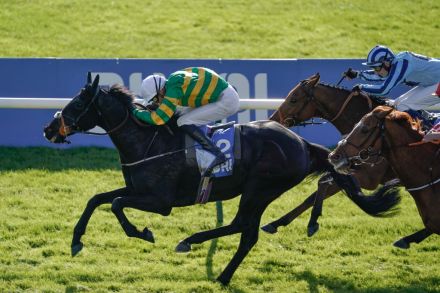
My favourite flat handicap of the season is the Club Godolphin Cesarewitch at Newmarket on 12 October. I have a good betting record in the race but this year the ante-post market is complicated by the fact that the brilliant Irish trainer Willie Mullins has entered no less than ten horses in the race. As always, the Irish runners, particularly those from the Mullins yard, are likely to have a big say in the outcome of this marathon contest which is run over two miles and two furlongs, and which therefore attracts lots of dual-purpose horses with decent hurdling form. The main problem is that Mullins keeps his cards close to his chest on his race plans and some of his best staying handicappers will go for the more valuable Friends of the Curragh Irish Cesarewitch two weekends earlier.

Labour should work with schools, not tax them out of existence

Keir Starmer insists his plan to place VAT on independent school fees is not ideological. It’s a ‘difficult decision’, he says, but necessary to raise revenue which will be used to hire 6,500 teachers for state schools. He wants the independent sector to ‘thrive’. Few would deny that state schools need better funding, but it is important to question whether the policy will be successful at raising money and also to examine what a thriving independent sector looks like, how it can contribute to education more broadly – and how the VAT plan threatens all that. Labour has claimed for some time that the policy would raise £1.7 billion. This initial figure was based on a 2011 Fabian Review article that simply calculated 20 per cent of the sector’s fee income.

The real threat to schools? Falling birth rates

Labour’s proposal to impose VAT on private school fees will, we are often warned, lead to state schools becoming overloaded as parents withdraw their children from the independent sector and try to find alternative arrangements. That may turn out to be true in some areas in the short term, but in the longer term there is a different problem facing the state and independent sectors alike: a falling population of school-age children. It isn’t excessive class sizes which threaten to be an issue so much as shrinking classes, leading to school closures and amalgamations with other institutions. London classrooms appear to be emptying – in 2022, 15.5 per cent of primary school places were unfilled For nursery and primary schools in England, pupil numbers peaked in 2019.

Why state schools need old boys’ clubs too

Ask a certain type of class warrior about the old boys’ network and they’ll tell you of ruddy-faced men in club ties, offering each other’s offspring summer internships. Or perhaps they’ll talk of thrusting bankers, who as children shared showers and a chilly dormitory, plotting to hire old school friends over more deserving candidates. Wink wink, nudge nudge, chortle chortle. What websites like ToucanTech and Gravyty have developed is essentially social media in a school tie There is probably still a little bit of truth in that. But in the past few years, it’s become much easier for any school to run an alumni network. Many independent schools, and an increasing number of state schools, have built dedicated websites where former students can find one another.

Religious schools will be hit hardest by Labour’s VAT tax raid

Imagine the government pledged to introduce a 20 per cent tax rise on ‘bankers’. Then imagine that, when the details were announced, the new tax made no distinction between HSBC executives and lowly bank tellers on £19,000 a year. Furthermore, imagine that the public debate failed to mention the people who were going to suffer most from the policy; that commentators argued over whether the tax rise was technically workable, while ministers self-righteously declared that they were sure the richest people in the country could cope with paying a little more. Far-fetched? Yes, but not a million miles from Labour’s proposed imposition of VAT and business rates on independent schools.

The toddlers being prepared for the seven-plus exam

The feverishness of the private prep-school market in London has reached such a pitch that children in the nursery class at Eaton House Belgravia are being prepared for the seven-plus from the age of two. ‘Some of them are still in nappies, and some of them still need a nap,’ the headmaster Ross Montague tells me. ‘We have folding camp beds, and our lovely nursery team of six teachers deal with that.

Keir Starmer is blind to the brilliance of private schools

Despite protestations from every quarter, Sir Keir Starmer will press on with his malicious plan to slap VAT on private school fees. I can only assume he’s doing this because he believes an excellent education, stemming from hundreds of years of tradition, is entirely undesirable. Look, there’s no question about it. Our private schools are the cat’s pyjamas. They attract discerning parents from all over the planet, even from New York, that bastion of elitism, where bankers and lawyers duke it out to hire Juilliard grads to teach their four- year-olds the violin. Recently, I met a financier from that city. So enamoured was he of London schools that he upped sticks and transferred his entire family. The spectre of an extra tax is as nothing to him.

Can school rugby survive safety concerns?

The look on the face of A&E staff was one of horror and disbelief. ‘He’s playing contact rugby – at eight?’ I nodded, my son Gus’s left arm hanging uselessly by his side, his face white and pinched with pain. Later, after we emerged from the X-ray and plaster rooms with a diagnosis of a micro-fracture to the elbow, one of the nurses from reception caught up with us. She was so concerned that she’d gone on to the RFU website, which confirmed that contact is indeed legal from Year 4. (Although the spear tackle that Gus’s friend had executed definitely isn’t.) ‘Striking a child outside of sport is abuse, but striking a child in sport is socially acceptable’ Our sons’ prep school, like many others, switches from tag to contact rugby at the start of Year 4.

The pitfalls of the Accelerated Reader programme

To my enormous pride, my six-year-old daughter is an excellent reader. In Reception, she raced through the colour-coded chart of Biff & Chip books with ease and wound up bored. So bored that she took to jumping off trees with increasing exuberance each playtime. She needed to be stretched, the school decided, with only a hint of exasperation. Stretch her we did. That summer, we read T.S. Eliot’s Old Possum’s Book of Practical Cats aloud, laughing at the names Bombalurina and Macavity. We read Eleanor Farjeon’s Kings and Queens and wondered at how we were all Elizabethans. We read The Diary of Anne Frank and thought about annexes. We read Judith Kerr’s magisterial When Hitler Stole Pink Rabbit and she packed her own evacuee suitcase.

What the Cass Review means for schools

When the Cass Review was published in April, many of us working in schools heaved a sigh of relief. For many teachers the muddle surrounding the position of transgender children and those working with them caused serious concern. A maths teacher in Swindon was sacked for addressing a student as ‘she’ and writing her ‘dead name’ on the board, even though she/he was asking to be entered into a girls’ maths challenge. Most teachers are in the job to impart knowledge, to encourage thinking and to play a part in guiding a child towards adulthood. We are not there to judge, mock or belittle. But we found ourselves increasingly confused. How much should – or could – we tell the parents?

School portraits: snapshots of four notable schools

Elstree, Berkshire Elstree – which educates boys and girls from three to 13 – is nestled in 150 acres of stunning countryside near Newbury in Berkshire. The school, which celebrated its 175th anniversary last year, says that its aim is two-fold: ‘to find out how a child is intelligent rather than how intelligent a child is’ and to teach pupils that ‘effort is king’. From Year 4 onwards, children can choose to flexi or weekly board and from Year 5 pupils are taught by individual specialists in all subjects from Year 5, compared with the usual Year 7. Although Elstree is non-selective, school-leavers have received scholarships to – among others – Eton, Harrow, Radley, Marlborough and Winchester.

Tried and tested by the Common Entrance Exam

This is about something that did not happen to me at school, an exam I dreaded, but never had to take. It was the only examination that ever really worried me, and it was called Common Entrance. Do not confuse it with modern imitations bearing the same name. In those days, preparing for it involved (for me, anyway) translating English into Latin and French (a proper knowledge of irregular verbs and a wide vocabulary in both those languages was required). It also demanded thorny and tricky types of mathematics, an astounding grasp of largely Imperial geography – and a full knowledge of English history since the Conquest. I actually understood the jokes in 1066 and All That, for which modern children would need a decoder.

The no-bake bliss of icebox cake

Standing in the biscuit aisle of my local supermarket, I’m overwhelmed by possibilities. This isn’t unusual for me, but normally it’s fuelled by greed, and resolved by buying them all. Today I have to make a choice. I am making an American icebox cake, which requires a lot of one type of biscuits, and the structure and flavour of the whole cake depends on them. As befits a no-bake dessert, the process of making it is a cinch The problem is that the three most popular biscuits for the pudding are not easily available here: graham crackers, Oreo thins and Nabisco chocolate wafers. I almost feel relief when I discover that the classic icebox biscuit, the Nabisco chocolate wafer, was discontinued last year.

Curiously understated: Porthminster Kitchen reviewed

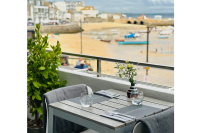
Porthminster Kitchen sits above Warren’s Bakery on St Ives Harbour, like a paradigm of the British class system in food. This happens everywhere, but it is particularly pronounced in St Ives, which is unlucky enough to be a site of pilgrimage for Virginia Woolf addicts – her childhood holiday home sits above the town, her lighthouse is on the bay – and other feckless Londoners. But the balance is long lost. Since the Tate Gallery arrived in 1993, Cornish natives, who used to live alongside artists – Barbara Hepworth, Patrick Heron – have left the old town (‘downalong’).

Which schools get the most pupils into Oxbridge?

Oxford and Cambridge have released figures showing how many offers they gave to pupils from schools in the 2023 Ucas application cycle. We have combined the figures in this table. It shows how well state grammars and sixth-form colleges compete with independent schools. Over the years, both universities have increased the proportion of acceptances from state schools: 72 per cent, up from 52 per cent in 2000. Of the 80 schools, 29 are independent, 29 grammar or partially selective, 17 sixth-form colleges and five are comprehensives or academies. (Schools are ranked by offers received, then by offer-to-application ratio. If schools received fewer than three offers from one university, this number has been discounted due to Ucas’s disclosure control.

The timeless beauty of Shropshire’s canals

Shropshire is a strange county, little known by those beyond its border, and perhaps that’s part of its appeal. It not only has no coastline, but no city officially either. Phone cover is shaky and transport links sparse (at some times in the day, only one bus every two hours will leave my market town, and they cease abruptly around 6 p.m.). But what it does have are medieval towns, lush green landscapes, and enormous numbers of farm animals – cows, sheep, and horses (for someone coming, as I do, from relatively arable East Anglia, this has a certain H.E. Bates charm to it). The town I’ve moved to, built on a canal, has a livestock auction house on the outskirts, the lowing of cows-for-sale emanating through the carpark outside.

Gen-Z mean girls are aggressive and progressive

When Black Lives Matter created the figure of the Karen, it was a sign of that movement’s darker, bullying qualities. What exactly was wrong with a white middle-aged woman who asked to speak to the manager when things were unsatisfactory? The answer seemed to be in the white part and the woman part, and perhaps also in the middle-aged part. In short, the Karen was a racist, sexist, ageist construct, and as a middle-aged white woman myself, who makes her dissatisfaction known from time to time, I felt extra defensive. But if that original Karen caricatured the wrong person, then there are some modern female types that deserve closer scrutiny.

How to survive the start of the school year

At long last, the day has come. After nearly two months of summer holidays, institutions beckon their children back for another school year. The television will resume its status as a post-school treat rather than an indispensable tool to fill the dead hours between events. The kitchen will no longer resemble an all-day canteen, and the house will take on the solemn quiet of the middle of the day. But this kind of peace is only won after a great deal of preparation. First up, school shoes. Unfortunately, children grow at a disproportionate rate to your bank balance. This means that the start of the new school year heralds the annual cash haemorrhage in Charles Clinkard shoe shop or similar.

The rise of the rogue bouncer

Bouncers – or ‘door supervisors’ – are a pillar of the ‘British night out’. They can sneak you into an exclusive club or send your teeth skating across the pavement with their Wreck-It Ralph fists. They can take a selfie with you and call you ‘mate’ or they can hit on your sister and emasculate you on your 19th birthday. We’ve all tried to sneak past them, to argue with them, to convince them that your best friend ‘is like that normally’ and ‘definitely not throwing up in his mouth right now’. We’ve all tried to high-five them. We’ve all been scared of them. We’ve all seen them hit a posh bloke called Hugo for saying ‘My daddy can buy this place.