Spectator Life

Spectator Life

An intelligent mix of culture, style, travel, food and property, as well as where to go and what to see.

Inside the secretive world of tutoring

‘There is absolutely no need for any child applying to our school to be tutored,’ said the headmistress of a prestigious London day school during the Q&A session. Relieved, I left the hall to wander around the booths in a nearby room. I was struck by the many tutoring agencies, offering advice, courses and books on how to boost your child’s chances of securing a place at an elite school. In light of the headmistress’s earlier comment, I couldn’t help but recall the famous words attributed to P.T. Barnum. ‘A sucker is born every minute.’ The majority of applicants are tutored to the hilt Not long after, I found myself on a tour of a reputable school for possible 7+ entry for my son.
The finest Rhône I have ever tasted

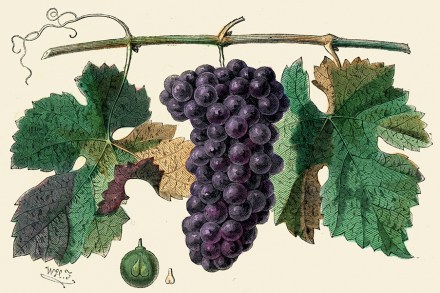
The medics would have one believe that alcohol is a depressant. That may be their conclusion drawn from test tubes in laboratories. Fortunately, however, it bears little relation to real life, which is just as well. The world has rarely been in greater need of antidepressants, in every form. One tries to tease American friends out of their gloom, reproaching them for taking their independence too early. Last time I attempted that, it did not work. ‘If Washington and Jefferson had foreseen Trump vs Harris, they would have asked George III for forgiveness.’ The 2014 Hommage à Jacques Perrin was just about the finest Rhône I have ever tasted In the rest of the world, there is a charming paradox.

I’m a Nisbets addict

It’s a bright autumn morning and I’m first through the doors. There are only two shops that can inspire such a disregard for my finances, and the other is Swedish. Today I find myself in Nisbets, and the first rule of Nisbets is not to bring a shopping list. If you’ve not heard of it, Nisbets is a catering supply shop, with outlets all across country. Every professional chef that has ever cooked for you will have spent a small fortune in Nisbets, some of it on their restaurant’s business card and likely even more from their own dwindling debit account. What is a hobby if not a means of spending all of your disposable income in ways that only make sense to a handful of other weirdos? Unlike online stores, buyers can go and fondle the utensils in one of their 26 shops.

Are you ready for the baby wars?

Such an awful lot of stuff is happening right now, even the keenest observer of social trends could be forgiven for missing a statistical milestone passed earlier this month. So here it is: at the beginning of October, it was revealed that, for the first time since the 1970s baby bust, deaths outnumbered births in the UK – meaning, in effect, that all of our population growth (about 680,000 for this year) came from immigration. The reason why is obvious. The boomers – i.e. people born during the great baby boom of 1945-1965 – are dying out, and they are not being properly replaced, thanks to a low total fertility rate (TFR, which equals ‘births per woman’). In England and Wales, TFR fell to just 1.49, far below the accepted replacement rate of 2.1.

An old codger’s guide to ageing

When I was in London recently, I arranged to meet some old university friends at the pub. Now in our late 50s, we’re getting quite decrepit. Hair – if we have any left – is grey or greying; waistlines are expanding. We talked about our deteriorating vision and hearing, high blood pressure, dodgy knees. None of us is retired yet, but it’s a topic that comes up more frequently. Can we afford it? What will we do with all that extra time? Almost no one reaches middle age without life delivering a few sucker punches Once we’d exhausted the gloomy prospects of impending old age, we returned to our favourite topic of conversation – our youth, particularly our university years.

Ozempic and the sugar coating of reality

Old or young, fat or thin, body-positive or body-embarrassed, man or woman, everyone with money seems to be on a weight-loss drug: Wegovy, Mounjaro or Ozempic (which although a diabetes drug, is so often used off label for weight loss that there have been supply shortages). In the past couple of weeks alone, two freewheeling 60+ titans of journalism – my Spectator colleague Julie Burchill and my Telegraph colleague Allison Pearson – have written about how Mounjaro has curbed their hedonism (the former) and unhealthy, ancient patterns around cake (the latter). If these life-loving ladies have taken the plunge, I thought, maybe similarly life-loving 42-year-old me should be considering it?

The cult of true crime 

‘I love serial killers,’ explained Megan, 29, from Kent. ‘People think I’m weird; my sister thinks I’m going to kill someone.’ She travelled to London for the weekend for CrimeCon, a convention dedicated to true-crime lovers. Here, for the eye-watering price of £700 for the two days, strangers can come together to meet the survivors of the UK’s most disturbing crimes, delve into unsolved cases with psychologists, criminologists, police detectives, and speak to victims’ families. At 9 a.m., within 30 seconds of arriving, I was in a talk on blood spatter analysis. People in hazmat suits stood in front of a 10 ft photographic banner depicting a kitchen covered in blood.

Why shouldn’t English teachers use video games?

English is in crisis. And no, not the sort of crisis caused by signs in supermarkets saying ‘ten items or less’. It’s caused by students hating their GCSE English Language lessons and refusing to continue the subject at A-level. A-level take-up has dropped by 40 per cent since 2012. You might giggle that this just throttles the supply of mournful Yeats-quoting burger-flippers but I think it’s a concern. There are all sorts of reasons that it’s worth studying English and only some of them are being able to quote Yeats. A very large number of young gamers engage voluntarily with text related to the games they love In response to this crisis, there seems to be consensus among teachers that GCSEs need to change.

British vineyards are suffering

Across vineyards in England and Wales, secateurs are being sharpened and buckets are at the ready as owners prepare for harvest. October is usually the month commercial vines give up their fruit before being whisked away to the winemaker–cum–alchemist who turns the juice into wine. As a former vineyard owner (I sold up in January) harvest was always a nervy time of year, enough to drive you to drink. It represents nine months of pruning, de-leafing, weeding, replacing vines, and chemical spraying (yes, pesticides), all assisted by the right amount of rain and sun at the right times. By October, the grapes have, hopefully, the optimum balance of acid and sugar to allow the winemaker to make a balanced, palatable wine with good body.

Cooking lessons from the wild

These days, it’s fashionable to get deliveries of vegetable boxes. Some do it through devotion to the dour idol of seasonality; the true worshipper knows they are buying a challenge. Many great recipes are created to deal with gluts and shortages. Digby Anderson, in his wonderful Spectator food column, pointed out that every good kitchen runs on the solera system. Cooking with what one has, rather than going out and getting what one wants, provides some useful lessons. Foraging for mushrooms is the best lesson of all. The result is both a challenge and, if you’re lucky, a glut too. Beneath every fallen leaf or umbral shadow lies possibility; one walks in hope and arrives, occasionally, in a state of grace.

Six bets for Ascot’s Champions Day

Foreign-trained horses are often overpriced when they come on raids to Britain, particularly when they are housed with the smaller stables. This may well be the case again tomorrow when I expect horses from the other side of the English Channel to make their mark on Champions Day at Ascot. Several French handlers will be looking for revenge from two weekends ago when the home trainers went down by eight wins to three against their British and Irish counterparts in feature races over ‘Arc weekend’ at Longchamp. The more rain that falls tomorrow, the better for the Jerome Reynier-trained FACTEUR CHEVAL in the Group 1 Qipco Queen Elizabeth II Stakes over a mile (Ascot, 3.15 p.m.).

How I found Love on Airbnb

‘My name is Love,’ typed the help assistant, ‘and I’m a member of the Airbnb community support team.’ I was using one of those chat boxes, where someone from the company you’re grappling with, embodied in a flashing cursor, interacts with you in print on a live chat screen. I am kind and polite, I thought. No one has ever really given me credit for that before Now, I’m a big fan of the chat box. The chat box works when all other forms of customer service fail. Chances are you will get much better service if you stop expecting companies to speak to you on the phone, and start letting them do what they do best, which is to solve your issue without speaking to you, because speaking to you is where all the problems start, let’s face it.

A teashop like no other: Sally Lunn’s Historic Eating House reviewed

Sally Lunn’s is a teashop in Bath. It sits in a lane by the abbey, and the Roman baths. Paganism and Christianity jostle here: Minerva battles Christ, who wins, for now. Sally Lunn’s calls itself ‘the oldest house in Bath’ (c. 1482). It is rough-hewn, with a vast teal window and pumpkins on display. The pumpkins might be plastic. I don’t know. Tourists queue in the hallway behind a large wooden cutout of a woman who might be Sally Lunn. She is a semi-mythical woman: the Huguenot refugee Solange Luyon, who came to Bath in the 1680s with brioche in her hands. No one knows if she really existed.

The secret to making great oysters Rockefeller

There’s nothing more intriguing than a closely guarded secret recipe. Coca-Cola and KFC are two famous examples, with the precise ingredients for the soda syrup and special coating kept in guarded vaults: the story is that those who hold the information aren’t allowed to travel on the same plane in case of disaster. Lea & Perrins, Angostura Bitters and Chartreuse all keep their products’ make-up secret. Making sure the butter is the brightest of greens is as important as any of the individual components Nobody knows the recipe for oysters Rockefeller – or at least nobody knows the original recipe. It was created in 1889 at Antoine’s restaurant in New Orleans, which still stands today, serving the same classically French food it did back in the 19th century.

The hypnotic competitiveness of Sir Ben Ainslie 

Sailing’s very own ubermensch Sir Ben Ainslie has every right to be considered the world’s most competitive bloke. Those who knew him as a teenager say he always had just two ambitions: to bag a sackful of Olympic medals, and to win the America’s Cup for Britain. Well he didn’t have much trouble becoming the most successful sailor in Olympic history, with four golds and a silver. The America’s Cup, however – the ultimate challenge for yacht-racers – is proving a bit trickier. The America’s Cup is pursued by some of the planet’s most steely-eyed sportsmen You might think this is a preposterous event, bearing little relationship to anything you or I might mean by the word ‘boats’ or ‘sailing’ and pursued by very rich men for indeterminate reasons.

Meet England’s octogenarian matador

It’s a sunny October morning at a bull-breeding ranch north of Seville, and 82-year-old Frank Evans is preparing to step into the ring. Born in Salford, Evans is one of the few British men ever to become a professional bullfighter, or torero. There is something of the retired rock star about him. He is dressed in the traditional matador’s outfit of black trousers, white shirt and red-and-black waistcoat. Although a little frail, he is toned. His thinning hair is dyed brown but still reaches his shoulders. ‘There are a million people in the local cemetery who’d love to have my eye problem’ Evans and I are here for a tienta – a practice session in a private bullring, in which young cows and bulls are assessed for breeding.

My life as a historian of the Great War

As the author of eight non-fiction books, I am most often asked why did I chose to write a particular title. The answer is that my books are usually written out of obsession: to slake my personal thirst for knowledge on the subject in question – almost irrespective of whether the topic would interest anyone else. Fortunately, most have. I started early, writing my first title, The War Walk: A Journey Along the Western Front, when I was in my twenties. This, my most personal book, was a homage to my late father, Frank Jones, a very elderly dad who had been in his sixties when I was born.

Private schools brought this tax hike on themselves

It’s the season to do the rounds of senior schools and my 10-year-old son and I have been jostling through the crowds to glimpse science labs and drama workshops for the past month. Open days for the top state schools have been heaving. At a state boarding school rated ‘outstanding’ by Ofsted (boarding fees aren’t subject to VAT), the head apologised for lengthy queues to register, get coffee, join a tour. Another 200 people had turned up in addition to the 600 booked in. Among them, I spotted several families whose children are currently at local prep schools. Labour starts charging VAT on school fees from January. But an estimated 10,000 children have already been taken out of independent schools, mine among them.

I think we’re turning Japanese

Japanese culture is rapidly colonising the West, from our theatres to our cinemas, to our streaming services and our bookshops, to the food we eat and the clothes we wear, even the footballers we cheer on. This year alone I must have written half a dozen articles on different areas where Japanese culture is making its mark worldwide (and especially in the UK). Some are quite surprising, such as novels. By one estimate, a quarter of the two million translated novels sold in the UK last year were Japanese. It has become almost de rigueur to be seen reading the latest volume by Banana Yoshimoto, Sayaka Murata, et al.

The end of the car is now

I love driving. When I say ‘driving’, I obviously don’t mean crawling along the North Circular at 2.7 miles per hour, in a state of zombified inertia, mutinously wondering why Keir Starmer’s voice is so weirdly soul-sapping. And when I say I love driving, I don’t want to claim I’m any kind of petrolhead. I have no idea what a carburettor is, and the same goes for crankshaft, torque, drift, and understeer. In fact, I’m not totally sure what a petrolhead is. I wonder if we are overlooking a much smarter solution, which can be found in Phnom Penh No, when I say I love driving, I mean what I am doing now: speeding across majestic British Columbia in a massive great motor, eating up the North American miles on a proper North American road trip.

The nonsense of Frieze

And so ends another Frieze, where art lovers from across the globe gather to admire each other’s horn-rimmed spectacles, regulation black attire and wacky hairdos. Like so many creative events held in the capital, Frieze isn’t so much about looking at interesting artwork as being seen to be looking at interesting artwork. The fair is held annually at a temporary hangar in Regent’s Park and is essentially a spectator sport where leggy blondes eye up wealthy collectors on the make. Don’t even attempt to crash the Deutsche Bank Wealth Management Lounge. When will contemporary artists get it into their diamond-encrusted skulls that the public are immune to their shock values?

Staying at the King’s Transylvanian home

We hit downtown Zalánpatak at rush hour, and it was gridlocked. True, you get used to livestock on Romanian roads; the 30-minute gravel zig-zag from the nearest main road had brought us up against stray dogs, horses and carts and free-range pigs. A shepherd huddled near the roadside in a sheepskin poncho – crook in one hand, iPhone in the other. But it’s when you’re sitting immobile on a village street with a herd of cows pushing past on either side – when you feel the vehicle rock as bovine flank thwacks against the car door – that you start to grasp why King Charles III might have a bit of a soft spot for the place.

Admit it, roast dinners are bad

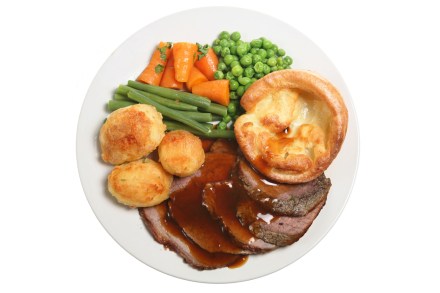
Sunday lunch is a bit like the Edinburgh festival. People make a big thing of it, it’s considered a British treasure, and I am meant to book it, go to it, and like it. But I don’t. If Edinburgh is forever associated in my mind with glowering edifices of grim dark stone, hostile chilly sun between spells of overcast cold skies, the worst comedy and theatre I have ever seen, and paying a king’s ransom for a nasty little room a 20-minute taxi ride out of town, then Sunday lunch is, for me, forever intertwined with desperately wishing to be somewhere, anywhere else. Maybe even the Edinburgh festival. Sunday lunch is what people traditionally do when they don’t much like each other, or at least don’t know how to talk to each other.

Science needs Russians

Something extraordinary has happened. It wasn’t just the docking of a SpaceX capsule at the International Space Station, some 250 miles above the Earth, on a mission to rescue stranded astronauts. It was the sight of Americans and Russians embracing. As the new arrivals – Nick Hague and Aleksandr Gorbunov – appeared through the hatch, it was hugs all round. There are now four Russians and seven Americans manning the ISS. Since the outbreak of the war, collaborations with Russian scientists – measured by the co-authors named on papers – have dwindled across the West Then consider that this happened just a few days after the International Chess Federation voted to extend its ban on Russian grandmasters competing internationally. That’s got to hurt.

Alan Clark’s wines were as remarkable as he was

Où sont les bouteilles d’antan? For that matter, où sont les amis with whom one consumed them? These autumnally melancholic musings arose because a young friend asked me about Alan Clark. He had been reading the Diaries. Were they truthful? Was Alan really such a remarkable character? The answer was simple. An emphatic yes, on both counts. I suspect that I speak for most of his muckers when I declare that I have never met anyone who was more fun. The 1967 Yquem tasted like a Greek temple melted down in honey. Alan served it as a house wine If Alan was of the company, the conversation might well have a whiff of sulphur. But one could rely on spice and scintillation. Alan’s very walk presaged mischief.

The ladies who punch

Double jab, right, hook body, duck, right… Right, left, right, upper, four hooks… Ten straight punches… And ten more… Twenty roundhouse kicks… Now the other leg… When I tell people that I’ve started kickboxing, they tend to think they’ve misheard. It’s true I’m not who one might think of as a typical fighter. I’ve spent my life working with books and now along with the books I juggle three kids and a dog. The closest I usually get to fighting is when I drag my whippet away from a scuffle in the park, or get elbowed out of the way in the school bake-sale scrum.

An ode to lamplighting

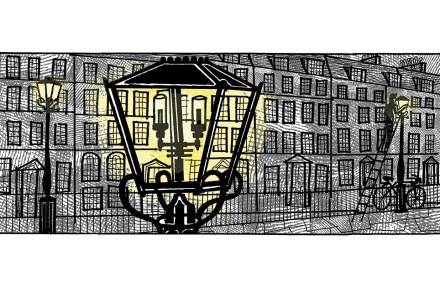
I was growing impatient with a recent blog by Sam Altman, who runs OpenAI, promising progress, universal prosperity, ‘a space colony, and the discovery of all of physics’ through artificial intelligence. I won’t go over that ground now, because I suddenly sat up at a passing remark he made: ‘Nobody is looking back at the past, wishing they were a lamplighter.’ Stephen’s task for Paddington council was to cycle round with his ladder fixing street lamps on the blink I’m not so sure. I used to know a lamplighter and I miss his company. His name was Stephen Fothergill, and in the 1980s he was a welcome sight in the French pub in Dean Street, Soho, late in the evening.

What horror does to us

Tonight, the BBC will be broadcasting what is – to my mind – the scariest film ever made. Indeed, I would go further than that, I would say this movie is the scariest human artwork in any form – and that includes novels, plays, stories, the lot. This film beats them all, and by a distance. What is it? Of course, I’m not going to tell you that straight off, that would break all the rules of scary suspense writing. First, I want to examine the underlying questions: why do we like being artificially scared? And what makes a particular ghost story or Dracula remake genuinely frightening? The questions sound simple; they are not.

I’m finally a proper villager

I knew that my adjustment to living here was complete when, this morning, I hit the send button of an email. I had written to the parish council suggesting that the local church change its street signage. This is, of course, the critical moment when the character undergoes a metamorphosis into Flora Robson. ‘The board is in a shade of blue one associates with a major hospital,’ I wrote in mild protest. I was about to file him away as a bisexual in search of his first same-sex experience I suggested a smaller sign in heritage-green. The clerk of the parish council obviously runs a tight ship because she responded within the hour. A new sign was being ordered, she said, and thanked me for my interest. Naturally, being English, I replied thanking her for replying to me.