Roger Kimball

Roger Kimball

Roger Kimball is a US columnist for The Spectator, the publisher of Encounter Books and the editor and publisher of the New Criterion.

Is this the end of the American Experiment?

So how did I do? Pretty poorly. Yesterday, I predicted that the GOP would hold the Senate and maybe pick up a seat or two. In particular, I said that I thought bizarro candidate James Talarico would lose to Ken Paxton in Texas and that Abdul El-Sayed would lose to Mike Rogers in Michigan. Wrong and wrong again. I thought Susan Collins would prevail in Maine – somehow, she always had – but the former logger Troy Jackson crushed her by nearly 10 points. I understood that the party apparatchik Sherrod Brown was likely to best Jon Husted in Ohio, but I thought that Husted might pull it out. No such luck. Then there was Alaska. That race is still undecided as I write. I think the one and only Dan Sullivan will prevail – he’s ahead by a hair – but who knows?
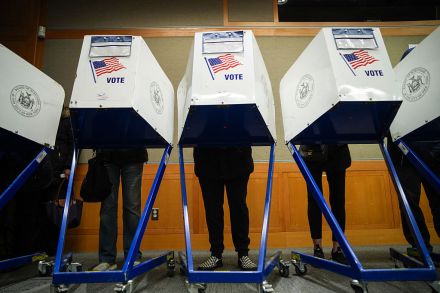
And my final prediction for the midterms is…

I’ll be weighing in again on the midterms early Wednesday. But since this is the season of prediction, prophecy, punditry and prognostication, I thought I would take my cards, which I have grasped here in my hand, and lay them on this virtual table. The only thing certain is uncertainty – except when we are talking about the experts I see that the latest New York Times/Siena poll has the following numbers for the Senate race: Alaska: D+2, Iowa: D+1, Michigan: D+11, Ohio: D+5, Maine: D+6, Texas: D+7. Amazing! The people who would respond to a pollster that uttered the name “New York Times” report their preferences in such a way that the Democrats are ahead in not one, not two, but all these tightly contested races. “Tightly contested?

Good wine comes from struggle

Oliver Cromwell would not have liked John Wilmot, 2nd Earl of Rochester. Born in 1647, two years before Cromwell engineered Charles I’s final appearance at Whitehall, Rochester was a shooting star in the Stuart Restoration under Charles II. His father, Henry, was a Cavalier who had been instrumental in arranging Charles II’s escape to the continent after Cromwell’s regicide. For services rendered, Henry was created Earl of Rochester in 1652. Rochester inherited the title upon his father’s death in 1658. You cannot read about either Rochester without soon encountering the word “dashing.” Both were charismatic, hard-drinking, courageous adventurers, epitomes of the Cavalier spirit. Henry, who died at 45, has receded into the footnotes of English history.

Midterm rally

Beware the false electoral prophets

As the 2026 midterm election jamboree entered its final days, the punditocracy has been treated to a couple of cathartic and possibly clarifying shudders. As I write, Elissa Slotkin, a Democratic Senator from Michigan, is scrambling to retrieve her standing after she told an interviewer that she favored having the deep state harass people who supported Donald Trump and the MAGA agenda. She didn’t put it quite like that, of course. What she said was: “I want young people coming out of school to say, ‘Should I go work for the Trump administration?’ I want them to be like, ‘Lord, that might be buying myself a ton of problems that I don’t want, and so let me avoid participating in that.’ I want that deterrence message sent.” “Deterrence,” eh?

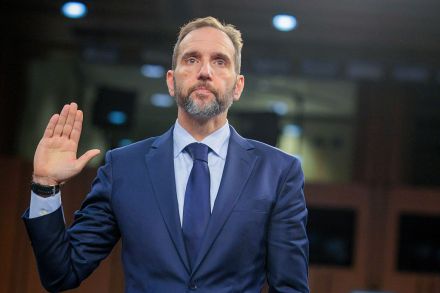
Jack Smith’s plot against the republic

Six hundred and thirty-nine thousand. Thanks to the indefatigable Chuck Grassley, we now know that that’s the number of individuals whose names Special Counsel Jack Smith hoovered up for Merrick Garland’s Department of Justice when Joe Biden occupied 1600 Pennsylvania Avenue. (“Occupied 1600 Pennsylvania Avenue,” it may almost go without saying, seems more accurate than saying “when Biden was president.”)  Senator Grassley has been terrier-like in pursuing evidence of wrongdoing by people like Jack Smith, Merrick Garland and their many confrères in the deep state, which is to say, the Democrat State. Grassley had earlier shown that nearly 5,000 GOP donor checks, mostly for piddly amounts, had been collected as “evidence” by Garland’s minions.

Jack Smith

Is the Trump phenomenon an anomaly?

I suppose you could say that the Trump decade began on June 16, 2015, when Donald and Melania Trump descended the golden escalator in Trump Tower to announce his candidacy for the presidency and the birth of MAGA, the “Make America Great Again” movement. There are, however, a few problems with that start date. For one thing, the Trump decade, which may have started then, did not stop when Trump took an extended vacation from the White House beginning on January 20, 2021. It continued running, like a television set blaring in another room, all through the Biden presidency. And now, in October 2026, the Trump decade has lasted more than a decade. Really, we are talking about the Trump era.

Who’s afraid of AI?

It’s not often that we get a ringside seat to the Birth of a Narrative. Usually, those overseeing the parturition are careful to manage the event offstage, away from the prying eyes of skeptics, spoilsports, and counternarrativists. There are walls of silence and moats of obfuscation to accompany the rollout. That helps keep everyone on message. There are media firemen assembled to extinguish the flames and wash away the reputations of questioners. That helps neutralize pests and quash doubts.  But with the sudden onslaught of the “AI will end humanity” narrative, the impresarios orchestrating the debut got sloppy. They knew their own lines. Artificial intelligence was the biggest threat to humanity since, well, since ever.

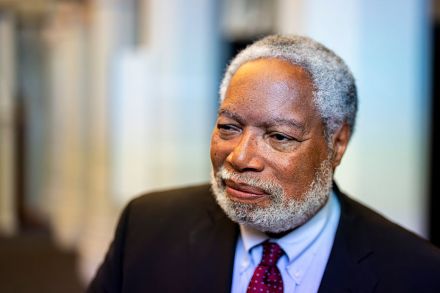
Lonnie Bunch’s long march through the Smithsonian

Lonnie G. Bunch III, the first black head of the Smithsonian Institution, is stepping down after a tenure of some seven years. NPR had the news: “In 2019, Bunch was named secretary of the Smithsonian, becoming the first historian and the first African American to hold the position.” The Wall Street Journal also got the memo: “The first Black historian to lead the world’s largest museum and research complex says he’s retiring and will leave by year’s end.” NBC looked behind the headline. “Bunch, the first Black person and first historian to lead the institution, has said he would have retired a year ago but felt he had to stay to defend the institution from the White House attacks, the person said.

Fraternizing with Les Aligoteurs

In the last installment of these cheery chronicles, I had occasion to mention aligoté, the second most widely planted white grape in Burgundy. I say “second most,” but it is a distant second. Only about 6 percent of Bourgogne is planted with that ancient grape, a crossing of pinot noir and gouais blanc, a nearly extinct varietal known as the “Casanova of Grapes” because it is a parent of scores of grape varieties. Until fairly recently, aligoté was second in another sense as well. It seldom ripened fully by harvest time and the resulting wine, though taut and full of mineral notes, tended to be a bit astringent. It’s usual fate was as the muscle behind the cocktail kir, the elegance being supplied by crème de cassis. Two things changed that: nature and nurture.

Midterms

The Democrats are both cynical and naive

At the beginning of his essay “Thank God for the Atom Bomb,” the literary critic (and World War Two Army veteran) Paul Fussell recalled a poetic advertising slogan he used to see on the sides of city buses. In life, experience is the great teacher. In Scotch, Teacher’s is the great experience. Not having tasted the potation named in the second line, I offer no opinion about the truth of the statement declaring its excellence. About the first line of the couplet, however, I must register a certain skepticism. Is experience “the great teacher” in life? An honest answer, I believe, should begin with the hoary qualification “that depends.

It’s DSA vs ICE in the battle of the acronyms

In the Battle of the Acronyms, perhaps no contest is more ferocious than the slugfest between the DSA – that’s “D” for dumb and “S” for commie, I mean “socialist” – and ICE (always excepting TDS vs MAGA). A wacko woman steers her car into an ICE agent. He shoots her. The media calls make up and tries to turn the dead woman into the second coming of Saint George Floyd. There was a warehouse full of outrage just waiting to be paraded at prime time but somehow the entertainment fell flat. Renée Good, the woman in question, didn’t have what it takes to triumph in the victimology sweepstakes. The anti-Trump media wept for a week and then went on to other wheezes. Nevertheless the Democratic Socialists of America have kept an eye on ICE.

DSA ICE

Drinking with Geoffrey Madan

Geoffrey Madan (1895-1947) was an English aesthete of the first water. Although he fought and was wounded in the Great War, his main passions were quiet: wine, old silver, and books, especially books. Madan was an accomplished classicist – he procured a schoolwide holiday while at Eton for his account of the establishment written in Herodotean Greek. He published no books. He did compile a large collection of aphorisms, mostly in English but many in other languages. A selection of these were published in 1981 by Oxford under the title Geoffrey Madan’s Notebooks. In one of the handful of entries Madan himself contributed to this chrestomathy, he described the collection as “an anthology of the forgotten sayings of great men, and the great sayings of forgotten men.

The Republican party’s secret weapons

Do the Republicans have a secret weapon they can deploy in the midterms? In fact, I think they have two weapons, one sort-of-secret, the other out in the open but somehow not quite recognized.  “That’s good,” you say, if (faute de mieux) you want the Republicans to win. Midterms, we’ve been told ad nauseam, almost always favor the party out of power. I believe that the last time the incumbent party won in the midterms was in 2002 when George W. Bush, riding the tailwind of public sentiment following the September 11 attacks by our Muslim friends, picked up eight House seats. Many of the most noteworthy Democrat candidates hail from la-la land At the moment, all the polls have the Dems leading by a comfortable margin.

Trump’s battle for sovereignty

Secretary of State Marco Rubio is on a roll. Docket his consistently robust responses to Hamas, Iran and NATO for future delectation. On July 13, he wrote a brilliant op-ed for the Wall Street Journal titled “Why We’re Dismantling the International Criminal Court.” Then, on July 20, the State Department released “Cuba: The Capital of 21st Century Communism,” a 64-page report detailing Cuba’s 40-year effort to infiltrate susceptible groups in the United States. As a prefatory summary notes, Cuba’s campaign was less about politics or economics than, at bottom, “a revolution against western civilization itself – waged, in part, via the novel and insidious method of persuading the children of the West to turn against their own inheritance.

Only cheats fear the SAVE Act

David Axelrod, Barack Hussein Obama’s chief strategist, was clearly worried about Donald Trump’s prime time speech about election integrity last night. Hyperventilating on X Tuesday, he warned that “If @POTUS really trots out Pulte, Patel and a crew of political apparatchiks posing as intel experts... to announce they've uncovered ‘evidence’ of foul play in 2020, it’ll only heighten fears that he'll claim an ‘emergency’ down the line and claim extraordinary fed power over elections. If so – and there are plenty of other signs of manipulation brewing – the most important battles of the midterms may be in the courts.” Let’s begin by considering Axelrod’s rhetoric.

trump save act

The Smithsonian hates America

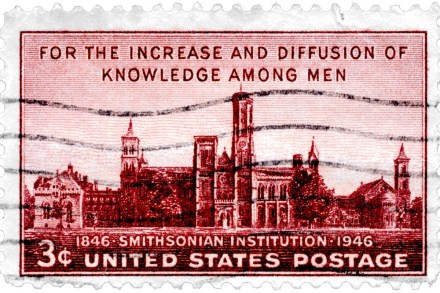
In the extensive coverage of this year’s July 4 celebrations in Washington, DC, it was often mentioned that 850,000 fireworks were detonated in the course of the evening. In fact, there were 850,001. For in addition to the extraordinary visual panoply on view there was a quieter but no less breathtaking detonation that day: the sobering 162-page report about the Smithsonian Institution issued by the White House’s Domestic Policy Council.

Drinking 2009 Mouton Rothschild at Butterworth’s

I have always wondered whether The Compleat Angler, Izaak Walton’s piscine classic, would have enjoyed its wide and longstanding recognition absent the antique spelling “compleat.” I somehow suspect that a book titled The Complete Angler would not have made the same impression, especially on modern readers. First published in 1653, the book went through many editions in Walton’s life and after. It is a charming, leisurely guide, “not unworthy,” as its original title page observed, “the peruſal of moſt Anglers.” (Those long “s”es add a little something, don’t you agree?) It is said that Walton, a staunch anti-Cromwellian, good fellow, was particularly fond of the saying “Study to be quiet.

Why is America’s radical left winning?

Why is America’s radical left winning?

After success in the New York democratic primaries for far-left candidates, President Trump says 'the game is on. Enjoy Watching.' Freddy Gray speaks to Spectator columnist, Roger Kimball, about how Trump plans to deal with the radical left, the lawlessness of New York under Mamdani, and how artificial intelligence is changing politics. Learn how to earn yield on gold, paid in gold, at Monetary-Metals.

Why socialism will fail

The philosopher David Hume warned us not to mistake “constant conjunction” for causation. It’s good advice, though it is not the sort of universal disturbance in the force that some philosophers, eager to jettison old certitudes, believe it to be. Hume himself eventually rejected that “pretended skepticism” as a juvenile affectation. Like the rest of us, he recognized that reasoning from induction, from observed realities, introduces us to that great guide in the cognitive adventure of life – probability. Don’t let the appearance of a black swan down under disturb you: good mental hygiene and faith in the soundness of inductive reasoning go together. I indulge in this preliminary expectoration (apologies to Søren Kierkegaard) because I arrived in London on June 22.

Why America is sounding the alarm about Britain and Europe

Back in November, the State Department warned that “mass migration poses an existential threat to western civilization and undermines the stability of key American allies.” In February, in his address to the Munich Security Conference, Secretary of State Marco Rubio expanded on that theme. After the Berlin Wall fell, Rubio noted, many in the West thought “the end of history” had finally arrived. Utopia was nigh. Western nations opened their borders, forsook spending on defense in order to bolster the welfare state and “outsourced” their national sovereignty. This was, Rubio warned, to ignore both human nature as well as the lessons of “over 5,000 years of recorded human history. And it has cost us dearly.

Henry Nowak