Spectator Life

Spectator Life

An intelligent mix of culture, style, travel, food and property, as well as where to go and what to see.

Why Roman gladiators were the first feminists

Chiselled out of stone in around the 1st century AD, the scene in this image gives a powerful snapshot of the excitement of gladiatorial combat. In this carving found in Turkey – once a key part of the Roman empire – the opponents face each other head-on, with a look of grim determination. From behind their curved rectangular shields, both appear ready to lunge with short stabbing swords. However, this gladiatorial fight differs from what you might expect in one crucial way: both opponents are women. Look closely enough and you will see the gladiator on the left has her long hair in a plait which snakes down to a bun at the bottom of her neck.

What does it mean to be British?

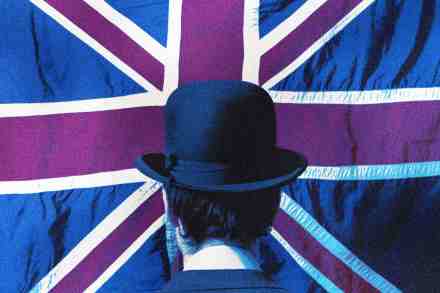
The comic writer George Mikes, who died nearly 40 years ago, knew he had made it when he received a fan letter one day from Albert Einstein. Mikes, the scientist said to him, was blessed with ‘radiant humour… Everyone must laugh with you, even those who are hit with your little arrows.’ Chief among Mikes’s targets were the British people, whom the writer – a refugee from Hungary – had chosen to spend the greater part of his life among. He had come to the UK on a visit in 1938 and wisely, given what would happen to his country in the years that followed, decided never to leave. Though it describes an England now long vanished, his 1946 book How to be an Alien, a comic study of the country and its foibles, brought him fame and acceptance.

Illegal rewilders are taking over the countryside

Hardly a month goes by without a report of guerrilla rewilders at work. Lynx released in the Cairngorms, wild boar on Dartmoor, beavers everywhere and, no doubt, before long, wolves and bears – if neo-Rousseauist guerrillas can find a ready supply and achieve it without being bitten.  Usually, these illegal releases of formerly indigenous-but-no-longer-native animals are in national parks, reinforcing my view that national parks give people a state-sponsored sense of entitlement to behave as they please on private land. The fact that the vast majority of farmers are against such reintroductions seems to give added incentive to the rewilding guerrillas. The extinction of family farms at the hands of Rachel from Customer Complaints is bad enough.

Boring jobs are good for you

More than one in five people in the UK is out of work at the moment. As lockdowns lifted, many people developed anxiety and depression – most of which can be alleviated by companionship, routine and having your own cash. What I can’t understand is young, fit people not working. From the age of 13, I stood in a cake shop every Sunday, boxing pâtisserie for affluent customers. The old lady who owned the shop would mutter for us to hurry up as there was a queue. It was a knackering job, being on my feet all day, and the owner didn’t trust her charges to work the till. So we had to hand the money to her, she would hand us the change, which we would then pass on to the customer.

Edinburgh has a snobbery problem – against the English

When I was at Edinburgh University a decade ago, a girl with a thick Surrey accent stopped me as I walked back to my room in halls. ‘Rah, have you been to the reeling society?’ she asked. ‘What makes you think that?’ I replied. ‘You’ve acquired a slight limp.’ ‘It’s the cerebral palsy, luv.’ They’re very forward, these English, I thought. Last week, Peter Mathieson, principal of the University of Edinburgh, claimed that Scots students were facing snobbery from the English. An alumnus, Dr Neil Milliken, had asked what Edinburgh was doing about ‘racial discrimination and class ridicule by self-perceived superior English incomes against native students’. He sounds jolly.

Tim Peake makes me cringe

He’s the best-known Briton ever to have boldly gone into space: the first to board the International Space Station, the first to carry out a space walk. Major Tim Peake even ran a marathon while in orbit. So why do I wince every time I hear his name?  When I was growing up, shortly after the Apollo moon landing, the portentous language of that mission – ‘The Eagle has landed’, ‘One small step’ etc – had permeated global consciousness. So when space travel was depicted in popular culture, in music and film, it was often with the atmosphere of an existential psychodrama – in Space Odyssey (Kubrick), Space Oddity (Bowie), ‘Rocket Man’ (Elton).

The comedy genius of John Shuttleworth

There is a certain comic archetype that is particularly British. The likes of Pooter, Mainwaring, Hancock, Fawlty and Brent are in a tradition – going back to Falstaff, perhaps further – of hopelessly optimistic yet socially oblivious dreamers. One such character is John Shuttleworth, created and played by Graham Fellows. For the uninitiated, John Shuttleworth is a retired security guard and aspiring singer-songwriter from Sheffield who lives with his dinner lady wife and two children, Darren and Karen. He performs mainly at hospices and drop-in centres, often for no more than his travel money. His career is inexpertly managed by his next-door neighbour with whom John enjoys a generally warm, though occasionally fractious, relationship.

Keep your paws off our cats!

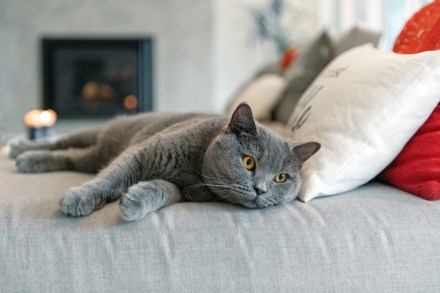
It’s open season on cats. Last month the Scottish Animal Welfare Commission (SAWC) floated the idea of 'compulsory containment of cats in vulnerable areas', and added that in some new housing developments felines could be banned altogether.  The report prompted a deluge of what I am going to call catphobia, for no other reason than that I’ve always wanted to coin a new word. There is an existing word for fear of cats (ailurophobia) but this isn’t that. What’s emerged since the SAWC report was published has, rather, been more like what I might call, if I were woke, a form of anti-cat racism. But that would be silly, and I’m not woke, so I’ll just call it cat hatred.

Love is blind? The truth about dating with a disability

Dimly lit bars are great first-date venues for most people: the seductive ambience, the candles, the gentle clink of a martini shaker. But they couldn’t be worse for a visually impaired dater such as myself. I was born with ocular albinism and nystagmus, which renders me blind in one eye and severely partially sighted in the other. Yet, stubborn to the end, I have persevered with sepulchral bars for well over a decade now. The results have been mixed. I’ve sat down next to the wrong woman when returning from the bathroom, got lost on the way to the very same bathroom and, on one occasion, spilt an entire Bloody Mary down the front of my date. Funnily enough, she didn’t want to see me again.

What happened to children’s hobbies?

Do kids still have hobbies? Maybe hobbies isn’t quite the right word. What I mean is a passionate interest in something fairly adult, something more than playing with toys. For example, a child might get precociously into theatre or birdwatching or medieval history and have a first taste of adult enthusiasm for something. I was into magic, meaning conjuring tricks. This seemed the most interesting thing about the world, the clear pinnacle of its complicated cultural array. Why wasn’t everyone fascinated by the fact that it was possible to perform acts of seeming wizardry? The magic bug bit me when I was about 11 – who knows why. Maybe it was my uncle doing a card trick, maybe Paul Daniels on television, maybe a basic magic set someone gave me. I had to know all about it.

The perfect genius of P.G. Wodehouse’s ‘never-never land’

Pelham Grenville (PG – or Plum) Wodehouse breathed his last on Valentine’s Day fifty years ago. As Evelyn Waugh saw it, Wodehouse inhabited a world as timeless as A Midsummer Night's Dream and Alice in Wonderland. Wodehouse himself said it was as though he was forever in his last year at school. It was, Waugh said, 'as if the Fall of Man had never happened'. In a letter to some admirers, Wodehouse wrote: The world I write about, always a small one – one of the smallest I ever met, as Bertie… would say – is now not even small, it is non-existent. It has gone with the wind... In a word, it has had it. But I have not altogether lost hope of a revival. Of course, that revival never came, and Plum died aged 93, just six weeks after he was so belatedly knighted.

Generation Bland: the inevitable rise of ‘Palentine’s Day’

As we approach with anticipation or dread 14 February, the day we traditionally celebrate love and all things amorous, a certain demographic will instead be observing a rather less passionate and altogether more bland occasion: ‘Palentine’s Day’. Commemorated on 13 February, this is apparently the date upon which to honour platonic friendships instead of romantic engagements – and it’s proving increasingly popular among Generation Z. It all started with ‘Galentine’s Day’, a celebration of female friendship invented by the character Leslie Knope in American political satire mockumentary Parks and Recreation in 2010. As the concept moved from comedy to real life it morphed into the gender-neutral ‘Palentine’s’ – lest anyone should feel left out.

Never write a book

I have just finished writing a book and am moping about the house at a loose end. The conventional advice to anyone thinking about writing a book is: don’t. Unless you’re one of the 1 per cent of authors who make 99 per cent of the money, it’s a mug’s game as far as making a living is concerned. Your cleaning lady earns more per hour. So my advice is only write a book if you have an alternative source of income. One of the hardest things about writing a book is stopping. The temptation to tinker persists until the publisher screams at you to stop and mutters that publishing would be a good business if it weren’t for the authors. Still, the end is in sight, and now I need something to do.

There’s nothing toxic about centrist dads

‘Centrist dad’, a term that has been with us for a decade or so, has never exactly been a compliment. In 2017, even Tony Blair – then still pretty close to being political toxic waste – disavowed the label, declaring: ‘I’m not a centrist dad.’ In that same year a chap named Matt Zarb-Cousin, a spokesman for Jeremy Corbyn – who astonishingly was the leader of the opposition at the time – described centrist dads as ‘middle-aged men who cannot come to terms with the world and politics changing.’ Zarb-Cousin added hubristically: ‘They think they must know better because they are older and wiser.’ (Fortunately the centrist dads did know better, and so did the country, rejecting Corbyn in 2019.

The delightful melancholy of an antiques shop

Antique shops are melancholy places. The deep leather armchairs, Anglepoise lamps and bamboo bookshelves. They ask questions: who sat, worked or read using these? Banal questions, possibly, but life is generally banal, and no less poignant for that. It’s not an unpleasant sort of melancholia. Quite the opposite. If I had to create a word to describe the feeling, I’d say it was melanphoria: ‘a state of intense excitement arising from a feeling of deep sadness’. One feels both a nostalgia for the lives of strangers and a sense of life’s possibilities. If this is abnormal, I would ask any amateur psychiatrists to write to The Spectator offices. I am physically unable to go into any antique shop without buying something. It is rarely a grand purchase.

The brash shall inherit the Earth

As a girl, and later a woman, prone to barbs and punchy elocutions, I have encountered a great many repercussions for my words. My re-education began in primary school when the mother of a classmate angrily rang my mum to tell her that I had said this or that outrageous thing to her daughter. (A daughter who was herself tough as nails and a crafty little madame; I never picked on those weaker than me.) Over time, the pain of fallouts with school friends became the stress of getting communication wrong in the workplace, which carries its own, more formal and sinister consequences. Now I try to pause and be polite and ‘reasonable’ (one must be ‘reasonable’!) no matter how angry, anxious or upset I feel in the face of blatant foul play, falsity or injustice.

My great-grandfather gave his name to Grenfell Tower

In Dad’s Army, Lance Corporal Jones, played by Clive Dunn, fought in six campaigns, from the Sudan in 1884 to the second world war. Well, my great-grandfather, Field Marshal Francis Grenfell, 1st Baron Grenfell, can beat that. He joined up at 18 in 1859 and stayed in the army for 65 years, until his death at 83, 100 years ago, on 27 January 1925. And then, in a tragic coda to his extraordinary life, he gave his name to Grenfell Tower, where 72 lives were lost in a fire in 2017. This week, Angela Rayner told bereaved families that the tower is to be demolished. Lord Grenfell was the ultimate Colonel Blimp – he even looked like him, handlebar moustache and all. The Zelig of the British Empire, he saw everything.

How I crossed the line from devout Muslim to stand-up comedian

In a small, dark room in the depths of Banshee Labyrinth, a gothic-looking venue just off Cowgate in Edinburgh, 11 people cheer and clap as I thank them profusely for spending the past hour with me. My backdrop is a red and white no-smoking sign and two coffin-shaped blackboards with drinks offers scrawled on them in chalk, and the portcullis-style door offers little soundproofing from inquisitive festivalgoers peering in and wondering aloud whether to take one of the 40 seats – but the setting is perfect for my first ever Edinburgh Fringe show.

So long, Marianne Faithfull

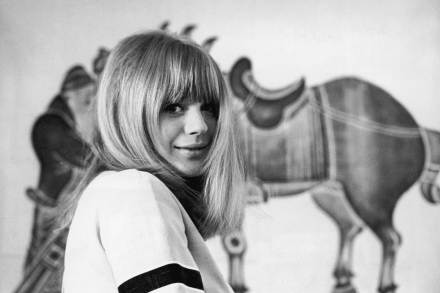
Anyone of a certain age is aware of the urban legend that links Marianne Faithfull, a Mars bar and Mick Jagger. But Marianne’s death yesterday at the grand age of 78 (given her lifestyle, how did she get that old?) really does remove one of the last living links with the golden age of rock and roll in its wildest youth. For Marianne embodied every cliche associated with rock excess: the lover of three of the original five members of the Rolling Stones (Mick, Keith Richards and Brian Jones), she also took on David Bowie, but had the good sense or taste to reject the amorous advances of Bob Dylan and Jimi Hendrix.  After the affair with Mick ended, Marianne had a lost weekend in the 1970s lasting for five years while she was deep in the throes of heroin addiction.

London needs the Prince Charles cinema

The suggestion that the Prince Charles cinema in London’s West End could be closed down was the least surprising news of the week. This sort of thing, fuelled by soaring property values, has been happening in Soho and its periphery for three decades now and shows no sign of relenting. The Prince Charles isn’t strictly in Soho, being just south of Shaftesbury Avenue, but it has always felt like it belonged there, with the other left field, misfit and seedy enterprises that gave the place its character and reputation. It was built in 1962 but, on the edge of Chinatown, was just too far off the main drag of Leicester Square to ever really thrive. By the 1970s the Prince Charles was mostly screening soft porn: Emmanuelle and later Caligula.

It’s not just DeepSeek, all AI is censored

There are multiple reasons to be fascinated by DeepSeek, the Chinese AI chatbot that debuted last week, knocking Donald Trump off the headlines and $1 trillion off the US stock market. For a start, it represents yet another remarkable leap forward in the race to artificial general intelligence – which looks likely to arrive this decade, maybe this year. Brace. A second reason to gaze with intrigue at DeepSeek is the mysterious way it arrived. Was it really made for a mere six million bucks, as they claim? Or did they cut corners and steal the IP of ChatGPT, as OpenAI is alleging? If they did, it is quite the irony, as OpenAI itself is right now in court for chewing up the entire internet, copyright be damned, to feed its own ravenous bot.

Other artists sing Dylan’s songs better than him

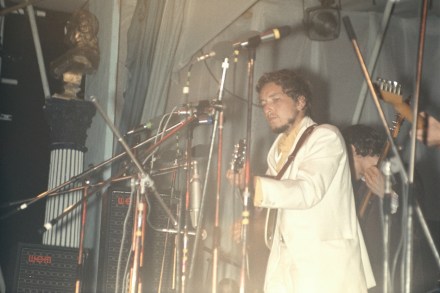
At the start of the new Bob Dylan biopic A Complete Unknown, Dylan’s protest-singer mentor Pete Seeger implores him not to swap his trusty acoustic for a newfangled Fender Stratocaster electric. ‘A good song can get the job done without the frills,’ says Seeger – who, for all his progressive views, wasn’t very hip to the new sound of rock ’n’ roll. ‘Yeah, but sometimes they sound really good,’ retorts Dylan. It’s a brief exchange, but it shows how the times were indeed a-changin’ – and Dylan’s own music with them. Comercially, abandonment of his folkie roots in search of his inner Rolling Stone was to prove an astute decision. His debut electric single, ‘Subterranean Homesick Blues’, became his first single to chart in the US.

I can’t stand Stanley Tucci

I love Italian food, and I love food writing and TV programmes, so you might think I’d love Stanley Tucci. And yet I find him creepy and his recipes are rubbish. I can’t be the only one. The actor, who I first saw in the brilliant film Big Night, about a Jersey Shore Italian-American restaurant, is probably best known for The Devil Wears Prada, a film I adore. His character in that film did wind me up, but it took a while before Tucci himself got on my nerves. I suppose it began with him coming over all cheffy, like he’s the new Anthony Bourdain. Who cares what Colin Firth eats when he’s round at the Tucci gaff? I kept being told to watch his TV series where he travels around Italy, but the sight of his smug face on my screen turned out to be more than I could bear.

The enduring charm of King Solomon’s Mines

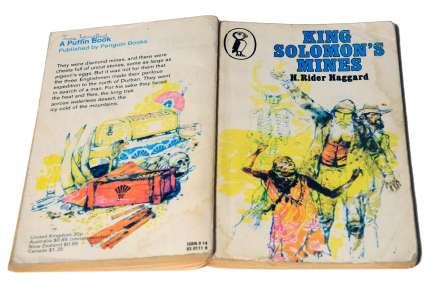
How many people under 40 in Britain today do you think have read H. Rider Haggard’s King Solomon’s Mines? Five, six… 50? It’s hard to know. If you’re lucky – or unlucky, depending on your point of view – you might have bumped into the 1985 film version with Richard Chamberlain, Sharon Stone and Herbert Lom in the unloved crevices of the TV schedule when only insomniacs or household spiders are deemed to be a risk. I ask the question because this year marks 100 years since the death of Sir Henry Rider Haggard as he was then, having been knighted in 1919, apparently for services to the British Empire – and things have obviously moved on a bit since then. Except, of course, they haven’t changed in his famous tale of adventure and lost treasure in Africa.

The year of the creep

It's only January, but I’m ready to declare my 2025 word of the year. Creep. It’s everywhere (though true to form you may not immediately spot it). The online world is no longer merely parallel. It intersects, subsumes and fuels our real world. Siri, Alexa et al lurk. The internet, email and, above all, apps skulk silently but persistently, stealing away our ‘free’ time. We are never off duty. Social media has crept in as our number one and sometimes only friend (though of course the parasocial relationships delude us into thinking we have many more). AI is stealthily permeating every aspect of our lives, often with huge benefits, but the imperceptibility of its advance is unnerving.

Simon Schama is a bore

When Herbert von Karajan was at his celestial height in the 1960s, juggling conducting duties at the Berlin Philharmonic, the Vienna State Opera and the Salzburg Festival, his musicians liked to tell a joke. ‘Karajan gets in a taxi, and the driver asks, “Where to?” Karajan says, “It doesn’t matter, they want me everywhere.”’ Not bad for a German joke. You want to dump on Trump? Send for Schama! A fresh look at Rembrandt? There’s a professor at Columbia who knows everything! Who is the Karajan of our day, hopping from gig to gig with the assurance of the born maestro? It must be Simon Schama, historian supreme, and transatlantic darling of the telly. You want to dump on Trump? Send for Schama! A fresh look at Rembrandt?

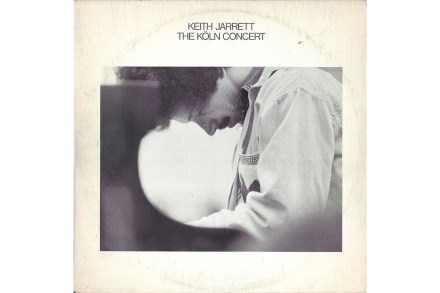
Keith Jarrett’s accidental masterpiece

Shortly before midnight on the evening of Friday 24 January 1975, at Cologne Opera House on the banks of the Rhine, a wiry 29-year-old from Pennsylvania walked onto the stage in front of a crowd of 1,400 people and began to play the piano, alone. The 50th anniversary of what followed is being celebrated with a number of events and documentaries across the world this week. A recording of Keith Jarrett’s performance that night, released on 30 November 1975, went on to become the best-selling solo piano record of all time. The record was produced by ECM (Edition of Contemporary Music), a prog jazz label that was at its peak in the mid-1970s, with The Köln Concert its crowning achievement.

Confessions of a Costco Guy

Those who use TikTok, or are familiar with Ed Davey’s dance routines on social media, may have heard of the ‘Costco Guys’. For those with an aversion to TikTok (or to Ed Davey), Andrew ‘A.J.’ Befumo Jr. and Eric ‘Big Justice’ Befumo are a father-and-son duo who became internet celebrities by gorging on food items in their local Costco in Florida and rating them on a ‘boom or doom’ scale. Cue 2.5 million followers and debut single ‘We Bring the Boom’ – which Davey chose as the soundtrack to his latest bid for online attention. Patrick Maguire was probably right in the Times last week to say that this sort of soul-crushingly knuckleheaded viral fame justifies Oxford University Press’s decision to make ‘brain rot’ its word of the year. And yet I’m with A.J.

Prisons must prioritise mental health

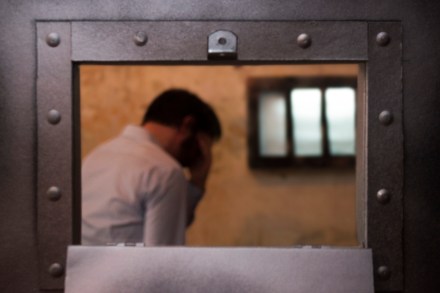
What is prison for? I’ve wondered that a lot, these past five years. In February 2020, just a few days after the UK left the European Union, and as scientists worked to agree an official name for the ‘new coronavirus’, I was sentenced to 45 months in prison for a fraud I’d committed in 2014. During my time inside I discovered a system that did almost everything badly and didn’t seem to know its own purpose. Meanwhile our jails remain a mystery to those who haven’t been there. Since my release I’ve written and spoken to help people understand our prison system. I believe there is a better way of doing things, which would protect the public, provide value for money, reduce crime and help people who’ve committed crimes turn their lives around.