Spectator Life

Spectator Life

An intelligent mix of culture, style, travel, food and property, as well as where to go and what to see.

Britain gave up on farmers centuries ago

Farmers are threatening a national strike over the inheritance tax increases, the first in history. Given how quickly the Labour government yielded to public sector unions, it is little wonder that the farmers have sensed that strikes are the best way to achieve their goals. By 1851, the proportion of Britain’s male workforce employed on the land had fallen to 22 per cent – lower than China in 2022 But it is not surprising that the government thought it would get away with stinging family farms for more inheritance tax. The voice of farmers (as opposed to landowning nobility) has long been weak in Britain for simple demographic reasons: few people are employed in agriculture, and this has been the case for centuries.
So long, Bob Dylan

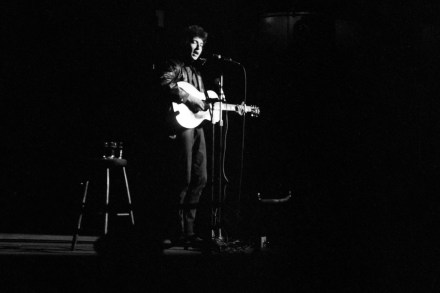
‘We have heard the chimes at midnight, Master Shallow.’ Bob Dylan took his leave of our shores last week at the Royal Albert Hall, with 5,000 people cheering him on a victory lap. Dylan is 83 and too frail to stand unsupported for long. He occasionally needs notes for his lyrics, but he will never surrender. I’m a performer, he seemed to say throughout every minute of the hour and 40 minutes he was on stage, and performers perform. I’m a performer, he seemed to say throughout every minute of the hour and 40 minutes he was on stage, and performers perform It's fairly clear we won’t see him again. The three nights at the Kensington Bowl ended the British leg of his Rough and Rowdy Ways tour, which seems to have been going on since the relief of Mafeking.

Blooming marvellous: the year’s best gardening books

I am an absolute sucker for a handsome reproduction of a rare and highly illustrated natural history, preferably more than two centuries old. This may possibly be a niche interest, but Catesby’s Natural History was pronounced a wonder when it was first published and is a wonder still. Mark Catesby was ‘a procurer of plants’, sponsored by a group of rich, curious patrons, including William Sherard and Sir Hans Sloane, to explore and record the flora and fauna of the most southern of the Thirteen Colonies – the Carolinas and Florida, as well as the Bahamas Islands. He made several perilous trips in the 1720s, sketching his subjects live, and completing paintings in England. He finally published his text and 220 hand-coloured plates in 1747.

Today’s oldies don’t envy the young

Next year, I will be 65. At 65, one leaves the plateau of middle age and enters the foothills of senescence. For some, it’s an uneventful milestone marked by tidying up some herbaceous borders or experimenting with pesto; others yield to mortal panic and max out their credit card on something wildly impractical. On reaching this jubilee, an acquaintance of mine dyed his hair jet black. This is inadvisable because rather than restoring the appearance of youth and vigour, one emerges from the bathroom looking haunted, like a persecuted homosexual solicitor in a Dirk Bogarde film. .

Helping veterans find their next mission

Last month, Keir Starmer made an announcement that sounded full of governmental largesse. From henceforth, the Prime Minister said, ex-servicemen would be exempt from local connection tests for social housing for ever, guaranteeing them a roof over their heads. ‘The military is a brilliant mechanism for social mobility… but it can be difficult to continue that upward trajectory when you leave’ Leaving aside the fact that the announcement did nothing to actually increase the amount of social housing available, or that the lack of housing generally means an ever-widening gap between civilian and military life, why would someone leaving the service need access to social housing for ever?

Oxford University and the abuse of titles

Those casting their eye over the candidate list for the chancellorship of Oxford University might be forgiven for believing that social mobility has drastically reduced, returning to Trollopean quantities of languid toffs taking part in public life. Competing for the honour are Lord Peter Mandelson and Lord William Hague, both, you might think, the younger sons of Dukes; alongside them is Baroness Jan Royall, who I presume is the unmarried daughter of a European aristo. Lady Eilish Angiolini, remarkably, is correctly so, as she is a Lady of the Thistle, though not an Earl’s daughter: this usage, like haggis, is an anomaly of the Scots. The only commoner on the list is the Rt Hon. Dominic Grieve. Well done him for pulling himself up by his bootstraps.

All Souls is the SAS of academia

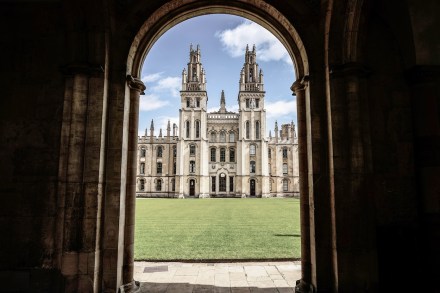
‘What sort of book might Satan write?’ ‘Why do people watch horror films?’ ‘Should we give up hope?’ These were three of the questions faced earlier this year by candidates seeking admission to All Souls College, Oxford, Britain’s most elite academic institution. Founded by the Archbishop of Canterbury, Henry Chichele, and King Henry VI in 1438, the college takes its name from All Souls’ Day on 2 November, the occasion on which Christians around the world pray for the faithful departed (in Mexico it’s called Día de Muertos, or the Day of the Dead).

The royal love triangle that led to Montecito

Were The Duke and Duchess of Sussex to leave their mansion in Montecito, California, and head a couple of miles across town, to Toro Canyon, they would soon find themselves at the one-time home of a woman whose story they would find rather relatable. Because the former occupant once drove a wedge between the Prince of Wales and his younger brother, Prince Harry. Sound familiar? That former Montecito resident was Beryl Markham, a woman whose destructive involvement with the two English princes decades before Meghan was born bears one or two rather strange similarities with the Sussexes’s own story. The fact that Harry and Meghan chose to make their new home just around the corner from where Markham established herself after her own flight to America really is an extraordinary coincidence.

What’s sadder than an ageing rocker?

‘Old soldiers…’ they used to say, ‘never die. They simply fade away.’ What a shame that the same can’t be said of old rock stars. The old codgers can’t be cajoled, shamed or otherwise persuaded to kindly leave the stages they have profitably adorned for half a century or more. My lifelong rock hero, Jim Morrison of the Doors, had the good taste to die at 27 This unworthy thought came to me the other day as I watched 75-year-old Bruce Springsteen creakily strutting his stuff at a campaign rally for cackling Kamala. I have been a fan of the Boss since the 1970s when the perceptive critic Jon Landau dubbed him ‘the future of rock and roll’.

Make Halloween scary again

It was the early evening of 31 October and I was three years old, sitting in the living room with Mum, on the brink of bedtime, when I turned to the corner and a decorative wicker armchair. (It was the 1980s.) ‘Mum,’ I enquired sweetly, ‘who’s that man sitting there?’ Mum, suitably unnerved, asked me for details about the invisible guest, whereupon I outlined a farmer resembling every description Mum had heard of her great-grandfather. Her great-grandfather was a 19th-century ploughman who worked the fields where our home would later be built. My parents had never spoken of him in my presence.

Will councils soon be digging up the dead?

I’ve been fighting Brent Council over some graves. Paddington Old Cemetery is dilapidated and Victorian and has been classified as a park by Historic England for decades. Only a tiny section of its 24 acres is used for new burials. Without life, cemeteries attract foxes (who mess on graves), and the wrong type of people – drug addicts and drinkers Brent recently launched a rather biased consultation looking at whether off-lead dogs should be banned (my favourite question in the survey: ‘Do you agree with dogs urinating on graves?’). The council claims they have received ‘a growing number of complaints’ from mourners about dogs but won’t say how many complaints.

The debauched posh are back

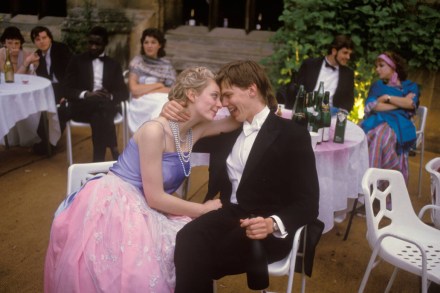
‘The wines were too various: it was neither the quality nor the quantity that was at fault. It was the mixture.’ This is the meet-cute at the beginning of Brideshead Revisited. Lord Sebastian Flyte chunders through the window into the ground floor quarters of Charles Ryder. Seduced by these smart shenanigans, Charles proceeds to dump his dull middle-class muckers in order to ‘drown in honey’ (also champagne, Catholicism and plover’s eggs) with Sebastian and his rich Oxford set. By the time I arrived at university at the turn of the century, debauchery had long been democratised.

Where are the small boat babes?

Realising that I was one of only two non-Polish women while partying with the youngsters from my local Pizza Express – my home-from-home for a decade now – I had to laugh at myself. How I love my waitress mates; Marta, Polina and Camila have become almost like family, showing up self-funded and shoutily supportive at my theatrical endeavours over the past couple of years. Now one of them has left to return home, I felt a sense of loss. How odd to see the likes of the Guardian favouring such red-in-tooth-and-claw capitalism And to think I used to believe that Poles coming here was a bad idea.

Che Guevara was a sadist

Che Guevara died 57 years ago this month and yet, even now, he remains the epitome of revolutionary cool. You never know when he is going to pop up. I came across him recently in the lobby of a hotel in Kandy in the highlands of Sri Lanka. There he was with that determined, heroic look under a dashing beret with a red star badge. He was on a poster dominating the wall above the capitalist till where the luxury hotel took payment. Guevara didn’t care. He took out his pistol, held the barrel at the boy’s neck and fired. The boy was almost decapitated The famous photo was taken by a professional photographer, Alberto Korda, during a funeral in Havana in 1960. Thus began the spread of the famous image around the world. Today you have a choice of hundreds of different T-shirts.

Are you ready for the baby wars?

Such an awful lot of stuff is happening right now, even the keenest observer of social trends could be forgiven for missing a statistical milestone passed earlier this month. So here it is: at the beginning of October, it was revealed that, for the first time since the 1970s baby bust, deaths outnumbered births in the UK – meaning, in effect, that all of our population growth (about 680,000 for this year) came from immigration. The reason why is obvious. The boomers – i.e. people born during the great baby boom of 1945-1965 – are dying out, and they are not being properly replaced, thanks to a low total fertility rate (TFR, which equals ‘births per woman’). In England and Wales, TFR fell to just 1.49, far below the accepted replacement rate of 2.1.

The cult of true crime 

‘I love serial killers,’ explained Megan, 29, from Kent. ‘People think I’m weird; my sister thinks I’m going to kill someone.’ She travelled to London for the weekend for CrimeCon, a convention dedicated to true-crime lovers. Here, for the eye-watering price of £700 for the two days, strangers can come together to meet the survivors of the UK’s most disturbing crimes, delve into unsolved cases with psychologists, criminologists, police detectives, and speak to victims’ families. At 9 a.m., within 30 seconds of arriving, I was in a talk on blood spatter analysis. People in hazmat suits stood in front of a 10 ft photographic banner depicting a kitchen covered in blood.

My life as a historian of the Great War

As the author of eight non-fiction books, I am most often asked why did I chose to write a particular title. The answer is that my books are usually written out of obsession: to slake my personal thirst for knowledge on the subject in question – almost irrespective of whether the topic would interest anyone else. Fortunately, most have. I started early, writing my first title, The War Walk: A Journey Along the Western Front, when I was in my twenties. This, my most personal book, was a homage to my late father, Frank Jones, a very elderly dad who had been in his sixties when I was born.

I think we’re turning Japanese

Japanese culture is rapidly colonising the West, from our theatres to our cinemas, to our streaming services and our bookshops, to the food we eat and the clothes we wear, even the footballers we cheer on. This year alone I must have written half a dozen articles on different areas where Japanese culture is making its mark worldwide (and especially in the UK). Some are quite surprising, such as novels. By one estimate, a quarter of the two million translated novels sold in the UK last year were Japanese. It has become almost de rigueur to be seen reading the latest volume by Banana Yoshimoto, Sayaka Murata, et al.

The nonsense of Frieze

And so ends another Frieze, where art lovers from across the globe gather to admire each other’s horn-rimmed spectacles, regulation black attire and wacky hairdos. Like so many creative events held in the capital, Frieze isn’t so much about looking at interesting artwork as being seen to be looking at interesting artwork. The fair is held annually at a temporary hangar in Regent’s Park and is essentially a spectator sport where leggy blondes eye up wealthy collectors on the make. Don’t even attempt to crash the Deutsche Bank Wealth Management Lounge. When will contemporary artists get it into their diamond-encrusted skulls that the public are immune to their shock values?

Michael Gove, Max Jeffery, Christopher Howse, Robert Jackman and Mark Mason

31 min listen

On this week’s Spectator Out Loud: new Editor Michael Gove discusses his plans for The Spectator (1:08); Max Jeffery heads to Crawley to meet some of the Chagossians based there (5:44); Christopher Howse reads his ode to lamp lighting (12:35); Robert Jackman declares the Las Vegas Sphere to be the future of live arts (19:10); and Mark Mason provides his notes on the joy of swearing (26:50).  Produced and presented by Patrick Gibbons.

The Tracy-Ann Oberman Edition

31 min listen

Actress and writer Tracy-Ann Oberman is well known for her roles across theatre, radio and television, including Dr Who, Friday Night Dinner, It’s a Sin and, of course, EastEnders. Most recently, she has taken on one of the most famous, and problematic, Shakespearean roles: as Shylock in The Merchant of Venice. Inspired by her great-grandmother, she has reimagined the role as a Jewish matriarch, and the play returns to London’s West End this December.On the podcast, Katy Balls talks to Tracy about her obsession with the Roman Empire, what it was like spending a term in Moscow towards the end of perestroika, and her  career from soap to Shakespeare, hero to villain.

Science needs Russians

Something extraordinary has happened. It wasn’t just the docking of a SpaceX capsule at the International Space Station, some 250 miles above the Earth, on a mission to rescue stranded astronauts. It was the sight of Americans and Russians embracing. As the new arrivals – Nick Hague and Aleksandr Gorbunov – appeared through the hatch, it was hugs all round. There are now four Russians and seven Americans manning the ISS. Since the outbreak of the war, collaborations with Russian scientists – measured by the co-authors named on papers – have dwindled across the West Then consider that this happened just a few days after the International Chess Federation voted to extend its ban on Russian grandmasters competing internationally. That’s got to hurt.

Royal Mail is a right royal mess

Benjamin Franklin famously said that there are only two certainties in life: death, and taxes. It turns out there is a third: Royal Mail not delivering post on time. I live in East Oxford, where Royal Mail has not met its target of delivering 91.5 per cent of all first-class mail by the next working day in over five years. The reality is much worse than that: my OX4 postcode seems to only receive letters somewhere between once every two weeks and once a month. This can be a minor inconvenience (it is a bit surreal receiving birthday cards in June when your birthday is in May), or it can be an administrative headache, like the time we received notification that our resident parking permit was about to expire weeks after it actually had.

Bring back the stiffy!

The other day, clearing out boxes, I stumbled on a sheaf of invitations from childhood. Decorated with trains and fairies, they are very similar to those my children still (just about) receive today, except there’s usually a Thelwell pony instead of Elsa from Frozen. The handwritten addresses, the names of the houses and streets (Bluebell Cottage, Leeward Road) plunged me back to 1980s Sussex, sunlit gardens and pass the parcel (where only the winner got a prize, unlike now, when a Haribo lurks in every layer). It was a ritual. There was the pleasure of choosing the invitations (‘Darling, we had spaceships last year’), the thrill of doling them out and the tension of waiting for the RSVPs. It was also, though I knew it not at the time, social preparation.

Punk may be dead, but the Sex Pistols aren’t

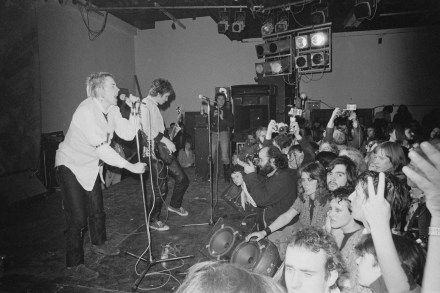
Pull those ripped tartan trews on lads, the Sex Pistols are back! Well, kind of. Lead singer John Joseph Lydon, aka ‘Rotten’, is livid that the other three surviving members have decided to perform a couple of charity gigs without his consent. Really? Punks doing charity gigs? Sid Vicious must be turning in his Pennsylvanian grave. A throng of balding 67-year-olds were pogoing to ‘God Save the King’ while hurling £8 pints of lager at each other The feud goes back to the mid-1970s when Lydon, in typical muso style, vowed to stay true to the music while the other layabouts were more inclined to milk the legacy for all it was worth. More recently, he tried to prevent the band’s music from being used in a TV series directed by Danny Boyle.

What Robert Jenrick can learn from Oktoberfest

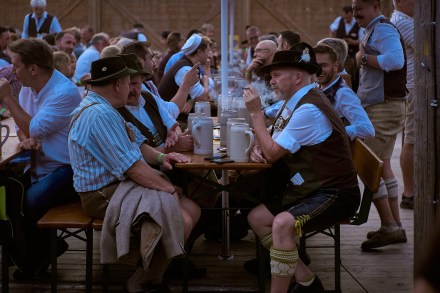
Sitting in a gigantic marquee on the green edge of Munich, surrounded by thousands of boozy Germans singing along to a Bavarian oompah band, I wonder how I got talked into coming to another Oktoberfest. Last time I came, ten years ago, I hated it and swore I’d never come again, but this time feels different. Maybe it’s the beer talking, but this year the atmosphere seems less manic, more relaxed. There are lots of couples, old and young, and hardly any stag parties. Amid the endless rows of trestle tables I see numerous families in traditional Bavarian dress (the women so alluring in their dirndls, the men faintly ridiculous in their lederhosen), tucking into huge hearty platters of carnivorous Bavarian grub.

Rachel Johnson, James Heale, Paul Wood, Rowan Pelling and Graeme Thomson

34 min listen

On this week’s Spectator Out Loud: Rachel Johnson reads her diary for the week (1:19); James Heale analyses the true value of Labour peer Lord Alli (6:58); Paul Wood questions if Israel is trying to drag America into a war with Iran (11:59); Rowan Pelling reviews Want: Sexual Fantasies, collated by Gillian Anderson (19:47); and Graeme Thomson explores the ethics of the posthumous publication of new music (28:00).  Produced and presented by Patrick Gibbons.

How can we trust the National Trust?

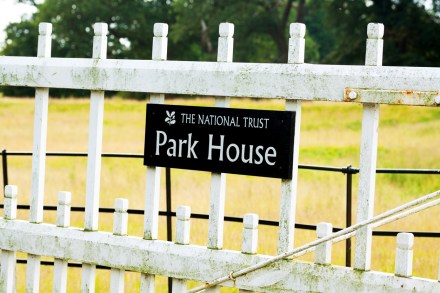
A few weeks ago I felt it was my civic duty to draw attention to the many grammatical mistakes and spelling errors in the National Trust’s pronouncements. The abundance of howlers seemed to constitute something of an educational hazard: ‘How many impressionable schoolchildren will assume that the phrase “It’s [sic] location is unknown”, published by such an august body, must be correct?’ It’s hard to envisage the National Trust managing to reduce ‘unequal access to nature, beauty and history’ if it can’t correct elementary mistakes Since such mistakes can be corrected easily, at no cost and almost immediately, it seemed reasonable to think that they’d soon be gone.

Fans have ruined Wodehouse and Monty Python

Why do we decide something is not for us? This is a question I’ve been pondering as I’ve got older, and started to take a liking to various cultural products that I’d previously marked down – in some cases, for decades – as absolutely unpalatable. Is this a sign of a maturing, more tolerant palate? Maybe – but I think it’s mainly because the fans of some (it turns out) very good things that you might well enjoy can really put you off. If you have cultural bugbears, I recommend checking on a few of them, every now and again For decades – even though he was recommended over and over again by friends, and by writers whose work I really liked, and latterly by Amazon algorithms – I avoided the novels of P.G. Wodehouse.