Spectator Life

Spectator Life

An intelligent mix of culture, style, travel, food and property, as well as where to go and what to see.

What my walking boots taught me about death

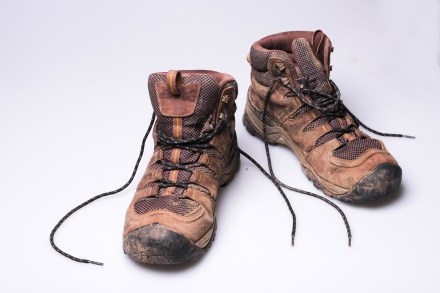
It’s unlikely you’ll find a sorrier-looking pair of hiking boots than mine. As a result of my Camino addiction, the backs of my boots are literally crumbling, while the fronts have split open like a French baguette. They look like prime candidates for the hiking boot version of assisted dying – to put them out of their misery. But on my last pilgrimage, and in recognition of my complacency, I began treating my boots like royalty. I applied leather grease at the end of each day, packing them with newspaper to draw out the moisture. In short, I put those boots before all else. They are lasting far longer than I thought possible. These boots got me thinking about my recent experiences of palliative care: three cases in as many months at the start of the year.

How the internet turned ugly

Consulting a website on my phone recently, I was struck by how painful it has become to use the internet. All I wanted was to read some local news and check the spread of a power cut in my area. Instead, as I scrolled, I was assailed by interruptions from integrated adverts which – in the best case – wanted eagerly to tell me about the charm and usefulness of a new BMW. In the worst case, I was urged to consult some lawyers immediately because I had been mis-sold an insurance or financial product in the past and was due an enormous payout, if only I would contact the least credible-looking advocates in the country.

The sorry state of our public conveniences

Britain’s public loos are a national embarrassment. If you are in any doubt, head to Liverpool Street Station and spend a penny. It’s unquestionably the most odious and unpleasant public lavatory anywhere in the supposedly civilised world. It has to be experienced to be believed, but suffice it to say that the level of cleanliness on display would make a Medicine Sans Frontier doctor fresh from West Africa recoil in fear and reach for their PPE. The floor is usually awash in various places with unknown fluids. The long shared trough installed for handwashing is so disgusting that you wouldn’t clean your dog in it. The supposedly automatic taps barely dispense water. The soap dispensers are equally hit and miss.

Is AI evil?

Is Claude your confidant? Is ChatGPT your yes-man? Your wingman? Artificial intelligence seems more like a friend than the apex predator we feared. Maybe it’s not gearing up to enslave us or turn us into paperclips after all. But I find there is something just as malign about AI posing as our friend. Slowly, subtly, politely, it is changing how we think of ourselves, other people and our relationships. The friendliness of AI is a user-retention tactic. OpenAI, for example, relies on its models to be informative, yes, but also on them being more agreeable than humans. Sam Altman recently announced that OpenAI was rolling back its latest model of ChatGPT because it had become ‘sycophantic’.

The Lord of the Rings gave me my moral compass

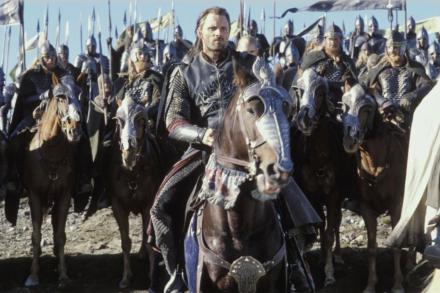
In a recent diary for The Spectator, the editor noted that many of the world’s leading tech companies have names inspired by The Lord of the Rings: Peter Thiel’s Palantir and Mithril; Palmer Luckey’s Anduril. ‘J.R.R. Tolkien has a curious hold on the minds of Silicon Valley’s Trump supporters,’ he wrote. Well, they’re not the only ones. If I had founded a company I probably would have called it Anduril too. While less odd teenagers spent their money on CDs or football boots, I used to have a life-sized replica of the Elvish sword hanging above my bed. I, like the tech bros, was a LOTR obsessive. A super fan. I still am. Tolkien was a genius and I have read his books many times over.

Magic and the art of lying

Talking to a former politician about lying felt very appropriate. It was during one of my ‘Magical Thinking’ sessions, a corporate team-building event I run in which I perform close-up magic tricks and the participants try to work out how they’re being done. Among those at this session was Anne-Marie Trevelyan, who had initially been baffled by a particular mentalism effect. She thought of a day of the week, then a month of the year and finally a playing card, and my guesses on all three proved correct. Every possible route by which I could have cheated seemed blocked off – but Anne-Marie was brilliant at responding to my hints (part of the process, of course), and gradually she led the team towards the solution. The moment it dawned on her how the trick worked was wonderful.

Leave Katy Perry alone

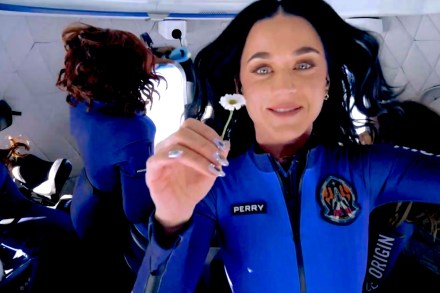
Last month, Katy Perry became the first pop star to go to space. The Blue Origin flight took only 11 minutes and involved her singing to Planet Earth. She had no idea the planet would hate her on her return. Much of the criticisms included phrases like ‘waste of money and resources’; some even mentioned an ‘ongoing genocide’. She has defended herself in strange self-help metaphors, as the biggest pop stars are wont to do. ‘Through my battered and bruised adventure I keep looking to the light and in that light a new level unlocks,’ she said. ‘It’s so out of touch,’ said Lily Allen, who has since apologised for singling her out – there were five other women on the ship.

When it comes to cheese, I’m Eurocentric

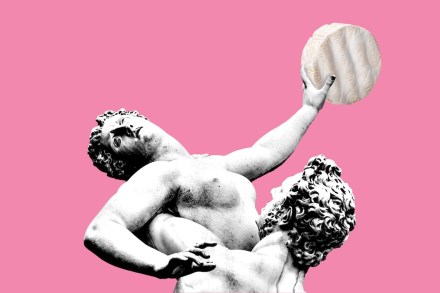
There are many reasons to like Kyrgyzstan. It has extraordinarily lovely women: some mad collision of Persian, Turkish, Russian, Mongol and Chinese genes makes for supermodels at every bus stop. It is safe, friendly, cheap. Its cities are commonly free of rubbish and graffiti (how does Central Asia do this, yet we cannot?). Despite these charms, it has few tourists. However, I can’t say anything positive about the cheese – because the cheese is dreck. Last night I went to the Globus supermarket here in downtown Bishkek and bought a sample of the local fromage. When I got it home, it was like chewing a rubber toy: tasteless, over-firm, banal. In the end I was reduced to smothering it in Sriracha to make it vaguely flavoursome.

Spare us from podcast host plugs

I’ve spent most of my working life producing radio commercials. You might expect me to say this, given my job, but when hosts read out ads on their own podcasts, I find it embarrassing. On commercial radio and television, viewers and listeners have always understood that the ads pay for the programmes and they’re fine with that – on one condition. The ads must be separated from the programmes in a commercial break. This has always been the unspoken agreement between advertisers and their audiences: a programme might be interrupted but at least it stays honest to itself. Podcast hosts are trashing this time-honoured contract when they read out the ads themselves.

Why Londoners still love Ally Pally

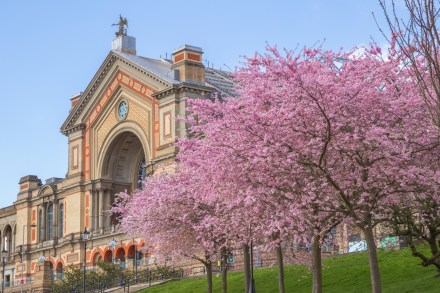
It was conceived as a ‘people’s palace’ – and, as it turns 150 this week, Alexandra Palace continues to fulfil this brief admirably. There is something for everyone, and it’s not too sniffy about who ‘everyone’ describes. Hence the annual mayhem around the winter darts tournament, when everywhere between Muswell Hill and Wood Green is crawling with groups of very drunk men dressed as Smurfs, monks or the cast of Scooby Doo. The Royal Opera House this isn’t. But that doesn’t mean there aren’t more lofty, less populist offerings. I recall when Alexandra Palace’s theatre reopened in 2018 after an £18 million restoration, it debuted with an ENO production of the lesser-known Britten opera Paul Bunyan – hardly an obvious money-spinner.

Dame Vera Lynn didn’t win the war by herself

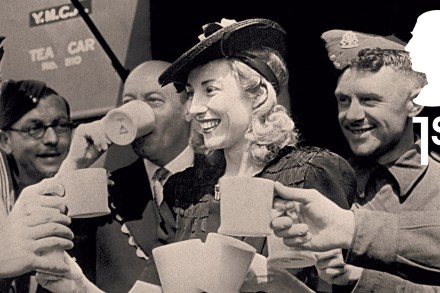
The Royal Mail has issued a set of commemorative stamps to mark the 80th anniversary of VE Day on 8 May. The ‘Valour and Victory Presentation Pack’ features ten men and women whose courage and determination, in the words of Royal Mail, ‘helped shape the outcome of the second world war’. Another criteria in selecting the ten was ‘diversity’. One or two curmudgeons on social media have muttered about ‘wokeness’, but that is unjust. For many decades, the valiant contribution of Indians, Nepalese and West Indians to the war effort was overlooked or, worse, airbrushed out of British history books.

‘It is sad that we are sometimes seen as just killers’: an interview with Japan’s last ninja

Getting an interview with Jinichi Kawakami, the man known in Japan as ‘the Last Ninja’, was no easy task – but nor should it have been. Ninjas, Japan’s legendary covert operatives and assassins, were renowned for their elusiveness, so it would have been disappointing if tracking one down had proved a cinch. It took a good deal of research and persistence before I was granted an interview by landline telephone – which also seems appropriate since ninjas were reputedly able to make themselves invisible. Kawakami is head of the Banke Shinobinoden school of ninjutsu (ninja culture), director of the Iga-ryu Ninja Museum and Ninja Council, and a professor of Ninja Studies at Mie University.

AI killed the Easter Bunny

On the grounds of advancing age, I had decided to ignore all the chatter about artificial intelligence and devote my remaining time to things I could properly understand. Then I discovered that one of my own copyrighted properties, the fruit of a year’s work, had been scraped into the AI maw without so much as a by-your-leave, and it became personal. I wrote to my MP who responded with template blandishments. This government… committed to blah blah… exciting prospects… safeguarding… potential opt-out system… a close watch, yadda yadda… Feeling impotent and no further forward, I returned to my knitting. It took the murder of the Easter Bunny to rouse me from the torpor of denial.

The art of a great pub quiz

‘What’s the capital of Albania?’ The correct answer is, of course: ‘Who cares?’ If you’re at a quiz and this is one of the questions, find another quiz. Either you know it’s Tirana or you don’t, and in neither case is there any satisfaction. A really good quiz question is one you can work out. For instance: ‘Which major UK retailer has the same name as Odysseus’s dog in Greek mythology?’ Even if you don’t know your Classics, you can take a mental trip up and down the high street until you arrive at Argos. Or, in the case of one team I encountered, FatFace. A good quizmaster should also avoid themed rounds. Saying ‘and now – geography’ will produce a groan from at least a quarter of the crowd.

We need a chugger crackdown

Why do we allow our public spaces to be taken over by chuggers? Whenever I exit my office above Charing Cross station in search of lunch, I am immediately confronted by no fewer than three charity muggers – each decked out in a garish uniform promoting whichever charity they are being paid for that day. It is best to avoid eye-contact – otherwise prepare to be bombarded with a flurry of phoney scripted sales patter. ‘Didn’t we go to primary school together?’ Unlikely, I suggest, given our age difference. ‘Still, it must be a big school given you said the exact same thing to the fella five paces in front of me.’ I consider replying, but think better of it.

What’s wrong with national stereotypes?

Saying that national generalisations have fallen out of fashion is an understatement. Stereotypes have become less common and less tolerated. But not all is unblemished improvement, and something of value has been lost. National generalisations – often misnamed racial – now veer close to thought crimes. A pity – national generalisations are a basic tool for making sense of the world, and for understanding how people’s backgrounds shape their values, character and culture. Abusus non tollit usum – that something can be misused does not mean it should not be used. As a man with a very limited range of anecdotes and conversational gambits, I frequently repeat myself. Handily, I work as a hospital doctor, supported by an ever-shifting cast of juniors and students.

Did Terry Pratchett really write classics?

The news that Terry Pratchett’s 2002 novel Night Watch has joined the ranks of the Penguin Modern Classics series may seem, to the Pratchett uninitiated, something of an eyebrow-raiser. Penguin has proudly announced that the book ‘which draws on inspirations as far ranging as Victor Hugo and M*A*S*H, is... a profoundly empathetic novel about community, connection and the tenacity of the human spirit’ and that it was ‘written at the height of Pratchett’s imaginative powers’. All this may very well be true. But many people, even those millions well disposed towards Pratchett, might be asking another question: why this book, and why now?

Happy birthday to angry, Terfy Mumsnet

I learned recently that Mumsnet is 25 years old, and my immediate reaction was: who the hell is still using Mumsnet? And then I read that Mumsnet has nine million unique users every month, and my immediate reaction was: who the hell are these people? According to Mumsnet, they’re almost all women, but I don’t seem to know any of them. I’ve never used Mumsnet, and when I conducted some forensically accurate research, I struggled to find any friends who are well acquainted with it. One friend amuses herself occasionally with how middle-class the posts can be, with lots of queries about Eton and sneering at double-barrelled designer baby names.

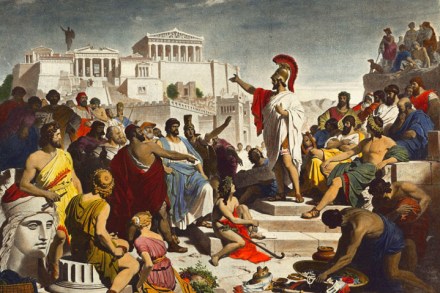
Are we too stupid for democracy?

In 1906, Sir Francis Galton observed a crowd at a country fair in Plymouth attempting to guess the weight of an ox. Nearly 800 people participated – from butchers and farmers to busy fishwives. Galton, ever the measurer of men and beasts, gathered the guesses and calculated their average. The result was startling: the crowd’s collective estimate came within one pound of the actual weight. This elegantly simple experiment is the founding parable of what we term the ‘wisdom of crowds’ – the idea that while individuals may be flawed, the collective judgment of a sufficiently diverse group is compellingly accurate. Galton’s experiment also became one of the great justifications for democracy.

The cursed world of the LinkedInfluencers

Next month marks the 23rd anniversary of the launch of LinkedIn, the most awful of all the social media networks. It used to be about business. These days it’s a parallel universe where the sort of nonsense you once shared with your family and close friends on Facebook – births, deaths, marriages, attention-seeking ‘U OK HUN?’ sad selfies, angry rants, happy birthday messages, saccharine memes and cryptic quotes are chewed up and regurgitated into smug self-promoting drivel or, worse still, marketing blurb. I was made redundant in November and the worst thing about the past five months has been having to go on LinkedIn. Naively, I believed I could upload my CV, apply for some jobs, get a job, and get on with my life. But no.

The glamour and grit of J.K. Rowling

Seeing that photograph of J.K. Rowling, I reflected gleefully that her journey from mousey, play-nice moderate to unapologetically glam and flamboyantly defiant fox is complete. It’s not often that glamour and righteousness come along in one person – but when it occasionally happens, as her caption said, ‘I love it when a plan comes together.’ Many brave people – mostly women, but joined by a few exceptional men – have sacrificed much for the victory we finally took receipt of in the Supreme Court last week. They have been robbed of reputations, careers, relationships and – almost – sanity, as much of the world’s establishment and institutions went gender-woo gaga and told us that women could have penises, men could grow cervixes and giraffes are born without sex.

The Vanity Fairytale

The last time I saw Graydon Carter, editor of Vanity Fair for 25 years, he was strolling along Jermyn Street in London. Graydon was a media-land acquaintance from LA and New York where I worked as a journalist in the 1990s. We gossiped affably for a few minutes about mutual British friends before heading back to our different lives (him to a suite at the Connaught, me to a rented flat in Pimlico). It wasn’t until I read his entertaining new memoirs, When the Going Was Good, that I realised quite how very different our lives had become ever since I met him at Vanity Fair’s first Oscar party in 1994. Graydon and his team of fixers quickly won over Hollywood by adapting the 1990s media mogul spending mantra of: ‘I gave my wife an unlimited budget and she exceeded it.

Why I’m joining the Church of England

I blame The Spectator. The chain of events that has led me to be christened and confirmed in the Anglican Church began with an article I wrote for Spectator Life in January. I had spent New Year’s Eve with a friend, a former vicar, who had lost his faith and honourably resigned his living as a result. He claimed that most contemporary clergy no longer believe in the basic tenets of Christian doctrine: the divinity and miracles of Christ; the Virgin birth; the resurrection; life after death; even the very existence of God. I wrote an article bemoaning this, and mourning the decline of the Church as an essential element of the nation.

Is it time for Christians to unite over Easter?

So, you thought the date of Easter, which rambles irritatingly round the spring calendar, was settled by the Synod of Whitby, no? That gathering in 664 AD, which established that Northumbria would celebrate Easter in the Roman calendar, used to be one of the events that Every Schoolboy Knows, though probably not now. There were two rival ways of computing Easter, the Celtic and the Roman, and the problem was that King Oswald belonged to the Irish/Iona tradition, and his wife, Eanflaed, kept the Roman calendar. One bit of the court would be in Lent and fasting, vegan-style, and abstaining from sex and fighting, while the other was celebrating Easter, gorging on Paschal lamb and presumably up for conjugal relations and brawling.

Woke was invented by angry schoolgirls

For the first half of the 2010s, any teenage girl in her room had a chance of amassing more political influence than a junior Spad. She could define political terms and concepts, blacklist undesirable elements, and argue for a different kind of society. Thousands, sometimes tens of thousands, of other teenage girls would be following her, reading and engaging. These were the days of Tumblr, a youth blogging website that functioned like a dysfunctional think tank. I first found out about Tumblr in 2012, when I was in Year 7; a girl in my year group started a blog about her depression and anxiety and linked it from her public Facebook. I wanted in on her mental anguish – the posts she shared would ring safeguarding alarm bells today, but they seemed impossibly grown-up at the time.

The Odyssey is more real than we thought

Odysseus is back on his eternal journey to Ithaca – and he’s sailing towards your cinema screen. Ralph Fiennes is playing Odysseus in The Return, released last week. And Christopher Nolan’s Odyssey, starring Matt Damon as the cleverest of the Greeks at Troy, should be out next year. I criss-crossed the Mediterranean for three years, in the wake of Odysseus, for a book – and I’m convinced The Odyssey is true. OK, the monsters, like man-eating Scylla and the one-eyed Cyclops, might not have existed. And you’d have to be a Zeus-fearing type to believe in the gods toying with Odysseus’s fate on Mount Olympus. But the catastrophic storms that tossed Odysseus back and forth across the Med are certainly true.

Save the Red Arrows!

You will be aware that we face a national emergency. I’m not referring to the fact that our closest ally has seemingly taken leave of its senses or the astonishing news that apparently one in four Britons is now disabled – nor that more than nine million of us of working age are economically inactive. I’m not even talking about the parlous state of the NHS. The national emergency I’m referring to is one that trumps even Trump, so brace yourselves. Soon we are going to run out of Red Arrows. The jolly red-painted planes they fly – the Hawk T1s made by BAE Systems – are now so old, they’re even older than Putin’s fighters.

Spare us from ‘nobituaries’

Sometimes it seemed to me as a young hack that writing obituaries must be the best job in newspapers. You can’t get sued – though people tend not to take the gloves off out of ‘respect’ and use ancient phrases like ‘bon viveur’ and ‘did not suffer fools gladly’ when everyone knows you mean ‘well-connected drunk’ and ‘ill-tempered’. It’s only once in a blue moon that someone really says what they think, like when the ‘social influencer’ Jameela Jamil barely waited until the fashion designer Karl Lagerfeld was cold in his casket before X-ing that the capering clown – widely being celebrated as a ‘genius’ – was in fact ‘a racist, misogynistic, fat-phobic rape apologist who shouldn’t be posted all over the internet as a saint gone-too-soon’.

Finally, we’re cracking down on buskers

At last, somebody has said it. Busking is akin to psychological torture, especially for those who have to live or work within earshot. This damning comparison came from no less than a judge at the City of London magistrates’ court, following a suit brought by Global Radio, the Leicester Square-based owner of LBC and Classic FM. The judge noted ‘the use of repetitive sounds is a well-publicised feature of unlawful but effective psychological torture techniques’. He found that the ‘volume’ of the buskers’ music was ‘the principal mischief’ but also delivered a damning assessment of the way out-of-tune pop songs are offensive to the human spirit. ‘It is clear that the nuisance is exacerbated by the repetition and poor quality of some of the performances,’ said the judge.