David Shipley

David Shipley is a former prisoner who writes, speaks and researches on prison and justice issues.

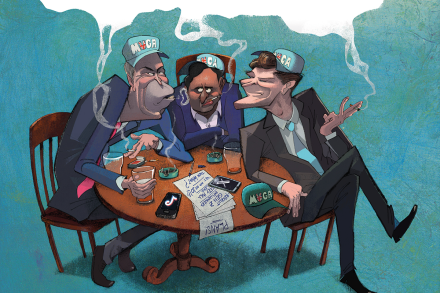
Is short-form video rotting our brains?

When I read that a new scientific study had shown impacts on the brains of those watching short form videos I was delighted. As someone who doesn’t have a television, doesn’t let my daughter use any screens and refuses to watch videos – I always ask friends, ‘is there a transcript you can send me?’ – I felt vindicated. Perhaps now I could crow I told you so, videos are bad to everyone I know. Participants were shown short videos they liked they ‘exhibited significant deactivation’ in parts of their brains responsible for ‘cognitive control’ – demonstrating a mechanism which might mean that short-video consumption makes people prefer instant gratification and lowers their self-control. Is this backed up by other studies?

Is Labour really considering a Rwanda-style scheme?

From our UK edition

After two years in office, Labour may have begun to realise the Tories were right. One of Keir Starmer’s earliest acts as Prime Minister was to scrap what he called a ‘gimmick’ – the Tories’ Rwanda scheme, under which illegal arrivals were to be deported to the African country. At the time some 52,000 migrants had been identified for deportation, but Starmer said it had ‘never been a deterrent’, and instead promised to ‘smash’ the people smuggling gangs. Now, with Starmer gone, and after two years of ‘smash the gangs’ around 80,000illegal migrants have crossed the Channel, representing almost 40 per cent of all small boat arrivals since records began in 2018.

It’s no surprise many Britons think migration is ‘mostly bad’

From our UK edition

A decade after the Brexit vote, YouGov has conducted a large-scale survey of the nation’s attitudes towards migration. Their work shows that the British people are significantly more negative about the subject than they were in 2016. On each occasion, people were asked ‘do you think the level of immigration over the past ten years has been good or bad for Britain?’ In 2016, a third of us thought it had been ‘mostly bad’, and 38 per cent said it was ‘both good and bad’. Now, 43 per cent of us said ‘mostly bad’, and just 29 per cent said ‘both good and bad’. Notably, the opinions of 2016 Remain voters have shifted the most: almost twice as many of them now say that migration has been bad for Britain. This shouldn’t surprise anyone, really.

Do we really all have to ‘play our part’ housing asylum seekers?

From our UK edition

Andy Burnham wants ‘all parts of the country…to play their part’. Not because we’re at war, or another pandemic is sweeping across the world. No. What the Prime Minister wants is for every town and village in the land to house ‘refugees and asylum seekers’– he believes it wouldn’t be fair if we ‘have a situation where it’s only the poorest communities in the country that receive all of the dispersal of refugees and asylum seekers’.

Andy Burnham still doesn’t get the prisons crisis

From our UK edition

Two days is a very long time in British politics. On Saturday, it was reported that Andy Burnham might block the early release of two men who killed policeman Andrew Harper. No doubt the PM was motivated in part by a petition making that demand, which now has almost 900,000 signatures. On Monday, Downing Street was briefing that it ‘cannot stop’ the killers' early releases, claiming it is ‘not possible’ to exempt just these two men from the scheme. By Tuesday morning, the story had changed again. Now we were being told the PM has asked the Justice Secretary to find a way. Angela Rayner, the Communities Secretary, has said that plans will be announced in September to block early releases for those who killed police officers.

The justice system is collapsing

Just over a week ago Andy Burnham came under attack over the impending early releases from prison. His critics included the widow of Andrew Harper, a policeman killed on duty in 2019 by being dragged behind a car for a mile. Andrew’s widow, Lissie, described the possible early release of two of his killers as ‘deplorable’. Burnham insisted that ‘keeping the public safe will be my top priority’ and said of the early release policy that he would ‘look at in detail before we go further forward’. Clearly Burnham wanted to do anything to avoid being the PM who released rapists early. But he will still be releasing men who have done very awful things Now, having presumably done all the detailed looking, the PM has a plan, just in time for the start of his holiday.

Burnham doesn’t get why people are angry about migration

From our UK edition

Andy Burnham coasted into No. 10 via an uncontested leadership election in which he was never forced to share his views on the great and grave issues facing Britain. As a result, when he became Prime Minister we knew little to nothing about how he planned to address the migration crisis, the energy crisis, the worklessness crisis or the prisons crisis. But to govern is to be confronted with events and forced to choose and so we are fast learning who Burnham is. Last week’s scenes from Ceuta, as 60,000 Moroccans swarmed across the Spanish border, seemed to represent the gulf between the rich, soft West, and the people who come here because they want the wealth we are all too eager to give them.

We must learn from Suzy Lamplugh’s death

From our UK edition

Forty years ago today Suzy Lamplugh, a 25-year-old estate agent, left her office in Fulham. Colleagues believed she was meeting a client named ‘Mr Kipper’. Despite decades of police investigations, her body has never been found. Indeed, according to Mike Barley, a former police officer who spent many years trying to find Suzy’s body, and her killer, all we know for certain now is the same three things we knew on the evening of her disappearance.  I spoke with Mike, who has written a book: Suzy Lamplugh: The Inside Story of Britain’s Most Notorious Missing Person Investigation. He explained to me that the only things we know for sure are that Suzy left her office around 12:40 p.m. on Monday 28 July 1986, her car was found on Stevenage Road at 10:01 p.m.

Should we let women out of jail?

From our UK edition

Andy Burnham has a problem. Desperate to ensure that his government isn’t defined by releasing killers and sex offenders early, he’s ‘paused’ the planned early releases which are due to commence in September. There is something in the argument that many women prisoners pose a low risk to the public, and that an early release scheme based on risk rather than time served would be more sensible But, as I wrote yesterday, he’s quickly going to be warned that there is no slack in the prison system – if the Sentencing Act early release scheme isn’t implemented then our prisons will run out of room in November. Burnham finds himself in exactly the same trap Labour encountered after the 2024 election.

Burnham will struggle to stop the early prisoner releases

From our UK edition

In 2019, a police officer, Andrew Harper, was killed while on duty. After responding to a burglary he chased after a car, and was caught in a strap attached to it. The car was driven away, and Harper was dragged for a mile behind it, at an average speed of 42.5 miles per hour. His body was found by colleagues, and a later post-mortem showed he had died of multiple injuries, suggesting he had been caught between the car and the road. He was 28 when he died and had been married less than a month. The car was driven by 18-year-old Henry Long. With him in the car were 17-year-olds Albert Bowers and Jessie Cole. All three were charged, and, in 2020, acquitted of murder. Long pleaded guilty to manslaughter and was sentenced to 16 years.

Is Axel Rudakubana playing the system?

From our UK edition

Just before the second anniversary of his horrific murders, it has emerged that Southport killer Axel Rudakabana has been transferred from Belmarsh prison to Broadmoor, a high-security psychiatric hospital. Although this does not change the fact that he is serving a prison sentence, Broadmoor is a more comfortable and safer environment than a jail like Belmarsh. It’s also far more expensive. Instead of the approximately £100,000 per year Rudakubana cost us as a prisoner, he will now cost over £300,000 per year. He will remain in Broadmoor until psychiatrists decide he’s well enough to return to prison. Rudakubana has previously been described by a senior mental health clinician as having a ‘lack of empathy’ and a ‘fascination with violence’.

Louise Haigh will always remain a ‘convicted fraudster’

From our UK edition

Louise Haigh is back in government. The former transport secretary resigned in November 2024 following news reports that she had a conviction for an offence of fraud by misrepresentation, which she committed in 2013. The conviction was the result of Haigh pleading guilty to having lied about the loss of her company Blackberry so that her employer would replace it with an iPhone. She had reported a ‘terrifying’ mugging in London to police, claiming that her work mobile had been stolen. Her sentence was a ‘conditional discharge’ – essentially, she was set free with the promise to not do it again. Such a conviction did not bar her from standing for parliament, although it does not appear that she disclosed it during the 2015 election campaign which saw her elected as an MP.

What is the MoJ hiding about migrant crime?

From our UK edition

On his last day as Justice Secretary, David Lammy was accused of ‘fighting to cover up foreigners’ crimes’. This is because the Ministry of Justice (MoJ) which he led is taking legal action against the Information Commissioner’s Office (ICO), seeking to overturn a ruling which instructed them to publish conviction data by nationality and offence type for the past seven years. This ICO ruling followed a Freedom of Information request by the Centre for Migration Control (CMC). Why are they so determined to avoid publishing the data?

Lord Hermer is an unserious man

From our UK edition

Lord Hermer, the Attorney General, has often been criticised during his two years in the role. For his decision to authorise Lucy Connolly’s prosecution, his angry denials that two-tier justice exists, his ‘fanatical devotion to international law’, being ‘dangerously wrong about the ECHR’, an apparent dislike for the British state and its soldiers, and for ludicrous hyperbole such as when he claimed that critics of the ECHR want migrants to drown. It’s been easy to picture him as a sinister figure, using domestic and international law to serve his politics rather than the interests of his people.

We are heading for a Boriswave disaster

From our UK edition

Just eight months ago Shabana Mahmood’s Home Office published a document called,  ‘A Fairer Pathway To Settlement’ which described the Boriswave as an ‘extraordinary open border experiment’, in which an additional 2.6 million people moved to this country between 2021 and 2024. Many of these arrived under the health and care visa. This was a disastrous policy – as the Home Office pointed out at the time, in an ‘attempt to fill between 6,000 and 40,000 jobs’ in the care sector, we imported ‘616,000 individuals from 2022 to 2024’. Even worse, over ‘half were not even arriving to work in that sector but were instead dependants of those who were’. The Home Office added that ‘fraud… was rife’.

Labour can’t blame the Tories for Britain’s tagging crisis

From our UK edition

Electronic Monitoring – ‘EM’ or ‘tagging’ – is at the heart of the government’s plans for the justice system. Tags are used to enforce curfews, prevent drug and alcohol abuse, and even ensure that people stay away from certain areas. In 2021, there were 13,400 tagged people. From September, as part of the new sentencing regime, the Ministry of Justice is introducing a presumption to tag all prison leavers, meaning that from 2027 the government expects an additional 22,000 people will be tagged every year. And as the new Sentencing Acts takes effect, people will be serving shorter sentences and spending more time supervised by probation, meaning that the number on tags is going to rise and rise.

The Home Office must ignore Pakistan and deport Shabir Ahmed

From our UK edition

Shabir Ahmed, the leader of the Rochdale rape gang, is for now a free man, living in the UK, having served 14 years after being convicted of 30 child rape offences. Ahmed is a British citizen – he gave up his Pakistani citizenship. As the law stands, he can not be deported because of provisions in the Immigration Act 1971. The law states that because Ahmed arrived in the UK before 1973, and lived here for more than five years before his deportation was considered, he is immune from deportation.  This, naturally, has provoked great outrage, with Andy Burnham having said he wants the home and foreign secretaries to do everything they can in order to deport Ahmed.

Will there be justice for Henry Nowak?

The Independent Office for Police Conduct (IOPC) have announced they are investigating two officers who attended the scene of Henry Nowak’s death. This does not necessarily mean they will face disciplinary proceedings, merely that such proceedings are now possible. This was probably the only course of action open to the IOPC, particularly after last week’s release of a transcript and more video footage of the incident, seemingly with the consent of the Nowak family. They paint both the police and the Digwas in an even more damning light. The video shows Vickrum Digwa being questioned by police while Henry lay dying on the ground nearby. Henry was manhandled by police and cuffed behind his back.

Why asylum seekers probably won’t have to pay back their accommodation costs

From our UK edition

It’s clearly asylum week at the Home Office. On Sunday, destructive new ‘safe and legal’ routes for asylum seekers which will create a Burnhamwave were unveiled. Monday brought a commitment to replace employment tribunal judges with specially recruited members of the public. And today we a new plan was revealed which, according to the department’s press release, means ‘asylum seekers [are] to pay’ towards the cost of their accommodation and support. We know from Home Office research published last year that those granted asylum have very low levels of employment (less than 50 per cent), even years after that grant The media management model is familiar to those of us who’ve followed Home Secretary Shabana Mahmood’s team since they were at the Ministry of Justice.

Labour’s latest immigration plan is pure insanity

From our UK edition

Last week, almost a thousand more illegal migrants entered the country via small boats. Over 204,000 have arrived since 2018. And of them, 76,352 have broken into Britain since Labour’s election win, just under two years ago. Almost all of them claim asylum. Almost none of them are ever deported. Meanwhile the migrant crime wave rolls on. On Friday, three Afghan men who raped a teenage girl before fleeing the country in the back of a lorry were found guilty. Our borders are not secure. It would be an act of wilful neglect to introduce another route for those who wish to live here at our expense On legal migration too, the signs are bleak. The Home Secretary’s long-promised reforms to Indefinite Leave to Remain (ILR) are yet to be enacted.