Spectator Life

Spectator Life

An intelligent mix of culture, style, travel, food and property, as well as where to go and what to see.

Are tribute bands killing music?

If you fancy watching a live performance of Fleetwood Mac's hits, there’s plenty of choice in tribute band land: Fleetwood Shack or Fleetwood Bac, McFleetwood or Rumours of Fleetwood Mac – or perhaps Tusk, Tell Me Lies, Fleetwood Macrame or Gypsy Dreams. Or you could wait to see if the real Fleetwood Mac tour again, minus keyboard player Christine McVie who died two years ago and guitarist Lindsey Buckingham who is currently ostracised from the band in true Fleetwood Mac falling-out tradition. Ultimately… you can go your own way.  But are tribute acts – no matter how good or authentic – ‘real’ music, or are they cheating? Are they a harmless piece of nostalgia, or clogging up small- to medium-sized venues and preventing the new acts of tomorrow from performing today?


Rachel Reeves should not pack her lunch

When Rachel Reeves was the shadow chancellor, she would round up the spare pastries at the end of meetings and save them for later. No wastage! Her intentions were surely good, but she would have known that there were witnesses, and she knows how political gossip works. Now, as chancellor of the exchequer, she has just told the BBC’s Nick Robinson that she brings in her own home-cooked lunches in Tupperware. Of course, every part of her personality must scream fiscal responsibility. She has a favourite chess move (the Sicilian defence), that conveniently works as an allegory for her approach to politics. She claims to enjoy freezing cold open-water swimming late at night. A half-eaten croissant sparks rage in her. Do you get the message?

The life-affirming misery of the Cure

Watching the Cure’s live-streamed performance of their first album in 16 years, it was hard not to notice the toll time has taken on Robert Smith. At 65, his black spiky hair has long turned into a bedhead of fag-ash grey – a reminder to those of us who have grown up with him that none of us are as young as we used to be. As the slow waltz of the first track of Songs of a Lost World kicked in, and Smith wailed ‘Where did it go?’, it was starting to look like a very gloomy evening indeed – even by the standards of a band hardly known for its cheeriness. I’ll admit that as I started to watch the Troxy gig live from my sofa, even I, as a long-time Cure fan, worried how dark it was going to get.

Catherine Lafferty, Michael Simmons, Paul Wood, Philip Hensher, Isabel Hardman and Damian Thompson

39 min listen

On this week’s Spectator Out Loud: Catherine Lafferty argues that the drive to reduce teenage pregnancies enabled grooming gangs (1:27); following Luke Littler’s world championship victory, Michael Simmons says that Gen Z is ruining darts (6:32); Paul Wood looks at the return of Isis, and America’s unlikely ally in its fight against the terrorist group (10:35); Philip Hensher reviews a new biography of the Brothers Grimm by Ann Schmiesing, and looks at how words can be as dangerous as war (17:57); Isabel Hardman highlights the new garden now open at the Natural History Museum (26:57); and, Damian Thompson reveals he watched videos of plane crashes to distract himself from the US election coverage – why? (31:40).  Produced and presented by Patrick Gibbons.

What’s wrong with Spotify?

Spotify is bad, apparently. The charges levied against the app are that it stifles artists by paying them a pittance and listeners with its all-pervasive algorithm. ‘How Spotify ruined music,’ was the title of one recent Washington Post article, while the New Yorker asked ‘Is there any escape from Spotify syndrome?’ going on to conclude that ‘what we have now is a perverse, frictionless vision for art, where a song stays on repeat not because it’s our new favourite but because it’s just pleasant enough to ignore’. Is it worth spending £20 to £30 on a record? Can you really be bothered with all the faff? Really?   Interest in iPods is said to be on the rise, with music influencers insisting that they’re a better option because they’re algorithm free.

Fanboys are ruining the arts

I’ve been to a talk by two very clever and talented men: the American novelist and critic Jonathan Lethem and the English documentary filmmaker Adam Curtis. They were talking about Lethem’s book about his art collection, Cellophane Bricks: A Life in Visual Culture. Never have I left a talk with such a warm glow of schadenfreude. Here were two gifted men who had nothing interesting to say about their chosen subject. It was an evening full of ArtSpeak and hot air, a facsimile of intelligent ‘cultural discourse’, as they say in the art world. The interesting Lethem and the brilliant Curtis had done the unthinkable: they’d become boring. Oh, what a joy it was to witness!

The end of the Church of England

I spent New Year’s Eve in the company of a former Anglican vicar who lost his faith and had the honesty to resign from the Church as a result. He said what I have long suspected; that almost none of those in the hierarchy of the Church today believe in the central tenets of their faith: the divinity of Christ, the Virgin Birth, the Resurrection of the dead, the miracles of Jesus, the Trinity, Heaven and Hell, life after death, or even a benevolent God. To be told that the guardians of that faith are today little more than hollowed-out hypocrites going through the ritualistic motions is a tad dispiriting In the end, I, an agnostic who tries to keep an open mind about Christianity, found myself arguing with the former clergyman’s new faith in atheism.

The science of a happier 2025

As 2025 gets under way, I’m going to guess that one of your hopes for the coming year is ‘to be happy’. I’m also going to take a punt that you’re likely to spend a considerable amount of time, effort and money doing things you hope will make you feel that way. But considering that happiness is the number one goal of most people living in the western world, here lies the unspoken paradox at the heart of this tireless quest. Most of us can reel off a list of things that we believe will make us feel good – a great holiday, a delicious dinner, a promotion at work, fabulous sex. Yet many still don’t have a clue about how the feeling of pleasure is made in our brains in the first place. And knowing would be an incredibly useful way to work out how get more of it in 2025.

The worst hangover in the world

I awoke in the early afternoon of 31 December 1995 face down on the carpeted floor of a mansion house flat in Notting Hill with the worst hangover I have ever had.  It is customary when writing about hangovers to quote the best description of the condition – by Kingsley Amis: ‘A dusty thudding in his head made the scene before him beat like a pulse. His mouth had been used as a latrine by some small creature of the night, and then as its mausoleum. During the night, too, he'd somehow been on a cross-country run and then been expertly beaten up by secret police. He felt bad.’ And there’s also, of course, P.G.

Forget Dry January: give up social media instead

Any moment now it will begin – and then it won’t stop for a month. Because as we enter the new year, the twin horsemen of the joyless apocalypse – the anti-booze and anti-meat lobby – pounce upon the January blues like a starved dog on the Christmas leftovers. And they are merciless. Give up drinking for the month, they’ll shout – that’ll really help you through the darkest days of the year. Or, better still, become a vegan for 30 days – oh, the horror of ‘Veganuary’ – and forgo meat, fish and dairy products at precisely the same time as almost nothing is growing out of the wintry, fallow soil in our hemisphere. Yes, that makes sense. About as much sense as asking Prince Andrew for a lecture on integrity.

The case for ‘long Christmas’

There comes a time right after the new year when the retail sector decides it’s done with fairy lights and sparkles. Out goes the party food, the bao buns with Santa hats, the mixed platters of prosciutto and cheese, the gift sets of flavoured olive oil and the festive cheeseboards. On the discount rails there are scarlet jumpers with diamante and slinky party frocks, looking less and less inviting by the day. Back comes the sleek minimalism of the retail sector in its most pared down aspect as it flogs low-carb, low-calorie ready meals and fitness gear in time for the great 'new year, new you' personal transformation.

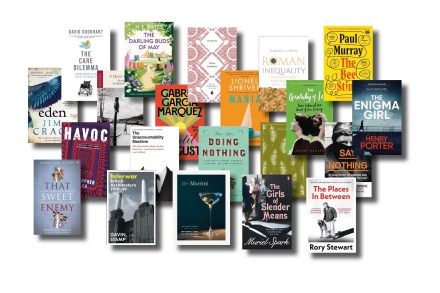
What Spectator writers read in 2024

Rod Liddle The angels in Jim Crace's Eden are tetchy and petty authoritarians, apart from one who can't fly properly. This dissertation on freedom and mortality is rather wonderful – published two years ago but I caught up with it only this year. The best non-fiction book of the year is David Goodhart's The Care Dilemma: Caring Enough in the Age of Sex Equality, which has the temerity to suggest that divorce rates and broken families might just have something to do with our epidemic of mental illness. How dare he? Lionel Shriver I’d recommend the novel Havoc by Christopher Bollen, set in an Egyptian hotel to which westerners have fled to avoid the tyrannies of Covid regulations.

What’s your Christmas Eve pub tribe?

Come on in, take a seat, drink deep by the roaring hearth and don’t worry about the time – there’s bound to be a lock-in. Such is the Christmas Eve pub scenario of our fantasies. It’s been a long trek back to our home town, most likely thanks to a ‘cow on the line’ or some such nonsense announced by Avanti somewhere between Milton Keynes and Rugby. But you’re finally home so what could be finer than heading down to your old local for a festive pint or three? Well, quite a lot, actually. Like staying in and sticking hot pins into your retina. Yet out we go regardless, already drunk on the spirit of Christmas. But who will you be sharing bar space with this evening?

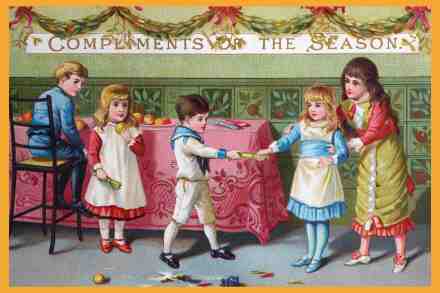
The curious history of the Christmas cracker

Those who still make a habit of the Sunday roast are faced with a challenge come Christmas: how to make sure the big meal doesn’t disappoint. What if the turkey is a let-down given everyone so loves the topside of beef? It would take a real Grinch to sniff at the festive spread – we serve it not because turkey would be anyone’s death row meal but because, as I have written before, there is virtue in tradition for its own sake. And truth be told, there is little reason to fear disappointment when pigs in blankets are close at hand. But there is one other trick up the Christmas dinner host’s sleeve – something that if served at any other occasion of the year would prompt raised eyebrows and being led away gently on suspicion of imbibing too much red wine.

Where do you stand on ‘I was sat’?

Perhaps because more and more BBC radio programmes are being broadcast from Salford, the whole of Britain is getting used to hearing multiple uses of the expression ‘I was sat’ or ‘I was stood’. Often, those words come at the very beginning of programmes, spoken by the presenter to set the scene. ‘I’m sat in a crowded pub’, ‘I’m sat in the back of a van on a lay-by’, ‘I’m stood in the rain on the outskirts of Oldham, waiting for…’ To those who live south of the Watford Gap services, this simply sounds grammatically wrong. It’s a misuse of the passive voice. It should be ‘I was sitting’ or ‘I was standing’.

Were Boney M the weirdest pop act of all time?

For a spell in the late 1970s there were two pop groups which dominated the UK singles charts – both, coincidentally, vocal quartets from continental northern Europe. But while one, Abba, have since become a billion-pound industry with an apparently permanent hologram-shaped presence on the London concert scene, their then rivals for pop supremacy, Boney M, have almost completely disappeared from public consciousness. And this is a shame because Boney M remain uniquely noteworthy in one field in particular: weirdness.  There are other contenders: Little Richard, the Sweet, Village People, the KLF.

The anatomy of an earworm

In the pantheon of memorable pop songs, Chappell Roan’s ‘HOT TO GO!’ is right up there. A breezy, unpretentious electropop effort, it has quite a forgettable verse, but that soon gives way to a shouty, cheerleader-style chorus in which Ms Roan repeatedly informs us that she is, indeed, ‘hot to go’. Somehow I recently heard it twice in one day, and that was all it took for ‘HOT TO GO!’ to get stuck on repeat in my mind’s ear for three whole days. Of course, I’ve had earworms before, but never for longer than a few hours; this was something else, worming on an epic scale. It became the soundtrack to every moment of my waking life, the unofficial theme tune of every person I saw.

The sad decline of the Booker Prize

There was a magnificent chorus of spluttering and gasping in literary London last week when it was announced that the actress Sarah Jessica Parker was to be one of the judges for the Booker Prize. As one critic remarked, ‘Just because she plays a writer of sorts in Sex and the City doesn’t mean that she is one.’ In fairness, the appointment is not quite as strange as it initially appeared. Not only is Parker a keen reader who frequently offers literary recommendations on her Instagram account to her near ten million followers (most recently, Linda Grant’s The Story of the Forest), but she sufficiently impressed Penguin to be given her own imprint at the publisher, SJP at Hogarth, which she parlayed into an independent imprint, SJP Lit, last year.

My Desert Island Discs

Withnail and I’s Uncle Monty found it crushing to realise that he was never going to be given the part of Hamlet – ‘I shall never play the Dane!’ – for many of us, an equal disappointment is realising, sooner or later, that we’ll probably die uninvited onto Desert Island Discs. This programme has run almost unchanged since 1942 and is the nearest thing – after a knighthood or a CBE – to a nod of recognition from the Establishment, a sign you’ve finally arrived. I imagine most people in public life occasionally ponder the eight discs they’d take should the call from Radio 4 ever come, or which luxury or book (along with Shakespeare and the Bible) would go into their knapsack.

A middle-aged man’s guide to ageing gracefully

Middle-aged men might be feeling persecuted at the moment. But we bring so much of the opprobrium upon ourselves. The MasterChef host Gregg Wallace has, it should be remembered, not been charged with any crime. But the allegations of his inappropriate, predatory and downright cringe-worthy behaviour towards women have inspired the kind of reaction among my male colleagues and friends that I haven’t heard the likes of since the arrival of David Brent and The Office some 20-plus years ago. Nobody finds your Tommy Cooper impression funny because the only other person old enough to remember Tommy Cooper is outside hectoring a stranger about the smoking ban ‘You don’t understand, Rob,’ said the editor of the magazine I worked for at the time.

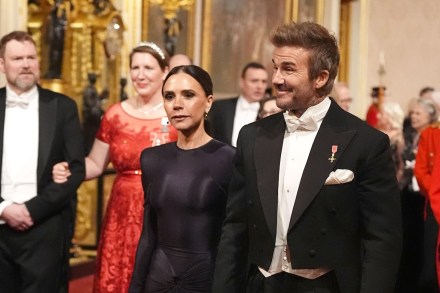
When did the Beckhams become minor royals?

Seeing the snaps of David Beckham, Victoria in tow, smirking like the cat that got the cream-covered canary at the King’s state banquet for the Qatari royals, I was in two minds. It pleased me to think of Meghan angrily slamming the doors of her 17 toilets, as the trophy couple the Sussexes once saw as friends so firmly showed their allegiance in the ongoing War of the Windsors. But on the other hand, there’s something rather unappealing about a monarchy which sups with showbiz, using a short spoon. We’ve just seen in the example of the American election how profoundly unimpressed people are when the powerful, rich and famous flock together too much, when entertainers get too chummy with people who are there as representatives of a nation.

London is getting worse

A famously elitist members’ club, a 900-year-old meat market, and a traditional old barbershop may not feel like they have much in common. In fact, they didn’t – not until the last week or two, when they all simultaneously closed in their disparate parts of London. The first closure, that of the Groucho Club, has been widely covered in these pages, generally with an overtone of chortling. After all, it is hard to feel sorry for a place that is notoriously exclusive, boasts a world-class art collection, and charges members £1,500 a year for the privilege of eating near a Damien Hirst – or indeed eating near Damien Hirst.

Who cares about Gregg Wallace?

In 1986 the late Martin Amis published a book of essays called The Moronic Inferno – a title he had borrowed from the writers Saul Bellow and Wyndham Lewis. The essays focused on Amis’s dim view of culture in the USA. These aspects of American life have long since crossed the pond, and we are all now living in a Moronic Inferno – a veritable cauldron of cretinism and ignorance. Our public discourse is more concerned with the career of a superannuated slapheaded former market trader At the time of writing this piece, the lead story on national news bulletins for five whole days has been not Gaza, Syria or the Donbas, still less the plight of farmers or the elderly, but the travails of a BBC television ‘celebrity’ named Gregg Wallace.

Gregg Wallace was no national treasure

To call Gregg Wallace a ‘national treasure’, as some did after his fall from grace last week, was inaccurate. Just because he is (or was) very popular on television does not qualify him. To attain national treasure status, a person needs to be older, as well as much nicer. The expression is vastly overused, lavished on too many undeserving celebrities, and it needs to be reined in. As Julie Burchill (sick to death of them last Christmas) wrote, ‘it seems harder to name a public figure who isn’t one’, and that most of them ‘can’t open their cake-holes without mouthing centrist platitudes which we’ve all heard a million times before’. David Attenborough is the yardstick.

Are you ready for agentic AI?

It’s an interesting and unusual word, agentic. For a start, some language enthusiasts dislike it as a mulish crossbreed of Latin and Greek. Also, its etymology is obscure. It appears to derive from 20th-century psychology: one of its first usages can be found in a study of the infamous 1960s Milgram experiments at Yale University, when volunteers were persuaded to electrocute, with increasing and horrible severity, innocent ‘learners’ (actually actors). The experiment revealed that most of us would administer a lethal shock of electricity to an innocent human being, if only told to do so by a man in a white coat with a clipboard.

The cinema is the worst place to watch a film

I’ve always loved cinema, but hardly ever cinemas. It’s no surprise to me that movie-going audiences are in decline. Ticket sales this year are only $4.8 billion, down from $6 billion in 2023. Apparently 65 per cent of Americans now prefer to watch a movie at home, compared with 35 per cent who say they prefer to watch it in a theatre. This is probably due to improved home cinema technology and the ever-shortening gap between when a movie is released in cinemas and is available at home. The chain of Curzon cinemas sold this month for a measly £3.9 million. I can’t say that I find this trend upsetting. I don’t miss feeling my shoes sticking to the carpet, small children emptying popcorn down my neck or discovering that my underpants have become infested with fleas.

Get police out of the playground

It’s not just that the lunatics – sorry, ‘neuro-diverse’ – have taken over the asylum. They’ve taken over the asylum and started walking on their hands, and they’re determined to make us do the same or feel ashamed for staying the right way up. That is what I thought, anyway, when I read that children as young as nine are being cautioned by the police for calling each other names in the playground. Half a century later, at 65, I have extremely high self-esteem The correct way to counter name-calling is either to hurl them back or ignore them. As a teenager, I was occasionally called a ‘witch’ by schoolmates because of my big nose. Sometimes I simply stuck my massive beak in the air and flounced past, sometimes I retorted with an observation about my accuser.

Hollywood is quietly welcoming Trump

When I lived in LA in the 1990s, there was one golden rule of the film industry: Hollywood should follow and never lead. This mantra was, predictably, ignored in the wake of the election. Variety splashed with the headline ‘Hollywood on Edge After Trump’s Devastating Victory’. One actor was quoted bemoaning the ‘unimaginable cruelty that’s going to be unleashed on women, immigrants and the LGBTQ community’. Another said they had called LA pharmacies to ‘hoard birth control pills’. ‘I know lots of agents and producers who voted Republican’ Yet this fractious relationship is about to see a surprising plot twist.

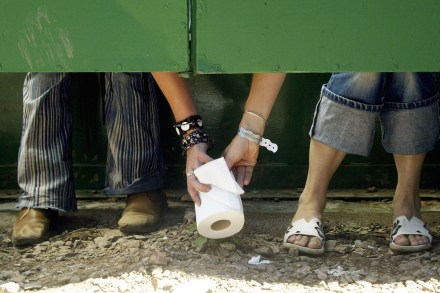
Glastonbury and the problems of youth

On Sunday, I was in deepest Wales, listening to birdsong, braying donkeys and a demented cockerel, but instead of getting away from it all I was staring at three different laptops all clicked to the same link: the Glastonbury ticket sale countdown clock. This was the fifth year in which my daughter has sought tickets and, determined not to fail once again, she had arranged a military-style operation, recruiting a small army of volunteers, including me, to be online on the stroke of 9 a.m. in the hope that one of us would get lucky. The other five people she was planning to go with had all done the same. There must have been 50 people trying for the the tickets. My daughter had arranged a military-style operation, recruiting a small army of volunteers At first it was fun.