Culture

Culture

The good, the bad and the ugly in books, exhibitions, cinema, TV, dance, music, podcasts and theatre.

The skeleton is key to solving past mysteries

More from Books

One hot summer’s morning, as a nine-year-old girl living on the rim of a Scottish loch in the hotel owned by her parents, Sue Black was unaware she was about to ‘leave those days of innocence behind’. A man delivering groceries sexually assaulted her. Many years later, Black imagines how this unspeakable childhood trauma might have been written into her very bones. Extreme stress can cause a temporary halt in the growth of a child’s arms or legs, which leaves a ‘Harris line’ that is visible on X-ray. This white mark would have said what she couldn’t. The abuse remained secret for a decade, and when she finally told her mother, she wasn’t believed.

The Tibetans’ fight for freedom continues — but only just

More from Books

‘Free Tibet!’ used to be a rallying cry for Hollywood A-listers and rock stars. Richard Gere hung out with the Dalai Lama; the Beastie Boys organised a series of giant benefit concerts. Global attention has shifted to other regions suffocating under the jackboot of the Chinese Communist party (CCP), notably Xinjiang and Hong Kong. But the Tibetans’ fight for freedom continues — though only just. Since 2009, 156 Tibetans have set themselves alight in protest at China’s repressive policies. Nearly a third of them are from Ngaba, a small county on the south-eastern edge of the vast Tibetan plateau. Ngaba (pronounced Nabba and known as Aba in Chinese) is home to 73,000 citizens and a mind-boggling 50,000 security personnel.

How the wreck of the White Ship plunged England into chaos

More from Books

Never was a monarch so undone by water as Henry I. A fruit of the sea killed him in 1135: he ate too many lampreys, a jawless, parasitic fish that sucks its prey to death. But the tragedy of his reign occurred 15 years earlier. At the most ill-fated party of the Middle Ages, his heir — the 17-year-old William Ætheling (Anglo-Saxon prince) — drowned when the White Ship sank, taking nearly 300 of his friends and relatives with him. The ramifications of his death were seismic, leading to a succession crisis that saw thousands die in a bitter civil war. The author of the Anglo-Saxon Chronicle famously described this 19-year-war as a time when ‘The earth bore no corn, for the land was all laid waste... and people said that Christ and his saints slept.

Is it possible that Neanderthals had a spiritual life?

More from Books

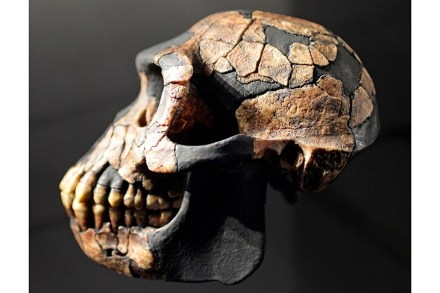
When I studied anthropology back in the early 1980s, Neanderthals were still largely the bulk-browed brutes of yore, grunting in smoky caves and loping across the tundra. Their vanishing from the fossil record some 40,000 years ago was a result of competition, along with a little interbreeding, with our own forebears. The story, as I received it then, retained something of the racially hierarchical views at large when the first fossilised bones were recovered in Germany, from near the Neander river, in 1856. Neanderthals were made extinct by an altogether smarter creature. It was inevitable — the clue was in the name: Homo sapiens. Neanderthals have come a long way since.

The magic of JFK remains undimmed

More from Books

It’s easy to forget that John F. Kennedy lived such a short life. At 43, he was the second youngest president in history; when he died, he was younger than Barack Obama was in 2009. Kennedy’s presidency was brief —‘a thousand days,’ as the historian and Kennedy confidant Arthur Schlesinger Jr memorably put it — but included some of the most intensively covered episodes in modern history, from the civil rights movement to the Cuban Missile Crisis. As a result, JFK has not lacked for attention. So, what more is there to say about him? A good deal, it turns out. Kennedy is familiar yet mysterious, and therefore difficult to get come to terms with — perhaps this is why he’s been given a surprisingly wide berth by presidential biographers.

Too much learning is a dangerous thing

More from Books

It is often said that the left does not understand human nature. Yet it is difficult to think of anything as antithetical to Homo sapiens as the notion, popularised by free marketeers during the 1980s, that people would willingly evacuate those parts of Britain where ‘market forces’ had decreed that collieries and steelworks were no longer profitable. People did not ‘get on their bikes’ — in Norman Tebbit’s notorious phrase — once industry was shut down; instead they grew resentful at a world they felt had little respect for their lives or communities. We often refer to these people as ‘left behind’ — or as the journalist and author David Goodhart calls them, ‘Somewheres’.

Primal longing: Blue Ticket, by Sophie Macintosh, reviewed

More from Books

Sophie Macintosh’s Blue Ticket is not classic feminist dystopia. Yes, it is concerned with legislated fertility, a world where women’s bodies are monitored like science projects by condescending medics.But the horror here is not impregnation but unwanted childlessness. Blue tickets, dispensed (randomly? It’s not clear) by a machine on a girl’s first bleed, decree a childless future; white tickets the opposite. Victims are not raped handmaids but sexually liberated working women, desperate to conceive and forbidden from doing so. Our narrator is Calla, a blue ticket, who grows increasingly dissatisfied with her lot, nurturing a ‘new and dark feeling’ inside herself.

Capital entertainment: how the West End became the playground of London

More from Books

The West End was always something a little apart. Some years ago, I used to go drinking with a man who had jointly run one of the best Soho live music clubs of the late 1950s and 1960s. He told me that they received a visit in their early days from the Kray brothers demanding protection money, who were summarily told, in his words, ‘to fuck off’. When I expressed surprise at this apparently dangerous response, he explained that while the twins meant a lot in Bethnal Green at that time, ‘up West’ it was a different story.

The paradox of Graham Greene – searching for peace in the world’s warzones

Lead book review

Joseph Conrad’s death made Graham Greene feel, at 19, sitting on a beach in Yorkshire, ‘as if there was a kind of “blank” in the whole of contemporary literature’. Greene’s own death in 1991, aged 87, had a similar effect on many younger writers, myself included. For John le Carré, his most obvious successor, Greene had ‘carried the torch of English literature, almost alone’. His cool fugitive presence, in Martin Amis’s phrase, had been there all our reading lives. In an age of diminishing faith, he had used Catholic parables in a way that lent them a power beyond their biblical origins, mining the gospels rather as le Carré has mined the Cold War.

The South Sea Company’s bonds were never meant to be a scam

More from Books

In Money for Nothing, Thomas Levenson brings us into the story of the South Sea Bubble by writing about the development of the mathematics of odds and prediction. These advances were the beginnings of actuarial science: an understanding of risk that underpins insurance. We start with Isaac Newton and his role in attempting to stabilise the currency with something we now think of as quite normal: currency revaluation (Levenson’s previous work on Newton means he’s well prepared here). Much of early modern Europe based their currencies on silver, and fluctuations in the value of the metal were a recurring issue. Ongoing wars meant England was massively in debt, and having its coins worth more (as silver bullion) than their face value in pounds was a problem.

Not such a hero: the tarnished legend of Robin Hood

More from Books

Britain’s two most famous legendary figures, King Arthur and Robin Hood, remain enduringly and endearingly elusive, and thus ever-fascinating: Arthur slumbering in the mists of nebulous Avalon, Robin as a hardy perennial somewhere deep in Sherwood Forest. Historians, folklorists, Eng Lit academics and cranks — the list is not mutually exclusive — enter these realms at their peril. When I did so a few years back, a headline in the Sun alarmingly proclaimed: ‘ROBIN HOOD FROM TUNBRIDGE WELLS, SAYS HISTORIAN.’ To put it mildly, that was a rather reductive and misleading summary of my research; but it certainly raised my awareness of being ambushed while ambling along the edenic Greenwood pathways.

As Lucian Freud’s fame increases his indiscretions multiply

More from Books

Staying with Peregrine Eliot (later 10th Earl of St Germans) at Port Eliot in Cornwall, Lucian Freud remembered that the Eliots ‘ate off solid silver plate, even shepherd’s pie’. In 1968, Freud was having an affair with Perry’s wife Jacquetta. According to her, it was an addiction: ‘Completely hooked, a dreadful drug...’ After two turbulent years, she decided to have a baby by Lucian, ideally to be born on his birthday. Her husband agreed to bring up the child as his own, provided the matter was not mentioned again. The laissez-aller attitude is partly accounted for (though not by William Feaver) by the 1960s, and the way the young aristocracy embraced the hippy-trippy counter-culture. Jacquetta mentions smoking an opium spliff in Paris with Freud.

Forlorn Plorn: The Dickens Boy, by Thomas Keneally, reviewed

More from Books

Parents are always terrified of bad family history repeating itself. Prince Albert dreaded his son Bertie turning into a roué like his own father, and this of course happened. Charles Dickens had fantasised in David Copperfield that the jokey version of his own father — Mr Micawber — would become a success in life by going to Australia. In real life, Dickens’s parents had been ‘hopeless’, and as he watched his own family growing up, he had a heartless fear that his dud children would be versions of parents who were sent to the Marshalsea. Sure enough, Dickens sent two of his least promising sons to Australia, hoping something would turn up.

The story of Sealand – a most improbable sovereign state

More from Books

In 2012, the editors of Vice ran an article aimed at would-be contributors to their self-avowedly edgy magazine headed ‘Never Pitch Any of These Things to Us Again’. Among a list of no-nos that included burlesque dancing and art made of bodily fluids was the principality of Sealand. They wrote: OK, so an independent sovereign state floating just outside the UK sounds great, right? Except, well it’s not really, is it? I mean, it’s not an independent sovereign state like, say, France. It’s more like a big, floating turd of mental illness in the North Sea.

Written in blood or bound in human skin: the world’s weirdest books

Lead book review

In 1791, Isaac D’Israeli — father of prime minister Benjamin — published his most famous work, the Curiosities of Literature, a collection of freewheeling mini-essays on whatever literary topics happened to tickle their author’s fancy: ‘Titles of Books’, ‘Noblemen Turned Critics’, ‘On the Custom of Saluting after Sneezing’, ‘Cicero’s Puns’. One of its joys is its capaciousness — completely unsystematic, yet seeming somehow to touch a little on everything. The book is long, but the essays are rarely more than a couple of pages, sometimes less.

My dazzling chum: Mayflies, by Andrew O’Hagan, reviewed

More from Books

Presumably because a small part of it takes place in Salford, the epigraph to Andrew O’Hagan’s latest novel consists of four lines from Ewan MacColl’s ‘Dirty Old Town’. More fitting, though, might have been six words from the Undertones’ ‘Teenage Kicks’: ‘Teenage dreams, so hard to beat.’ The first half of the book follows a group of lads from Ayrshire as they excitedly prepare for, excitedly travel to and excitedly attend a post-punk music festival in Manchester in 1986. The narrator is the bookish 18-year-old Jimmy Collins, whose life bears a close resemblance to O’Hagan’s at the same age and time.

A story without redemption: The Lying Life of Adults, by Elena Ferrante, reviewed

More from Books

‘I don’t at all hate lies,’ Elena Ferrante explained in Frantumaglia, her manifesto for authorial anonymity. ‘I find them useful and I resort to them when necessary to shield my person, feelings, pressures.’ Shortly after writing these words, Ferrante, who refuses all interviews and keeps her identity under wraps, was accused by an investigative journalist called Claudio Gatti of lying to her readers. She had allowed us to assume, Gatti revealed, that her hugely successful Neapolitan quartet — My Brilliant Friend, The Story of a New Name, Those Who Leave and Those Who Stay and The Story of the Lost Child — was autobiographical.

Treasures or clutter? The problem of knowing what to keep

More from Books

Every so often the past makes a pass at you. An old school report, a train ticket, a curl from a first haircut falls out of an envelope and sends you tumbling back through the decades. For most of us these things are flotsam and jetsam, of momentary interest, but for Rachel Morris they are vital. It is partly that she works in museums, so is deeply invested in the past, and partly that her family history is so mysterious, fragmentary and ‘soaked in sadness’ that she relies on ‘things’ to help her piece together where she came from, and who she is. This book has two strands.

She just keeps rollin’ along: Colombia’s Magdalena River

More from Books

As Colombia comes out of 50 years of civil war and into a still precarious peace, with some 220,000 dead, this timely book explores one of the few dividends to emerge from such a terrible conflict. Large areas of the country were isolated by the war, and so spared the ravages of modern development. Unlike neighbouring Ecuador, where oil and gas exploration has done its worst, Colombia still has an essentially roadless expanse of pristine forest nearly the size of France. When I travelled in the mountains near Cali last year, I was struck by how depopulated the rural areas were. The peasant farmers, the campesinos, were only slowly returning from their exile in the comparatively safer cities.

Never a dull sentence: the journalism of Harry Perry Robinson

More from Books

Is Boris Johnson a fan of Harry Perry Robinson? If he isn’t, he really ought to be. Reading this absorbing biography, I was struck by how much they have in common — especially in their early lives. Both men went to public school, then on to Oxford, then into journalism, where they proved incapable of writing a dull sentence. They both divorced and remarried — and were also American citizens, for a while. Both dipped a toe into politics, but while Boris took the plunge, Harry stepped back and remained a jobbing hack until his dying day, the finest journalist of his generation. The biggest difference, however, is that Harry was born in 1859, which is why you’ve probably never heard of him. I certainly hadn’t until I read Joseph McAleer’s fascinating book.

Toussaint Louverture: the true hero of Haiti

Lead book review

In Haiti you have to be careful which founding father you admire. The average Haitian will think first of Toussaint Louverture when talking about their island’s revolt against France in the late 18th century, and about the original idea of a full-fledged Black republic: Toussaint the stable, the intense, the military genius, courageous, careful. But for others, the real hero of the revolution is Jean-Jacques Dessalines, or Papa Dessalines, who is said to have connived with the French to remove Toussaint from power. Once France had exiled Toussaint, Dessalines turned on the French, rejecting their ‘peace’ and authority. He prosecuted the revolution to its bloody end, but without the restraint that Toussaint had often demanded from his fighters.

Bombs over London: V for Victory, by Lissa Evans, reviewed

More from Books

Lissa Evans has been single-handedly rescuing the Hampstead novel from its reputation of being preoccupied by pretension and middle-class morality. Her original black comedy (Crooked Heart) concerned Vee, a middle-aged suburban scammer, and the prodigiously bright but orphaned Noel, who join forces in north London’s urban village during the second world war. Evans then went back in time to tell the story of Noel’s Suffragist godmother Mattie founding a disastrous girls’ club on Hampstead Heath during the 1930s (Old Baggage). In V for Victory, the story moves forward again. It’s 1944, and Hitler’s rockets are falling all over London. Mattie is dead.

Should we all be prepping for the end of days?

More from Books

In the Covid-19 crisis the calamity-howlers have found a vindication: go back to survival mode and bunker down because nobody believed Noah until it was way too late. Bunker: Building for the End Times, a hybrid of reportage and philosophical musing, considers contemporary survivalist culture in all its manifest craziness, from the doomsday realtors who sell bomb-proof, virus-free bunker space to the Bible-belt survivalists who pack their INCH bags (I’m Never Coming Home) and bug out to bunker encampments in Wyoming in anticipation of the Final Judgment. In the modern concrete bunker Bradley Garrett sees an extreme expression of our fear of nuclear, chemical, biological and climatic calamity.

In just eight years Selim I became ‘God’s Shadow on Earth’

More from Books

Faber must take a rather dim view of British readers’ historical awareness these days. This is a biography of one of the greatest Ottoman sultans in the empire’s 600-year history, yet the publishers cannot bring themselves to mention his name in the book’s title. Perhaps they thought Selim I was too obscure, and maybe they’re right, but their reticence is not shared by Alan Mikhail’s American publishers, who rightly give the sultan his due. Never mind. Mikhail, chair of Yale’s history department and a specialist in Ottoman history, makes it his mission to demonstrate how this utterly compelling leader helped define his age, bending the world to his will. And he succeeds with a flourish.

A rainy day in the Highlands: Summerwater, by Sarah Moss, reviewed

More from Books

There is an old Yorkshire tale about a prosperous town which, legend has it, once stood on the site of Lake Semerwater. A beggar comes looking for alms but is turned away by everyone, save for a poor couple. As he is leaving, he curses the proud townspeople and water rises up and floods their houses, leaving only the couple’s hovel high and dry. In Summerwater, her seventh novel, Sarah Moss moves this tale north to a holiday resort by a Scottish loch and transforms it from a moralistic parable into a complex reflection on the contemporary situation. But she retains the haunting images of rising water and strangers being refused hospitality.