Julian Glover

Robert Hardman, Melissa Kite, Julian Glover & Sarah Carlson

From our UK edition

24 min listen

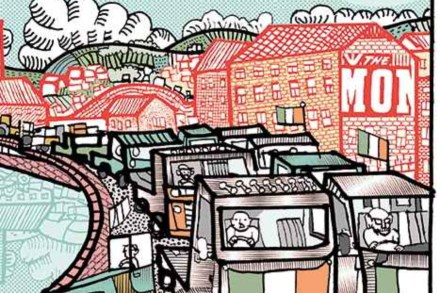
On this week’s Spectator Out Loud: as the King prepares to head to America, Robert Hardman looks ahead to what would have been Elizabeth II’s centenary celebration; Melissa Kite reports from the fuel protests in Ireland (featuring one of the disgruntled truckers); Julian Glover mourns the demise of the railway restaurant car; and finally, do you love it or hate it – Sarah Carlson provides her notes on marmite. Produced and presented by Patrick Gibbons.
Robert Hardman, Melissa Kite, Julian Glover & Sarah Carlson

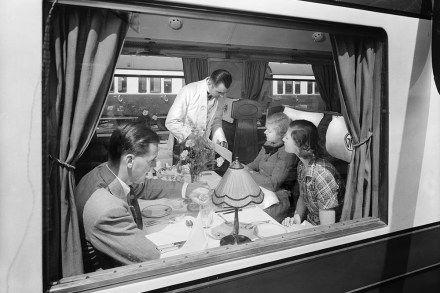
Treasure Britain’s last railway dining car while you still can

The 17.48 from Paddington does not, on first sight, seem exceptional. Over-hard seats, over-bright lights and a scrum at the ticket barriers: none of these is special. The modern Hitachi trains are solid but dull. Only Isambard Kingdom Brunel’s great arching iron roof adds splendour to the scene. But pause by coach L on the daily London to Carmarthen express and you might notice a small miracle. This train is one of the very last in Britain to carry a proper dining car. To its immense credit, GWR, the route’s operator, cooks and serves decent meals on six services a day: three at lunchtime and three in the evening, on its lines from London to Wales and the West Country.

In the footsteps of Cecil Rhodes

From our UK edition

In a scrubby paddock on the edge of Bulawayo, I walked up to a half-broken leatherwood tree growing in a tangle of old barbed wire. It looked no different to a million tough trees across Zimbabwe, the still-beautiful, still-friendly country which remains the most wonderful place in Africa. But this tree is exceptional: it is listed as a national monument. Beneath it, in October 1888, a concession was agreed which led Lobengula Khumalo, King of the Ndebele, to lose his lands to a consortium led by Cecil Rhodes. It’s disputed what Lobengula thought he was agreeing to when he made his mark on the treaty.

Douglas Murray, Lionel Shriver, Julian Glover and James Bartholomew

From our UK edition

20 min listen

On this week's episode, Douglas Murray says the world is becoming claustrophobic, (00:55) Lionel Shriver struggles to get through South African airport security, (08:29) Julian Glover maps out the countryside battle lines, (16:52) and James Bartholomew buys a tank. (22:13) Produced by Angus ColwellEntries for this year's Innovator Awards, sponsored by Investec, are now open. To apply, go to: spectator.

Farmers vs rewilders: can they find their common ground?

From our UK edition

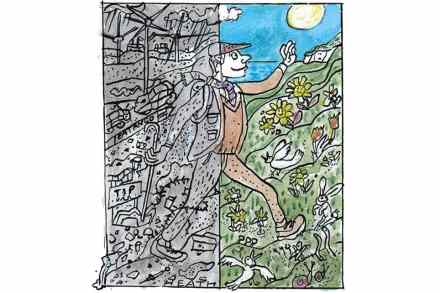
Our age isn’t the first to set an English landscape of our dreams against the one which actually exists, or see earning a living from the land as something base and destructive. The tension has always been there between people who work the land and the utopian dreamers for whom every mark of the plough is a scar. Farmers bristle at talk of countryside utopias and rewilding, and passionate wilders can’t see why land managers do things which they think are harmful to the land. Both groups complain about being misunderstood by the other, all the while failing to spot that the much more profound threat to the countryside comes from those who don’t care about what happens to it at all.

London’s 598 railways stations have made the capital what it is

From our UK edition

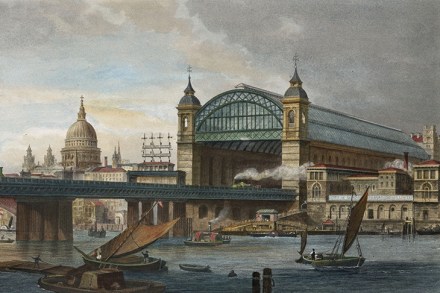
I began this book waiting for a diesel train to Derby, under the windy, boxy, flat-roofed bit which one of Sir Norman Foster’s team added to the back end of St Pancras station. At around 7 p.m. on a weekday only a dozen or so people were travelling. In the arcade below — built by the proud Midland Railway, as Christian Wolmar reminds us, to the dimensions of the Burton beer barrels the space was designed to store — shops are being boarded up. No one buys a new wheelie case or jewellery before catching a Eurostar to Paris anymore. Among the many entertaining facts he has assembled, Wolmar calculates that London has 598 railway stations. There are mornings now when it feels as though that is greater than the number of peak-hour passengers across the city.

Long live the National Trust

From our UK edition

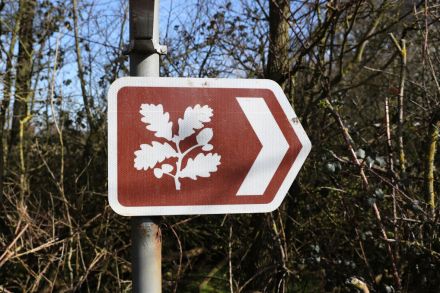
If the second son of an ageing Marquess decided to dress in a pink bikini, rename himself Madame Frou Frou and hung the family Canaletto sideways in his crumbling Lincolnshire pile while lighting his farts we’d all chortle at the charm of the eccentric English toff. You can get away with almost anything if your lineage is sound. When Deborah Devonshire moved into Chatsworth in the 1950s, she sliced a portrait of General Monck by Peter Lely in half to fit in a lift bringing food up from her new kitchen. Hint at anything as half as crass as this if you run the National Trust and all hell will be unleashed. Things, the critics say, were always better at some undisclosed point before the vulgarians arrived.

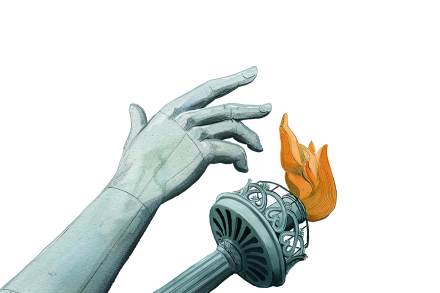
In defence of liberalism: resisting a new era of intolerance

From our UK edition

45 min listen

Are we witnessing the death of the liberal ideal? (01:02) Next, what's behind the government U-turn on primary schools and what effect could it have on the poorest students? (20:14) And finally, Britain's ash trees are facing a pandemic of their own, with so-called ash dieback sweeping the nation. Can Britain's ash trees be saved? (30:12)With Douglas Murray; The Spectator's economics editor Kate Andrews; Coffee House contributor Melanie McDonagh; political editor James Forsyth; associate editor of the Evening Standard Julian Glover; and professor at the Laboratory of Tree-Ring Research at the University of Arizona Valerie Trouet. Presented by Katy Balls.Produced by Gus Carter and Matthew Taylor.

Is it too late to save Britain’s ash trees?

From our UK edition

Once we wrote poems when we lost our trees. Now we just watch them rot. In 1820 John Clare was moved to mark the end of a single tree he had loved: ‘It hoples Withers droops & dies.’ In 2020, so many English trees are dying that it would take a library of Clares to record the casualties. This year, locked-down in Derbyshire, I have been watching skeletons amid the green, hoping that they will return to life. Almost all have. The last of the great field ashes are only just coming into leaf, scarred by late frosts and drought. A row of oaks I ride by most days has dead leaves that crunch in my fingers when I reach up from my horse. The frost got these too — but beneath the brown there are fresh shoots.

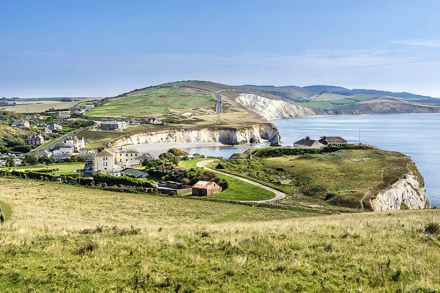
Shropshire

From our UK edition

I found the land of lost content last week, west of the Clee Hills in the Shropshire Housman wrote about, but hardly knew. It is deep England, thick with trees, stone-built farms that look like forts and tracks in gullies cut by ancient feet. The villages here have rhythmic names: Bouldon, Peaton and Cockshutford — or simple Heath, where there is now no village at all, only the pure Norman chapel standing in grass with its long old iron key on a hook outside. It was built for a settlement lost at the Black Death. Few sounds here are unnatural: you hear birdsong more than cars or planes. I was riding my horse James, with two friends on Cassie and Rubin, along paths bursting with nettles.

And in the event of a hung parliament…

From our UK edition

David Cameron may have to rely on Nick Clegg to form a majority. But Julian Glover says that a deal should be simple – if they focus on areas where they already agree In late 2007 two fresh-faced, privately educated party leaders gave speeches setting out their philosophies. ‘We’ve always been motivated by a strong and instinctive scepticism about the capacity of bureaucratic systems to deliver progress,’ said one. I want ‘a politics of people, not systems, of communities, not bureaucracies; of individual innovation, not administrative intervention,’ said the other. ‘The days of big government solutions – of “the man in Whitehall knows best” – are now coming to an end,’ they could have chorused together.