James Campbell

‘I’m tired of your ridiculous lies’ – the wrath of Muriel Spark

From our UK edition

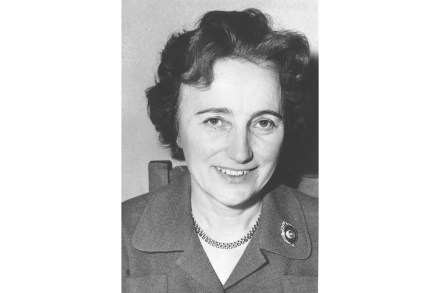
Few among Muriel Spark’s circle of friends would have disputed the judgment of Storm Jameson when recommending Spark to the publisher Blanche Knopf in 1963: ‘I warn you, or remind you, that you are taking on a tartar. She has worn out two Macmillan directors already.’ Even tartars are forgiven, however, when they exhibit a touch of genius. ‘On the credit side, she is a good writer.’ Spark was a good writer of letters, too. They were often a joy to receive, as this fascinating first volume of her correspondence shows. (Jameson to Knopf is quoted in an editor’s note.
Why does James Baldwin matter so much now?

From our UK edition

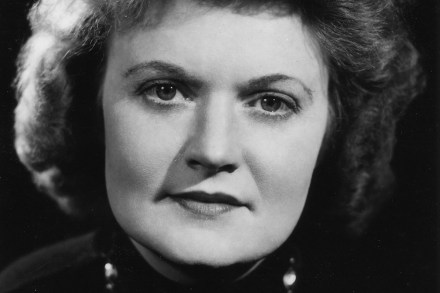
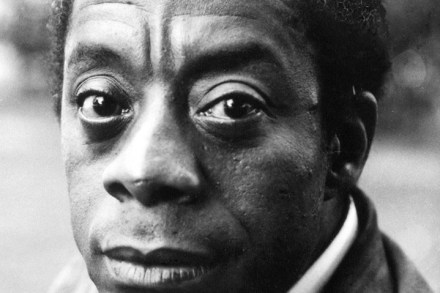
James Baldwin matters. To veteran Baldwin admirers, his renewed prominence comes as a surprise after decades of indifference. This year, in the centenary of his birth in Harlem, Baldwin has seemed to matter more than at any time since his heyday, when he combined the roles of writer and civil rights spokesman. Between 1961 and 1964 he produced three bestselling books – two collections of essays and the novel Another Country – as well as a stylish collaboration with the photographer Richard Avedon and a Broadway play. In May 1963, Time put him on its cover (Martin Luther King had to wait until the following January). Life called him ‘the monarch of the current literary jungle’.

100th anniversary of A A Milne and E H Shepard, with James Campbell

From our UK edition

36 min listen

On this week's Book Club podcast we're celebrating the 100th anniversary of a landmark in children's publishing, When We Were Very Young — which represented the first collaboration between A A Milne and E H Shepard, who would (of course) go on to write an illustrate Winnie-the-Pooh. Sam Leith is joined by James Campbell, who runs the E H Shepard estate. He tells Sam how the war shaped the mood and success of that first book, why Daphne Milne's snobbery and ambition left Shepard out in the cold, what happened to Christopher Robin... and how Pooh became Pooh.

Paris is perhaps the greatest character in Balzac’s Human Comedy

From our UK edition

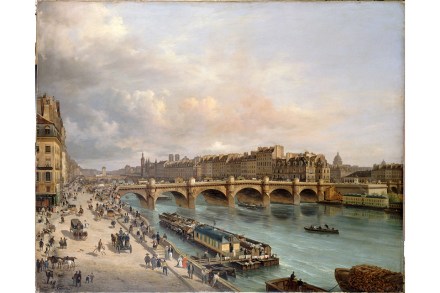
Open one of the major novels by Honoré de Balzac and you are likely to encounter a sentence such as this, from Cousin Bette: ‘Towards the middle of July, in the year 1838, one of those vehicles called milords, then appearing in the Paris squares for the first time, was driving along the rue de l’Université.’ Or this (from César Birroteau): ‘On winter nights there is no more than a momentary lull in the noise of the rue Saint-Honoré.’ It is the same story in Père Goriot (rue Neuve-Sainte-Geneviève), Cousin Pons (Boulevard des Italiens) and others. From the first words of the tale, the reader is cast into the drama of the street. One of the first things to beware of is the mud.

The heyday of Parisian erotica

From our UK edition

Maurice Girodias was the most daring avant-garde publisher in English of the post-war era. His Paris-based Olympia Press took on Samuel Beckett at a time when no British publisher wanted him, Vladimir Nabokov when Lolita was considered unprintable, William Burroughs when The Naked Lunch was regarded as obscenely incomprehensible, The Ginger Man by J.P. Donleavy, as well as translations of risqué works by Jean Cocteau and other French authors. After a police raid, Terry Southern’s banned book Candy simply reappeared as Lollipop Olympia flourished for a dozen or more years from 1951.

Kicking up a stink: Dead Fingers Talk, by William S. Burroughs, reviewed

From our UK edition

William Burroughs was introduced to a British readership in November 1963, and the welcome he received was ‘UGH...’ The headline stood guard over a review in the Times Literary Supplement of Dead Fingers Talk, the first legally obtainable book by Burroughs to be offered to the public in this country. Included in the round-up was a trilogy of novels issued in previous years by the Olympia Press in Paris: The Naked Lunch (1959), The Soft Machine (1961) and The Ticket That Exploded (1962). The three had been compressed, disassembled and rearranged in selected parts by Burroughs himself to create Dead Fingers Talk.

Blair the chameleon?

From our UK edition

A new book on John Howard's government, by the veteran Australian politcal journalist Paul Kelly, has a nice account of the Australian PM's first encounter with Tony Blair: "At one point John Howard, trying to be clever, asked Tony Blair: 'What are you going to do with the Thatcher legacy?' Blair paused, he sat up straight, extended his arms and broke into a huge grin. 'I'm going to take the lot,[ he chortled. Blair laughed but Howard seemed stunned. It wasn't the answer he expected. On his return to the hotel Howard was fuming. 'That man's a bloody chameleon. He doesn't stand for anything,' Howard declared.

At least we know about it

From our UK edition

Britons today may not be inclined accentuate the positive about the way their government goes about its business but there is one consolation to be had from the lost data debacle:  the government 'fessed up to it. Think about that for a minute and then consider how this might have been handled in other countries. Can you imagine George Bush or Jacques Chirac coming out with a foursquare admission of failure this size? There are many things wrong with the extraordinary centralisation of Britain's government but it has one merit: when things go wrong the minister finds out sharpish.

Howard’s end nears

From our UK edition

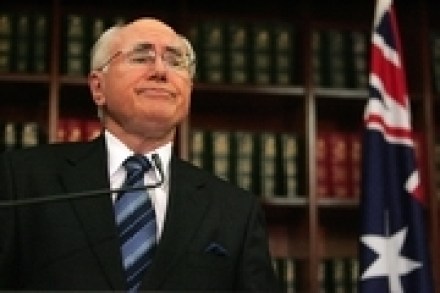
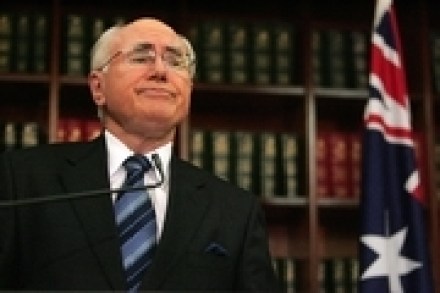
There's just over a week to go until the Australian election and it's very hard to see John Howard winning it from here. Though there has been a slight narrowing over the course of the campaign, all polls are still showing Labor with a landslide winning percentage of the vote, 54-55%. Thanks to favourable electoral boundaries Howard’s Liberals could probably lose the popular vote by as much as 2% and still win, but they needed to be a lot closer by now. Unfortunately everything seems to be going wrong. Last week the Reserve Bank raised interest rates for the sixth time since Howard was re-elected in 2004 with the slogan 'Keeping Interest Rates Low'.

Howard’s end?

From our UK edition

Nothing is going right for John Howard at the moment. Following a slight improvement in the polls last week came a poor showing against Kevin Rudd in the only debate of the Australian election campaign.  Now a devastating poll has Labor with a crushing lead of 58-42%.  Most worrying for the government must be the news that Rudd has made big strides on the issues of economic management and national security. These are supposed to be Howard's strong suits and suggest that having made up their minds to vote for Rudd, voters are now telling themselves that he can be trusted with these issues.  Howard opened his campaign with a bang last Monday by promising $34 billion in tax-cuts, mainly to low-income earners.

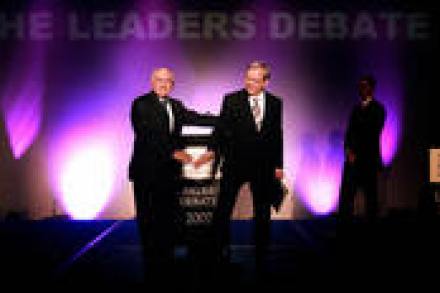
John Howard stumbles in Australian election debate

From our UK edition

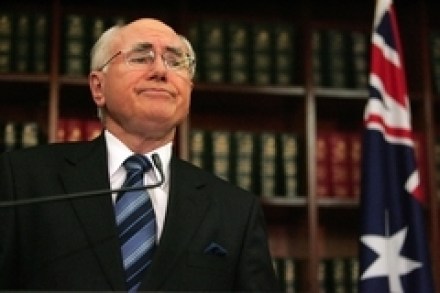
John Howard and Kevin Rudd went head-to-head tonight in the only leader's debate of the Australian election. Most commentators are giving it to Rudd. His opening was upbeat, talking about the future and the need for new leadership. Howard's opening was strange: instead of outlining what he is going to do if he is re-elected or frightening people with the prospect of a Labor government, he spoke about the achievements of the past twenty years (for nine of which Labor was in power),  and  how he is an optimist while Rudd is a pessimist. His bizarre message to voters who hate his new industrial relations laws was that they should relax as "Australia has the second highest minimum wages of any country in the developed world".

Can John Howard pull it out?

From our UK edition

John Howard has been trailing in the polls for months and time finally seemed to be up for the Australian PM. But under the headline 'Lazarus Stirs' the Sydney Morning Herald has a poll showing a swing back to Howard at the end of the first week of the Australian election campaign. Although Labor is still in front by an election-winning margin of 54-46% the gap is closing. The result is mirrored in News Ltd's polling which has Labor up to 53-47%. However the government's best news came from the preferred Prime Minister rating which has closed a massive 9 points in the last two weeks.