Peter Jones

Tax like an Athenian

From our UK edition

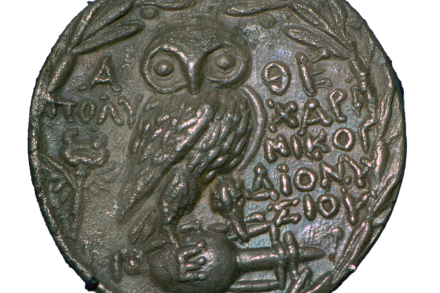
If Gary Lineker wants to convert his footballing OBE into something better reflecting his wealth, he will have to try a little harder. His latest suggestion that all rich men should be taxed more was not a hit. Let him pause the day-job hawking crisps and instead propose an ancient Greek solution to our financial problems. Every year in Athens, the richest 300 citizens could be instructed to carry out a leitourgia, lit. ‘work in the interests of the people’, i.e. an obligation to subsidise a state activity (origin of our ‘liturgy’). The wealth in property that qualified a man for such a duty was 3-4 talents (18,000-24,000 drachmas). This duty could involve anything from equipping a trireme for a year to underwriting cultural festivals. These did not come cheap.

Plato would know why Farage attracts chancers 

From our UK edition

The problem with Nigel Farage is that he seems to be something of a chancer and, as a result, tends to attract chancers to his cause. The notion that ‘like attracts like’ goes back to the ancient world. It first occurred in Homer’s Odyssey, and was picked up by Plato, for whom good people are naturally attracted to other good people. The philosopher Democritus even observed how mixed pebbles of different types, when agitated, naturally resolve themselves into groups of the same size and shape. Aristotle saw three categories of friendship. One sort is driven by usefulness, the advantage that two people can bring each other. But once that mutual benefit disappears, the friendship disappears with it.

Will Andy Burnham open Pandora’s Box? 

From our UK edition

A Mr A.M. Burnham announced at his elevation that he would bring ‘hope’ to the country. A fine sentiment. But hope in what? And how many parsnips will it butter? Greek myth told of Pandora, the first female. Because of the tricks Prometheus had played on Zeus to help men, Zeus made her irresistible to males, but the source of men’s woe. She was given a jar said to be filled with all (‘pan’) the gifts (‘dora’) of the world but filled instead with all the evils. She opened it, flooding the world, with only hope left as a counterbalance. But the Greek word we translate as ‘hope’, elpis, had strong overtones of ‘expectation’. It could be a source of comfort and resilience, but equally of delusion.

Augustus’s plans for poverty

From our UK edition

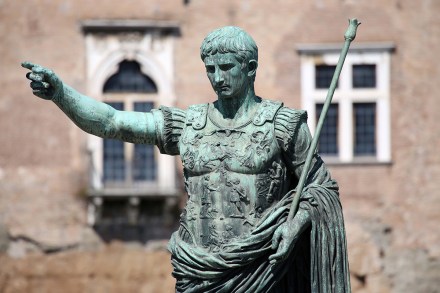
A Mr A.M. Burnham has introduced a clear blueprint and legislative goals intended to lift hundreds of thousands of children out of hardship. One can hardly wait – but for the record, in ad 101 the emperor Trajan reintroduced a system invented by Augustus, of alimenta (‘maintenance, means of livelihood’) for poor children. Perhaps this could hold the fort while Burnham’s legislation for the blueprint, or vice versa, is clarified. Alimenta worked as follows. The imperial treasury offered loans to farmers against the security of a proportion of their land. These loans were not repayable, but interest on them was charged, though at a lower than usual rate. That interest was diverted into the local community to support poor children.

The word ‘tragedy’ has lost all meaning

From our UK edition

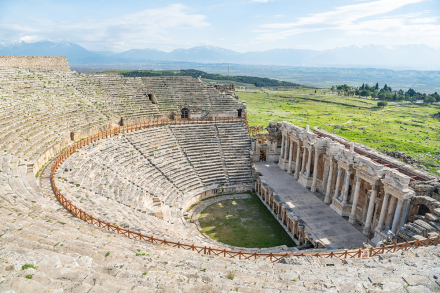
The Chancellor of the University of Cambridge has said the university has ‘lessons to learn from the Jason Arday tragedy’. Well, you can make words mean what you want – the ancient Greeks invented the word tragôidia and it meant ‘goat-song’ – but is ‘tragic’ really the word for Arday? Tragedies reworked the fate of great ancient heroes, whose death was of high significance and meaning to the watching audience. Such dramas were typically characterised by a number of markers. They could include prophecies, warnings, ignorance of the true state of affairs (generating irony), over-confidence accompanied by self-delusion and understanding too late to avoid disaster.

How the ancients saw eclipses

From our UK edition

By the 5th century bc, probably thanks to the Babylonians, enlightened Greeks were well aware that eclipses were natural phenomena. On 3 August 431 bc, Pericles was about to lead his triremes into battle when a solar eclipse occurred, and panic broke out among his men at the ‘omen’. Pericles promptly wrapped a cloak around his helmsman’s eyes and asked whether he thought that was an omen. ‘Of course not,’ replied the helmsman. ‘Same difference,’ said Pericles. ‘The eclipse has just been caused by something bigger than this cloak.’ There was a very different outcome when a lunar eclipse occurred as the Athenian army was about to retreat from Sicily (27 August, 413 bc): the general Nicias ordered a fatal 3 x 9 day delay.

Would the ancients have considered Rod Liddle a satirist?

From our UK edition

If the great Rod Liddle was a satirist, as many columnists have suggested, he was not one in the Roman tradition. They invented satire, which often worked by contrasting a corrupt Rome with the golden years of the past.  But Rod was a political animal, like the Athenian comedian Aristophanes (5th C bc), whose plays attacked the living, like Socrates, and even his audience, if he felt they were being too easily deceived by politicians he hated, such as Cleon. In 424 bc, he imagined the Athenian state as a household, headed up by Dêmos (‘The People’). Dêmos is served by two slaves (= politicians), who are fed up that a foul-mouthed new slave, Bullshitter (Cleon), has taken total control of their master.

Would Grok’s Odyssey be better than Nolan’s?

From our UK edition

Elon Musk, who does not rate Christopher Nolan’s film of The Odyssey very highly, has said: ‘Before this year ends, Grok [Musk’s AI] will make a full-length movie of The Odyssey that is historically accurate and true to the art of Homer.’ Will it, now? Around 1200 bc the city that Homer calls Troy or Ilium was destroyed by fire and warfare. In 1873, this site (which archaeologists now call Troy VIIA) was excavated by German adventurer Heinrich Schliemann, who announced to an astonished world that it was the well-spring of Homer’s Iliad and Odyssey. The problem is that there is no evidence at all that VIIA was attacked by Greeks. But there are passages in the Iliad which could be said to match some of the features of VIIA.

There’s a world beyond Manchester, Andy

From our UK edition

‘Things are just completely coming full circle here. For me to be here with you all in the heart of Manchester this Friday morning, at the end of a fairly big week, is just everything to me,’ said a Mr A.M. Burnham MA (Cantab.) after he had sent all his advisers up the hill to Manchester only to send them back down again. Seneca would have had something to say about that. Addressing his friend Lucilius, Seneca points out that it is no surprise that his travels have done nothing for his state of mind and goes on to quote Socrates: ‘Why do you wonder that globe-trotting does not help you, seeing that you always take yourself with you? You cannot shake off the reason that sent you on your travels.’ So what was that reason? Mr Burnham knows about Manchester already.

The modern hysteria about hysteria

From our UK edition

The McKinsey Institute says that health outcomes for women are less successful than those for men, and it has been argued that men should take a greater interest in the problem. We have names of about 50 female doctors from the ancient world, and one wonders what they made of the male theorists’ views of their bodies. Health in the ancient world was understood to depend upon the balance of the four ‘humours’ (liquids) inside the body: yellow bile (vomit), black bile (from the spleen and liver), phlegm and blood. Having no idea what the purpose of menstruation was, doctors argued that women’s soft and spongy bodies tended to corrupt their blood, which the body very sensibly expelled every month.

Does Nigel Farage think he’s above scrutiny?

From our UK edition

If Nigel Farage is so confident that the £5 million donation he received from a friend is entirely kosher, why is he so frightened of being subjected to the official parliamentary code of conduct on the matter, or does he think he is above such scrutiny? That is a dangerous tightrope to tread. In 406 bc, after a naval battle in the long war between Sparta and Athens, a ferocious storm prevented the Athenian generals from picking up their survivors and the dead. In the law-making democratic Assembly, consisting of all Athenian male citizens over 18 (the dêmos), fury was high, and there was a demand from one Callixenos that the six out of the eight generals who had returned to Athens should be tried en bloc.

Lessons in oratory for Andy Burnham

From our UK edition

A Mr Burnham, A.M. (Andrew Murray) fancies being PM and Labour MPs have decided to humour him. Needing to assert what a democratic triumph this is, they will welcome ideas from Menander, the ancient Greek orator. Menander would suggest starting their acclaim as follows: ‘With favourable omens have you come to us, as splendid as a bright day of sunshine, appearing to us from on high. A welcome report announced your auspicious arrival and the good fortune that your subjects had fervently prayed for.’  MPs should then explain why he is needed, not slandering the previous leader but suggesting the subjects were unhappy, and go on: ‘Just as if night and darkness had held the world in its grip, you appeared like the sun to our eyes and scattered all our hardships at once.

How to paint like the ancient Greeks

From our UK edition

Last week David Hockney was cited as an example of a great English artist who insisted on working, like ancient Greek sculptors, in a well-established tradition. But how did Greek painters work? Let Pliny the Elder remind us. According to Pliny, Apelles (fl. c. 330 bc) from the island of Cos ‘surpassed all painters before and after him’. Court painter to Alexander the Great, he published volumes on the principles of painting – he favoured a palette of white, black, red and yellow – and was modest enough to recognise excellence in others: indeed, he thought a certain Protogenes his equal (he bought his paintings to sell as his own), except in one respect – that he (Apelles) ‘knew when to remove his hand from the picture’.

Would the ancients have appreciated David Hockney?

David Hockney has died, and there has died with him an artist whose work has given those of us who are not artists a very great deal of pleasure, in striking contrast to most art that wins prizes these days. The ancient Greeks did not have a word for ‘art’. The closest they got to it was tekhnê (cf. ‘technical’), brilliantly defined by Aristotle as ‘the trained ability to produce something under the guidance of rational thought’, always difficult to discern in the work of most modern artists. So in the ancient world, the artist was on the same level as (say) a dentist – someone whose purpose it was to serve the ordinary public to the best of his technical capacity.

Plato would have been appalled by Newcastle University

From our UK edition

Newcastle University is advertising for a Director of Academic Advising, which will offer guidance that is ‘inclusive, compassionate, and genuinely personalised to [student] goals’. Plato would have been appalled. Should not students be meeting the university’s goals? In 361 BC Dionysius II, tyrant of Sicily, invited Plato to come to Sicily to educate him on the matter of ruling a country. Plato agreed, but had grave doubts whether Dionysius would respond well to his method, which was to ‘demonstrate the nature of the subject as a whole, and all the stages that must be gone through, and how much effort is needed’ in order to acquire ‘the daily routine which will best foster his powers of learning and remembering and conducting sober debate within his own mind’.

An ancients’ guide to sexual incontinence 

From our UK edition

King’s College Cambridge has lost (according to the papers) a ‘famous’ classicist, who resigned because he slobbered wet kisses all over an unimpressed woman. But everyone knows there is only one famous classicist, and she is not at King’s. The classicist at issue surely cannot have been paying too much attention to the literature which one assumes he has studied, because Eros was seen as a sickness, a madness, a god who robs us of our wits, creating a strong and obsessive desire (‘desire doubled’ as an ancient puts it). Plato saw sexual incontinence as a ‘disease of the soul’. Sophocles thought of sex as a ‘mad and savage master’.

Is the Pont-Neuf bridge the new Plato’s cave?

From our UK edition

An artist, J.R., working with something called Snap Inc., has covered the Pont-Neuf bridge in Paris with a gigantic tarpaulin shaped like a cave, through which the public is invited to walk. It is supposed to represent the underground cave where Plato (d. 348 BC) thought most of mankind metaphorically lived. Of course it bears no likeness whatsoever, being empty of everything with which Plato filled his cave. But then he is an artist, beyond such banausic considerations. Plato’s cave is seen as an allegory of the human situation. Plato sees mankind chained into position from birth like prisoners, able to see only the wall directly in front of them.

Welcome to Diocletian’s cashless society

From our UK edition

Money is a pagan god because it has value only as long as people believe it does. Refuse to believe, and the value disappears. In the 3rd century ad, the Roman empire was under intense pressure, and emperors resorted to increasing taxes and debasing coinage to fund its protection. The result was terrifying inflation. Cash became worthless. Soldiers refused to be paid in it and the state to accept tax in it. So ‘requisitioning of supplies’ – goods, materials, labour – became, in effect, taxation ‘in kind’ to pay for the military; and the army plundered at random to ‘collect’ it. The emperor Diocletian rationalised the system by organising this requisitioning of supplies into a coherent tax scheme.

Did Plato invent women’s lib?

One could go on endlessly about what the ancients have done for us, but one of the most interesting things is that Plato could be said to have invented women’s lib, though it seems to have taken 2,500 years to catch on. Since most ancient states were at war much of the time, putting the male population especially at risk, women had to commit to the production line as soon as possible if the state were to survive. But Socrates, in Plato’s dialogue The Republic, portrays a utopia in which women shared the same status as men. The ruling class of this state are called Guardians and Plato likens them to dogs hunting and protecting the flock, an activity in which female dogs engage just as much as male dogs (though the males are stronger).

Rome vs Jeff Bezos’s yacht 

From our UK edition

Rumour has it that Jeff Bezos, the founder of Amazon, is selling his agreeable little yacht Koru because it will not fit into places like Monaco and Venice and costs far too much to run. Poor old Jeff! Had he studied Classics, he would have known this was not a wise project. In 240 BC, we are told, Archimedes designed for Hiero II, tyrant of Syracuse, the cargo boat Syracusia, protected by fearsome armaments, carrying 400 tons of grain and 500 tons each of pickled fish, wool and other cargo. It had interior panelling of cypress, ivory and aromatic cedar. Multi-coloured mosaics re-telling the Iliad covered the three floor-levels. There was a temple to Aphrodite, the ship’s guardian deity, and statues and artworks were liberally scattered about.