Orlando Bird

Love it or loathe it – the umami flavour of anchovy

From our UK edition

We are blessed to be living in a golden age of anchovies. They’re everywhere – lacing salads, festooning pizzas, draped across inordinately expensive small plates. In certain circles, there are few more potent social signifiers than the red, yellow and blue of an Ortiz tin. Victory for the umami junkies. How times change. Today the average Spaniard puts away 2.69 kilos of the things each year, but it was a different story in the 16th century, when the Catalan chef Ruperto de Nola complained that anchovies were ‘commonly bitter’. A little later, the English physician Tobias Venner fumed that they ‘do nourish nothing at all, but a naughty cholerick blood’.

There are no ‘correct’ recipes when it comes to pasta

From our UK edition

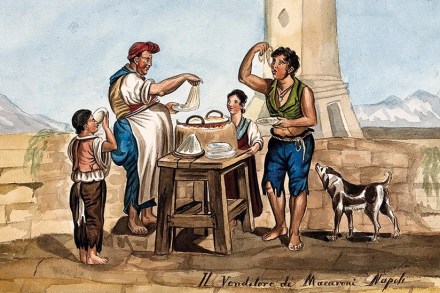
A few years ago I was feeling peckish at Catania airport. I wandered over to the main café and spotted – beyond the stacks of panini stuffed with wilting prosciutto – a sign promising pasta. I assumed they’d be doling it out ready-made from a hulking pot, school-canteen style. But no: they were carefully blanching each portion of rigatoni, then finishing it in the sauce (a humble pomodoro). Who cares about foot-tapping customers on the verge of missing their flights? There were more noble priorities. The celebrity chef Carlo Cracco caused an uproar when he included garlic in his amatriciana sauce This national pedantry – more interesting than the British and their tea – has often been mined for comedy.

An enduring classic

From our UK edition

A couple of years back, John Carey reviewed a new biography of Kingsley Amis and began with the question that people had been asking for years: why was he so horrible? Amis is regarded as one of a generation of fat philistines, drink-sodden and misanthropic, who made careers of bating Britain’s ‘Trots and leftist shags’. But he was not always so. John Metcalf, reviewing Lucky Jim for the Spectator in 1954, described it as ‘that rarest of rare good things: a very funny book’. ‘Dixon’, he wrote, ‘is completely believable, his predicaments and gaucheries are a part of him, and Mr Amis watches with wide-eyed objectivity’. Lucky Jim, Metcalf concluded, is ‘a very funny, very human novel’.

The ‘Big Society’ in Georgian and Victorian literature

From our UK edition

When David Cameron unveiled his plans for a ‘Big Society’, transferring power from ‘the elite in Whitehall to the man and woman on the street’, Ed Miliband accused him of wanting to drag the welfare state back to Victorian times. Presumably he feared a Tory Britain in which a latter-day David Copperfield was left to be thrashed by Mr Murdstone. Actually, though, the idea of the Big Society has other precedents, many of them literary, with different implications. We find it in Samuel Johnson’s journalism. ‘The Benefits of Human Society’, an article written for The Rambler, balances scepticism with an uplifting idealism.

From the archives: The Chatterley trial

From our UK edition

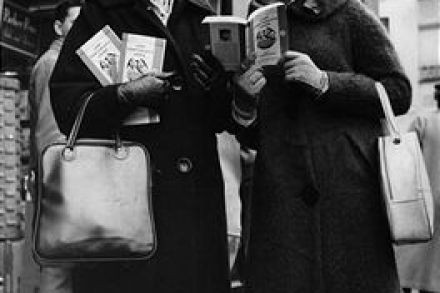
It’s 50 years since the case of Lady Chatterley’s Lover was declared sub judice, so commenting on the trial amounted to contempt of court. Here’s how the Spectator circumvented the order at the time: The Prosecutors, The Spectator, August 26, 1960 As Penguin Books Ltd. have been summoned under the Obscene Publications Act, the case of Lady Chatterley’s Lover is now sub judice; and this means… But what does it mean? The trouble with the law of contempt in this country is that because defendants are allowed neither trial by jury nor the right of appeal it tends to be more arbitrary, and more capriciously exercised, than any other law.