Culture

Culture

The good, the bad and the ugly in books, exhibitions, cinema, TV, dance, music, podcasts and theatre.

A father’s nightmare: What You Need From the Night, by Laurent Petitmangin, reviewed

More from Books

The unnamed narrator of Laurent Petitmangin’s prizewinning first novel, What You Need From the Night, a middle-aged railway engineer and lifelong socialist, is faced with his worst nightmare when his 24-year-old son Frédéric, known as Fus, joins a violent far-right group. The narrator lives with his younger son Gillou and Fus in a village in eastern France, near the Luxembourg border. It’s an insular part of the country, suspicious of the capital and devoid of employment prospects or cultural resources. The sole diversions appear to be football and alcohol. Petitmangin depicts a predominantly male world, accentuated in the narrator’s case by the death of his wife after her three-year battle with cancer.

What possessed the Duke of Windsor to visit Nazi Germany in 1937?

More from Books

Bombs start exploding at the beginning of this book. Buckingham Palace was targeted by the Nazis early on in the war in an act of extraordinary audacity – and one that backfired. George VI noted in his diary: ‘We all wondered why we weren’t dead.’ Little did he realise that Hitler had gifted him his first wartime ace. But while George grew into the role of stoic monarch, his older brother never worked out how shake off the trammels of his birth. Edward was hurt, angry and rudderless – which resulted, if not in treason, certainly in disloyalty The Windsors at War is a follow-up to Alexander Larman’s The Crown in Crisis, which explored the abdication of 1936.

Mass poisonings in a small town in Hungary

More from Books

There is a small town in Hungary called Nagyrév. With a population of 800, it seems unlikely to make the news. But a century ago it turned out to be the centre of a murder ring, and suddenly it became the focus of news-paper reports across the world. The unlikely setting made the story. It was a backwater, literally: the redirecting of the Tiszaltiver river decades earlier had cut Nagyrév off. Forget cars: this was a town where it was notable in the 1920s if someone owned a bicycle. Yet the place had the murder rate of a violent city. By the time the authorities woke up to what was going on, they discovered dozens of homicides going back several years, and all traced to the town’s midwife, Suzannah Fazekas.

The European influence on modern American art

More from Books

Charles Darwent’s Surrealists in New York is somewhat misleadingly titled, though its true content and focus are revealed in the subtitle: ‘Atelier 17 and the Birth of Abstract Expressionism.’ Perhaps that sounds obscure and even academic. If so, it gives the wrong idea, for this is a very readable and accessible account of a hitherto unexplored area of mainstream art history. Many of us suspected the importance of European influence on what is always claimed as the thoroughly American art movement of Abstract Expressionism. This book sets out the situation in detail, and makes a convincing argument for giving credit not only to a bunch of European émigrés but to an Englishman as well.

A deep mystery: In Ascension, by Martin MacInnes, reviewed

More from Books

Martin MacInnes’s third novel, In Ascension, is a literary sci-fi epic set in the 2030s. It centres on a Dutch marine microbiologist called Leigh Hasenboch. As a child she suffers from a violent, frustrated father and a distant, unavailable mother, and tries to protect her younger sister from the worst of it. One day, swimming in the Nieuwe Maas, she experiences a revelation: ‘Absolutely everything around me was alive.’ Her fascination with the marine world eventually takes her on a voyage to explore a newly discovered mid-Atlantic trench. Strange, harmful things happen to divers who approach it. It seems to repel the ship she is on, and its oval shape appears significant. But people who experience this alien, damaging space seem to be irresistibly drawn back to it.

Femicide in Mexico reaches staggering proportions

More from Books

In July 1990, Liliana Rivera Garza, a 20-year-old architecture student, was strangled to death at her home in a borough of Mexico City. Her suspected killer, Ángel González Ramos, an ex-boyfriend, fled and remained at large. Three decades later, buttressed by a movement protesting against violence towards women, her sister returned to Mexico in the hopes of finding justice. An acclaimed author and essayist, Cristina Rivera Garza is a professor of Hispanic Studies at the University of Houston. Liliana’s Invincible Summer begins with her quest to track down the case files. When the paper trail hits a dead end, she turns her detective work to her sister’s personal archive, motivated to memorialise Liliana in the absence of an institutional record.

Karl Lagerfeld – from fashion icon to invisible man

More from Books

Karl Lagerfeld was an icon when he died in 2019, but for most of his career he was unknown outside the fashion business. He was born in 1933, the year Hitler came to power, a distasteful coincidence, so Lagerfeld altered his birth to 1938. He was an only child, whose father did well by introducing condensed milk into Germany. His parents had been Nazi members, and Karl saw his future elsewhere. At 18 he left Hamburg for Paris. Short and chunky, he had simian good looks, with beetling brow and a smile that was wider than his eyes; and he didn’t want for admirers. In 1954 he won the young designers Woolmark Prize, but only in ‘the coat category’. The winner in the more prestigious ‘dress category’ was the several-years-younger Yves Saint Laurent – and that scorched Karl for life.

A passion for painting at the early Stuart courts

More from Books

Four years ago Roy Strong – one-time director of both the National Portrait Gallery (1967-73) and the V&A (1973-87) – published The Elizabethan Image: An Introduction to English Portraiture, 1558-1603, in which he returned, after more than a 30-year hiatus, to the subject with which he first made his name: the imagery of Queen Elizabeth I and her court. Now 88, the indefatigable Strong has produced a follow-up volume charting the fate of portraiture (and painting and the visual image more generally) at the courts of Elizabeth’s Stuart successors, James I and Charles I. Charles I would travel by barge to Van Dyck’s studio to pass the time with him and watch him paint The format of – and thinking behind – The Stuart Image is the same as in the previous book.

Inside Warhol’s Factory: Nothing Special, by Nicole Flattery, reviewed

More from Books

In 1965 Andy Warhol set out to record 24 one-hour audio cassettes focused on one of his ‘superstars’, the actor known as Ondine. The recordings later became a, A Novel, a Joycean distillation of a day in the life. Four typists, two of them teenagers, transcribed the cassettes verbatim – everything they heard on their headphones, every word, cough, gurgle, screech of chair or clink of glass. In his memoir POPism, Warhol mentions ‘two little high school girls’ who typed up his recordings. ‘The typists’ mistakes are all part of the process... that’s what makes it real.’ This is the inspiration for Nicole Flattery’s blade-sharp coming-of-age debut novel, Nothing Special.

Why Anaximander deserves to be called ‘the first scientist’

More from Books

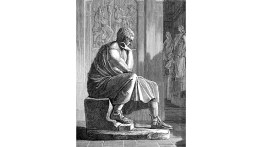
It’s a daring thing to write a whole book about a man while confessing early on that ‘we know almost nothing of his readings, life, character, appearance or voyages’, and of whose writings only a three-line fragment survives. Luckily, as with many ancient authors, the works of the 6th-century BC philosopher Anaximander are described in subsequent treatises, and a resourceful writer can infer much from this evidence about what might have been ‘the first great scientific revolution in human history’.

There’s nothing ‘magical’ about a great theatrical performance

More from Books

‘Make him read the lines the way they’re written!’ Raymond Massey snarled at Elia Kazan during the East of Eden shoot. Classically trained, Massey was infuriated at the way the movie’s star, the Method instinctive James Dean, never played a scene the same way twice. Kazan, who had refereed similar rows between Jessica Tandy and Marlon Brando on the Broadway production of A Streetcar Named Desire, did what good directors do with warring actors: play them off against each other the better to boost both performances. Nobody who has watched the picture, especially those scenes in which Massey flinches at Dean’s latest flight of fancy, could doubt the artfulness of Kazan’s technique.

A source of bitter rivalry: Burton and Speke fall out over the Nile

More from Books

For the 19th-century English adventurer, author, ethnographer, pornographer and all-round maverick Richard Burton, one of life’s happiest moments was ‘the departure upon a distant journey into unknown lands’. There would of course be difficulties; but happiness derives from the prospect of overcoming great challenges and in the process achieving fame and perhaps even fortune. By contrast, what delights the reader most is when a traveller, somewhere deep in those unknown lands, faces overwhelming obstacles. What possible interest is there in hearing that they went, they saw and they returned? Few journeys involved more hardship than the one Burton contemplated in the spring of 1855.

Women beware women: young feminists are betraying their older sisters

More from Books

Where are all the father-in-law jokes? You won’t find them, because fathers-in-law are not fair game in the way middle-aged women are. There is no male ‘Karen’. Men are not mocked as wizards, but we are witches. Victoria Smith has subtitled her timely book ‘The Demonisation of Middle-aged Women’, and if you are one of them you will know that is no exaggeration. Witches, crones, hags, scolds, evil mothers-in-law – up here in middle age, we are used to male scorn. But Smith has a different target: ‘I do not wish merely to present the myriad ways in which older women are belittled, undermined or misrepresented.’ We know all that, it’s obvious: ‘Ageist misogyny has always existed.

A radical new theory about the origin of the universe may help explain our existence

Lead book review

The deeper you get into physics, the simpler it becomes. The starting point of this wonderful book about Stephen Hawking’s ‘biggest legacy’ (which no one outside of physics has heard of) is the problem of our insignificance. Make a change in almost any of the slippery, basic physical properties of the universe and we’re toast – life would not be possible. If, for example, the universe had expanded even slightly more slowly than it did after the Big Bang it would have collapsed in on itself. Result? No us. A fraction faster and no galaxies would form, let alone habitable planets. In the incandescent beginning of the universe, each of these basic physical properties was as vacillating as a dream: they could have ended up being pretty much anything.

The women who rallied to the Republican cause in Spain

More from Books

‘We English,’ the prime minister Stanley Baldwin allegedly remarked following the outbreak of the Spanish Civil War in July 1936, ‘hate fascism, but we loathe bolshevism as much. So if there is somewhere where fascists and bolsheviks can kill each other off, so much the better.’ Initially, many in Britain probably agreed with Baldwin, seeing no reason to be drawn into another country’s civil war. But a sizeable minority thought very differently, believing that the conflict was not just a civil war but part of an ongoing struggle between democracy and fascism. To them, Spain became a rallying cry, and over the course of the war many thousands from around the world volunteered to join it.

Poetry anthologies to treasure

More from Books

Francis Palgrave, the founder of the Public Record Office, didn’t like having his version of the past parcelled in neat gobbets. In his History of Normandy and England, he described anthologies as ‘sickly things’, adding that ‘cut flowers have no vitality’. His son, Francis Turner Palgrave, differed fundamentally, and, with Alfred Tennyson’s help, gathered what is still the greatest collection of English lyric poetry, The Golden Treasury, which sold 10,000 copies in six months after its publication by Macmillan in 1861 and, according to Clare Bucknell in this delightfully engaging survey of verse anthologies, had shifted 650,000 copies by 1939 and must surely now be hitting the million mark.

Why is Ukraine honouring the monsters of the past?

More from Books

The historian Bernard Wasserstein is admired as a rigorous academic. In his monumental work on the Holocaust and his perceptive study of barbarism vs civilisation in the West, he strove for objectivity and maintained a professorial tone, as if writing of the past from an Olympian height. Wasserstein’s grandparents and aunt were forced to dig their own graves, and were then shot Not so in this extraordinarily moving book about Krakowiec, the shtetl 40 miles from Lviv where his forebears lived for generations, and the role his family played there. At various times part of Austria, Poland, Ukraine, Germany and Soviet Russia, it was, he says, ‘a small place you’ve never heard of’. Yet its complex history is relevant today, as war returns to Eastern Europe.

Living trees that predate the dinosaurs

More from Books

It is perhaps easy to understand why some of the Earth’s largest trees, with roots spreading deep into the underworld as their upper limbs ascend to heaven, are charged with symbolic importance. Yet the origins of our fixation are perhaps surprising. To give one example, the Buddha was said to have attained enlightenment beneath the spreading limbs of a bodi, or pipal tree. That same specimen still reputedly flourishes at Bodh Gaya in Nepal. Even earlier, the first temple of Jerusalem was constructed from timbers King Solomon obtained specifically from the cedars of Lebanon, whose own sacred status recedes into the mists of prehistory. Elderflora – a name coined by Jared Farmer for these venerable old masters – suggests that little has changed since Solomon’s time.

Shared secrets: The New Life, by Tom Crewe, reviewed

More from Books

‘It is shocking to read about. But once you are used to it, it is a little like reading about Ireland, or socialism.’ This is the accepting, if unfeeling, response of John Addington’s undergraduate daughter after reading his recently completed book on homosexuality. ‘It is a very rational argument, Papa.’ The New Life, Tom Crewe’s superb debut novel, is set in fin-de-siècle London and follows Addington and his co-author Henry Ellis (based on John Addington Symonds and Havelock Ellis) as they try to make a rational argument for ‘the impossible subject’. They are respected writers and family men, but each is burdened by an unacceptable private life: Addington has brought a young man to live in his home; Ellis’s wife has moved away to be with another woman.

The idealist vs the entrepreneur: Birnam Wood, by Eleanor Catton, reviewed

More from Books

I always feel an element of trepidation when approaching a new book by an author whose previous work I have admired. When the novelist in question won the Booker prize in 2013, and I was on the judging panel, the static crackle of anxiety is even more intense. And so the fearful question: is Eleanor Catton’s Birnam Wood a stinker? No, it isn’t. But will it ‘pull a Mantel’ and win the Booker again? I doubt it, though I would not rule out its appearance on other prize shortlists. It is a subtle, sometimes acerbically comic and ultimately tragic novel of great sensitivity.

Why are women composers still disregarded?

More from Books

Did you know that throughout the 19th century and well into the 20th it was considered a ‘biological impossibility’ for women to sustain the kind of abstract thought required for serious musical composition? Or that in the 1910s women in London could be compelled to sit separately from men in concert halls, sometimes even denied entry if not in academic dress? How about the fact that the Halle Orchestra summarily dismissed all its female members in 1920? Or that from 1952 to 1962 only eight works by women were performed at the Proms? For a bonus point, can you name the year – the decade, the century, even – in which the first opera by a woman was staged at the Vienna State Opera? (The answer is 2019.

From man of words to man of action: Hotel Milano, by Tim Parks, reviewed

More from Books

The global disruption of 2020-21 posed a special challenge to novelists. As a subject it seems irresistible; but how to find order and pattern in a series of seemingly blank, eventless days? Stuck in the pandemic doldrums, Tim Parks’s elderly narrator at least has memories of the past and a richly stocked mind to call upon when lockdown bites. Frank Marriot embarks on an ill-advised trip to Italy at the very start of the pandemic, when he is begged to attend the funeral of an old friend, Dan Sandow. Oddly, Frank has heard nothing about a virus spreading from China. A former cultural commentator and magazine feature writer, he has long undertaken a print and TV detox, so is unaware that he is being flung into the rapidly heating cauldron of Covid. ‘Ben, I don’t do news.

‘It felt like a piece of bad news I should pass on to someone else’ – Robert Douglas-Fairhurst on his MS diagnosis

More from Books

In October 2017 the academic Robert Douglas-Fairhurst went to see a neurologist in Oxford. A couple of months earlier a weird thing had happened: he’d gone on a long walk and ended it shuffling along, like an old man in slippers. He wasn’t yet 50. Having had a scan, he was looking forward to hearing there was nothing to worry about. ‘I’m going to come right out with it,’ the neurologist said, fixing him in the eye. ‘I think you have multiple sclerosis.’ Contemplating a trip to Dignitas, he wonders if people generally buy a two-way ticket or just the single All of us, Douglas-Fairhurst writes in Metamorphosis, his heartening and unexpectedly gripping memoir, find at one point or other that we are standing on a trap-door.

The world has become a toxic prison – and a volcanic winter lurks on the horizon

Lead book review

Civilisation pollutes. Every improvement will bring poison and entropy in its wake. Apparently infinite resources are always finite. Immediate gain is inevitable loss. Lip service to ideals of balance and moderation is as old as humanity and has never been enough. Peter Frankopan’s story of our relationship to the world across all planetary space and human time is necessarily vast – 660 pages of text, with footnotes relegated to 212 pages online – in which the grand cycle is enacted again and again.

Pico Iyer finds peace even in lost paradises

More from Books

We all have our vision of a paradise travel destination. Mine was Tahiti, based on exotic remoteness and those pictures of glorious atolls with their cerulean blue lagoons – until I went there and discovered a severe underlying drugs problem among the island’s youth, and whispering discontent. Herman Melville once talked of how ‘the soul of man was an insular Tahiti, full of peace and joy but encompassed by all the horrors of the half known life’. It’s a phrase that gives Pico Iyer his title for this intriguing collage of such places which might, and should, be considered paradise, but that human intervention has spoiled. Like Satan surveying the Garden of Eden, the reader can take a certain mordant pleasure in the process.

The triumphs and disasters of 1845

More from Books

It was the best of times, it was the worst of times: not France in 1789, convulsed by revolution, but Britain in 1845, when the period Dickens referred to as ‘the moving age’ was in danger of spinning out of control. It was the year when the SS Great Britain, designed by Isambard Kingdom Brunel, left Liverpool docks on the first transatlantic crossing by an iron-built steamship; the Hungerford suspension bridge (another Brunel design) opened, and a Birmingham manufacturer obtained a patent ‘for Improvements in Springs to be applied to Girths, Belts and Bandages, and Improvements in the Manufacture of Elastic Bands’: the birth of the modern rubber band.