Culture

Culture

The good, the bad and the ugly in books, exhibitions, cinema, TV, dance, music, podcasts and theatre.

Woman of mystery: Biography of X, by Catherine Lacey, reviewed

More from Books

Catherine Lacey’s new book is the second literary novel I’ve read recently to radically rewrite American history. In last year’s To Paradise, Hanya Yanagihara imagined a different outcome for the Civil War: the Confederate states secede to become the thoroughly racist ‘United Colonies’. Up north are several political unions, such as the ‘Free States’ (including New York), where gay marriage is not just legal but widespread by the end of the 19th century. Lacey plants her sensational plot-twist a little later on the timeline. In Biography of X, ‘the Great Disunion’ occurs at the end of the second world war, when a wall goes up around the ‘Southern Territory’, a theocratic entity eager to protect its citizens from the purportedly communist north.

The Spanish Civil War still dominates our perception of modern Spain

Lead book review

Nigel Townson’s history of modern Spain begins with disaster – or, more specifically, with the Disaster. When an ignominious defeat in the 1898 Spanish-American war lost the country its last major colonies, a crisis of confidence followed, and the ‘Generation of 1898’ set about trying to diagnose Spain’s problem. Since the scope of Townson’s book runs from that year to ‘the present’ (roughly the spring of 2022), there are plenty of crises to cover. Spain has been unfortunate in its governments. The Penguin History of Modern Spain is a chronicle of ineffectiveness and corruption at the highest levels, and of failures to implement reform. As such, it sometimes reads like a history of missed opportunities.

Painful memories: Deep Down, by Imogen West-Knights, reviewed

More from Books

‘What are you like with enclosed spaces?’ Tom asks his sister Billie before they head into the maze of tunnels under Paris. Away from the ‘tourist bit’ of the catacombs – the part filled with bones moved from the city’s cemeteries – is an extensive network of claustrophobic pathways beneath the everyday, visible level of the city. As the setting for the climax of Imogen West-Knights’s subtle and compelling debut Deep Down, it is certainly fitting: in the wake of their father William’s death, the siblings begin to explore hidden and submerged memories from their childhood. The two are not close.

Find the lady: Tomás Nevinson, by Javier Marías, reviewed

More from Books

The plot sounds like an airport thriller – or a Netflix mini-series pitch. In a proud and staid riverside town in north-west Spain, where ‘each individual played the role assigned to him’, live three women. One is a merciless terrorist killer: Magdalena Orúe, or Maddy O’Dea, half-Spanish, half-Northern Irish, a warrior on long-term loan from the IRA to the Basque separatists of ETA, but now either retired from the armed struggle or quietly brewing fresh mayhem. A mothballed secret agent, one of those ‘nasty angels’ who ‘never forget what everyone else forgets’, arrives in ‘Ruán’ in 1997 on an off-the-books mission hatched in London and Madrid.

The fall of the Berlin Wall promised Europe a bright future – so what went wrong?

More from Books

Homelands is Timothy Garton Ash’s first book since Free Speech, published in 2016, and is an account of Europe from the second world war to the current war in Ukraine, blending history, reportage and memoir.  On several occasions, Russia accepted Nato membership for the Baltic states and former Warsaw Pact countries Unsurprisingly, given how well-travelled the author is and how extensive his contacts are, among its great strengths are the personal encounters, experiences and anecdotes it relates. We learn, for example, of the Romanian pastor who, on hearing that Garton Ash is from Oxford, asks in all seriousness whether he has met John Henry Newman.

There was no golden age for Muslims in Nehru’s India

More from Books

It’s a little-remembered fact that the Indian subcontinent once had the world’s largest Muslim population. Numbering 95 million, they were almost a quarter of India’s total population. Partition in 1947 still left them as the world’s largest Muslim minority, at 15 per cent of Hindu-majority India. More than 70 years later, no single study has successfully explained the consequences of that transition. This latest attempt, though often original and incisive, fails to bridge that gap, partly because it ends in 1977, thereby largely ignoring the major turning point that brought to power India’s current Hindu-chauvinist rulers.

The agony of grief: Old Babes in the Wood, by Margaret Atwood, reviewed

More from Books

Margaret Atwood has often resisted auto-biographical interpretations of her work, but it is impossible to read her short story collection Old Babes in the Wood without acknowledging the death in 2019 of her long-term partner Graeme Gibson. Death permeates every page of the book. Reaching for a comforting layer of fiction, Atwood revives two characters who have appeared previously in her work as stand-ins for herself and her partner: Nell and Tig. The collection’s first third contains stories of the two together, while the end is about Nell on her own after Tig’s death. Between these is an interlude of unrelated tales, which makes Old Babes something of a patchy work.

The eeriness of lockdown: To Battersea Park, by Philip Hensher, reviewed

More from Books

We never quite make it to Battersea Park. By the time the narrator and his husband reach its gates, it’s time for them, and us, to return home. The narrator is a writer, living just that little bit too far away from the park, inspired by eeriness of the Covid lockdown regime but also horribly blocked. All kinds of approaches to fiction beckon to him in his plight, and we are treated to not a few of them here.  Each section of this novel embodies a literary device. We begin, maddeningly, in ‘The Iterative Mood’ (‘I would have’, ‘She would normally have’ ,‘They used to’) and we end in ‘Entrelacement’, with its overlapping stories offering strange resolutions to this polyphonous, increasingly surreal account of lockdown.

The relationship between self and singer

More from Books

The professional performer is the tree in the philosopher’s human forest. If there’s no opportunity to sing or act or dance in front of an audience, are they still a performer at all? In the spring of 2020, when most of his colleagues shrugged and started making banana bread, the tenor Ian Bostridge took an altogether more existential approach to isolation, writing a series of lectures for the University of Chicago exploring the relationship between self and singer, silence and song. Now they form the basis of his latest book. Song & Self is a slim volume. Early on, Bostridge invokes the essay’s origins in Montaigne – the idea of essayer (to try), the form as a space for experimentation and exploration, for provisional attempts rather than finished thoughts or arguments.

The chaos of coronations over the centuries

More from Books

In January 1559 an Italian envoy wrote of Elizabeth I’s coronation that ‘they are preparing for [the ceremony] and work both day and night’. More than four and a half centuries later much the same could be said of the imminent investiture of Charles III – an event overshadowed, at the time of writing, by the uncertainty as to whether his publicity-shy younger son and wilting violet of a wife will be attending. But, as Ian Lloyd describes in The Throne, there have been many more dramatic build-ups to coronations, some culminating in injury or even death.

No happy ever afters: White Cat, Black Dog, by Kelly Link, reviewed

More from Books

Kelly Link’s latest collection of short stories riffs wildly on traditional fairy tales, filleting out their morphological structures and transposing them. She ranges from a space-set ‘Hansel and Gretel’ to a same-sex version of ‘East of the Sun and West of the Moon’, and much more besides. Like Angela Carter, Link understands the psychological (and narratological) powers of her raw material, and makes thrilling shapes while also dissecting modern society, our fears and our fantasies. Each of these scintillating stories (not a dud among them) concerns lost characters in search of truth about themselves or the world. Sometimes they find it; more often they don’t. Link’s lucid prose moves the reader unerringly onwards through the forested thickets of her imagination.

As special enclaves proliferate, what are the consequences for democracy?

Lead book review

When the British announced the withdrawal of their navy from Singapore in 1967, a Dutch adviser from the United Nations, Albert Winsemius, offered the Singapore government two pieces of advice. The first was to crush the communists: I am not interested in what you do with them. You can throw them in jail, throw them out of the country, you can even kill them. As an economist, it does not interest me; but I have to tell you, if you don’t eliminate them in government, in unions, in the streets, forget about economic development. The second piece of advice was to let the statue of Sir Stamford Raffles, the founder of Singapore, remain standing.

What can we learn of George Eliot through her heroines?

More from Books

‘I have... found someone to take care of me in the world,’ Marian Evans wrote to her brother in 1857, three years after setting up house with George Henry Lewes. Professing herself ‘well acquainted with his mind and character’, she requested that the modest income from her father’s legacy should in future be paid into her husband’s bank account. A reply from the family solicitor forced her to acknowledge that ‘our marriage is not a legal one, though it is regarded by us both as a sacred bond’. The funds were paid accordingly, but all contact was severed. Very soon, money from Evans’s novels – written under the pseudonym of George Eliot – also began pouring into Lewes’s bank account.

The bittersweet comedy of ageing: Ladies’ Lunch and Other Stories, by Lore Segal, reviewed

More from Books

Every family has its folklore. Apparently, as a five-year-old, I was on the floor playing when I looked up at my grandmother and told her matter-of-factly that she ‘was not the kind of granny I had been expecting’. I’m not quite sure what my foetal presumptions had been, but she is far from the hackneyed image society reserves for older women: no blankets or twee knitting for Norma. Sharp, glamorous, her face alive with mischief, she is a lady who lunches, a nonagenarian who shared stories, gossip and advice amid a riot of laughter. She would be familiar with much of the gentle drama in this collection of Lore Segal’s stories, which revolves around five women in their nineties dining on a monthly basis together.

Living in a state of fear: a haunting memoir

More from Books

The Fear, a memoir by the author and artist Christiana Spens, opens with an account of the most Parisian of existential crises. A ‘newly heartbroken philosophy graduate’ in ‘the city of Sartre and de Beauvoir’, she is too depressed to get out of bed: ‘It was as if standing was falling, too pointless even to attempt.’ Finally driven outside by hunger, she ends up ‘wandering around a French supermarket wanting to die’. She finds temporary relief in stealing a housemate’s Diazepam pills, but the escape she longs for is love: ‘Nothing worked the way love did’; it was ‘the ideal, the solution, the cure’. Her consciousness of being ‘one more cliché in a city full of them’ only intensifies her agony. But this book is anything but an assortment of clichés.

The remarkable prescience of Alexis de Tocqueville

Lead book review

Alexis de Tocqueville (1805-59) produced what his biographer Hugh Brogan called ‘the greatest book ever written on the United States’. Among the most remarkable things about this work – Brogan was referring to the first volume of Democracy in America, not the more abstract second volume – is that Tocqueville’s journey to the United States lasted just nine months, and was undertaken when he was in his mid-twenties, never to return. Yet the book’s publication, when Tocqueville was still only 29, made him an instant celebrity. The young French aristocrat was especially pleased by its reception in America, where an unauthorised edition was published in 1838.

How hardboiled detective fiction saved James Ellroy

More from Books

Public readings by James Ellroy would tend to begin like this: Good evening, peepers, prowlers, pederasts, panty sniffers, punks and pimps. I’m James Ellroy, demon dog of American literature, the foul owl with the death growl, the white night of the far right, and the slick trick with the donkey dick. My books are written in blood, seminal fluid and napalm. Etcetera. This is his ‘demon dog’ persona, adopted many years before as a way of overcoming his native insecurities. At school, Ellroy adopted a persona whose main shtick was expressing a fondness for far-right politics He is quoted in this biography as saying that this persona is ‘about 3 per cent’ of who he is. I would say, and I choose the adjective carefully, this is a conservative estimate.

Strange encounter: The Gospel of Orla, by Eoghan Walls, reviewed

More from Books

It’s been two months since 14-year-old Orla’s mother died of cancer, and the girl isn’t coping. Neither is her father. While he self-medicates with booze, she plots her escape, to her aunt’s in Northern Ireland, where her mum is buried: I am sad to go but it is time now and there is no point in hanging around any longer. I leave my phone under the pillow. I don’t leave a note because that is just for suicides. I don’t want to make them sadder than they will be anyway but I also don’t want them coming for me straight away. We are plunged from the outset into Orla’s head and her anguish.  Walls is a poet, who has translated Heidegger’s poetical works.

The long journey from Lindisfarne: Cuddy, by Benjamin Myers, reviewed

More from Books

Benjamin Myers had a lucky break with his 2017 novel, The Gallows Pole. First published by a small indie press, it won the Walter Scott Prize for historical fiction, garnered a two-book deal from Bloomsbury and this year is to be adapted by Shane Meadows as a BBC television series. It’s a humble orphan girl, not one of the Lindisfarne monks, who is given a vision of Durham cathedral He is something of a maverick – his work a mix of Hughesian lyricism and noir violence – and his success has been hard won.  He has been working the literary coal face for almost 20 years, trying every kind of genre while knocking on publishers’ doors and finding them shut.

The wiliest politician in the Middle East is back – but not in charge

More from Books

Bibi is back. Benjamin Netanyahu has returned to the prime ministership of Israel two years after a motley coalition of his many enemies banded together to topple him. With him removed from power and facing trial on corruption charges, many assumed that the Netanyahu era was over. They under-estimated the wiliest politician in the Middle East. In last November’s elections, Netanyahu ousted his ousters and won for himself a sixth term in which to wreak vengeance on the leftist establishment he believes is ranged against him. The most powerful man in Israel presents himself as the helpless victim of ‘leftist’ journalists Victory did not come without a price. He had to team up with the disreputable right.

Postmodernism meets pulp fiction: Dr. No, by Percival Everett, reviewed

More from Books

Perhaps Percival Everett’s The Trees, shortlisted for the Booker Prize last year, made readers realise what an astonishing writer he is. But there is certainly a great backlist. I am particularly fond of Erasure, Glyph, I Am Not Sidney Poitier and American Desert in his satirical vein; and Suder, Walk Me to the Distance and Wounded in his more elegiac and contemplative tone. Dr. No seems to be in his Menippean form, until you realise just how seriously he is joking. I have often thought that a joke is not funny until it stops being funny, when it becomes hilarious, and this novel exemplifies that. The central character is not actually called Wala Kitu, two words from Tagalog and Swahili that both mean nothing.

How to be top: two new books promise the self-improvement Holy Grail

More from Books

People just love books about creativity and the imagination and how to be better or smarter or more efficient. And when I say people, I mean me. I am ripe, frankly, for wholesale improvement and upgrade, right across the board – physically, emotionally and spiritually, you name it. I want to know, Molesworth-like, How to be Topp. I would love to wake up fizzing with ideas, overflowing with insights and determined beyond all reasonable determination to share my extraordinary wisdom and knowledge, my art, with the world. No one wants to be a Fotherington-Thomas – a wet. Or a schlub, a has-been or a never-was. It’s just a shame, then, that most of the books which promise to tell us how to be top are absolute garbage.

The age-old debate continues: are science and religion compatible?

More from Books

According to the census, there are more Christians in the UK than there are atheists and agnostics – yet the churches are empty. These Christians, it seems, don’t take their faith too seriously. Nor, I fear, does Nicholas Spencer, who has written a big book arguing that science and religion are fundamentally compatible. He’s wrong; but, surprisingly, he is more wrong about religion than he is about science. The great assault on Christian faith came not from science, not from a denial of creation, but from history Let me start by laying my cards on the table. I’m the son of a missionary. My father’s parents were atheists and scientists. He, in adolescent rebellion, became a Christian; I, ditto, became an atheist.

The biography Noël Coward deserves

Lead book review

‘In the prison of his days,’ W.H. Auden wrote, ‘teach the free man how to praise.’ Noël Coward’s last performance, possessing, like so much of his work, a scene-stealing quality, was in the 1969 film The Italian Job. He plays the gangster Mr Bridger, masterminding a gold robbery in Turin from his prison cell. In his final appearance he walks like a Ziegfeld heroine down the central stairs of the jail to the fervent acclamation of the other inmates, acknowledging the ovation to left and right. Coward had abundant worldly acclaim; and he knew very well where the walls lay, and the doors that would not be breached. That knowledge has served him extremely well.

Is this the end of travel writing?

Lead book review

Thirty years ago, in the days when friendships were sustained not by email but by air mail, a friend of mine was spending time in some exotic faraway place. He would send me beautiful, florid accounts of his travels and I would read out the most hilarious passages to the flatmates I was living with at the time. When I next replied to him, I sent him their regards and let him know how much they had enjoyed hearing about his adventures. The next letter was angry. Although part of me understood why (I suppose I had rather naively and stupidly shared something that was supposed to be private), another part of me struggled with an expression that was new to me. I had apparently committed what he called an act of ‘cultural appropriation’.

Living with the Xingu in deepest Amazonia

More from Books

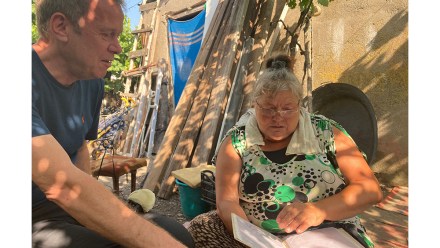
The Amazon is a notoriously difficult part of the world to write about – and I’ve tried. Travelling the river’s slow length, it can be hard to make sense of any changes beneath the forest canopy or to link its disparate communities. The Brazilian writer Eliane Brum succeeds triumphantly. Acclaimed for her previous ‘despatches from Brazil’, appealingly titled The Collector of Leftover Souls, she moved from São Paulo, one of the largest cities of the Americas, to the isolated Xingu tributary to embed herself completely. Or, as she might put it, to lose herself. When asked their age, tribal people just make up a number to be helpful – and then repeatedly change it As a journalist, she is used to asking people their age.