Culture

Culture

The good, the bad and the ugly in books, exhibitions, cinema, TV, dance, music, podcasts and theatre.

The chase looms large in the best new thrillers

More from Books

The ‘chase’ thriller is the fallback choice of writers looking for an easy way to make the pages turn. The Continental Affair (Bedford Square, £16.99) shows a gifted writer embracing the more obvious traits of these novels, while adding some innovative twists of her own. The story is set during the Algerian war that led to independence; its co-protagonist Henri is a former Algerian gendarme, of French and Spanish descent, who deserts when he is made to interrogate a childhood friend. Henri takes refuge in Grenada among his late mother’s family – countless cousins, and all of them crooks. As they get to know Henri, the cousins decide to give him a task which is also a test: he’s sent to collect a package left by a woman in a courtyard.

The big picture: two books on artists and their lives

More from Books

Michael Peppiatt (born 1941) explains in the introduction to his new book of essays that he has from the start of his career been attracted to the lives of artists, as much as, if not more than, their work. Accordingly, he should find a ready audience with the British, who much prefer the written word to the visual image, and who always seem to spend more time on information panels than exhibits in museums, when not in a side gallery watching documentaries about the artists’ lives. In this book Peppiatt assembles a selection of biographical studies of some of the artists whose work quickens his heart. None of it is new material, but it is usefully gathered in one volume, with a very readable introduction and notes to each section.

Joan Didion deserves better 

More from Books

This book is an example of a regrettable new trend – the solipsistic biography. I mean lives of famous people written by unfamous people (usually women) who want to tell you a LOT about themselves. This one is about the writer Joan Didion by an academic called Evelyn McDonnell who never met Didion but believes that they had much in common. Here is her evidence. ‘She was born within one year of my mother; I was born within two years of her daughter. We are both native daughters of California. We lived in New York at the same time, though she was an Upper East Side celebrity and I was a Lower East Side punkette. We both wrote in order to live. We both thought about the sea whenever we felt troubled.’ Soul sisters, right?

Brutality rules in paradise – a memoir of Jamaican childhood

More from Books

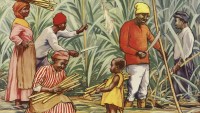
The blue-skied, hibiscus-clad ‘postcard’ beauty of Montego Bay, where the seasons shift with the rhythm of the sea breeze, veils the terrifying reality of Safiya Sinclair’s life at home. Until the age of five, Safiya lived in a small Jamaican hamlet on the white sand close to the endless beaches that attract the tourists, many of whose ancestors, ‘the white enslavers’, stole Jamaicans’ freedom and left behind their unforgettable, unforgiveable legacy. But for a while, as music and the sweet scent of ganja fill the salt air, Safiya, born in 1984, remains convinced that her country has given her all the blessings she could ask for.

Whole world in his hands: a fascinating story of globes and globemaking

More from Books

Despite the subtitle of this fascinating book, it soon turns into an account of how Peter Bellerby’s obsession eventually led to a considerable personal triumph. Unable to find a worthy 80th birthday present for his father, he set out to create a globe himself, which led him to found Bellerby & Co, ‘the only fully bespoke globemakers in the world’. His chatty style sometimes seems at odds with the meticulous professionalism of his work, which in due course led to him selling his car and his share in a house in north London. There was nothing easy about the process of establishing the company. Requirements included ‘knowledge and skill in engineering, geographical knowledge, and artistic ability in painting’, not to mention financial acumen.

The bloody prequel: a triumphant new translation of the Iliad

Lead book review

There is an ancient comment (on the work of a grammarian with the terrific moniker Dionysius Thrax) that the performers of the Iliad and the Odyssey changed costume according to which poem they were reciting: a dark blue crown for the sea of the Odyssey, red for the blood of the Iliad. Emily Wilson, whose brisk and clear-eyed translation of the Odyssey became a bestseller, has now switched her sea-blue crown for her blood-red one. Even the covers of the two books – the Odyssey had a blue-dominated cover depicting the Minoan fresco of ‘Ladies in Blue’; the Iliad is red and gold, with an image of Thetis giving Achilles his new helmet – reflect the shift.

Jonathan Raban’s last hurrah

More from Books

Jonathan Raban, who died earlier this year, left this memoir almost complete. It tells two stories, artfully braided. One concerns the first three years of the author’s parents’ marriage, when Peter Raban was abroad serving in the second world war. He rose to become a major in the Royal Artillery, fighting in France and Belgium, evacuated from Dunkirk and proceeding to North Africa, Italy and Palestine. The second is about the author’s stroke in 2011, aged 69, his rehabilitation in a neurological ward where, on his first morning, a nurse asked ‘Do you want to go potty now?’, and the start of a new life as a hemiplegic.

A treatise on greed: The Vaster Wilds by Lauren Groff reviewed

More from Books

Lauren Groff writes to alleviate her angst about aspects of life she finds hard to confront. Climatic disaster, misogyny, spousal death, flawed utopias and pandemics have all fuelled the plots of books as disparate as Fates and Furies, her 2015 contemporary two-hander about marital verisimilitude, and Matrix, which features a 12th-century feminist abbess based on the little-known poet Marie de France. Yet neither is a bleak read; indeed, Barack Obama selected Fates and Furies as his 2015 pick.

The schoolgirl crush that never went away: Absolutely and Forever by Rose Tremain reviewed

More from Books

When 15-year-old Marianne Clifford tells her parents that she is in love with 18-year-old Simon Hurst, her mother dismisses it as a schoolgirl crush and her father tells her that she is far too young for a boyfriend and should concentrate on her own life ‘as befits a girl of your age and upbringing’. It is precisely because of her age and upbringing that Marianne meets Simon at one of the Home Counties ‘hops’ that her parents’ circle organises for their adolescent offspring. Ignoring the boys who ‘stood awkwardly in a line sipping cider cup’ and ‘jigged around in an embarrassing way’, she drives off in Simon’s new Morris Minor and loses her virginity on the back seat.

So which Naomi do you think I am? The saga of Klein vs Wolf

More from Books

Maureen O’Hara, the flame-haired ‘Queen of Technicolor’ celebrated for her on-screen chemistry with John Wayne, hated to be confused with Maureen O’Sullivan, who was Jane to Johnny Weissmuller’s Tarzan. But they were both Irish-born Hollywood actresses called Maureen, so it kept happening. I once heard John Sessions describe the time he met the octogenarian O’Hara. He prepared for the encounter by repeating to himself: ‘Don’t call her Maureen O’Sullivan.’ They got on famously until, inevitably, the wrong name slipped out. She took it ‘as badly as you can possibly imagine’.

Spelling it out: the volunteers who made the dictionary

More from Books

‘Everything obscene comes from France,’ wrote James Dixon, an eye surgeon retired to Dorking, in 1888. He was provoked by learning of an item called a condom, and explained to his correspondent, James Murray, that this was ‘a contrivance used by fornicators, to save themselves from a well-deserved clap’. Surely the word had no place in the Oxford English Dictionary, of which Murray had for the previous nine years been editor? Murray was persuaded and left it out. Dixon was a useful source of information about words relating to medicine, and Oxford’s team of under-resourced lexicographers relied on the goodwill of such volunteers.

An obituarist’s search for the soul

More from Books

‘“Deep breath”, says the doctor. I take one and hold it.’ Thus begins the fourth chapter of Ann Wroe’s Lifescapes. It is apt because, although the book is part memoir, part essay on the art of biography, it is really about the breath of life itself. Wroe’s writing is intense and visionary, at times almost ecstatic. Reader, dive in. Wroe has written weekly obituaries for the Economist for 20 years, seeking out seemingly ephemeral moments that unlock people’s lives. ‘Time and again,’ she says, ‘some incident in childhood is the key to a career.’ The composer Karlheinz Stockhausen was delighted by the sound his toy hammer made on pipes and buckets at his family’s farm.

How the Scottish care system failed me in every conceivable way

More from Books

This is one of those books that may change you when you read it, so be warned –although Jenni Fagan herself warns you in the first lines: ‘Twenty years ago I began writing this memoir as a suicide note.’ Ootlin is about how the care system in Scotland failed the author in every conceivable way. Fagan is only in her forties, so this is not terribly long ago. She has dug up every file, every archive on herself as a baby in care – there are thousands of pages, ‘most redacted in black lest they validate something that would allow me to sue to the social work department’. ‘I’ve never met an abuser who owned what they did, or a system that wanted to be accountable,’ she says, and then asks us to bear witness, which we must.

The extraordinary – and haunting – life of Lafcadio Hearn

More from Books

It’s a convoluted title for a book, but then Lafcadio Hearn – a widely travelled author and journalist who earned his greatest fame as an interpreter of Japanese horror stories – led a convoluted life. Born in 1850 from a difficult marriage between an Irish officer-surgeon and a wildly unpredictable noble-blooded Greek woman (his middle name, Lafcadio, was adopted from Lefkada, the name of the island where he was born), he was quickly abandoned by both. His mother ended her life in an asylum; his father remarried and died young of malaria. Hearn went on to be yet again abandoned by the great-aunt who raised him, and spurned by the impatient Catholic priests to whom he was entrusted for an education.

‘My attachment to Giacometti grew into the bedrock of my existence’

Lead book review

Michael Peppiatt is an octogenarian English art historian, based in London and Paris, who has met many of the artists he writes about. But, sadly, he never met Alberto Giacometti. He was working as a translator when, in 1966, he applied for a junior editor’s job at Réalités magazine in Paris and, much to his surprise, got it. He went to say goodbye to his friend Francis Bacon,who offered to give him an introduction to Giacometti. Bacon wrote it in felt-tip on a torn-out page of Paris Match and told Peppiatt to take it round to Giacometti’s studio, which he did. But then he stood irresolute at the door, lacking the courage to knock.

How Withnail and I became a cult classic

More from Books

There is an apocryphal story about a woman leaving a performance of Hamlet and complaining that it was nothing but a bunch of quotations strung together. Bruce Robinson’s 1987 movie Withnail & I can also feel like a caravan of famous lines: ‘I’ve only had a few ales’; ‘We’ve gone on holiday by mistake’; ‘We want the finest wines available to humanity!’ In the 1990s, when the men’s magazine Loaded canonised the film in its launch issue and Chris Evans paid £5,000 for Withnail’s tweed coat, its swift elevation from box office failure to cult set text came at the price of reducing it to a boozy lark. A film about ruinous alcoholism thus inspired a student drinking game, although most players stopped short of Withnail’s last resort tipple, lighter fluid.

Unfinished business in Berlin: The Secret Hours, by Mick Herron, reviewed

More from Books

During the summer, I noticed a new noise coming from the crowd whenever Ben Stokes or another English player bashed or stroked the ball to the boundary. It wasn’t quite the cheer you’d expect; more an ahhhh of appreciation, as you would deliver to someone who is offering a masterclass in how to win a game when it has, to all intents and purposes, already been won. By the time I was about halfway through The Secret Hours, that was the noise I was making in my head, as new twists kept unfolding. And they did keep unfolding, if twists can be said to unfold, right up until the last page. Never has a work of popular fiction delighted me more.

Feeding frenzy: memories of a gourmand in Paris

More from Books

‘Bald, overweight and gluttonous’ is how the American journalist and food writer A.J. Liebling described himself. Born in Manhattan in 1904, he wrote extensively about boxing and horse racing and was a war correspondent during the second world war, taking part in the Normandy landings in that capacity. He also recounted his gastronomic adventures in Paris before the war in Between Meals, a collection of essays largely derived from a four-part series, ‘Memoirs of a Feeder in France’, which ran in the New Yorker in 1959.

‘Struck with the dart of love’: portrait of a marriage

More from Books

‘These bloody days have broken my heart.’ Thomas Wyatt’s words are an expression of his personal distress at the fall of Anne Boleyn, Henry VIII’s second wife and the woman for whom the king had defied the pope and proclaimed himself supreme head of the English Church. But they are also indicative of the shockwaves resonating around England in May 1536. Within just three weeks, Queen Anne, along with five men – among them her brother George, with whom she was accused of incest – were tried and convicted of treasonous adultery and beheaded in the Tower. Wyatt himself, narrowly escaping their fate, may have witnessed Anne’s execution from a slit in a window in the Bell Tower. She was swiftly dispatched by a swordsman from Calais.

Science and surrogacy: The Seventh Son, by Sebastian Faulks, reviewed

More from Books

Sebastian Faulks’s new novel poses questions about the meaning of humanity and the significance of difference. Set in the near future – the action starts in 2030 – it centres around Talissa, a clever postgrad anthropologist from New York, who offers to become a surrogate mother to strangers in order to earn money to continue studying the recent past. It’s just a temporary use of her womb, she argues. But, as she soon finds out, even if everything had gone to plan, body parts can’t often be loaned without emotional attachments. And things don’t go to plan, because Lukas Parn, the billionaire owner of the foundation that carries out the embryo transfer, has ulterior motives. Faulks ingeniously conjures up a world only slightly different to ours.

Making peace with a mother’s death – and life

More from Books

A fundamental question is posed midway through this narrative by Michael Portillo. Speaking in his guise as a colourfully dressed TV presenter rather than politician, he demands of Natasha Walter as the cameras roll: ‘What did your parents actually achieve?’ They are standing in a nuclear bunker, the site of her parents’ most audacious stunt, but the implication of futility resounds throughout the book, probed most rigorously by their daughter. Walter counts as royalty in left-wing activist circles, her parents, Nicolas and Ruth, having been foundational in the nuclear disarmament movement of the 1960s alongside many other progressive campaigns. Nicolas served time in prison and Ruth was arrested.

The forgotten world of female espionage

More from Books

When the Germans occupied northern Italy in the autumn of 1943, they were pleased with the way that young Italian women, pedalling on bicycles around the country lanes in white socks and pigtails, smiled at them. The soldiers offered to help with their loaded baskets and gave them lifts in lorries. It took some months before they discovered that these smiling girls, known as staffette, were working as couriers, spies and carriers of weapons for the Resistance, then busy forming in the foothills of the Alps. When they realised their mistake, their reaction was often brutal. If caught, the women knew they would fare no better than the men.

The extraordinary life of 17th-century polymath Margaret Cavendish

Lead book review

Margaret Cavendish, the 17th-century Duchess of Newcastle, has been described as a heroine whose every doing ‘is romantic’ (Samuel Pepys); as being ‘so distracted... that there are many soberer people in Bedlam’ (Lady Dorothy Temple); as looking like ‘a devil in a phantom masquerade’ (King Charles II); as ‘the great atheistical philosophraster’ (anonymous 17th-century gossip writer); as ‘a picture of foolish nobility’ (Horace Walpole); as ‘a giant cucumber’ (Virginia Woolf); as a ‘crack-brained, bird-witted... fantastical... crazy duchess’ (Woolf again) and as ‘the empress and authoress of a whole world’ (herself). She has been seen as that most tiresome of types, a ‘character’.

A tribute to Alf Ramsey, football’s forgotten hero

More from Books

No better book about England’s victory in the football World Cup of 1966 and what followed it has ever been written. Duncan Hamilton’s Answered Prayers has the authority of a work of history and pulses with the narrative power of fiction. Its unlikely hero is Alf Ramsey. He emerges as a curiously complicated character through whom Hamilton tells his story. The men in charge of the FA were regarded as a vengeful, ungrateful bunch of heartless incompetents This is not a tale of the glory of that sunny day. It is instead a kind of melancholy eulogy.

A potent seam of violence: The Wren, the Wren, by Anne Enright, reviewed

More from Books

The Irish novelist Anne Enright is now in her sixties. Her deceptively modest new novel, The Wren, The Wren, opens with a long section narrated by Nell, a woman in her early twenties living in contemporary Dublin. Nell scrapes by, ‘writing content non-stop’: travel pieces about places she’s never been to, stories for a wealthy ‘actress/eco-influencer’. Adrift and vulnerable, she falls into an on-off relationship with a man called Felim, who is emotionally cruel and photographs her naked without her permission. With this extended portrait of a much younger woman, Enright quietly establishes her excellence.

How much does Britain still ‘love’ the NHS?

More from Books

‘Of course I support the NHS. Everybody supports the NHS, or says they do,’ poked the comedian Frankie Boyle in one of the many campaigns promoting the health service. To admit you don’t believe in this national institution is as taboo as not caring about Britishness, about goodness, about people. The public is keen to find evidence for this collective belief. Nigel Lawson famously said that ‘the NHS is the closest thing the English have to a national religion’ – words which tend to be heard as praise. But his comment was laced with criticism. He continued, ‘with those who practise in it regarding themselves as a priesthood. This made it quite extraordinarily difficult to reform.