Culture

Culture

The good, the bad and the ugly in books, exhibitions, cinema, TV, dance, music, podcasts and theatre.

She’s leaving home: Breakdown, by Cathy Sweeney, reviewed

More from Books

The narrator of Cathy Sweeney’s first novel has finally cracked. I say ‘finally’ because there have been signs: drinking alone; disliking her daughter, or at least her type; having an affair with her friend’s son; opening a separate bank account in her maiden name when her mother died. But in the beginning we don’t know any of this. We don’t know what she’s doing, and neither does she. It’s an ordinary Tuesday in November when she leaves her comfortable home in the suburbs of Dublin, which she shares with her husband and their two almost-adult children: ‘I grab my handbag and keys, let the front door shut behind me. I have no idea that I will never come back.’ What follows is a taut tale of the protagonist’s journey by car, train, bus and ferry.

Milton Friedman – economic visionary or scourge of the world?

More from Books

The Keynesian economist Nicholas Kaldor called Milton Friedman one of the two most evil men of the 20th century. (Friedman was in distinguished company.) The ‘scourge’ he inflicted on the world was monetarism, a product of what Kaldor called Friedman’s Big Lie – of which more later. Moral judgments aside, how does Friedman rank in the world of 20th-century economists? By common consent, he stands with Friedrich Hayek and John Maynard Keynes at the apex of his profession. All wrestled with the defining problem of their age: the radical economic and political instability of the 1920s and 1930s. Their responses reflected their national situations.

The travails of Britain’s first Labour government

Lead book review

Once the working classes were allowed to vote it was inevitable that sooner or later they would elect a government which reflected their interests. That moment came with the appointment, in January 1924, of the first Labour government.    The circumstances could hardly have been less auspicious. There had been three general elections in as many years. No party had an overall majority. Labour, with 191 seats, was not even the largest, with the result that, throughout its short life, the government was entirely dependent on the goodwill of the Liberals, which soon ran out. With a couple of junior exceptions during the wartime coalition, no Labour MP had any experience of government.

Septuagenarians behaving badly: Stockholm, by Noa Yedlin, reviewed

More from Books

My grandmother wore a bikini long after she’d turned 60. As a teenager, I couldn’t think of anything more embarrassing than to be seen with her on the beach. When the day came, on an inescapable family holiday, I begged her to reconsider. ‘I’ve never understood why they say the body betrays you,’ she replied. ‘The body is simply doing what it’s supposed to. It’s the soul that refuses to do its part in the deal.’ I remembered this reading Stockholm, a delightful dark comedy by the Israeli author Noa Yedlin about four elderly people conspiring to conceal the sudden death of their friend, the renowned economist Avishai Har-Nof, so as to secure his award of a Nobel prize.

Has Germany finally shaken off its dark past?

More from Books

In 1982, a board game appeared in West Germany. If you landed on square B9 you were sent to a refugee camp in Hesse where you became ill from loneliness, unfamiliar food and not being allowed to work. Worse still, you had to miss a go and spend the free time thinking about ‘how you would feel in such a situation’. Even if, like me, your childhood was spent crying over lost games of Monopoly, nothing could quite prepare you for the cheerless experience of playing ‘Flight and Expulsion Across the World’. It’s unlikely an updated version has been commissioned for our home secretary, with players assigned counters representing the Bibby Stockholm, inflatable life rafts and Rwanda-bound jets, but you never know.

How dangerous is the Sunni-Shia schism?

More from Books

In 2014, with the Middle East convulsed by the murderous, self-styled Islamic State, a Daily Mail reader wrote a letter to the editor which began: ‘Are you confused by what is going on in the Middle East? Let me explain...’ Aubrey Bailey went on to describe the dizzying complexity of diplomatic relationships thrown into turmoil: So, some of our friends support our enemies and some of our enemies are our friends, and some of our enemies are fighting our other enemies, whom we don’t want to lose, but we don’t want our enemies who are fighting our enemies to win... And all this was started by us invading a country to drive out terrorists who weren’t actually there until we went in to drive them out – do you understand now?

What Shakespeare meant to the Bloomsbury Group

More from Books

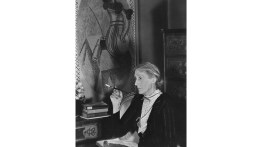
In November 1935, Virginia Woolf saw a production of Romeo and Juliet. She was not overly impressed. ‘Acting it,’ she wrote, ‘they spoil the poetry.’ Harsh words, you might think, for a cast that included John Gielgud, Laurence Olivier, Peggy Ashcroft, Edith Evans and Alec Guinness. But Shakespeare on the stage was something of a bête noire for the Bloomsbury group. ‘We, of course, only read Shakespeare,’ Clive Bell later said. The Shakespeare that mattered was the one on the page. Shakespeare on stage was a bête noire for the Bloomsberries. ‘We, of course, only read Shakespeare,’ said Clive Bell Who was that ‘we’, though?

Why were masters of the occult respected but witches burnt?

More from Books

It has long been acknowledged that alchemy, however bizarre its premises, is the fore-runner of modern chemistry, compelling a figure as rational as Sir Isaac Newton. Other aspects of Renaissance thought are harder to assimilate. In his study of five crucial figures of the 15th and 16th centuries, Anthony Grafton aims to demonstrate that astrology, angelology and conjuration were, if not central to the era’s world view, at least hard to extricate from its more respectable concerns. His first subject, Faust, is little more than a sideshow, but significant in establishing the magus as a not entirely respectable figure, from which ignominy Grafton seeks to rescue him.

Must we live in perpetual fear of being named and shamed?

More from Books

You should feel thoroughly ashamed of reading this infamous rag. Or else you might decide to revel, shamelessly, in its critics’ prim disapproval. From political squalls to global wars, David Keen argues that a ‘spiral of shame’ and shamelessness now traps individuals and societies in arid cycles of pain, rage and revenge. Manipulative actors – ‘advertisers, warmongers, terrorists, tyrants and charlatans’ – sell us ‘magical solutions’ to the anguish of the shame they themselves stoke. But they merely pass the burden to other groups, leaving us with more suffering. Keen writes: ‘Such actors do with shame what the Mafia does with fear.’ The author teaches conflict studies at the LSE.

Why are the Japanese so obsessed with the cute?

More from Books

Joshua Paul Dale is a professor of American literature and culture at Chuo University in Tokyo and a pioneer in what is apparently a burgeoning academic field called ‘Cute Studies’ – or what Damon Runyon might have called ‘Pretty Cute’ Studies, as in ‘“Are You Kidding Me? You Study This?” Studies.’ In fairness, Dale makes a strong case for his subject to be taken seriously. Irresistible is packed with references to all sorts of neuroscientific studies and cultural studies and studies about theories of animal domestication and the evolution of ‘affiliative social behaviour’, which lead Dale to posit that cuteness is a ‘species-wide emotion’. Is it an emotion? I don’t think so.

The freedom fighters who dared to take on a communist superpower

Lead book review

In May 2020, as the planet grappled with the pandemic, China’s state media declared that there were ‘obvious deficiencies’ in Hong Kong law enforcement needing to be addressed. Any delusions this might have referred to intensifying police brutality in response to massive pro-democracy protests, let alone the unleashing of Triad thugs to attack participants, were dashed rapidly. Details emerged days later of a draconian new security law that criminalised any form of dissent, whether at home or abroad, with threat of life imprisonment. ‘When the world is not watching, they are killing Hong Kong,’ said Dennis Kwok, a lawyer and pro-democracy legislator. He was right.

The bald truth about Patrick Stewart

More from Books

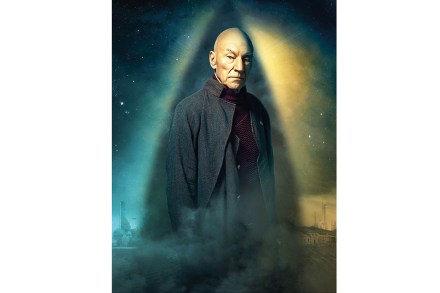
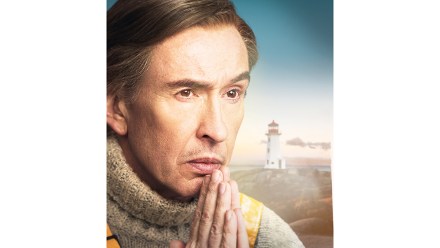
When you think that David Niven, James Mason, Ronnie Barker, Arthur Lowe and Powell and Pressburger among many others failed to receive state honours, you’ll concede that a knighthood was wasted on Patrick Stewart, even if for 12 years he was chancellor of Huddersfield University. I mean no disparagement by this. I’m happy for him. But why not Sir Timothy Spall or Sir Timothy West? Stewart, whose grandmother was Stan Laurel’s babysitter, is a middle-ranking mime with a gurgling bass-baritone. He is chiefly famous for the X-Men franchise and for playing Captain Jean-Luc Picard in 178 episodes of Star Trek: The Next Generation, plus the numerous feature film spin-offs in which he commanded an interplanetary spacecraft.

Andy Warhol would have revelled in the chaos of his legacy

More from Books

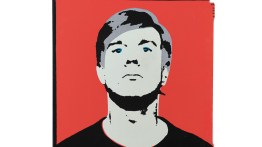
Andy Warhol’s legacy has been dogged by rows over authenticity more than that of any other modern artist. Warhol might well have predicted the chaos and even delighted in it. He once signed a fake painting at Christie’s – four silkscreened Jackie Kennedys – for the hell of it. ‘I don’t know why I ever did,’ he wrote in his diary – and yet the confession makes clear that he maintained a distinction, in the end, between what was fraudulent and what was his. You can’t sign a fake if everything is real. The task of the Andy Warhol Authentication Board – established in 1995 by the foundation which handles the artist’s vast legacy – was to uphold that distinction, preserving the integrity of his corpus.

Surprise package: Tackle!, by Jilly Cooper, reviewed

More from Books

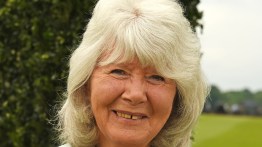
Jilly Cooper, queen of the British bonkbuster, has turned her attention to football for her 18th novel. She was inspired after sitting next to Sir Alex Ferguson at lunch one day. She also thanks Kenny Dalglish, Alan Curbishley and ‘my wonderful neighbour’ Tony Adams in her acknowledgements. Her friend, the former home secretary Michael Howard, even took her to a Liverpool match, where she met Steven Gerrard.  Her legions of fans need not worry, however. We are still in Rutshire, the village Cooper created for her earlier novels; Rupert Campbell-Black, the hero of Riders, Rivals and Mount!

The popularity of ‘Amazing Grace’ owes much to its melody

More from Books

Type ‘Amazing Grace’ into YouTube and you can cancel any other plans you might have had for the day. Page after page serves up everything from Elvis Presley to Pavarotti, Gospel choirs and winsome Celtic lovelies, folkies in fabulous knitwear and X Factor finalists strenuously proclaiming their surgically enhanced faith; even an American president. There are arrangements for electric guitar, steelpan orchestra, bagpipes or (God help us) beginner flute ensemble. Saved from the storm, Newton was aware of ‘a sense of the amazing grace that snatched me from ruin’ All of which suggests that James Walvin’s Amazing Grace is a book landing in fertile soil.

The invisible boundaries of everyday life

More from Books

Norman Shrapnel, the wise and kindly parliamentary correspondent of the Guardian back in the day when it was a readable newspaper, tried never to give a book a bad review. He liked to say that anyone who had taken the time and trouble to write about anything at length deserved to be given the benefit of the doubt, and so he generally dipped his reviewer’s pen in honey rather than vinegar. I must say that on picking up Maxim Samson’s Invisible Lines, I felt quite otherwise. I wanted at first (an important caveat) to paint my laptop’s entire screen with vitriol. Within two pages I’d begun to loathe the author’s use of ‘foreground’ as a verb (technically he is not wholly wrong, just wanting in style).

Nothing satisfies Madonna for very long

More from Books

In 1994, Norman Mailer called Madonna ‘our greatest living female artist’. She was huge in those days. I remember teenagers like my daughters constantly asking ‘What would Madonna do?’ But my grandchildren haven’t even heard of her. She seems to have faded faster than most. Why? Perhaps it’s because, as often claimed, she’s the ‘queen of reinvention’. But people who reinvent themselves every few months, as Madonna always did, tend to leave other people behind. Her ‘rebel life’, as told here by Mary Gabriel, is a frenzied churn of friends, lovers, mentors and collaborators who were vital to her for a year or two and then discarded.

Seeing the dark in a new light

More from Books

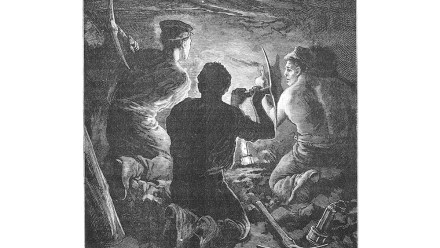
True darkness, it turns out, can be experienced but does not exist. If you have been down a deep mine where the guide tells you to turn off your lamp you will have seen – in not seeing – something close to it: an utter nothingness in which your body and mind seem to shrink and expand at the same time. On a school trip to Big Pit in South Wales my entire class fell into a moment of unprecedented and never-to-be-repeated silence, a gasped amazement at the disappearance and invisibility of ourselves. Just for a moment everything vanished – and then the whooping and squealing started.  This double impulse, of delight and terror, runs through Into the Dark, Jacqueline Yallop’s exploration of what she describes as ‘an anomaly...

What convinces Jeremy Corbyn that ‘there is a poet in all of us’?

More from Books

Much like its editors, I have no idea who Poetry for the Many is for. However, the choir it preaches to is quickly identified. It opens with a dedication to Julian Assange, the free speech martyr in no way a narcissist patsy for a hostile state. A member of UB40 summarises the book’s aim on the jacket: to ‘encourage the working classes to embrace and enjoy culture’. Elsewhere, in the course of four separate introductions, I divine some plan to make poetry both politically relevant and accessible to the lower orders. This project apparently requires the literary advocacy of Len McCluskey and Jeremy Corbyn. They have written personal introductions to their favourite poems and invited ‘friends’ to do the same.

The horrors of dining with a Roman emperor

More from Books

Emperor of Rome? Is there a typo in the title? Mary Beard’s latest book is about not one but 30 Roman emperors, from Julius Caesar (assassinated 44 BCE) to Alexander Severus (assassinated 235 CE), so why the singular? The answer is that Emperor of Rome is a study of autocracy and one autocrat, as Marcus Aurelius put it, is much the same as another: ‘Same play, different cast.’  Beard’s subject is emperors as a category, because it was the symbol of rule rather than the ruler himself that mattered to the 50 million imperial subjects between darkest Britannia and the Saharan desert in the first three centuries of the Christian era.

Will the Caucasus ever be tamed? 

Lead book review

How to get your head around that searingly beautiful but complicated land that lies between the Caspian and Black Seas? The early Arab historian Al Masudi called the Caucasus jabal al-alsun, the mountain of tongues, and through the centuries the place has certainly seen its fair share of peoples, many of them troublesome, many of them troubled. Indeed, for somewhere you might think would be a transcontinental backwater, its outcrops, secluded valleys and expansive plains usefully separating its formidable neighbours – Russia to the north, Turkey and Iran to the south – it’s proved remarkably busy over the centuries; also persistently relevant. The turbulence of the region is rarely far from the news.

Mother’s always angry: Jungle House, by Julianne Pachino, reviewed

More from Books

Jungle House is not the sultry tropical tale you might expect either from its title or from its vivid, palm-strewn dust jacket. Instead, Julianne Pachico’s third novel concerns AI. This is not immediately obvious, and although there is an appealing directness to the writing, it means that no time is spent setting the scene or allowing readers to get their bearings fully. I could have done with more explication of the circumstances in which a young girl, Lena, comes to live in an AI-controlled house. At the book’s opening, Lena has her work cut out: There’s fishing and mushroom-gathering and swimming in the river. Five days a week are for exercise and two days are for rest. In the orchard there are bananas and guavas, grapefruits and limes.

In the dark early 1960s, at least we had the Beatles

More from Books

‘These things start on my birthday – like the Warsaw Uprising – and spoil my day,’ wrote the understandably self-pitying Barking housewife Pat Scott in her diary on the first day of the Cuban Missile Crisis in October 1962. ‘And then to spoil it more, Ted [her husband] took his driving test for the second time and failed.’ It is clashes like these, of the personal and humdrum against the political and global, that make David Kynaston’s close surveys of Britain in the second half of the 20th century such fascinating and lively documents. Yes, the world might be about to end, but that was no excuse to spoil Pat’s 37th birthday.

The hubris of the great airship designers

More from Books

Tribal rivalries have existed from humanity’s beginning and have fuelled the creation of every prestigious monument ever built. By the Age of Science we were building not pyramids but ironclads and submarines fighting for ascendancy at sea, expanding our empires in spite of an ever-growing movement for colonial independence. The Spanish-American war of 1898 added the United States to the list of great nations believing it to be their destiny, even duty, to bring their kind of progress to the world. Many understood that achieving overwhelming technological power as a nation guaranteed that no antagonist would dare attack. Limited by agreements made after the first world war, Britain no longer ruled the waves.

A strong whiff of goodbyes: The Pole and Other Stories, by J.M. Coetzee, reviewed

More from Books

New books by, articles about or Sasquatch-like sightings of J.M. Coetzee routinely send me back to that infamous YouTube clip of Geoff Dyer face-planting while being introduced by Coetzee at the Adelaide Book Festival – an episode often cited as evidence that the Nobel Laureate has no sense of humour. The garlanded ex-South African’s work is famously as dry as the Karoo, and Coetzee himself has been accused of having only ever laughed once. But a smile is visible in ‘The Pole’, the longest story in this collection. Beatriz, in her late forties, is an educated Spanish woman, ‘a good person’ in a ‘civilised’ (read dormant) marriage, involved in organising things like highbrow concerts but otherwise not taken seriously.

Religion provides the rhythm

More from Books

Music is an art of time: songs play to a rhythm, giving shape to the seconds as they pass, charging the present with a pulse we can feel. But as music takes us forward through time it also takes us back – to the moment of its composition or recording; to a particularly resonant time in our own past; and yet further, summoning the echoes of older music contained within a song. In new books by David Remnick and Michel Faber we get two different approaches to writing about something ephemeral yet emotionally adhesive. One of them made time fly, and one of them made time slow until the only beat I could hear was the sound of my own head against the desk.