Sebastian Faulks

The mystery of what makes us special remains unsolved

From our UK edition

Consciousness is thought by many to define what it is to be human. We know that animals are conscious to some extent, but they don’t have what we have in that department. So if we can explain how human self-awareness works it will be a Rosetta Stone to understanding what makes our species so odd, or, depending on your view, so special. Also: big brains love exercise. And the great thing about this topic is that it can be tackled by biologists, neurologists, philosophers, physicists and even novelists. It’s an interdisciplinary, no-holds-barred intellectual wrestling match. Michael Pollan, an American journalist and academic who works at both Harvard and Berkeley, comes from a literature background but is fluent in the relevant science.

Bring back the book launch!

From our UK edition

It’s that time of year when the local librairie-papeterie in your French holiday village is full of signs for la rentrée and English newspapers carry ads for gel pens and shoes with Velcro fastenings. I used to love this season as a schoolboy – discovering if I’d made the under-13 football training squad. For the past 40 years, though, September has been for me a different season: the time of the publishers’ launch party. These used to be lavish affairs, held in a hotel or gallery with themed drinks and food, the whole thing fizzing with romantic possibilities. In 2001 we had a memorable do for my American novel On Green Dolphin Street with a jazz quartet, cheeseburgers and bottomless dry Martinis. (What happened afterwards in Vauxhall Bridge Road has stayed in VBR.

I sledged Steve Smith for England

From our UK edition

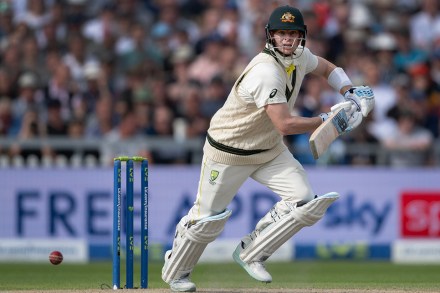
In this summer of sporting dramas, every patriotic sports fan likes to think he’s done his bit to help. I went up to Manchester with my brother last Thursday and in the evening we found ourselves in an Indian restaurant with the England wicket-keeper Jonny Bairstow at the next table. I feel sure it was Edward’s and my manly cries of ‘Good luck, Jonny’ as he left that helped him bat so brilliantly for his 99 not out. Though I suppose it could have been the vindaloo that fired him up. My major influence on the Ashes series came a few days earlier, when I bumped into the Australian all-time-great batsman and scourge of England, Steve Smith. This was on the balcony of the All England Club at Wimbledon, where he was having a quiet chat with some friends.

Diary – 5 April 2018

From our UK edition

When the much-admired (and very tall) literary agent Gillon Aitken died in October 2016, he left most of his estate in a charitable trust to be named after his daughter Charlotte, who had, very sadly, predeceased him. Quite soon, the trust will start its work, which is to ‘educate the public in the appreciation of literature’, including poetry and drama, by whatever means seem appropriate — to include prizes, grants, scholarships, the funding of retreats, courses and so on. As one of the trustees, my job is to find the best ways to fulfil Gillon’s wishes. The slate is blank.

Diary – 14 September 2017

From our UK edition

I never expected to visit Iceland, let alone play cricket there. But the Iceland national team was off to play in the Pepsi Cup in Prague last week, against Hungary and Poland among others, and needed some easy meat to practise on. So the Authors XI found themselves in a vast indoor stadium in Reykjavik with artificial grass and a yellow ball, playing three 20-over games. The floodlights were dim and the ball swung prodigiously. When it bounced, it either stood up, stopped or hurried through low. The best word to describe batting conditions would be ‘difficult’. Our opening bowler, the novelist Nicholas Hogg, took four for seven in four overs. The Iceland team had one native Icelander and one Brit; the rest were from Sri Lanka or Pakistan.

What ‘The Crown’ didn’t get right

From our UK edition

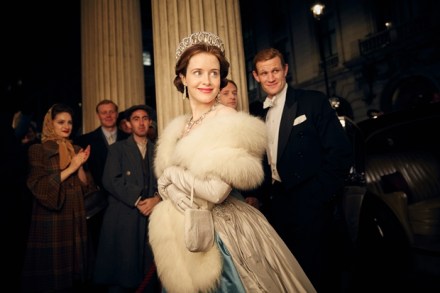
Watching the enjoyable Brontë drama To Walk Invisible the other day on television, I was brought up short when Charlotte told Emily that their books would be ‘rubbished’ by male critics in London. Such anachronisms crop up in all period dramas, but would be easy to fix if someone with an ear for language was asked to skim through the script before it was filmed. Which brings us to The Crown. I think we all enjoyed Claire Foy’s shot at the Queen’s voice and Vanessa Kirby’s smoky Princess Margaret. (Not sure why they gave Prince Philip a teddy-boy haircut. Surely all they have to do is copy the photographs?) But The Crown also had some ‘going right down to the wire’, ‘it’s a learning curve’, moments.

Diary – 12 January 2017

From our UK edition

In December I was in a group of writers on a British Council visit to Moscow, where the UK was the guest nation at the Moscow Book Fair. This entailed going to art galleries, restaurants and to the Bolshoi as well as giving various talks. The hunger for books at the fair itself was extraordinary. Young people queued with armfuls of the latest Jim Crace, Jonathan Coe, Julian Barnes or Marina Warner in the hope of a signature. Used as we are to the apologetic €1,000 advance and talk of young people not reading any more, this was heady stuff. One night my Russian publisher, Alexander Andryuschenko, took me and my son William, who was passing through, to dinner at the Pushkin restaurant because he says it is the only place you can get ‘real Russian food’.

A rose between two thorns

From our UK edition

Emma Rauschenbach was the daughter of rich Swiss industrialists — a plump, good-natured girl, nicknamed ‘Sunny’, who married young without knowing what she was letting herself in for. Her husband, Carl Gustav Jung, was revered after his death as a guru as much as a doctor — as the mystic and visionary that Freud might have become had he not been so fixated on the role of the libido. As a husband, a father and a younger man, however, Jung appears to have been close to intolerable. He was physically large, selfish, bullying and loud of voice; he cheated at games, had a vile temper and appalling table manners; he thought men should be polygamous but that Emma should be his alone.

Sebastian Faulks’s diary: My task for 2015 – get a job

From our UK edition

Just back from Sri Lanka, a place I first went to in 1981. It was then a dreamy island. I remember giving the room boy who had brought my case to the bandicoot-infested bedroom in Colombo a few rupees, but he wasn’t interested. He just wanted to sit on the bed and talk — about London, England, cricket, life. Three decades and a civil war later, people are aware of money, there is bottled water, and a pot of tea doesn’t take half an hour to arrive. One thing that seems unchanged is the optimism of the people. The new president, Mr Sirisena, has promised an end to the corruption of the Rajapaksa regime.

Sebastian Faulks’s diary: Inside the official first world war commemorations

From our UK edition

A year or so ago I was asked to sit on a committee that advises the government on how to commemorate the first world war. It consists of about 30 dauntingly well-qualified people (former heads of the army and of Nato, historians, ex-defence secretaries), so there seems little for me to contribute at meetings. But it is interesting to be on the government side of something and see how it deals with public expectation and the press. In the summer there was a report in a British paper that the Germans had sent over their commemoration team and asked if, instead of dwelling on the conflict, the British could make 2014-18 a chance to talk up the European Union. I emailed the Department of Culture to ask if this could be right.

The writing bug

From our UK edition

Authors seem to be more unhealthy than most people. Sometimes the sick room simply offers time to read and a sense of grievance or detachment; but the relationship between health and writing may be more complex. John Ross, a practising physician and assistant professor of medicine at Harvard, has happily violated every rule of patient confidentiality in this gossipy, highly conjectural and entertaining piece of medical bookchat. Some of it is a bit far-fetched. Did Shakespeare have syphilis, and if so did a mercury cure cause tremors and personality changes? Ross thinks Shakespeare may have had an STD, that mercurial rage may have surfaced later, that he may have struggled to complete his last plays and that perhaps a syphilitic chancre increased his sympathy for others.

Diary – 13 September 2012

From our UK edition

My postbag is mostly things like: ‘I once played tennis against you in the Provence in 1981. My daughter is now bicycling through Spain to raise money and I wondered… .’ So picture my surprise to get one that instead began like this:  ‘In your novel Engleby, the hero mentions a gig by Procol Harum he attended at the Rainbow, Finsbury Park, in 1972.’ The next line that was the killer: ‘I was playing keyboards in the band that night… .’ And so began an intriguing pen pal friendship.