Alistair Horne

‘Papa told us everything’: Winston Churchill and the remarkable Mary Soames

From our UK edition

By any standards Mary Soames was one of the most remarkable women of her era: close confidante (possibly the closest) to Winston Churchill throughout the second world war, dedicated political wife, one of the most outstanding British ambassadresses sent to Paris, successful (against all reckoning) chairman of the National Theatre, and — later in life — a prize-winning author. She was also one of only three non-royal Ladies of the Garter in recent British history, and a Spectator contributor to boot. All this went hand in hand with a reluctance to talk about herself, and — except on rare occasions — about the war, and the father whom she adored and was especially close to.

General ‘Stormin’ Norman’ Schwarzkopf: a tribute

From our UK edition

'Stormin’ Norman' Schwarzkopf was a formidable figure: formidable in size, in his fearsome temper—and as a genius in the art of war. I first met the General in Oman a few weeks before the unleashing of the First Gulf War of 1990, where he commanded a remarkable array of coalition forces, including Egyptians and Syrians. At first glimpse it was hard to take seriously the bear-like figure, bursting out of his desert fatigues, with a cap that seemed several sizes too small. But within five minutes it was plain that here was a most remarkable man. Speaking very directly, he made it clear that the coming battle would be ‘short and sharp.’ He was surprisingly open in outlining his strategy.

Picking sides in Syria, the Algerian experience

From our UK edition

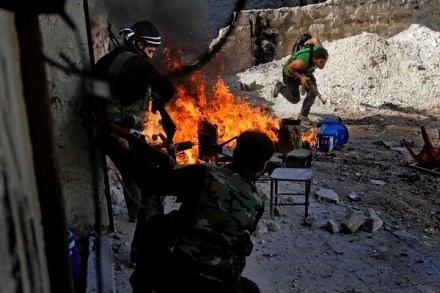
Some thirty-five years ago, in 1977 to be exact, I first published A Savage War of Peace, a definitive history of France’s war in Algeria. The war dragged on from 1954 to 1962, torpedoed six French governments, and the Fourth Republic itself, bringing de Gaulle to power. It also introduced a new meaning to the word ‘insurgence.’ Thanks to the indolence of my publishers, the book was allowed to go out of print. When the Iraq War began, to my fury I learned that it was changing hands on the free market in Washington at over $200 a copy, with quantities being bought by the Pentagon.

The bravest of the brave

From our UK edition

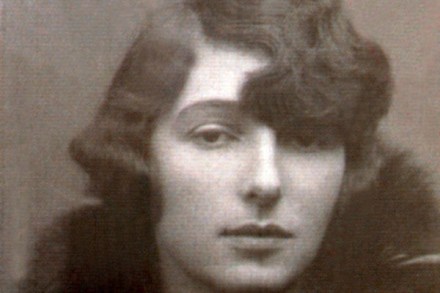
I suppose I may be one of the few people still alive to have known Krystyna Skarbek (aka Christine Granville), though, perhaps regrettably, not as well as many others in her brilliant, stormy but eventually tragic life. Today she would have been over 100. Of all the women agents who risked their lives in Nazi-occupied Europe in the second world war, Polish-born Krystyna must surely rate as one of the bravest of the brave. As they used to say in army vernacular, the George Medal (which was about as close to a VC as a foreign national could get), the OBE and the Croix de Guerre did not exactly ‘come up with the rations’. Churchill is alleged to have rated Skarbek his ‘favourite spy’. The reason?

Discomforting

From our UK edition

Britain has not been lucky with her Defence Secretaries. I cannot remember one ‘fit for purpose’ since George Robertson, back in 1999. There followed, under New Socialism, the colourless provincial lawyer who helped Blair lie his way into Iraq (I forget his name, as it’s always imprudent to libel a lawyer). Then came the wee Scottie, Dr John Reid, who promised us that troops would leave Helmand ‘without a single shot being fired’. (That was in 2006; already by 2008 four million bullets had been fired by the British armed forces—and we’re still there). Finally, Socialism presented the PBI (Poor Bloody Infantryman) with Bob, the bemused sheet-metalworker.

A portrait of the Lady

From our UK edition

Aung San Suu Kyi is free, but has the ruling junta won the battle for Burma’s future? Aung San Suu Kyi’s late husband, Michael Aris, was a good friend of mine at St Antony’s, Oxford. The gentlest of gentle academics, he helped establish a centre in Tibetan studies at Oxford, and converted to Buddhism. In 1972, he married Aung San Suu Kyi, whom he had met while they were both studying in Oxford. They had two young sons, Alexander and Kim, and for a while settled into the quiet life of north Oxford. But as we all know, in 1988, Suu Kyi returned to Burma to tend her ailing mother and soon found herself swept into politics.

Kissinger’s man from Moscow

From our UK edition

When Anatoly Dobrynin died earlier this month, aged 90, the British press paid little notice. Yet it is increasingly clear that he was one of the most remarkable players in the Cold War — someone who did much to stop the conflict turning hot. Over 24 years he served as Soviet ambassador to six US Presidents — Kennedy, Johnson, Nixon, Ford, Carter and Reagan. Perhaps his most telling contribution was his role in the period of détente during the stewardship of Henry Kissinger, Nixon’s all-powerful national security adviser, and later secretary of state. Dobrynin arrived in Washington just in time to be thrown into the Cuban Missile Crisis. At 42, he was the first Soviet envoy to the US born after the Russian revolution.

Recalling the Cuban Missile Crisis

From our UK edition

Like the assassination of JFK, everybody alive then can remember where they were that Doomsday Week of the Cuban Missile Crisis in October 1962. That Saturday, 27 October, was, and remains, the closest the world has come to nuclear holocaust — the blackest day of a horrendous week. It was an incredibly beautiful autumn day. There was an almost sinister tranquillity in London. I recall walking across Hyde Park, almost deserted, and thinking ‘this is my last walk, the last day I shall spend with my tiny children, the end of all hopes for their future ...it’s the end’. And yet a still small voice within me, of belief in the fundamental humanistic values of Americans, and their good sense, told me that it wasn’t going to be the end. JFK would not allow it....

Diary – 18 November 2006

From our UK edition

In tandem with Asa Briggs, I am speaking at the Howard Gotlieb Archival Research Center atop Boston University. This is a truly remarkable institution, yet, even in Boston, Mass., surprisingly few people know about it. Gotlieb himself was an extraordinary man; a Rhodes scholar, he began by collecting British archives over 40 years ago — then discovered that no one had ever shown an interest in Hollywood memorabilia. He cornered the market. Asa and I are transferring all our papers to it, in my case 150 boxes dating back to the 1950s.

Roots of terror

From our UK edition

On the night of All Saints, 1954, a young honeymooning couple of French school teachers, dedicated to their work among underprivileged children, were dragged off a bus in the Aurès Mountains of Algeria and shot down. Their murder by the newly created FLN (National Liberation Front) marked the beginning of organised revolt against the French colonial ‘occupiers’. The eight-year-long Algerian war was to bring down six French prime ministers, open the door to de Gaulle — and come close to destroying him too. The war was the last of the grand-style colonial struggles, but, perhaps more to the point, it was also the first campaign in which poorly equipped Muslim mujahedin licked one of the top Western armies.