Andrew Gimson

Andrew Gimson is contributing editor at Conservative Home.

A fogey’s guide to cryptocurrency

From our UK edition

All innovations seem unseemly to fogeys. When bitcoin, the first of the cryptocurrencies, was launched in 2009, we dismissed it as a deplorable and transient phenomenon. Its inventor, who called himself Satoshi Nakamoto, would not reveal his real name. Perhaps he did not exist and whoever hid behind the pseudonym was having a joke at our expense. When Satoshi created the first bitcoin on 9 January 2009, he embedded within its code a headline from a recent Times: ‘Chancellor on brink of second bailout for banks.’ Crypto appeals to people who distrust banks, as well one may. ‘Never trust the bankers,’ Winston Churchill warned in old age. History suggests one can trust neither governments nor central banks to maintain the value of money.
Fear and loathing in Baden-Wurttemberg

From our UK edition

Stuttgart Everyone is frightened of the euro. So said the sweet old lady who runs the small hotel where I am staying. She and her husband are Germans who came to Stuttgart from Slovenia 50 years ago. They have worked ‘day and night’ to build up their modest fortune, and now they fear their savings will be destroyed.The old lady explained how people are trying to guard against losing everything: ‘Those who have money want to put it in property. We’d rather invest money in our own country than send it to Greece. We’re worried we’re going to have to pay for others. But what can the small man do? Other people don’t particularly like the Germans. They want the Germans to pay for everything. This currency splits people ever more.

Heroes have faults too

From our UK edition

The chief function of the prime minister is to take the blame, and Sir Keir Starmer can no more escape this rule than his predecessors did. Having met him occasionally when he was my local MP, before he moved from Kentish Town to Downing Street, I feel a twinge of sympathy with him. He took trouble with unimportant people, could not have been more genial when I bumped into him at the Pineapple, his local pub, and on one occasion even asked if I could explain the attraction of Boris Johnson and Jacob Rees-Mogg. I feared this task would be beyond my powers of exposition, and perhaps also his powers of comprehension, so changed the subject. But in those days Sir Keir had a sincerity which disarmed criticism. This is no longer the case.

Is Zack Polanski our Zohran Mamdani?

From our UK edition

Like Zohran Mamdani in New York, Zack Polanski offers the thrill of cost-free rebellion. Mamdani leapt to prominence at the end of June by unexpectedly winning the Democratic party nomination in the New York mayoral race, and doing so as an avowed socialist who claims that by taxing the rich he will relieve ‘the despair in working-class Americans’ lives’. Polanski has made waves since the start of September as the new leader of the Green party of England and Wales, using a rhetoric calculated to appeal to left-wing activists, while proclaiming himself the champion of plumbers and hairdressers. He has conjured up an alliance between utopian socialists like himself and sturdy, hard-working people who provide services on which we all depend, and who are struggling to get by.

Varun Chandra: the most important adviser you’ve never heard of

From our UK edition

The porousness of the Establishment, and its reluctance to advertise its activities, are illustrated by the career of Varun Chandra. At the age of 40, he sits as business adviser at the right hand of the Prime Minister, accompanied him to the meeting on Monday with Donald Trump at Turnberry, and is credited with playing an invaluable role in the recent trade talks in Washington. Before the general election, he used his innumerable high-level contacts to persuade business that Labour would be a better bet than the Conservatives. About himself he has preserved an almost immaculate discretion. He has no Wikipedia entry and is not in Who’s Who.

Don’t write off Kemi Badenoch

From our UK edition

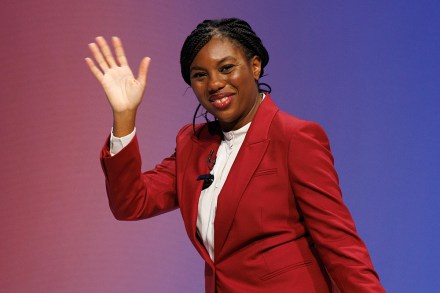
In the great game of musical chairs that is British politics, it’s impossible to foresee which contestant will be left with nowhere to sit when the music stops. Keir Starmer won a landslide victory last July, but has since behaved like a child who has allowed the excitement to go to his head. He agreed immediately to cut the universal winter fuel payment, which made the government look ready to risk short-term unpopularity in pursuit of serious long-term goals. Yet when the unpopularity arrived, he abandoned the measure and with it any claim to long-term thought. As a contributor to one of Lord Ashcroft’s focus groups said this week: ‘He made himself look bad doing it, but he’s made himself look even worse going back on it.

Your state pension is a socialist bribe

From our UK edition

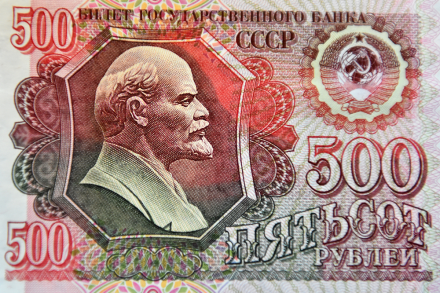
Every four weeks the government sends me my state pension. Those words have a socialist, almost Soviet, ring. The amount has recently risen to £11,973 a year – a preposterous sum to send a 67-year-old man still in paid employment. But from the state’s point of view, the money is not entirely wasted: it buys a kind of loyalty. Because I accept the money, and do so with a certain pleasure, I am bound into the system and am less likely to say it’s a bad one. I’ve allowed myself to become a dependent. I may criticise the way the welfare state is run and demand improvements in the administration of one or another part of it, but I have become less likely to challenge the principle of the whole thing. This is bad, because we’re heading for a smash.

This Kohlian abomination

From our UK edition

In the year when East and West Germany were being reunited Günter Grass felt he must start keeping a diary. He was sure what was taking place was a dreadful mistake: At night I often toss and turn, haunted by images of a Germany that can no longer be mine. This Kohlian abomination: egomaniacal, bombastic, jovial, tough, condescending, domineering, feigning harmlessness. Chancellor Helmut Kohl was a power politician of genius. Although taken by surprise by the fall of the Berlin wall in November 1989, he soon saw how to make himself the architect of reunification. Grass was dismayed to see how easily the Germans were led by this philistine.

Conduct becoming

From our UK edition

Every so often a programme appears which can be recommended even to people who hate television. Parade’s End (Friday, BBC1) is such a work. The awkward — one might think impossible — problem of shortening Ford Madox Ford’s 800-page masterpiece into five hours of television, without violating the spirit of the book or seeming to cram a quart into a pint pot, has been solved by getting Tom Stoppard to write the script. Stoppard’s less is not exactly more, but there is a certain liberation in being able to leave things out. Ford’s wit, penetration and eloquence are distilled into the five acts of a play, and some of his best lines echo all the clearer for being spoken in relative isolation.

Prophet of doom

From our UK edition

Enoch Powell was defeated. He condemned Edward Heath for being the first prime minister in 300 years who entertained, let alone executed, the intention of depriving Parliament of its sole right to make the laws and impose the taxes of this country. But Heath was victorious: in 1972 he led the United Kingdom into the European Economic Community, and in 1975 the British people ratified this decision by a majority of two to one in a referendum. Powell thought this was a disaster. As he put it in 1976, with characteristic lack of understatement: ‘It is the nation that is dying, it is dying politically — or rather, perhaps, it is committing suicide politically — and the mark of death upon it is that it has lost the will to live.

No time for bogus pieties

From our UK edition

This is the shortest political memoir I have ever been sent for review. It is a marvel of concision: 27 years in the Commons set down in only 168 pages. Can any Spectator reader point to a briefer example of the genre? Yet I confess that I opened Confessions of a Eurosceptic with a degree of trepidation. David Heathcoat-Amory’s style owes nothing to that of Jean-Jacques Rousseau. He writes with patrician flatness. It would not occur to him to ingratiate himself with his readers by purporting to tell us everything about his inner life. Not that he dodges deep emotion: the four pages in which he recounts the suicide of his son, Matthew, are harrowing.

Class system

From our UK edition

When my wife said she thought we should educate our three children at comprehensive schools, it was with a degree of trepidation that I went along with her. I was thankful to save the several hundred thousand pounds it would probably have cost to send them to fee-paying schools, money which I at least showed scant sign of being able to earn. But I wondered whether the education would be good enough. Like many a middle-class parent, I was frightened of a system of which I had no personal experience. My parents had tightened their belts to pay for my schooling, and I feared I was failing to give my children the advantages I had myself enjoyed.

A safe pair of hands | 7 April 2012

From our UK edition

Michael Spicer is too honourable to be a brilliant diarist. As he himself says, ‘I eschew tittle-tattle or small talk.’ These diaries cannot be read, as Chips Channon’s or Alan Clark’s can be, because they offer a joyful cascade of indiscretions. When Clark dies in September 1999, Spicer writes of his fellow Tory MP: ‘We never really hit it off. I thought he was untrustworthy.’ Spicer’s father was a soldier, and these diaries read like the history of a regiment written by one of its most loyal officers. A few pages are devoted to Spicer’s hotheaded youth, in which he sets up Pest (‘Pressure for Economic and Social Toryism’) and calls for the resignation of Sir Alec Douglas-Home — a cry magnified by William Rees-Mogg.

Anglo-Saxon divide

From our UK edition

Philip Oltermann has set himself an almost impossibly ambitious task. In 1996, when he was 15 years old, he moved from Hamburg to London, so he has close experience of both England and Germany. In due course it occurred to him, as a man of wide cultural sympathies, that he ought to be in a position to write an interesting book about Anglo-German relations. But how to structure such a work? Oltermann is too polite to say so, but a great part of the problem is that modern English readers are abysmally ignorant of Germany. This used not to be the case: before 1914, to be educated was to be able to read German.

The rival

From our UK edition

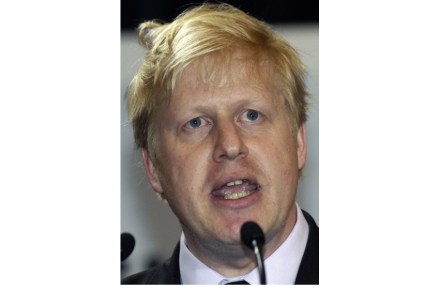
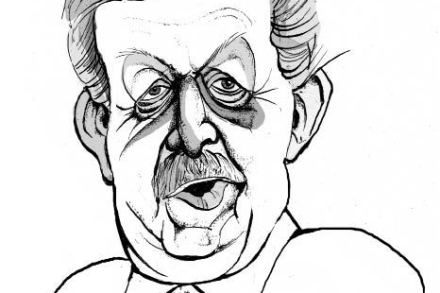
Ken Livingstone’s attacks on Boris Johnson seem to conceal admiration How does Ken Livingstone think he is going to beat Boris Johnson in the election for Mayor of London to be held next May? When I put this question to Ken, he launched into an almost admiring denunciation of his opponent: ‘He’s Britain’s Berlusconi. He just gets away with things nobody else could. And like Berlusconi he doesn’t really do the day job either.’ At the risk of undermining my hard-won reputation for impartiality, I ventured to suggest that Boris works quite hard. But Ken accused Boris of not being a full-time mayor: ‘The fact he carried on the Telegraph column. The fact he took an awful long time off to write the book.

The Conservatives: A History by Robin Harris

From our UK edition

If David Cameron and his friends wish to know why they and their policies are so despised by some Conservatives of high intellect and principle, they should read Robin Harris. His book is a marvel of concision, lucidity and scholarship, with penetrating things to say about Peel, Disraeli, Salisbury, Baldwin, Churchill, Macmillan and the rest. But much of its savour derives from Harris’s disgust — the word is not too strong — with the various forms of bogusness, including intellectual cowardice veiled by complacent politeness, which recur so often in the history of the Conservative party.

Work in progress

From our UK edition

At long last Johnson Studies is starting to take off. It had always been my hope, after publishing my own slim volume on Boris Johnson, that the baton could be passed to younger and fitter hands who would place the subject on a proper academic footing. Scholars from Balliol to Bangor would churn out papers and hold seminars on the symbolism of the Boris bike, or the duel between Boris and George Osborne for the Tory leadership. Very soon the American and Chinese universities would insist on getting involved, and would buy up some of the best people. A young man from the University of Hull came to interview me for his thesis on the Cult of Boris, his idea being that Boris was developing into a minor divinity, of the kind so often worshipped in the ancient world.

Professional jealousy

From our UK edition

 Few words now carry such tiresome connotations as ‘Eton’. Although the Prime Minister and some of his closest colleagues are Etonians, the British press considers it a dreadful disadvantage to have been educated there, especially if one wants to go into politics. This prejudice has seldom been challenged since Iain Macleod’s ‘magic circle’ article appeared in The Spectator on 17 January 1964. The philosopher Jonathan Barnes once told me that it was no advantage in the early Eighties to have been to Eton if you wanted to get into Balliol: ‘On the contrary, there was a pretty strong prejudice against public schools.

White mischief

From our UK edition

Boris Johnson’s enemies are hoping for a final snow-down London woke to snow and people wondered whether this time Boris Johnson would show true grit. His enemies reckon there’s no business like snow business for catching him out. They trust he will be found wanting, as he was by the unexpected snowfall in February 2009, when the city ground to a halt. Many people treasure the belief that the Mayor of London is fundamentally incompetent, and are disconcerted to find that sometimes whole months go by without any real evidence that the Tories have, in the words of the immortal Polly Toynbee, ‘put up a clown to run a great global city’. The snow reached Scotland and the north of England first.

The Tories’ history man

From our UK edition

Andrew Gimson talks to Alistair Cooke, the godfather of the Cameroons, about Dave’s temperament and Hilton’s penchant for ponchos As David Cameron solicits approval for deep spending cuts, he has assured the public: ‘We’re not doing this because we want to, we’re not driven by some theory or ideology.’ Cameron remains very anxious not to be taken for a closet Thatcherite, who beneath the cloak of necessity is pursuing ideological politics. If the Prime Minister wished to make a properly Tory case for cutting himself free from an outdated programme, he could do worse than turn to Alistair Cooke, who played a part in the political education of most of the Tory authors of the coalition government.