Matthew Richardson

Your guide to the Booker Prize

From our UK edition

Assorted literary grandees will squeeze into their tuxes this evening to compete for the Booker Prize. Of the debut novelists, one previous winner and a brace of old-timers, who stands the best chance of winning? Swimming Home by Deborah Levy This is a coiled, unsettling work. A group arrive at their French villa only to find a woman, Kitty Finch, swimming in the pool. Having nowhere to go, she is invited to stay. The book charts the way Kitty’s mental instability wriggles its way into the fabric of the group’s relations: the poet Joe, Isabel (his war-reporter wife), Nina (his teenage daughter) and tag along friends Mitchell and Laura. Written in taut prose, Levy wraps her world in claustrophobia, clinically detailing the depression and friction that ends in tragedy.

Review: Zoo Time by Howard Jacobson

From our UK edition

Winning the Booker can do strange things. For one, critics tend to become noticeably shyer around authors with some bling in their trophy cabinets, hyperbole blunting their edge. But if ever there was a writer primed to dismantle automatic appreciation it is Howard Jacobson. Zoo Time, his first novel since The Finkler Question won the 2010 Booker Prize, does everything short of physically assaulting the reader to excuse itself from being a bland follow up. In fact, its very obnoxiousness is both its weakness and its strength. I must confess to both liking and loathing it, pushed between extremes depending on the subject matter.

Modern life in verse

From our UK edition

Julia Copus’s new collection The World’s Two Smallest Humans exists in four parts, each in their own way circling the theme of loss. Two parts – 'The Particella of Franz Xaver Süssmayr' and 'Hero' – take on historic themes, the first inhabiting that of a man in 1791 ‘translating direct from the silence’ of Mozart’s shorthand for The Magic Flute while also caring for Mozart’s wife, Constanze. The second channels history too, in this case an Ovidian past made new, rejigged for a few pages in contemporary idiom. Both brief sections work well. But the collection really gets going in the two other larger sections – 'Durable Features' and 'Ghost' – where Copus’s lucid lines come into gripping focus.

The marriage plot: The Newlyweds by Nell Freudenberger reviewed

From our UK edition

Few could accuse literary fiction of not doing its best to perk up the US export sector recently. It has been a truly remarkable year. A quick glance at my shelves reveals some wonderful new finds: The Art of Fielding by Chad Harbach, We the Animals by Justin Torres, Seating Arrangements by Maggie Shipstead and recently Leaving the Atocha Station by Ben Lerner. Joining them this summer – although a second novel rather than a debut like the above – is Nell Freudenberger’s The Newlyweds. Exactly like the others, however, The Newlyweds comes already wreathed with praise from across the pond. And well deserved too.

Setting sail

From our UK edition

The sea has always been a powerful stimulant for the literary imagination, most famously, of course, for the likes of Messrs Hemingway and Melville. Both, indeed, are name-checked in Monique Roffey’s novel Archipelago, a new addition to the canon of ocean-inspired work, taking the trope of the waters and recasting it for the twenty-first century. Gavin Weald has had his family torn apart by a flood, his Trinidad house ruined and, worse still, losing his son and seeing his wife incapacitated. He is left alone with his six-year-old daughter, Océan, to try and rebuild a life. At the start of the novel he returns to his refurbished house but realizes he can’t yet face the site of his tragedy.

Better in Black

From our UK edition

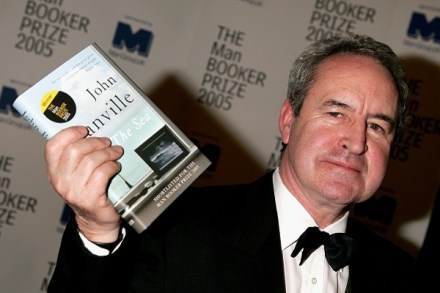
It is almost twelve months ago, following the below-par A Death in Summer, that I wondered aloud on these pages whether Benjamin Black (aka Booker-winner, John Banville) had what it took to write a crime series. A resounding yes comes in the form of the fifth instalment — sixth novel overall, after the 2008 stand-alone The Lemur — of the Quirke series, Vengeance. Black has finally rediscovered the formula that made his debut, Christine Falls, so memorable.   To be sure, crime fiction purists will still bemoan the absence of standard clue-laying.

The Unlikely Pilgrimage of Harold Fry, by Rachel Joyce — review

From our UK edition

The Unlikely Pilgrimage of Harold Fry by Rachel Joyce starts with a wonderfully simple idea. Harold Fry, resident of 13 Fossebridge Road, gets a letter from an old friend, Queenie Hennessy, saying she is dying of cancer. He drafts a reply and goes out to post it. He reaches the post box and, instead of slotting it in, decides to walk to the next one. And the next one after that. Before long, he concludes that a letter is not enough. He will have to walk to Queenie Hennessy himself. Only one snag: the journey from Kingsbridge to Berwick-upon-Tweed is 627 miles. So starts the tale of a modern pilgrim. The epigraph of the novel comes from John Bunyan, and the classic themes of pilgrimage — contemplation, purging of past sins — are threaded through the novel.

Missing Mole

From our UK edition

It is thirty years since Adrian Mole first hit our shelves. To celebrate, Penguin has re-released the oeuvre with shiny new covers and a celeb introduction from David Walliams for the first of the bunch, The Secret Diary of Adrian Mole aged 13 ¾. But that’s not all. Joining the commemorative volumes is a new Sue Townsend novel, not part of the Mole canon though burdened with a typically gangly title: The Woman Who Went to Bed for a Year.   It starts with the sort of classic Townsend what-if scenario deployed so brilliantly in two of her other non-Mole books, The Queen and I and Queen Camilla.

The cruel sea

From our UK edition

The early years of the twentieth century hold an irresistible draw for the modern imagination. The Lifeboat by Charlotte Rogan takes us back to 1914, the world poised on the precipice of the modern age, with a plot and characters that are of the pre-modern era. A ship is stricken and, in a rescue bid, lifeboats are hurriedly deployed. At the last minute, Grace Winter manages to secure a berth on one. She finds herself adrift with thirty-nine fellow passengers. Rumours of distress signals stoke hope of potential rescue. But this is a technological dark age; they are at the mercy of the sea and each other. It is a rollicking scenario, and one teased apart with aplomb. The boat is too small to cope with them all. Any hope of recovery depends on lightening the load.

Hollinghurst’s biographical ambitions

From our UK edition

How does fiction mix with biography? Is all biography fiction, or all fiction merely finessed biography?  These questions were considered last night, at the Oxford Centre for Life Writing, by two literary grandees from opposing sides of the issue: Hermione Lee, biographer of Virginia Woolf and Edith Wharton, and Alan Hollinghurst, whose recent novel, The Stranger’s Child, engages with biography in a fictional context. Hollinghurst confessed to nurturing foiled biographical ambitions of his own, eager early in his career to write a life of Ronald Firbank. He attributed it to a lack of patience, unable to submit to scholarly grind. But is biography mere fact-checking chronology? The nature of biography, both agreed, has changed dramatically in the last century or so.

Biting to the core of Apple’s success

From our UK edition

How did Apple gain such a hold on everyday life? Whether it’s checking overnight emails on the iPhone, reading a morning paper on the iPad, walking to the tune of the iPod or beavering away on a MacBook, Apple gadgetry is a companion from dawn till dusk. Inside Apple by Adam Lashinsky attempts to explain the phenomenon by nosing further into the workings of the company itself. The ghost of Steve Jobs, unsurprisingly, haunts the book. But Jobs is grounded in a roomier narrative that describes the company as a whole. Lashinsky draws an honest, if unflattering sketch of what it is like to work at Apple HQ. Take something like product development.

Interview: Christopher Reid

From our UK edition

Christopher Reid’s A Scattering — a collection of poems written in honour of his dead wife, the actress Lucinda Gane — won the 2009 Costa Award. Reid will be reading selected poems from that collection at the South Bank Centre later this month, as part of the forthcoming exhibition examining attitudes to death and grief. Here, Reid talks to Matthew Richardson about his poetry in general. Looking back over the collections excerpted in your new Selected Poems, has your career panned out as you hoped? I don’t think the younger me had any clear expectations. A few vague hopes, possibly, but nothing so definite as to leave the older me feeling either satisfied or disappointed. How do you think your work has changed? Some gains, some losses.

Looking into the well-read future

From our UK edition

E-books can be a strange, parochial beast. As any Kindle-user will know, the content of the Kindle store often varies wildly in terms of design and reading experience. Classics suffer especially from this. A lot of out-of-copyright classics have been digitized by volunteers and are available free, but devoid of any notes, substantial chapter headings and basic page formatting. Even worse, output from some of the big publishing houses proves little better. Pages are inadequately formatted, the type isn’t adjustable; and infuriating gaps exist between paragraphs, while the font often renders sentences unintelligible. But there are some saints among the throng of sinners.

Rumpole’s seasonal cheer

From our UK edition

Music fans may groan at the glut of greatest hit collections clogging up shelves at this time of year. Bookshelves are usually immune from such compilations, though the odd one slips through. In this case, it’s a positive. Forever Rumpole: The Best of the Rumpole Stories brings together some of the most winsome of John Mortimer’s tales. With a healthy range, and stories breezy enough to tackle on a full stomach, it is a timely fireside companion.   The charm lies largely with Horace Rumpole, Mortimer’s caustic lawyer. With his waistcoat, cigars and fondness for a tipple or two, Rumpole takes his rightful place in the pop-fiction pantheon.

Becoming great

From our UK edition

Christopher Reid’s Selected Poems moves through a neat thirty-year stretch from his first collection Arcadia (1979) to his acclaimed Costa-winning volume A Scattering (2009). We travel from Reid’s early period of inventiveness to the later years of solemnity. More importantly, however, it fleshes out a career many will only know through Reid’s recent work.    The early poems are an acquired taste. The reader can feel, in the words of a later poem, as if they are “in a land / whose language I do not understand / but from which I could bring back / some wisdom, some purloined knack” (‘Insofar’). Personally, I’m a sucker for its trippy, psychedelic charm.

One for the Christmas stocking

From our UK edition

Wordy things have had a renaissance of late. Stephen Fry’s superb five-part BBC series, Fry’s Planet Word, aired recently; David Crystal has just produced a handsome new volume, The Story of English in 100 Words; and now Mark Forsyth, of Inky Fool blog fame, offers up the charmingly titled The Etymologicon: A Circular Stroll Through the Hidden Connections of the English Language.   As such a quirky handle suggests, the book is a collection of verbal curiosities. Forsyth investigates what he calls the “glorious insanities of the English language” by exploring the etymological roots of words. The results are fascinating.

A quirky dish

From our UK edition

The four-hundredth anniversary of the King James Version of the Bible has produced some great books. Almost all aspects have been covered: the general histories of Melvyn Bragg and Gordon Campbell ranged over the politics and history, while David Crystal’s Begat showed how its idioms and phrases have percolated through our language. Now, in The Shadow of a Great Rock, Harold Bloom finishes the year by approaching the KJV as a work of art.   With a working knowledge of Hebrew and Greek, he shuffles between the original languages and a variety of English translations — Tyndale, the Geneva Bible and the King James itself. This approach makes for one of the book’s great strengths, namely the rich spread of quotation.

Before Dickens was a Victorian

From our UK edition

Robert Douglas-Fairhurst's Becoming Dickens: The Invention of a Novelist works as a companion piece of sorts to Claire Tomalin’s rival biography Charles Dickens: A Life. The clue is in the subtitle. While Tomalin takes the subject from birth to death, Douglas-Fairhurst’s book focuses on Dickens’s early years. And what early years they were.   With a father constantly dodging the debt-collectors, Dickens’s childhood was the very definition of unstable. The book makes much of the trauma of John Dickens being jailed in Marshalsea for debt with the young Charles forced to earn his keep by working at Warren’s blacking factory. The experience might have been brief, but the impact on Dickens’ imagination was huge.

A hatful of facts about … the future of the book

From our UK edition

The BBC's World at One recently asked five leading figures in the literary world for their thoughts on the 'future of the book'. Here is what they had to say: 1.) Notorious literary agent, Andrew Wylie - aka 'the Jackal' - worried that the industry is at a crisis point. He argued the book industry is in danger of mirroring the fortunes of the music industry by giving too much power to distributors like Amazon. 'Publishers have been trying to reconcile themselves with the demands of the digital distributors,' he said. 'I think if they allow the digital distributors to set the music then the dance will become fatal…The music business ended up needing to go on the road to support the musicians who were part of it.

The importance of plot

From our UK edition

As literary fly-on-the-wall moments go, it would be hard to beat. John Banville – the most austerely mannered stylist in the language, the archbishop of literary fiction – hands his publisher the typescript of his latest. Then he springs the surprise: by the way, it’s a crime novel. Plot, character, the lot. One would forgive the publishing exec for falling horizontal from the shock.   The only possible hint of such an inclination had been with Banville’s 1989 novel, The Book of Evidence. And it’s a faint one at that. Narrated by a murderer from his cell, the book is more Proust than Poirot with its prissily exact narrator and leisurely investigation of motive (or the lack of it). No surprise there.