Culture

Culture

The good, the bad and the ugly in books, exhibitions, cinema, TV, dance, music, podcasts and theatre.

Why do words and cricket go together?

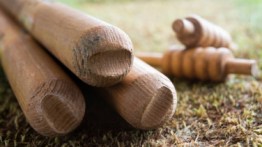
‘Words and cricket,’ wrote Beryl Bainbridge, ‘seem to go together.’ Why should this be? The Ashes series starting next week might not be the most eagerly anticipated of recent times, due mainly to the Aussies having developed a taste for self-destruction rivalling that of Frank Spencer. But still the words come. Broadsheets and blogs alike

Dark Actors, by Robert Lewis – review

More from Books

No book about Dr David Kelly could start anywhere other than at the end. Kelly is found, dead, in a wood near his Oxfordshire home. A public inquiry, headed by Lord Hutton, concludes that Britain’s leading germ warfare expert has committed suicide. Those who question the procedure or the verdict are scorned as conspiracy theorists.

Against Their Will, by Allen M. Hornblum – review

More from Books

After the Morecambe Bay Hospital scandal a new era opens of compassion, -whistle-blowing, naming names and possible prosecutions. But what about 70-odd years of harming children in ‘care’ homes, and prisoners, with toxin injections, -radioactive blasts, electro-shocks to the brain and frontal lobotomies — all done in the interests of medical advance by leading American

Laidlaw by William McIlvanney – review

More from Books

Laidlaw was first published in 1977, 36 years back from now, 38 on from The Big Sleep. Like Chandler’s classic it has survived the passage of time. William McIlvanney did for Glasgow what Chandler had done for Los Angeles, giving the city its fictional identity. Hemingway used to say that all American literature came out

Laughing at sin

Francis Quarles, An emblem on books ‘The world’s a book, writ by the eternal art Of the great Maker, printed in man’s heart; ‘Tis falsely printed, though divinely penned, And all the erratas will appear at the end.’ I like this witty little poem. The idea is simple – just as books have their printing

The Professor of Poetry, by Grace McCleen – review

More from Books

Elizabeth Stone, English professor at UCL,  has long lived on ‘paper and words and thin air’. Single, friendless, dessicated, respected, she passes out during a faculty meeting and wakes to find herself ‘attached by a chain of spit to her own cardigan’. A brain tumour is diagnosed, and removed. Expecting death, Elizabeth receives the news

An Englishman in Madrid, by Eduardo Mendoza – review

More from Books

To Spaniards, the English must appear a highly contradictory people. The stereotype of the restrained, well-dressed gentleman (Spain’s largest department store is El Corte Inglés, ‘the English cut’) must contend with the binge-drinking phalanxes of tourists occupying Spain’s beaches every summer. Though generally thought to be fairly law-abiding, the English are still, mostly affectionately, referred

Summer reading

Lead book review

Mary Killen Gone Girl by the American writer Gillian Flynn comes recommended by both high- and middle-brow readers (Orion, £7.99). I want the reported total absorption from the off and the welcome relief from thinking about anything other than what’s on the next page. The Blue Riband, Peter York’s anecdotal history of the Piccadilly Line

Boliver, by Marie Arana – review

More from Books

So here we go again into a heart of darkness:  the humbug and horror which is the history of Spanish South America ever since Columbus landed on the island of Hispaniola. Now modern Haiti and the Dominican Republic, the island’s population had within a few decades of Columbus’ arrival, through genocide and disease, been reduced

The Girl from Station X, by Elisa Segrave – review

More from Books

On her seventh birthday, Elisa Segrave’s five-year-old brother Raymond drowned in their grandmother’s swimming pool. From that day onwards, her mother Anne was emotionally detached and alcoholic. ‘My mother was only 42 when I, my father and my two remaining brothers lost her — to grief.’ Rebuffed by her mother in the days after Raymond’s

The Flamethrowers, by Rachel Kushner – review

More from Books

This bright, burning flame of a novel takes place in the art world of 1970s New York. Our guide to this scene of glittering parties and eccentric characters — such as the White Lady, who wears white and goes to a grocery store to buy ‘milk, white bread, a can of hominy, and two jars

The Spinning Heart, by Donal Ryan – review

More from Books

Despite being so short, The Spinning Heart certainly can’t be accused of lacking ambition. Over the course of its 150-odd pages, Donal Ryan’s first novel introduces us to no fewer than 21 narrators living in or around the same small town in the west of Ireland. One by one, they reflect on their lives, past

Edwardian Requiem, by Michael Waterhouse – review

More from Books

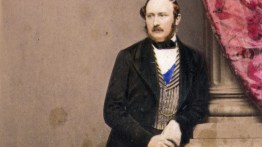
The photograph on the jacket, reproduced above, says it all — or at least all of what most of us think we know about Sir Edward Grey. Patrician, reflective, dignified, he stares into the future with the uncompromising honesty of one who has never even contemplated straying from the paths of rectitude. In fact, he

The Men Who Lost America, by Andrew O’Shaughnessy – review

Lead book review

On Christmas Day 1776, the ambitious, well-connected war hero, General John Burgoyne, soon to be appointed commander of British forces in Canada, agreed a wager of 50 guineas with Charles James Fox ‘that he will be home victorious from America by Christmas Day 1777.’ Nine weeks short of that date, on 17 October, Burgoyne surrendered

Timothy Beardson interview: It’s urgent that China reforms

Recent convulsions in China’s banks will not, I suspect, have surprised Timothy Beardson, a sinophile, veteran Hong Kong financier and author of Stumbling Giant: The Threats to China’s Future. He argues that China’s extraordinary growth over the last 30 years has come in spite of its banking system. A dinner party might speculate where China

The week in books | 24 June 2013

This week’s issue of the Spectator is packed with book reviews. Here’s a selection of quotes to whet your appetite. Old China hand Jonathan Mirsky finds much to applaud in Rana Mitter’s history of the Sino-Japanese war. ‘Into the Fifties, as Mitter outlines, a storm gathered in the US over ‘who lost China’; and those

The odd couples

This is the first post in an occasional series about rediscovering old science books. Twins, Lawrence Wright posits, pose a threat to the established order. People have long been scared of, and intrigued by, them. The doppelganger holds a special place in the gothic canon, whilst some cultures have even seen men cutting off a

Constance, by Patrick McGrath – review

More from Books

Patrimony and infidelity are defining themes of the Anglo-American relationship, as they are of Constance, a novel with alternating narrators: Sidney Klein is English, in his forties, and an authority on Romantic literature. Constance Schuyler is American, 22, and believes her father hates her. Their new marriage enters crisis when Constance’s family reveals her origins

Song Without Words, by Gerald Shea – review

More from Books

At the age of six, Gerald Shea had scarlet fever. The sounds of birds passed into memory to be replaced by the sound of locusts. Not only had Shea developed tinnitus, he had lost the ability to hear high frequencies.   Broadly speaking, he could only hear vowels, not consonants. If you can hear vowels, you

What Fresh Lunacy is This?, by Robert Sellers – review

More from Books

Midway through this startling book, Robert Sellers asks himself a question with such apparent seriousness I barked with laughter: ‘Was Oliver Reed an alcoholic?’ A more pertinent enquiry would be: ‘Was the man ever capable of drawing a sober breath?’ What Fresh Lunacy is This? is the monotonous chronicle of a nasty drunk whose ‘explosions

Paul Nash, by Andrew Causey – review

More from Books

Andrew Causey opens his book on a slightly defensive note: Paul Nash, he says is often identified as Britain’s outstanding 20th-century landscape painter, as if painting the natural scene was the only thing he did, or landscape art as a genre is entirely separable from others, such as portraiture or history painting. It is unexpected

China’s War with Japan, by Rana Mitter – review

Lead book review

The Sino-Japanese struggle that began in 1937, two years before the rest of the world plunged into war, is not as unknown as Rana Mitter, a professor of Chinese history and politics at Oxford, contends in this comprehensive new book. His copious notes, after all, display how well that conflict has been studied by many