Culture

Culture

The good, the bad and the ugly in books, exhibitions, cinema, TV, dance, music, podcasts and theatre.

Is Northamptonshire not scenic enough to visit?

More from Books

I don’t know whether Bruce Bailey, a proud Northamptonshire man, agrees with the late Sir Nikolaus Pevsner that no one would visit his county for its landscape. In the introduction to the first edition of this architectural guide, published in 1961, Pevsner wrote that although Northamptonshire bordered on more counties than any other in England (nine in all), it lacked ‘any of the memorable scenic qualities one may connect with some of them’. ‘Its beauty spots are few,’ he said. ‘There is no coast, nor a spectacular range of hills.’ Pevsner was, of course, German-born and therefore perhaps of the German romantic view that landscape without rocks and peaks and waterfalls is not really worth bothering with.

The thrill of the (postmodern neo-Victorian) chase

More from Books

Charles Palliser’s debut novel The Quincunx appeared as far back as 1989. Lavish and labyrinthine, this shifted nigh on a million copies, while more or less inaugurating the genre of ‘neo-Victorian literature’, whose ornaments are still clogging up the bookshop shelves a quarter of a century later. There have been three other novels since, at least one of them set in the here- and-now, but Palliser’s fifth outing straightaway returns us to the world of creaking lawsuits, high-grade subterfuge and lickerish kitchen-maids in which he made his reputation. In fact the territory occupied by Rustication is so familiar as to make the case-hardened reader of A.S.

The man who shared a bed with D.H. Lawrence and Dylan Thomas (though not together)

More from Books

Rhys Davies was a Welsh writer in English who lived most of his life in London, that Tir na nÓg in the east, the place of eternal youth and beauty to which in the mid-20th century many Welsh writers in English, adulterers and homosexuals ran. There were few chapels in London, but many bedsits. Also publishers. And guardsmen. Here Davies followed a career unique by Welsh standards, for he did not sell milk or teach. For 50 years he just wrote.

Portobello’s market mustn’t be allowed to close

More from Books

After reading Portobello Voices, I feel more strongly than ever that the unique Portobello market mustn’t be allowed to close. It gets over a million visitors a year and is one of London’s most frequented sites. Blanche Girouard interviewed a cross-section of people involved with the market and has written up their recorded interviews verbatim, using their own voices. This has the effect of making the market feel very immediate and alive. And what a rich cross-section is here.

The best funny books for Christmas

More from Books

Books do furnish a room, and quirky books for Christmas do furnish an enormous warehouse somewhere within easy reach of the M25. There are more of them than ever this year, some purportedly comic, some wilfully trivial, a few of them uncategorisable in their oddness, but all of them have one thing in common: they will be outsold by the Hairy Bikers’ diet book. Anyone who tells you that the world is a just and fair place has never written a quirky book for Christmas. In the still popular trivia category — which has survived the stark retraction of the Ben Schott empire — two books stand out. The Unbelievable Truth (Preface, £16.99, Spectator Bookshop, £13.99) is a spin-off from the Radio 4 panel show, where hard-to-believe facts vie with easy-to-believe lies.

Can virgins have babies?

More from Books

Mrs Christabel Russell, the heroine of Bevis Hillier’s sparkling book, was a very modern young woman. She had short blonde hair which she wore in two large curls on the side of her head, she was wildly social and she was a fearless horsewoman. In 1920 she set up a fashionable dress shop, Christabel Russell Ltd, at 1 Curzon Street. At the end of the first world war she had married John Russell, known as ‘Stilts’ (he was 6’5” tall), the heir to Lord Ampthill, a cousin of the Duke of Bedford. His snobbish and crusty parents disapproved furiously of the marriage. The young couple spent little time together. Christabel, who adored dancing, went out night after night with one of her many admirers.

Mary Killen: Sandi Toksvig is wrong about the placement of the pudding fork

More from Books

Sandi Toksvig, as this book’s cover declares, ‘makes Stephen Fry look like a layabout’. The broadcaster, author, comedian, actress and mother of three has also had time to churn out 20 books in 20 years. This one, a guide to modern manners, although dedicated to ‘Mary’, an eight-year-old girl whom she addresses regularly throughout, is said to be aimed at adults, or Mary when she grows up. There is no snobbery within, but Toksvig makes the point early on that The fact is you will do better in life if other people like you and find you are a pleasure to have around; if you know how to behave.

How much can you tell about E.E. Cummings from this photo?

More from Books

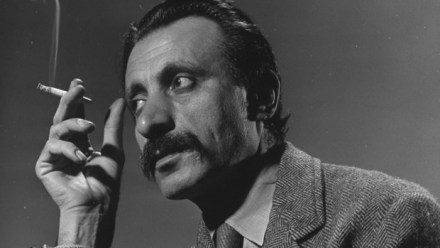
Do you think you can tell things about writers from the way they look in a painting or photograph? A more demanding test: from their books can you predict how authors look? It sounds unlikely, yet, upon seeing a photograph of an author, we do find ourselves exclaiming: ‘That’s not how I thought he’d look!’ In Portrait of the Writer there are 250 photographs with a potted biography opposite each. ‘In the best instances,’ says Goffredo Fofi in the foreword, ‘we can see in the photograph that the writer (although not just the writer) has discovered something about himself or herself that he or she was unaware of or had not reflected upon sufficiently.’ Can we, though? Take E.E.

Bill Bryson’s ‘long extraordinary’ summer is too long

More from Books

Hands up Spectator readers who can remember the American celebrities Charles Lindbergh, Babe Ruth, Al Capone, Jack Dempsey, Zane Grey, Edgar Rice Burroughs and the  adulteress and husband-killer Ruth Snyder  who all, in 1927, lit up what Bill Bryson calls ‘one hell of a summer’. Born in America only five years later, I knew about most of these characters. Lindbergh, in particular, whose flight across the Atlantic from the east coast to Paris made him for some years the most famous man ‘on the planet’ (one of Bryson’s favourite phrases), attracted vast crowds; once, in a welcoming frenzy, they almost tore his plane apart — an easy feat considering that it was covered in fabric.

Slow Train to Switzerland, by Diccon Bewes – review

More from Books

In 1863, the pioneering travel agent Thomas Cook took a group of British tourists on the first package holiday to Switzerland. One of them, a jolly young woman called Jemima Morrell, kept a diary — and 150 years later, English émigré Diccon Bewes has followed in her footsteps. His Slow Train to Switzerland (Nicholas Brealey, £18.99) is a fascinating survey of how that country (and ours) has changed. The main thing that strikes you about this charming book is how gung-ho those early tourists were. The trains were rickety, the hotels were spartan, and the toilet facilities virtually non-existent. Yet rather than moaning about these hardships on TripAdvisor, Jemima rose before dawn every day to hike up endless Alps and glaciers.

What would Auden have deemed evil in our time? European jingoism

More from Books

‘Goodbye to the Mezzogiorno’ was the first Auden poem that Alexander McCall Smith read in his youth. He discovered it in an anthology, and it puzzled him because he had not then visited Italy. A little later, Smith found Auden’s elegy to Sigmund Freud, and was enthralled by its promise that psychoanalysis frees people ‘to approach the future as a friend/ without a wardrobe of excuses, without/ a set mask of rectitude or an/ embarrassing over-familiar gesture.’ When Smith began his careful, systematic reading of Auden while living under civil war conditions in Belfast, he found the hostility, menace and anxiety of Auden’s pre-1939 poems attuned to his environment. The poet’s hold on Smith’s imagination and intellect has not slackened.

Why do we pounce on Wagner’s anti-Semitism, and ignore that of the Russian composers?

Lead book review

Before ‘nationalism’ became a dirty word, it was the inspiration for all sorts of idealistic and reform-minded people. This was never more true than in the history of music. Clearly, subsequent events have discredited some of those 19th-century ideals. It is striking, however, that we have become uncomfortable with Wagner’s German nationalism while continuing to regard Smetana’s Czech nationalism as an admirable, even inspiring quality. At times one feels that some musical nationalists are given too easy a ride — as if what happened in the opera house couldn’t conceivably affect anything outside it.

The View from 22 podcast books special: World War I and grave hunting

I'm delighted to present the first View from 22 books podcast. We begin with Allan Mallinson’s new book 1914: Fight the Good Fight (reviewed here by Peter J. Conradi), which argues that the Great War might have been won in 1915 if the British Expeditionary Force had been used as a strategic reserve in 1914. Mallinson and Charlotte Moore (who has reviewed Great Britain’s Great War by Jeremy Paxman and Fighting on the Home Front by Kate Adie in the latest issue of the Spectator) imagine what modern Britain would look like if the war had ended earlier. Ann Treneman has written Finding the Plot: 100 Graves You Must See Before You Die.

The joy of cemeteries

Features

The idea of writing Finding the Plot: 100 Graves to Visit Before You Die first came to Ann Treneman when she was chatting with Tony Wright, formerly Labour MP for Cannock Chase. They started talking about Birmingham and she happened to remark: ‘Did you know the man who invented Cluedo came from Bromsgrove?’ His name, rather marvellously, was Anthony E. Pratt, and she’d previously written about him for the Independent. Pratt had allowed the patent to lapse before the board game took off, and had died in obscurity (although with Alzheimer’s, in an old people’s home, rather than with lead piping, in the library).

The imitable Jeeves

More from Books

For as long as I can remember — I take neither pleasure nor pride in the admission — I have been one of those people who feels an irresistible curling of the lip at reviews of the ‘I laughed till I cried’ variety. Something about that hackneyed claim, invariably trumpeted in bold letters outside West End theatres, inspires absolute scepticism. No longer. At two memorable moments in Jeeves and the Wedding Bells I did indeed laugh until I cried. To readers unfamiliar with his role as a team captain on Radio 4’s The Write Stuff, the literary quiz which culminates each week with a pastiche of an author’s style, Sebastian Faulks, still best known for his novels Birdsong and Charlotte Gray, may appear an unlikely candidate for donning the mantle of P.G.

Hogarth and the harlots of Covent Garden were many things, but they weren’t ‘bohemians’

More from Books

It was Hazlitt who said of Hogarth that his pictures ‘breathe a certain close, greasy, tavern air’, and the same could be said of this book. It describes the fermenting stews of 18th-century Covent Garden, and the pungent work of the artists who lived and worked among them, Hog- arth and Thomas Rowlandson in particular. You could read it as a baggy prequel to Vic Gatrell’s marvellous, Wolfson Prize- winning study of post-1780 caricaturists, City of Laughter. The ‘ring of antique courts and alleys that laid siege to the Piazza’ of Covent Garden covered no more than a quarter of a square mile of London but, according to Gatrell, they brewed up a uniquely rich artistic culture.

Carlos Acosta, the great dancer, should be a full-time novelist

More from Books

Carlos Acosta, the greatest dancer of his generation, grew up in Havana as the youngest of 11 black children. Money was tight, but Carlos won a place at ballet school, and before long he was enthralling audiences at Covent Garden as a half Jagger, half Nureyev figure with a twist of the moon-walking Jackson in the mix. Now Acosta is about to leap into the world of literature with a debut novel, Pig’s Foot, written over a period of four years during rehearsal breaks. For all its manifest debt to Latin American so-called ‘magic realists’ (Marquez, Borges, Vargas Llosa), the novel stands triumphantly on its own. In pages of salty-sweetprose, it traces five generations of a black family through Cuba’s tumultuous recent history.

Why Jeremy Paxman’s Great War deserves a place on your bookshelf

More from Books

The Great War involved the civilian population like no previous conflict. ‘Men, women and children, factory, workshop and army — are organised in one complete unity of social resistance, to defend themselves both by offence and by ordinary defence,’ said Ramsay MacDonald. Geoffrey Studdert Kennedy, the popular army padre nicknamed ‘Woodbine Willie’, declared ‘There are no non-combatants.’ This premise underpins both these books. While Kate Adie specifically addresses ‘the legacy of women in World War One’, Jeremy Paxman discusses more generally the state of the embattled nation, its press, its political, industrial and social life, its assumptions and priorities. The strengths and weaknesses of both offerings are surprisingly similar.

Village life can be gripping

More from Books

Black Sheep opens biblically, with a mining village named Mount of Zeal, which is ‘built in a bowl like an amphitheatre, with the pit winding gear where a stage would be’. It is divided into Lower, Middle and Upper Terrace, the last-mentioned known by the locals as Paradise. If, like many bookshop browsers, you judge a novel by its first page rather than by its cover, you might think, at this early point, that Susan Hill’s fairly recent theological studies sit heavily on the structure. You might expect (not necessarily with wild excitement) a familiar tale of stock characters and their moral failings. But it’s not like that. The opening page or two mislead benignly, giving a generalised feel to what is, in fact, a personal and moving novella.

Christopher Howse takes the slow train in Spain — and writes a classic

More from Books

This is probably not a book for those whose interest in Spain gravitates towards such contemporary phenomena as the films of Pedro Almodóvar, Barcelona Football Club or the fashion retailer Zara. Nor, as far as trains go, is it a volume for people fascinated by the engineering feats of Spain’s new high-speed AVE train system, which means that you can travel from Madrid to Seville in just over two hours, or from Madrid to Barcelona in less than three (rather amazing, when you recall that the old service used to take nine hours). Christopher Howse does not like high-speed trains. Even moderately paced express trains are too fast for him, for one cannot really observe the landscape from them.

How we beat Napoleon

Lead book review

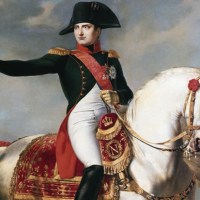
It feels the height of ingratitude to blame Jane Austen for anything, but it probably is her fault that most people seem to think that the only impact that the Napoleonic War had on British life was to bring Mr Wickham and the militia into the lives of the Bennet girls.

Competition: Back to school

Spectator literary competition No. 2823 This week’s assignment offers an opportunity to put yourselves into the 8-year-old shoes of future heads of state or literary giants. You are invited to submit a school essay or poem written at the age of eight by any well-known person, living or dead, entitled ‘My Pet’. Please email entries, of up to 16 lines or 150 words, to lucy@spectator.co.uk by midday on 6 November. Here are the results of this week’s challenge, in which competitors were asked to supply a postscript to any well-known novel.

The Lady on Lenin

A delightful anecdote in Jonathan Aitken's new biography of Margaret Thatcher, which is out today. Visiting the French estate of the late Jimmy Goldsmith in 1997, with Denis and Bill and Biddy Cash, Lady T posed for a photograph in front of the giant statue of Lenin that resides in the woodland of Montjeu. ‘I just want to show him we won,’ declared the late PM. History is written by the victors.

‘If I can barely speak, then I shall surely sing’

More from Books

A few weeks ago, I was wandering with a friend around West London when our conversation turned to the reliable and inexhaustible topic of Morrissey. We were discussing his gestures, in particular when he augments the percussive spondee that opens ‘Sheila Take a Bow’ with two magnificent jabs of his right elbow. So back we went to my friend’s flat to study it again. In goes the DVD; bang go the drums; jab goes the elbow, and my dear friend gives a small cheer of delight, dancing his dance of Rumpelstiltskin glee. ‘Genius!,’ he declares. And he is right. It is a small moment, one of those preposterously arcane details beloved of a devotee of the Smiths, but it somehow seems to say everything about our artistic hero.

My dear old thing! Forget the nasty bits

More from Books

There can be a strong strain of self-parody in even the greatest commentators. When Henry Blofeld describes the progress of a pigeon in his inimitably plummy tones, or greets a visiting Ocker to the commentary box with a jovial ‘My dear old thing!’, he is impersonating himself as surely as Rory Bremner has ever done. Just where ‘Blowers’ ends, though, and the man behind the act begins, can be tricky to judge. In Squeezing the Orange he does occasionally show us behind the scenes. He reveals, for instance, the advice which led him to his obsession with describing buses, and cheerily explains how he came by that ‘silly’ catchphrase, ‘My dear old thing’. What Blofeld does not do, though, is to explore anything so untoward as depths.

Clash of the titans

More from Books

This is an odd book: interesting, informative, intelligent, but still decidedly odd. It is a history of the Victorian era which almost entirely eschews wars and imperial adventures and concentrates instead on the social, political and intellectual climate of the times.  This is still a vast spectrum. Simon Heffer concludes that he must decide which facets deserve attention and picks out those which interest and entertain him most; hence the occasional oddity. Can the building of the Albert Memorial really be worth 30 pages? Or the conflict over the style of architecture to be adopted for the new government buildings in Whitehall be worth 20?