Jonathan Croall

The National Theatre Story by Daniel Rosenthal – review

From our UK edition

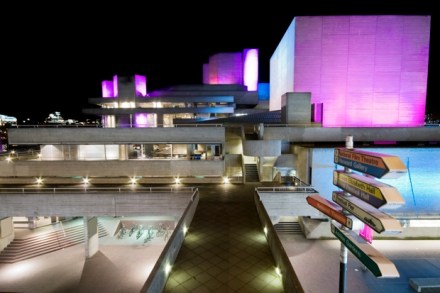
In 1976, as the National Theatre moved into its new home on London’s South Bank, its literary manager Kenneth Tynan observed: ‘It’s taken 123 years to get here: 60 of Victorian idealism, half a century of dithering, and a final 13 years in the planning and building.’ Today, still under Nick Hytner’s dynamic and broad-church directorship, the National is in rude health both artistically and economically. But as Daniel Rosenthal makes clear in this magnificently detailed history, published to mark the theatre’s first half-century, the journey has been a supremely hazardous and contentious one.
Gielgoodies

From our UK edition

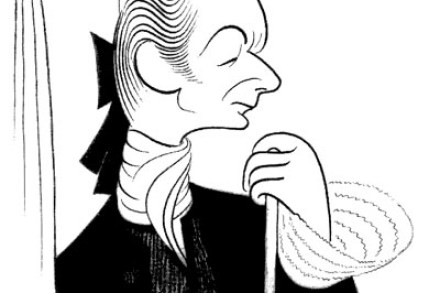
Timothy Bateson Richard Burton was playing Hamlet at the Old Vic, but he was very nervous and not at his best. John came round to his dressing-room afterwards, to find him stark naked. ‘I’m so sorry, Richard,’ he said. ‘Shall I come back later when you’re better — I mean when you’re dressed?’   To Vivien Leigh, after she suggested playing a scene from Romeo and Juliet for a wartime concert party: ‘Oh no, Vivien! Only a great actress can do that sort of thing.’   To Alec Guinness, then a rising young star, on meeting him in Piccadilly: ‘I can’t think why you want to play big parts. Why don’t you stick to the little people you do so well?

Forthright to a fault

From our UK edition

Her mother was Ellen Terry, the most admired actress of the day. Her brother was Edward Gordon Craig, the celebrated stage designer. Little wonder then that Edith Craig was overshadowed for most of her life by two such towering figures. Yet her theatrical achievements were substantial. She was a talented costume designer and maker, the founder of the radical theatre group the Pioneer Players, and an indefatigable producer and director of countless plays and pageants. She was also an important figure in the suffrage movement, staging many feminist plays, and lived in a famous artistic lesbian ménage-à-trois.

A serious man

From our UK edition

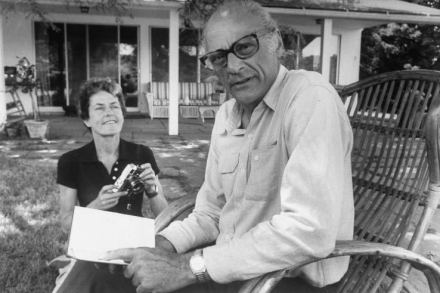
For much of the second half of his life Arthur Miller was a man whose future lay behind him. The acclaimed American playwright, celebrated for classics such as The Crucible, All My Sons, A View from the Bridge and Death of a Salesman, struggled to get his later plays staged in his own country. When occasionally they were put on they were fiercely attacked by most critics, who thought them tedious, preachy and ill-written; as one typically said of Incident at Vichy, it was ‘the same old noisy virtue and moral flatulence’. Miller, they decided, was a relic of the postwar era, stuck in the ideological struggles of the past, and totally out of touch with the modern theatre.

All his world a stage

From our UK edition

As in the theatre, so in his letters: John Gielgud was a man of many parts, and acutely aware of his audience for all of them. In this comprehensive volume of 800 letters spanning nearly 90 years, we see the great actor in a range of roles: loving son, wicked gossip, star actor, indecisive director, anguished lover, brilliant anecdotist. Some parts he plays with style, others with affectionate wit, yet others with sympathy, courage or blazing honesty. One of the many attractions of this absorbing and deliciously entertaining book is Gielgud’s capacity for self-criticism. He was by his own admission vain, impulsive, often selfish, totally impractical in ordinary life, and quite oblivious to the world outside the theatre.