Jeremy Treglown

The gentle intoxications of Laurie Lee

From our UK edition

He was always lucky, and he knew it: lucky in the secure rural intimacy of the upbringing described in Cider with Rosie; in the love of some passionate, clever women, whose guidance and support get rather less than their due in As I Walked Out One Midsummer Morning; and in having survived the Spanish civil war — the subject of A Moment of War — despite seeing action (though on his part this involved more seeing than action) in the terrible last battle of Teruel, and being imprisoned three times as a suspected spy. Behind and beyond all that, he was lucky in his gifts: charm, which included a knack for emotional escapology; artistic skill — he drew, painted and was an agile violinist; and above all verbal fluency.
‘Saul Bellow’s Heart’, by Greg Bellow – review

From our UK edition

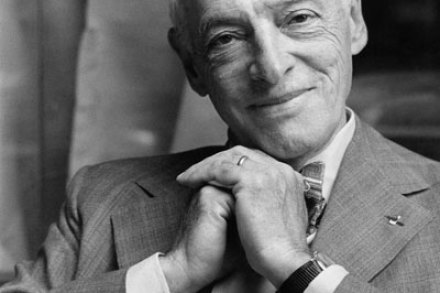
Greg Bellow, a retired child psychotherapist in his late sixties, is the eldest of the novelist Saul Bellow’s offspring. Bellow Sr (pictured above in 1984), as we already knew from his part-autobiographical fictions and a readable, well-sourced critical biography by James Atlas published in 2000, was a fairly dutiful, not unaffectionate father but didn’t see affection as an impediment to truthfulness and always put his writing before anything else. He claimed that he had never heard of ‘an honest working man’ on either side of his Lithuanian Jewish family: ‘My forefathers were Talmudists. My maternal grandfather had 12 children and never worked a day in his life.

The masters in miniature

From our UK edition

Jeremy Treglown finds something for everyone in Penguin’s new Mini Modern series It’s a cool silver-grey in colour, weighs two and a half ounces and fits flexibly into your pocket. It opens easily to reveal words imaginatively chosen and arranged in sequences so absorbing and surprising that they can make you miss your bus stop. It costs £3. Penguin’s Mini Moderns — there are 50 of them, to celebrate the 50th anniversary of Penguin Modern Classics — include a story in which a boy uses something very like Skype to call his mother and tell her he would like her to come and see him. She protests: ‘But I can see you!’ But it’s not the same through ‘the Machine’, he complains.

Lost and found | 20 May 2009

From our UK edition

‘Book for book,’ John Banville is quoted as saying on the cover of this one, ‘[Graham] Swift is surely one of England’s finest novelists.’ This may be Irish for ‘but of course he hasn’t written all that much’, though eight novels and a collection of short stories isn’t bad going and it would be odd if work so ruminative and elegiac came out more quickly. If Swift seems costive by comparison with some of his contemporaries, in fact, it’s not that he has produced fewer novels but that he does very little other writing: hardly any journalism or criticism, no polemics.

Do tell me some more about Devonshire

From our UK edition

So I Have Thought of You: The Letters of Penelope Fitzgerald, edited by Terence Dooley ‘I can’t remember whether you said you liked Barbara Pym,’ Penelope Fitzgerald wrote to an old school friend around 1980, ‘but am sending Quartet in Autumn in case you haven’t got it, otherwise it can go to the Mothers’ Union Xmas sale. I do like her very much, the incidents look so trivial that there’s nothing in them and then you suddenly realise how much she’s said.’ The recommendation is typical in its lighthandedness and could also be mistaken for a fair summary of Fitzgerald’s own fiction at that time. But her work went further and deeper than Pym’s.

Stein and Toklas Limited

From our UK edition

As in her brilliant study of Sylvia Plath and Ted Hughes, Janet Malcolm’s focus in Two Lives is on the writing of biography, especially the biography of a couple — here, the ebullient Gertrude Stein and her ugly, much exploited lover, Alice B. Toklas — and, behind that, the construction of identity itself. Like Stein’s own work, the book is vivid, elliptical and distrustful of artificial order. It’s un-Stein-like, though, in the lucidity of Malcolm’s underlying thesis: that life-writing often has a lot more in common with fiction than its practitioners have tended to admit. In the early 1930s, Stein wrote The Autobiography of Alice B.

Sticking close to his desk . . .

From our UK edition

The Several Lives of Joseph Conrad by John Stape Why did he do it? In his late thirties, Joseph Conrad abandoned the modestly successful career as a seaman which he had steadily built up. Though the job involved tiresome exams and increasing responsibilities, it had been his ‘great passion’, he wrote a dozen years later. ‘I call it great because it was great to me. Others may call it a foolish infatuation. Those words have been applied to every love story. But whatever it may be the fact remains that it was something too great for words.’ Yet he gave it up, opting instead for writing, marriage and a family, all of which made him miserable. Writing, in particular, was agony to him.

The dangerous edge of things | 10 February 2007

From our UK edition

If you are English and love the poetry of Robert Lowell, Anne Sexton, Zbigniew Herbert or Czeslaw Milosz, you probably have Al Alvarez to thank, directly or indirectly. The unostentatiously brilliant, cosmopolitan reviews Alvarez contributed to the Observer over a decade from the mid- 1950s, together with his taste-changing 1962 anthology The New Poetry and his editorship of a Penguin series of modern European poetry in translation, made him at least as important to poetry-readers as Kenneth Tynan was to theatre-goers. Latterly, most of his work has appeared in the New Yorker and the New York Review of Books (where he was one of the founding contributors), but in the 1950s and 1960s he was everywhere, including on radio programmes like The Critics.

A voracious collector

From our UK edition

‘The only novelist now writing in English whose works are likely to stand as literary classics...who has the power, range, knowledge, and wisdom of a Tolstoy or James.’ Verdicts like this American one on John Fowles were a lot more common in the 1960s and 1970s than they have been since, and in the USA more than the UK. Fortunately, you don’t have to agree with them to be absorbed by Eileen Warburton’s well-written, thoroughly researched and even-handed biography — her first book, and evidently a labour, if not of love, then of the queasy fascination which will also be most readers’ main response.

Past glories prove elusive

From our UK edition

Despite many allusions to Virgil and a diligent summary of various interpretations of Poussin's 'Les Bergers d'Arcadie', Ben Okri's main sense of Arcadia, with its 'star-dust magic', seems to be derived from pop music lite. 'We are stardust, golden', sang Eva Cassidy in Woodstock, 'and we've got to get ourselves back to the garden.' Anyone who has been tempted to replace this with 'We've got to get back to the weedin' ' will know what's missing from Okri's view of nature. Realism apart, In Arcadia has no narrative tension and the characters are ciphers.