Zenga Longmore

Ghosts of No. 10

From our UK edition

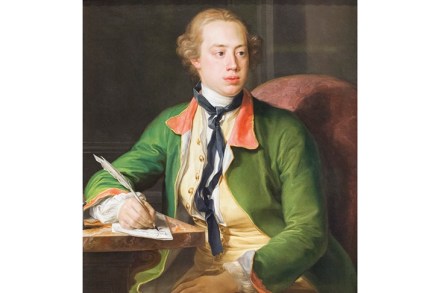
If you associate Lord Salisbury more with a pub than with politics, here is Andrew Gimson to the rescue, with succinct portraits of every prime minister to have graced — or disgraced — No. 10 to date. You will find no trace of waspish mockery in his book. In a time when heroes are constantly being debunked, its kindly, intelligent tone appears refreshingly old-fashioned. The flamboyant Robert Walpole makes for an ideal scene-setter. In 1721 he invented the office of prime minister and held it for longer than any of his successors — a full 21 years. Plump, affable and crude, with an astute business sense, he managed to amass a fortune by ingratiating himself with the first two Hanoverians and getting out of the South Sea Bubble in the nick of time.
Imagine Eastenders directed by David Lynch

From our UK edition

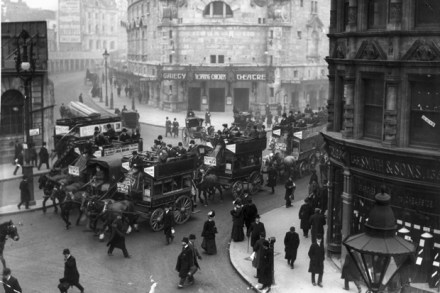
Ghostly doings are afoot in Edwardian London. Choking fog rolls over the treacle- black Thames. Braziers cast eerie shadows in grimy alleyways. Two sinister doctors hunch beside a dying fire in the appropriately-named Printer’s Devil Court, ‘a dark house, with steep, narrow stairs’. Having supped on a hearty repast of lamb stew and treacle pudding, the ‘shadowy’ Dr Walter reveals his dastardly scheme. ‘We are proposing... to bring the dead back to life.’ Our hero young Dr Meredith is appalled. This is diabolical! Derivative of Frankenstein! Not quite. The experiment results in a phantom rather than a monster. No gothic element is spared in this tale. The author has surpassed herself.

The Quickening, by Julie Myerson — review

From our UK edition

The plot of The Quickening (Arrow/ Hammer, £9.99) by Julie Myerson (pictured) revolves around pregnant, newlywed Rachel and her sinister husband, Dan. Rachel’s ghostly journey begins when Dan suggests a holiday in Antigua. Even though Rachel has a creepy premonition when she sees a photograph of her Caribbean destination, she’s not deterred. Of course, strange things happen when they arrive. Psychic taxi- drivers mumble cryptic warnings. A clairvoyant waitress tearfully begs Rachel to leave the island. Light-fittings fly off the walls. Shadowy figures lumber along sunlit beaches. Locals are murdered in mysterious circumstances.

Getting the knives out

From our UK edition

It’s odd that this book should be about a cleaner, because it exactly conjures up the emotions I felt when I worked as a cleaning lady many years ago. Contemplating the grease-encrusted kitchen floor I was about to scrub, I’d cry aloud: ‘How long must I perform this thankless, gruelling task? Why me?’ These agonised expressions were wordlessly repeated as I waded through this dismal novel. The main character is a girl called Agnes, and I spent many hours trying to work out whether she had no personality at all or too many personalities. She is wonderfully adept at managing restaurants, looking after babies and engaging in profound philosophical dialogue; yet she remains disturbingly dim. She is illiterate, but works as an accomplished secretary.

Carrying on regardless

From our UK edition

As a devotee of Fay Weldon I was amazed but nonetheless delighted by the change of her usual style. Set in 1899, her latest novel charts the lives and loves not of She Devils but Lord Dilburne’s household, both above and below stairs. The trademark Weldon wit is very much in evidence, only this time her characters are fetchingly clad in Liberty’s lace with leg-o’-mutton sleeves.England is tottering on the brink of huge change. The Boer War is being fought. Aristocracy and empire are breathing their last. New snobberies are overtaking the old. The story opens with filmic suspense. It is seven in the morning. Mr Baum, a Jewish lawyer, races up the steps of Lord Dilburne’s house in Belgrave Square to deliver catastrophic news.

Golden oldies

From our UK edition

Jackie Kay, one of Scotland’s most celebrated living writers, is a woman of many voices. In her latest collection of short stories the voices mainly belong to women of middle to old age. Many are lonely, some are caring for barmy relatives, some are barmy relatives. Reality Reality’s most successful tales glow with a quiet radiance, touched as they are by the warmth of their creator’s heart. In ‘These Are Not My Clothes’, Margaret, a resident of an old people’s home, lives in fear of a sadistic matron who pinches and mocks her. Drifting in and out of reality, Margaret spends her time secretly plotting to ask the only kind nurse in the home to buy her a ‘tomato soup coloured cardigan’.

Going to the fair

From our UK edition

Why would anyone want to buy this dreadful book? The frightful Simon Cowell appears to have co-operated with the author, and it is littered with repellent photographs — chiefly of a smirking Simon surrounded by beautiful ‘ex-girlfriends’. (Cowell is keen to inform us that he has had lots of girlfriends. He is not gay. Not. Gay.)    Surely, if one wanted to read about Cowell and gaze at pictures of his over-indulged, hairy body, why not just browse the internet? The websites featuring comments such as, ‘Simon Cowl is reelly horibel and rood’ are far more amusing than Tom Bower’s repetitive biography.

Growing up in no man’s land

From our UK edition

People who say, ‘Why don’t Asians try to integrate?’ ought to have known Yasmin Hai’s father. A Marxist Anglophile from Pakistan, Mr Hai imposed ‘true Englishness’ on his bewildered English-born children. He forbade them to speak Urdu. Western clothes were favoured instead of the traditional salwar kameezes and his girls’ beautiful ebony locks were cropped into English bobs. The Muslim religion was only practised when it was Eid, Mr Hai’s reasoning being that ‘Eid could be enjoyed like Christians enjoyed Christmas.’ Attempting to become British must have been an increasingly painful project during the1970s.

Venus in tears

From our UK edition

Saartjie Baartman, who performed under the name of ‘the Hottentot Venus’, became one of the most famous theatrical attractions of Georgian London. Exhibited like an animal for the entertainment of a paying crowd (‘two bob a head’), she was routinely obliged to suffer sharp prods in the buttocks from her curious audience who ‘wished to ascertain that all was nattral’. Tears would roll silently down her heart-shaped face. The deathly sighs she emitted on stage became as great a wonder as her Venusian form. Saartjie was born in the Eastern Cape in South Africa in 1789. Her Afrikaans name translates into Little Sarah, an apt choice for a girl who would grow no taller than four foot six and a half inches.

Happy days in Middle America

From our UK edition

According to Bill Bryson, 99.9 per cent of the world’s ills originated in America during the 1950s. Well, he doesn’t actually say that, as such, but in the course of his book he reveals some pretty grisly statistics concerning his homeland. Apparently, chemicals in food, endless nuclear-bomb testing, teenagers, intensive television- watching, American world domination, overeating and, most gruesome of all, Disney World, were all invented in the USA between 1950 and 1959. The Frightful Fifties was the age when it was every American’s God-given right not only to own a car but also to live in one.  ‘They dined at drive-in restaurants, passed their evenings at drive-in movies, did their banking at drive-in banks, dropped their clothes off at drive-in dry cleaners.

How to succeed as a failure

From our UK edition

‘Why do your tales of degradation and humiliation make you so popular?’ a fellow drinker at Moe’s Bar asks Homer Simpson. Homer replies, ‘I dunno, they just do.’ The toper would have been wiser to have addressed the question to Toby Young. No writer in Christendom has made a greater success out of failure. Young’s massive bestseller, How to Lose Friends and Alienate People, charted his thunderous flop as a journalist in New York. How we applauded his defeat. While reading The Sound of No Hands Clapping we cheer ever more heartily as we follow Toby’s path through Hollywood, a path strewn with nettles from the Devil’s own Satanic garden. Toby’s tale commences during a car ride to Norfolk.

Rescued by reindeer

From our UK edition

‘Something about the idea of being a travel writer distresses me,’ laments Jenny Diski in the introduction of her book. ‘So,’ she continues, ‘this is not a travel book.’ Well, distressing as this news may be to both author and reader, this is a travel book. All travel writers have their foibles. Some wish to delight their audience with tales of dangerous adventure. Others strive to amuse their public with wry and witty observations. Jenny Diski’s sole purpose is to do nothing. She wants to keep still. Her deeply uninspiring book slithers into action when she jets off to New Zealand to attend an International Writers’ Festival. Hey-ho, what a drag.

The distaff side of death

From our UK edition

The reason one heads straight for the obituary column when one is confronted by the Daily Telegraph is the abundance of rarefied mischievousness one finds therein. If it is grovelling hero-worship you crave, then Telegraph obituaries will disappoint. In Chin Up, Girls! we delight in a portrait of Dame Barbara Cartland: ‘In her later years, she cut an unmistakeable figure in a froth of pink ball gown with extravagant, almost clown-like make-up — her cheeks pulled back with sadly visible bits of sticking plaster … She was a formidable fairy queen.’ Ah! A morning devoid of sunny Telegraph obituaries is a morning misspent. I was slightly apprehensive about the idea behind Chin Up, Girls!. Why women’s obituaries?

The ghosts that haunt Brick Lane

From our UK edition

What an extraordinary book. It reminds me of a magnificently woven carpet whose eclectic style combines oriental, East- ern European and Hebraic adornments. Threads are abruptly snipped and left dangling. Curry and blood-stains are spattered upon it, causing confusion and alarm. Gavron’s work defies categorisation. It is not a collection of short stories. It is not fact and it is not quite fiction. The single theme that binds this cleverly researched book together is East London’s Brick Lane. The author includes sagas of silk weavers, manuscripts from the Civil War, Elizabethan poems, short stories, cartoon strips and newspaper quotations concerning the grisly ‘plasticater’ Gunther von Hagens.

An uninspired foreign correspondent

From our UK edition

What are the essential elements that make a good book of letters? The first is mild spite. Had John Gielgud spared us his catty asides (such as his amusement at Larry’s latest attempt at Iago) his letters would have been horribly dreary. The second is a lively correspondent. Fanny Kemble’s vivid letters describing the horrors of the Deep South will remain an everlasting antidote to the ghastly Gone With the Wind view of the ‘golden age of slavery’. Thirdly, one needs to be interested in the letter-writer. Anyone who would happily wade through Tolstoy’s novels would brave a similar struggle with the great man’s letters. So why would anyone want to read the letters of Gayle Hunnicutt’s father?

A bas la différence!

From our UK edition

Kathy Lette’s latest novel begins with a zany one-liner: ‘How can we win the sex war when we keep fraternising with the enemy?’ The next sentence is a zany one-liner: ‘God, apparently as a prank, devised two sexes and called them opposite.’ The third is also a zany one-liner, and the fourth and the fifth. Aaagh! Wacky one- liners choke the book, rendering the reader gasping for gravity. They elbow aside both plot and characterisation, which is just as well, because the plot is profoundly absurd and the characters are clichéd cartoon cut-outs. Shelly, a schoolteacher, suddenly finds she is about to marry a total stranger, handsome American Kit, ‘butter-blond with a chiselled physique’.

Intruder in the dust

From our UK edition

The Emma of the title was an intrepid young woman who journeyed to the Sudan in search of exotic adventure. Owing to an ill-chosen marriage she found herself at the centre of a bloody civil war. A few years later she met with an early death. One's loins need to be well girded before embarking on this book. Emma's Sudan, portrayed by Deborah Scroggins, is a nightmarish, Goyaesque picture. During the 1980s, Emma McCune left her dreary Yorkshire village to work as an aid worker in the Sudan in search of thrills, romance and Sudanese men. She found an abundance of all three, although her job with the British Voluntary Service Organisation was ostensibly to teach children English and art. Aid workers are described by Scroggins as naive but well intentioned at best, wicked at worst.

Mr Nice and Mr Nasty

From our UK edition

Quentin Crisp was, among other delightful things, a human paradox. He loathed the Gay Liberation Movement as bitterly as he despised Oscar Wilde, yet he did more than anyone else to change people's attitudes towards homosexuality. He was unashamedly flamboyant, yet spinsterish and celibate; the sex act, he explained, was like 'undergoing a colostomy operation without anaesthetic'. He was flippant yet wise. He hated England, but became an English figure of affection. Born Denis Pratt, he 'dyed' his name Quentin in his early twenties. His childhood was spent in 'middle-class, middling, middle-brow' suburbia where his unusual appearance prompted his father to expostulate that he looked like a male whore. Andrew Barrow takes us by the hand and guides us through Crisp's extraordinary life.