Culture

Culture

The good, the bad and the ugly in books, exhibitions, cinema, TV, dance, music, podcasts and theatre.

Larkin, Keats and Hardy can all be summed up in a word – but not Shakespeare

What can be said in a word? A lot, if you are a poet. Poets annex familiar words and empower them. Sometimes a single word, as used by them, can provide a key to their whole work. Here are some examples. (In this game, I permit two words if one is a definite or indefinite article or a preposition.) Blake: ‘lamb’; Milton: ‘high’; Keats: ‘blushful’; Gray ‘in vain’; Cowper: ‘stricken’; Tennyson: ‘the deep’; Pope: ‘Man’ (not ‘man’); Housman: ‘lad’; Burns: ‘lass’; Herbert: ‘sweet’; Hardy: ‘darkling’; Larkin: ‘almost’; Betjeman (this a good suggestion by my wife): ‘Aldershot’. In the case of T.S.

Divinely decadent

More from Books

‘Oh the Mediterranean addiction, how we fall for it!’ So sighed Sybille Bedford, who spent the 1920s and 1930s in Sanary-sur-Mer. Aldous Huxley settled in the same fishing village in 1930, writing to his sister-in-law: ‘Here all is exquisitely lovely. Sun, roses, fruit, warmth. We bathe and bask.’ James Lees-Milne perched further along the coast at Roquebrune from 1950–61. In a reverie, he later recalled the smells of brioche, coffee, pine needles, ‘the senses heightened, expectant of lovely future days without end’.

When greed became good

More from Books

We financial hacks have been encouraged, indoctrinated perhaps, to think that London’s Big Bang was a Very Good Thing. That moment in October 1986 when the City threw off old shackles and embraced global finance, ditched boozy lunches and chased money like never before was a result for us all — so we’ve been led to understand. My word is my bond went out. In came computerised trading, and the notion that greed was good. If you could monetise a thing, turn it into something tradeable, why wouldn’t you? In Crash Bang Wallop, published 30 years after the historic event, Iain Martin starts out sceptical but in the end doesn’t depart much from the script.

Bewitching stuff

More from Books

Richard Francis’s new novel covers ostensibly familiar ground. Set in and around Boston in the 1690s, it tells the story of the Salem trials, which resulted in the execution of 20 people (14 of them women), and which are sometimes regarded as a hinge event in the evolution of American secularism. As the historian George Lincoln Burr put it in 1914: ‘Salem witchcraft was the rock on which the theocracy shattered.’ This seismic moment was last visited by Francis in his 2005 biography of Samuel Sewall, the judge who presided over the trials. And it is to Sewall’s life that Francis returns in Crane Pond. He opens his story in January 1690, at which time Sewall is engaged in trying a handful of men for piracy.

Intimations of immortality

More from Books

A preoccupation with death is felt from the start of Margaret Drabble’s new novel, which opens with Francesca Stubbs, in her seventies, considering whether her last words will be ‘you bloody old fool’ or ‘you fucking idiot’. Fran is central to the web of characters that populate the book, linked by varying degrees of friendship and kinship, but tied more firmly together by the approach of death. Drabble squares up to old age with pragmatism: she shows us its terrible physical pain, loneliness and expense, but lightens what could threaten to be a grim read with observational humour, delighting in her characters’ eccentric pleasures.

Blithe spirit

More from Books

Lady Anne Barnard is a name that means almost nothing today, but her story is a remarkable one. She defied all the expectations governing the behaviour of upper-class women in 18th-century society, yet she made a success of her life. She died leaving six volumes of unpublished autobiography with a stern injunction that her papers were never to be published. For 200 years her memoirs have languished in the family archive, and Stephen Taylor is the first biographer to reveal her secrets. Anne was the daughter of a threadbare Scottish peer, Lord Balcarres, and she grew up the eldest of 11 children in a prisonlike tower house in Fife. Pushed by her mother to contract a conventional arranged marriage, trading her breeding for newly-gained wealth, Anne dug in her toes.

Deadlier than the male | 3 November 2016

More from Books

Teenage girls all over the world have suddenly developed electro-magnetic powers that can be unleashed on anybody who bugs them. The effect of these electrical jolts ranges from a tingly sensation to scarring, shock, pain, permanent disability, dismemberment and sometimes death. So girls have all the ‘power’ now. Older women soon start zapping too, and thereby move into high office and make millions. It is the end of patriarchy as we know it: almost overnight, women’s tolerance of bullying and sexual harassment sinks to zero, and men start dropping like flies. They now become the world’s cowering victims, servants, slaves and playthings. Men have to adapt swiftly to their new lowly status, and to kinky, often catastrophic, types of sex.

When the music changes

Lead book review

In 2011 the New York Times’s chief dance critic, Alastair Macaulay, asked: How should we react today to ‘Bojangles of Harlem’, the extended solo in the 1936 film Swing Time in which Fred Astaire, then at the height of his fame, wears blackface to evoke the African-American dancer Bill Robinson? No pat answer occurs. Zadie Smith’s fifth novel is a brilliant address to that question. In the prologue the unnamed narrator, who has recently lost her job as assistant to a Madonna-like star, goes to the Royal Festival Hall to hear an Australian director ‘in conversation’ and sees a clip from Swing Time — ‘a film I know very well, I watched it over and over as a child’.

Tormented genius

More from Books

Married as I am to an antiquarian book dealer, and living in a house infested with books and manuscripts, I’m constantly having to edit my own little library so as to be able to breathe. But three volumes have survived successive culls — Pax Britannica, Heaven’s Command and Farewell the Trumpets — Jan (or James as she was when these books were written) Morris’s trilogy about the British empire. It is, Morris says, ‘the intellectual and artistic centrepiece of my life’, and it opens on the morning of 22 June 1897 with Queen Victoria visiting the telegraph room at Buckingham Palace on the occasion of her Diamond Jubilee.

A race apart

More from Books

South African democracy has not, on the whole, been kind to the Afrikaner. During Nelson Mandela’s benign oversight of the Rainbow Nation, liberal Afrikaners persuaded themselves that all would turn out well in the end. But in their hearts, they sensed it would go wrong. And so it has. At the time of writing, President Zuma is aggressively defenestrating his finance minister, one of the few competent figures in his tawdry administration, and the rand is sinking so fast as to make post-Brexit sterling seem positively muscular. Kajsa Norman notes that, since the first democratic election in 1994, at least 117,000 whites have been purged from the civil service, traditionally home to poorly educated Afrikaners.

A tale of two prisons

More from Books

The Marshalsea was the best and worst place for a debtor to be imprisoned. From 1438 until its closure in 1842, there was dishonour in its name, contagion in its air and cruelty in its very premise: once detained, debtors could take no action to improve their lot. Instead, imprisonment was meant to serve to ‘rally friends and family’. Where none were forthcoming, many inmates died of starvation. The ancient barbarity of the system was redressed in 1729 when an inquiry revealed that medieval instruments of restraint were still in use — as well as a 3ft-long whip that terrified the debtors, fashioned out of ‘a bull’s pizzle, dried as hard as teak’. Even after the prison’s reform it was a death sentence to be on the ‘common side’.

A big beast in Hush Puppies

More from Books

It always used to be said that, if it had been up to Guardian readers, Ken Clarke would certainly have been leader of the Conservative party. It might have gone beyond that. Some politicians are much loved by the general public, who never have to meet them, and loathed by their colleagues and unfortunate underlings — one thinks of Greville Janner or Alf Morris, who once pushed his fist into my face when I was refusing to do his bidding. That doesn’t seem to be true of Clarke, who is popular pretty much across the board, his instincts for decency and sceptical intelligence ensuring that. Although his Europhile commitments effectively barred him from the party leadership on the occasions when he might have stood a chance, his qualities have always been recognised.

Shiver me timbers

More from Books

Brrrrr, this is a chilly book. Each time a character put on his sealskin kamiks, muskrat hat, wolfskin mittens and otter pelt coat I buttoned another cardigan toggle and shivered. It’s a book that gets you down to the marrow. The compass of Ed O’Loughlin’s Minds of Winter points north by northnorth. Up and up it goes, drawn by husky dogs towards the North Pole, chillier and chillier by degrees, frostbitten, snow-blind but determined.

The great Soviet gameshow

More from Books

In the opening chapter of her history of Soviet Central Television, Christine E. Evans observes two Russian televisual displays of 2014. February saw the opening ceremony of the Sochi Winter Olympics — which sought to depict a millennium of national history using glitter and gameshow grandiosity. April brought the stern, but no less theatrical, Direct Line with Vladimir Putin — an annual phone-in — during which the president celebrated Crimea’s annexation with an orgy of televisual patriotism. Although more glitzy than their Soviet-era equivalents, both can be seen as displays of continuity in Russian broadcasting, rather than incidences of invention.

Meaty matters

More from Books

I’m writing this in the Highlands. Through the window I can see Loch Maree, being ruffled into white-tipped skirls by the westerly wind and a squall of cloud that’s shrouding Slioch, the Place of the Spears. The Munroes are steeples at the end of the water, a bastion reminder of Scotland’s eternal war between the fastness and the wetness. I’m up here for the stalking. I come every year. I haven’t taken a shot for some time. I love the stalk: stalking is to walking what opera is to whistling. And I also love going out with people who have never done it before, or for whom pulling the trigger is still the pinch-point of life, death and everything.

Highly undesirable

More from Books

Most of us just live in cities, or travel to see them and take them pretty much as they come, for good or bad, save for moaning about how much better they used to be. Does anyone ever say of their home city how greatly it has improved? But aside from all the travel writers, there is a cadre of critics and academics which is endlessly fascinated by cities as physical organisms. This field of study is very distinct from, and considers itself rather grander than, mere architecture, from Stalinist housing estates to the wreckage of post-industrial Detroit. Its status has increased since the moment was reached, some time in the early 21st century, when finally more of the human race lived in cities than in agricultural communities.

Fierce indignation

Lead book review

In an autobiographical note written late in his life, Jonathan Swift set down an astonishing anecdote from his childhood. When he was a baby in Dublin, he was put into the care of an English wet nurse, and one day she heard that one of her relatives back in England was close to death. Hoping for an inheritance, the wet nurse jumped on a boat back to Whitehaven in Cumbria, taking the infant Swift with her. ‘When the Matter was discovered,’ Swift wrote, ‘His Mother sent orders by all means not to hazard a second voyage, till he could be better able to bear it.’ So the wet nurse kept Swift in England for two or three years, and by the time he returned home, Swift recalled, he could read the Bible from cover to cover.

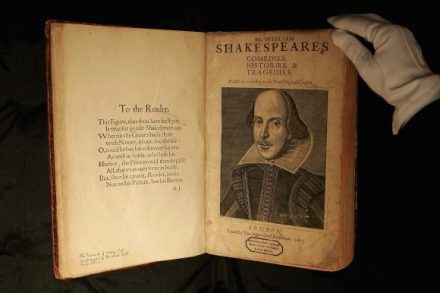
OUP and the Marlowe truthers are pandering to the lowest form of Shakespeare populism

Back in 2007, Derek Jacobi and Mark Rylance delivered a petition, pompously titled ‘Declaration of Reasonable Doubt’, to that august seat of learning, Brunel University. The petition was the continuation, and perhaps culmination, of centuries of debate over what is known as the ‘authorship question’, an obsessive pursuit – undertaken almost entirely outside of academia – of the real author of Shakespeare’s plays. For conservative folk, that answer has always been, simply, Shakespeare, but for the clear-sighted geniuses of the Shakespeare Authorship Coalition, the answer has ranged from Edward de Vere to Sir Francis Bacon.

Books podcast: What’s the point of the Man Booker Prize?

In this week’s Spectator Books podcast, we’re talking about tomorrow night’s big announcement: the 2016 Man Booker Prize. This year’s prize — like every year’s, it seems — has caused controversy. What is the prize for? Is it good for the literary culture? And how does the shortlist stand up?

Special K | 20 October 2016

More from Books

Our collective attention spans may not be as short as is widely cited, but they are pretty short. Take the case of the art historian Kenneth Clark. If anyone remembers anything about him, it is as the presenter of Civilisation, a TV series of the 1960s that rocketed him to stardom, and the author of the accompanying book, which sold over a million copies. He died in 1983 when he was a mythical figure, and any attempt to show his human dimensions was anathema, as I discovered to my cost. My own biography of Clark was published a year later. Nowadays, one can hardly get anyone to take him seriously. One reviewer dismissed Civilisation as a period piece, the narrator ‘a patrician’ in a tweed suit. Another spoke of ‘a figure of derision’.

A matter of life and death | 20 October 2016

More from Books

Shades of The Master and Margarita haunt Rabih Alameddine’s sixth book, in which Jacob, a Yemeni-born poet with a day job in IT, battles with drugs, insanity, visions of the Devil and a variety of Christian saints while trying to come to terms with the fallout from the Aids crisis. As that crisis wore on, ignored by the powers-that-be, Jacob’s lover and all of his closest friends died, leaving him with an apartment full of ashes and an eye-watering variety of instructions for their disposal. Yet, while echoes of Bulgakov’s masterpiece inform The Angel of History from first to last (there is even a cat named Behemoth), Alameddine has created a scintillating, original work whose moral complexity and detail of observation are wholly contemporary and entirely his own.

In the company of queens

More from Books

Steven Runciman, the historian of Byzantium, is a puzzling figure. He was an outrageous snob, once remarking that he would have enjoyed being the widower of a Spanish duchess, which would have made him a dowager duke in Castile. He particularly relished the company of queens (of the female variety), and he took the Queen Mother out to lunch once a year at the Athenaeum. But as Minoo Dinshaw shows in this richly original life, the snobbery was a subtle pose. Runciman was a tease who liked to play games with people, and he made a career out of being enigmatic. His family were wealthy shipbuilders in Northumberland. His parents were both dedicated public servants — his father was a minister in the last Liberal governments.

Apples for our eyes

More from Books

Apple Day, on 21 October, is a newish festival, created in 1990, by the venerable organisation, Common Ground. Intended to be a celebration of the apple, its purpose is also to raise awareness of the importance of apples in landscape, ecology and culture. All over the country there will be many revels where you can taste apple varieties, jellies, chutneys and drinks; try apple-bobbing, take apples from your own garden for identification by experts, buy apple trees and all sorts. These are charming festivities, much better behaved than the ancient cider-makers’ ritual, wassailing.

Time is of the essence | 20 October 2016

More from Books

Christopher Priest, now 73, has been quietly turning out oddly mesmerising fiction for nearly half a century but, like the protagonists of his 2005 novel The Glamour, somehow has the knack of never quite being noticed. It is true that he has devoted admirers; he has won awards; he was on Granta’s original list of best young novelists — scraping in on age, not quality — and Christopher Nolan filmed, cleverly, his even cleverer novel The Prestige (1995), which was about Victorian illusionists and duplicity.

A bit player in the great drama

More from Books

There’s a glorious scene in Astrid Lindgren’s first Pippi Longstocking book in which her fearless, freckled heroine strides to the centre of a circus ring and briskly lays out the World’s Strongest Man. Like most of the adults who expect to control her, he quickly learns that his inflated size, age and title are no match for the child’s bold pin-wielding attitude. As a little fan myself in the early 1980s I probably giggled as the strongman toppled. But reading it to my own children this summer I also felt a deep lurch of sadness. The strongman’s name was Adolf, and the book (published in 1945) was written as an equally ridiculous Adolf was sending train loads of bright little Pippis to their ‘final solution’.

Intoxicated with ink

Lead book review

One of the charms and shortcomings of biography is that it makes perfectly normal situations sound extraordinary. According to Michel Winock, Gustave Flaubert (1821–80), the author of Madame Bovary and L’Éducation sentimentale, contracted ‘an early and profound aversion to mankind’. To Gustave the schoolboy, man was nothing but a coagulation of ‘mud and shit… equipped with instincts lower than those of the pig or the crab-louse’. This might have been the influence of his freethinking father, an eminent Rouen surgeon, but perhaps it was just the spirit of the age. The Napoleonic adventure was over; the sun of Romanticism had set.