Culture

Culture

The good, the bad and the ugly in books, exhibitions, cinema, TV, dance, music, podcasts and theatre.

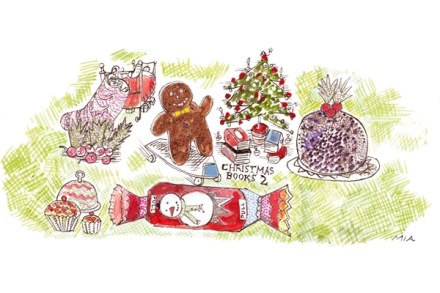
Christmas cookbooks

More from Books

New books by Raymond Blanc and Pierre Koffmann retell the truth that British food came back from the brink. If it were not for the émigré chefs, I hate to think what we would be eating in British restaurants now. Fishfingers à la King, with pea jelly ring? Such horrors existed, or let’s say they were perpetrated, in the 1970s, by Sainsbury’s recipe cards, the Good Housekeeping Institute and in the books of that serial offender Robert Carrier. An embarrassment of showboat dishes are in Anna Pallai’s 70s Dinner Party: The Good, the Bad and the Downright Ugly of Retro Food (Square Peg, £9.99).

A mystery, even to herself

More from Books

Armed with their tiny Leicas and Nikons, most of the great postwar ‘street’ photographers liked to be unobtrusive; they wanted to capture life unobserved. Garry Winogrand and Henri Cartier-Bresson haunted the city in search of the ‘decisive moment’. Somebody I know was photographed by Robert Doisneau, a very ghostly snapper. Doisneau entered the room and then left. His subject was baffled; he had not seen him take any shots at all. And then along came Diane Arbus. She was small but very noticeable, partly because of her childlike good looks but mainly because of the big flash and brick-heavy and breeze-block-sized Rolleiflex or Mamiya slung round her neck.

Pandora’s box

More from Books

While I’ve read plenty of books worse than Television: A Biography, I can’t immediately think of any that were more disappointing. After all, here’s David Thomson — a film critic about whom it’s hard not to use the word ‘doyen’ — looking back on more than 60 years of TV viewing for what should be a magisterial summation of the whole medium. Yet, although some of his analyses of individual shows are as sharp as ever, the overall result is often contradictory, occasionally incomprehensible and at times plain weird. At first, it seems as if the main problem will merely be the traditional snootiness of the intellectual movie buff towards telly, and the damage it supposedly does to all of us by offering only mind-numbing reassurance.

Atlas shrugs

Lead book review

In his Forward Prize-winning collection of 2014, A Cartographer Tries to Map a Way to Zion, Kei Miller’s hero describes his craft thus: ‘My job is to imagine the widening/ of the unfamiliar and also/ the widening ache of it;/ to anticipate the ironic/ question: how did we find/ ourselves here.’ This bringing of the unfamiliar into scope looms large in three new collections of cartographic curiosities which tell us about places that never were, places we’ve never been and places we will never go to. Edward Brooke-Hitching’s beautifully illustrated The Phantom Atlas presents the stories of over 50 locations that unwarrantedly found their way on to maps.

Books podcast: The Detection Club

Nothing like a spot of murder as the evenings draw in. In this week’s podcast I talk to the crime writers Andrew Taylor and Simon Brett about the enduring appeal of the detective story — and why they are becoming harder and harder to write in the age of DNA profiling and forensic science. We talk, too, about golden age crime-writing, the Detection Club, and The Sinking Admiral — a witty new version of a literary game of consequences first played by Agatha Christie, Dorothy Sayers and G K Chesterton back in 1931. You can listen here: And if you enjoyed that, please subscribe on iTunes for new episodes every Monday.

A choice of first novels | 17 November 2016

More from Books

Constellation by Adrien Bosc (Serpent’s Tail, £12.99) picks nimbly along the divide between fiction and non-fiction. It’s really a speculative group biography, telling the story of a Air France plane crash in the Azores in 1949, and the lives of the plane’s passengers, mostly (except for a quintet of migrating Basque shepherds) of an appropriately stellar socio-economic stratum.

Full steam ahead

More from Books

To write, and indeed to read, a history of considerable range, both in terms of chronology and of subject matter, is a profound challenge. The fourth volume in Peter Ackroyd’s History of England starts with the Glorious Revolution of 1688 and ends with Waterloo in 1815. It was a period that laid the foundations of the modern British state and created the basis of its prosperity, and of its status as the world’s greatest power later in the 19th century. During the 130 years Ackroyd covers there were revolutions in attitudes too: though when he writes of the coarse humour of cartoonists such as Gillray, and the aggressive expressions of public opinion in incidents such as the Gordon Riots, one wonders whether the temper of the English people is so very different today.

Things fall apart | 17 November 2016

More from Books

Ali Smith is that rare thing in Britain: a much-beloved experimental writer. Part of her attraction for readers is that she continually connects formal innovation and the freedom to reinvent a story with the freedom to reinvent the self. It’s a beguiling proposition that can make liberation seem like a matter of style. Following the success last year of How To Be Both, the most dazzling and accomplished of her novels, Smith planned to write a long-gestated novel quartet, its four volumes reflecting successive seasons — an idea that would allow her to pursue her fascination with what is perhaps the novel’s greatest subject: time.

Christmas stocking fillers

More from Books

The gift books come in all shapes and sizes this year: big, little, tiny, huge, long, short, fat and thin, rather like their writers, I would guess. Biggest and fattest of them all is The Art of Aardman (Simon & Schuster, £16.99). This is a coffee-table book, pure and simple, that celebrates 40 years of animation at Aardman Studios, who make Wallace & Gromit, Shaun the Sheep and others, and I would suggest that you have known since the beginning of this sentence whether or not you want this book for Christmas. It’s everything you would wish for from such a volume, featuring stills from the films, drawings from the animators’ sketchbooks, portraits of sets, technical drawings for props, manifold character studies and very, very few words indeed.

A fateful squiggle on the map

More from Books

When turbaned warriors from Daesh (or Isis) advanced on Raqqa in Syria two years ago, they whooped wildly about having ‘broken the Sykes-Picot Agreement’. They were celebrating athe destruction of national frontiers which had stood for nearly a century, since the fall of the Ottoman empire in 1918. They were also venting their spleen against the two villains (as they saw it) of the piece — one British, Sir Mark Sykes, and the other French, François Georges-Picot, who, after months of diplomatic haggling, had drawn metaphorical lines in the desert sand to reach their secret 1916 agreement apportioning Ottoman lands and creating the modern Middle East. In doing so, Sykes and Picot set aside promises of an Arab homeland made to Sharif Hussein of Mecca.

Up where the air is clear

More from Books

Robert Twigger’s father was born in a Himalayan hill resort and carried to school in a sedan chair. His son, born in 1965 and long fascinated by the region, has produced a social and cultural history of the mountains. It is a hybrid volume — and why not? Twigger leaves no mountain path untouched in his bookish reportage. Topics covered in this long book include crustal formation and destruction, the pre-Buddhist Bon religion (even today 10 per cent of Tibetans are Bon-worshippers), shamans, yeti, Colonel Francis Younghusband (‘the first mountaineer’), altitude sickness (which fascinates Twigger), the 19th-century exploration of Nain Singh, that bloody annoying Madame Blavatsky and much else.

In life divided

More from Books

The ten pallbearers at Thomas Hardy’s funeral in Westminster Abbey on 16 January 1928 included Kipling, Barrie, Housman, Gosse, Galsworthy, Shaw and both the prime minister and leader of the oppposition. This distinguished gathering was not strictly necessary for the job at hand, because Hardy’s coffin merely contained his ashes — all that there was room for in Poets’ Corner. At exactly the same time in Dorset, at a smaller funeral, a casket containing Hardy’s unincinerated heart was being borne to its final resting place alongside his parents and his first wife in the churchyard at Stinsford.

Books of the year | 17 November 2016

Lead book review

Michela Wrong Back in 2006, David Cornwell, aka John le Carré, hired me as guide for his first trip to the Democratic Republic of Congo (DRC), to research The Mission Song. Evenings were spent on the terrace of the Orchids Hotel in Bukavu, watching pirogues languidly traverse Lake Kivu, ice cubes clinking in respective glasses of Scotch. It was easily the most entertaining ten days of my life, despite the stonking hangovers. Cornwell proved to be a thespian manqué. The wry, extremely funny anecdotes about his career as diplomat, spy and writer, his charming conman father, his peripatetic childhood and his encounters with the likes of Yasser Arafat, Richard Burton and Rupert Murdoch were all gloriously enriched by the fact that he can do all the voices.

Obituary: Eric Christiansen

More from Books

Over the past year, we have lost two names cherished by Spectator readers. Rodney Milnes, our opera critic for 20 years before he moved to the Times, as well as editing the monthly magazine Opera, died last December, and Eric Christiansen, the Oxford medieval historian, who was a regular book reviewer here for many years, followed on the last day of October. They both died at 79, both of cancer. Their upbringing and education were similar — Rugby and Christ Church for Milnes, Charterhouse and New College for Christiansen.From the last peacetime ‘call-up’ generation, both served unenthusiastically and unheroically in the army. They were both old and dear friends of mine.

Books podcast: The biographer’s tale

In this week’s Spectator books podcast, it’s the Biographer’s Tale. I‘m joined by the doyen of romantic biographers Richard Holmes, and our regular reviewer Frances Wilson — author of the hugely acclaimed new Life of Thomas de Quincey, Guilty Thing. Jumping off from Richard’s new book This Long Pursuit: Reflections of a Romantic Biographer, we talk about where life-writing fits into the literary world. How do you go about it: with Richard’s “footsteps” approach, as much biographer as travel-writer; or with Frances’s deep dive in the library? Do you need to love your subjects, and what if you grow to hate them? And why is it that, however accomplished they may be, biographers never get filed under their own initials in bookshops?

Figures in a landscape | 10 November 2016

More from Books

Timothy Hyman’s remarkable new book makes the case for the relevance of figurative painting in the 20th century, a period effectively dominated by modernist abstraction. He identifies an alternative tradition of potent human-centred painting, coming out of Cubism and Expressionism and tracing its lineage through Chagall and Leger, the Italians Carlo Carra and Mario Sironi, the Germans Max Beckmann, Otto Dix and George Grosz, to Stanley Spencer, Edward Burra and William Roberts. Hyman claims many of the great independent artists for his argument — Balthus, Kirchner, Bonnard, Ensor — and registers them as resistance fighters in the war of influence and received opinion.

A very special relationship

More from Books

You learn startling things about the long entanglement of the British with Spain on every page of Simon Courtauld’s absorbing and enjoyable new book, which is not a travelogue but a collection of historical vignettes arranged geographically. Did you know, for instance, that the first Spanish football team was founded by two Scottish doctors working for Rio Tinto in Huelva, and that in 1907 a team of seminarians from the English College in Valladolid defeated one representing Real Madrid? Or that the first visit by a reigning British monarch to Spain occurred when Queen Victoria went to have lunch with Queen Maria Cristina at the Aiete Palace in San Sebastián, travelling by train from Biarritz and returning the same afternoon?

Worse than Big Brother

More from Books

The California novelist T.C. Boyle has often taken true stories and created alternative histories, from John Harvey Kellog and the birth of the breakfast cereal in The Road to Wellville to Alfred Kinsey and the creation of sexology in The Inner Circle. This might draw comparisons with James Ellroy, Boyle’s exact contemporary, except that where Ellroy aims at the very darkest version of a tabloid reality, Boyle takes a New Age perspective conveyed though whimsy and surrealism. Ellroy, of course, was born in California while Boyle chose to live there. He is a native of the culture rather than the territory. This is a problem in The Terranauts, where the assumptions and aspirations of a group of scientists inside a giant geo-desic dome are left unexplained.

Weird and wonderful

More from Books

The Un-Discovered Islands could not be more different in substance — though it is similar in style — to Malachy Tallack’s debut, Sixty Degrees North. In that he book he took a revealing pilgrimage around the places which lay, like his home of Shetland, on the 60th parallel, and found a range of concerns about ecology, land ownership, both solitude and community, and what it means to be considered peripheral. This book is an account of 24 non-existent islands, yet is suffused with the same elegiac frostiness as before. Tallack’s style is precise without being perjink, and the overwhelming feeling is of something lost, or disappearing. It’s just this time, what is lost never was.

Soldiers of the Queen

More from Books

It’s not immediately obvious, but the silhouette on the dust jacket — soldiers advancing in single file, on foot (‘boots on the ground’) isn’t one squad, but five soldiers from different campaigns. From left to right, first comes the British infantryman of the second world war; next is a ‘jock’ from (I think) the Korean war; then a jungle fighter from the Malayan Emergency or the Borneo ‘Confrontation’; then, unmistakably, the long-suffering foot soldier of Operation Banner, the 38-year counter-insurgency (or police action, no one ever quite knew which) in Northern Ireland; and finally, the technology-festooned warrior of Iraq and Afghanistan.

Fine silks and fiery curries

More from Books

Genial, erudite and companionable over most of its 760 pages, this stout Georgian brick of a neighbourhood history at length flings itself in fury through a toff’s window. Much of Dan Cruickshank’s book has shown with learned charm how, in its tangle of ancient streets just east of the City of London, Spitalfields has always hosted the rough with the smooth, tumult beside elegance. The East End patch where he has lived for four decades — his own 1720s home, a finely embellished history of inner London in itself, gets 15 loving pages — has ‘constantly embodied paradox: great wealth alongside appalling poverty, beauty juxtaposed with squalor’. As he nears his finale, the twin streams of this urban microcosm join.

No one turned a hair

More from Books

The Benson family was one of the most extraordinary of Victorian England, and they certainly made sure that we have enough evidence to dwell on them. Edward White Benson was a brilliantly clever clerical young man of 23 when he proposed to his 11-year-old cousin Minnie Sidgwick. He had been the effective head of his family since his father’s death nine years earlier; Minnie, too, was fatherless. Despite doubts from Minnie’s mother, they agreed to marry when Minnie was 18. She, too, was clever — Gladstone famously described her as ‘the cleverest woman in Europe’ — but had no real attachment to Benson or to any other man. Her romantic passions were always directed towards women.

The milk of human kindness

More from Books

One of David Cameron’s choices on Desert Island Discs, this book reminds us, was ‘Ernie (The Fastest Milkman in the West)’. The book does not, however, explain why Cameron chose the Benny Hill ditty. Consulting the online archive, I found the then leader of the opposition explaining that ‘when you’re asked to sing a song’, ‘Ernie’ was the only one to which he could remember all the words. Sue Lawley tested him, and Cameron responded: ‘You can hear the hoof beats pound as they race across the ground, the clatter of the wheels as they span round and round’. It’s a miracle the Notting Hill Set was ever seen as smart.And yet I know what Cameron means. For our generation milkmen are an exercise in nostalgia.

Surreal parables

More from Books

There is a common assumption that experimental writing — for want of a better term — is obscure, joyless and arid. Or worse: that it is fake (or ‘pseudy’), a deception practised upon either the deluded or gullible reader. So I wonder what people who hold such assumptions would make of this. It constitutes the final paragraph of ‘Specialist’, one of the stories in this collection. The story itself is, not untypically for this book, less than a page long: The cyclist hit me, and it’s vile after my life ends in the afterlife. Lots of incense, resin, apes and giraffe-tails — all acquired tastes. I don’t like that kind of thing. Several things may strike you.

Books of the year | 10 November 2016

Lead book review

Craig Raine  Philip Hancock’s pamphlet of poems Just Help Yourself (Smiths Knoll, £5): charming, authentic, trim reports from the world of work — City and Guilds, pilfering, how to carry a ladder, sex in a van (‘From the dust-sheet, wood slivers/ and flecks of paint stick to her arse’). One poem is called ‘Knowing One’s Place’; these poems know the workplace. Nutshell by Ian McEwan (Cape, £16.99) was hilarious and compelling. The Pier Falls by Mark Haddon (Cape, £16.99) was grim and compelling. Both books are ripping, gripping yarns — narrative Velcro. Paul Johnson  John Bew’s biography of Clement Attlee, Citizen Clem (Riverrun, £30), is a winner, though it might have been improved by cutting.

Books podcast: Ben Lerner’s hatred of poetry

Why do so many people think poetry is important, and so few of them read it? And why does what might pass unnoticed as a minority activity, like — say — tiddliwinks or sniffing bicycle seats, arouse such strong views in the public at large? The award-winning American writer Ben Lerner has a theory. In this week's Spectator books podcast I talk to him about his new collected poems, his monograph The Hatred of Poetry, and how he drew inspiration from the gigantic Wal-Mart in his hometown of Topeka, Kansas. You can listen to our conversation here: And if you enjoyed that, please subscribe to the podcast on iTunes for a new episode every Monday!

Gillon Aitken: A great literary agent we all looked up to

Gillon Aitken, the great literary agent, who has just died, was a reserved man. It is an admirable and brave thing to be in a culture which increasingly mistakes reserve for coldness. All Gillon’s communications, written or oral (I was one of his authors), were exact and economical. One could find this disconcerting, but what he said was what needed saying, and was conveyed with charm. He possessed no notebook, and would write minimal jottings on his cigarette packets. It used to puzzle me that such a literary man as Gillon was not a writer manqué sort of agent (though he translated Pushkin with great elegance): he dealt skilfully with money issues and never attempted to be ‘the midwife to genius’.