Culture

Culture

The good, the bad and the ugly in books, exhibitions, cinema, TV, dance, music, podcasts and theatre.

A study in alienation

More from Books

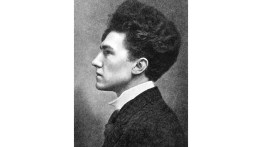
Looking for the Outsider is the biography of a novel, from conception through publication to critical reception. Alice Kaplan’s life-story of L’Étranger (The Outsider in English translations, The Stranger in American) is a lovely work, lucid and thought-provoking. It makes one feel afresh the sheer strangeness of Albert Camus’s imagination. All genius is, perhaps, freakish;

Courting the Iron Lady

More from Books

This is a strange book. Peter Stothard, the editor of the TLS, is packing up his office. It is a year after Margaret Thatcher’s death, and Murdoch’s Wapping site is being destroyed to make way for new, expensive flats. As the national memory of Thatcher fades, and transmutes into myth and caricature, so the physical

A parable of good and evil

More from Books

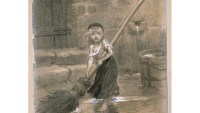
It is difficult to write well about slavery. As with the Holocaust, the subject’s horrific nature lends itself too easily to mawkishness. This tendency is one that Colson White-head consummately avoids in this impressive novel. The Underground Railroad, set before the American civil war, tells the story of Cora, a young slave on a cotton

England’s unloved king

More from Books

Aethelred the Unready (c.968—1016) has not, as Levi Roach acknowledges, enjoyed a good press. In recent times there may have been some attempt in academic circles to take a more measured view of his calamitous reign, but the fact remains that if most us would have trouble saying quite what he did or did not

Too good to be true

More from Books

The McNulty family in the novels of Sebastian Barry have a definite claim to be one of the unluckiest in all fiction. After serving with the Brits in the first world war, the main character in The Where-abouts of Eneas McNulty is branded a traitor to Ireland, and spends the rest of his days in

He blew his mind out in a car

More from Books

There was a touch of Raymond Radiguet, the young literary sensation of 1920s Paris, about Tara Browne. In life poetically beautiful, poetry-imbued, tender and trusting, deliciously precocious and eerily presumptive, androgenous in looks but not desires, Tara died —‘without knowing it’, as Cocteau said of Radiguet — tragically, but given his penchant for very fast

Paintbrushes at the ready

More from Books

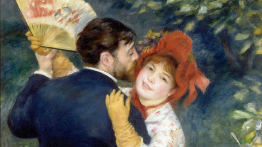
When the old curmudgeon Edgar Degas died in 1917, a stunning trove of works by Edouard Manet — eight paintings, 14 drawings and 60 prints — was discovered in his studio. There, too, was a portrait of Manet and his wife Suzanne, painted by Degas 50 years earlier. But its right-hand third was missing —

The world in limbo

More from Books

In 1919 the economist and sometime prophet John Maynard Keynes left the glittering ballroom of Versailles feeling profoundly despondent. The treaty that determined the political geography of a postwar world inspired in him a fearful sense of inevitability. The punitive conditions imposed on Germany would be too harsh for the country to tolerate for long.

And the answer is…

More from Books

Doorstoppers, slim volumes, loose leaves stacked in a box, bound pages fretworked with holes, epistolary exchanges, online postings, palimpsests…. Fiction comes in all shapes and sizes — and that’s just the format, before you get to the content, which might include fractured grammar, reversed chronology, parallel plots, contradictory footnotes, dead or unborn narrators and labyrinthine

Behind the fringe

Lead book review

‘Sexual intercourse began / In nineteen sixty-three,’ Philip Larkin famously announced in his poem ‘Annus Mirabilis’, ‘Between the end of the Chatterley ban / And the Beatles’ first LP.’ But the key line is a far more private confession, caught in parentheses like a gloomy thought bubble: ‘(which was rather late for me)’. Few of

Smoke and mirrors | 6 October 2016

More from Books

Nell Zink’s route to publication became something of a story in itself: one that involved an email exchange about birds with Jonathan Franzen, which led to Franzen’s subsequently championing her work, and ended with not one but two novels — Mislaid and The Wallcreeper — published together in a lavish, design-savvy edition. But it was

The magic of bookshops

More from Books

It is not uncommon for writers to be obsessed by bookshops. Some even find their writing feet through loving a particular bookshop and developing a habit, which helps to form the writers they become. And often they end up in a rage with the common run of bookshops. Why would they not? It is, or

Bolsheviks on board

More from Books

Full allowance must be made for the desperate tasks to which the German war leaders were already committed… Nevertheless it was with a sense of awe that they turned upon Russia the most grisly of weapons. They transported Lenin in a sealed truck like a plague bacillus from Switzerland to Russia. As so often, Churchill

More sinned against than sinning

More from Books

The 55-year-old ’flu-ridden John Charles Wallop, 3rd Earl of Portsmouth, his feet in a basin of warm water, shivered in the dock with fever but also with fear. Would the jury, assembled in 1823 in London’s jam-packed Freemason’s Hall at the end of an unpredecentally sensational two-week trial, find him eccentric, delusional, simple-minded or, instead,

The spell of the pharaohs

More from Books

Here’s a book to make an Egyptologist of everyone. A compendium of accepted gen on the gift of the Nile, Rose-Marie and Rainer Hagen’s (updated and reissued) Egypt: People, Gods, Pharaohs ‘aims to answer some basic questions about life in Ancient Egypt and whet your appetite to find out more’, and achieves both in appropriate

Over hill and dale

More from Books

When it comes to speaking of foreign affairs, Rory Stewart is one of the few MPs who does not peddle bland abstractions. Many of his parliamentary colleagues inhabit a blah-blah land where terms such as ‘peace process’ and ‘international community’ have meaning. An upbringing in the Far East, where his father was a diplomat, as

Jolly good fellows

More from Books

‘Leonard Michaels (1933–2003) was one of the most admired and influential American writers of the last half century,’ states the blurb on this reissue of the author’s first and penultimate novel, originally published in the US in 1978. Admired and influential Michaels may have been, but that was largely in his homeland and then as

A puzzling phenomenon

More from Books

Everyone has played it, or one of its manifold variations and rip-offs. Blocks of different shapes fall from the sky; you have to rotate and shunt them around so they fit perfectly together at the bottom, and then that horizontal line of blocks vanishes. This is Tetris, and it was created in 1984 by a

Nazis and narcotics

More from Books

Norman Ohler is rather hard on the Nazis, for compared to what our little group got up to in the late 1960s and 1970s, they were shrinking violets in the drugs department. We smoked cannabis, ate opium and sometimes took strong LSD; lines of uncertain content went up nostrils; and we swallowed countless uppers (speed)

Lessons in sex

More from Books

Helen Gurley Brown’s internationally influential career, as the author of Sex and the Single Girl and editor of Cosmopolitan, is revealed in this intimate biography in 50 shades of pink. ‘Let it be understood at the outset,’ writes Gerri Hirshey, an American freelance journalist for many upmarket periodicals: Sex has imbued the soft core, hard

Thoroughly bewitching

Lead book review

Angela Carter was a seminal, a watershed novelist: perhaps one of the last generation of novelists to change both the art she practised and the world. Reading this splendid biography, it is hard to avoid the false conclusion that she always knew exactly what she was doing. Her life, in its swerves and unexpected corners,

Too much glam

More from Books

This mighty volume begs a question, although it doesn’t ask it, let alone answer it. Does anyone in the known universe really want to read 650 pages about glam rock? Simon Reynolds must do, because that’s how much he has written on the subject. All writers, if we are to be honest, write books because

The Spectator launches new books podcast

Today we’re proud to launch the Spectator’s Books Podcast, a literary younger sibling of our popular weekly podcast on politics and current affairs. Each week I’ll be hosting a discussion about the most interesting recent books and the literary talking-points of the day. Books contain every subject known to man – and rather than focusing

Knight’s tale

More from Books

In The Cousins’ War (1999), the Republican political strategist Kevin Phillips argued that three ‘civil wars’ had defined politics in the English-speaking world: the English Civil War, the American Revolution and the American Civil War. The ideological battle lines of 1641 recurred in 1776 and 1865, and not just because the Sons of Liberty and

Frankly impenetrable

More from Books

One day in April 1969 Theodor Adorno began teaching a new course entitled ‘An Introduction to Dialectical Thinking’. Feel free, the sociologist-cum-philosopher told the packed hall at Frankfurt University, to ask questions as I go. Two of his charges did so immediately. When was Adorno going to apologise for having set the cops on those