Culture

Culture

The good, the bad and the ugly in books, exhibitions, cinema, TV, dance, music, podcasts and theatre.

Who will guard the guards?

More from Books

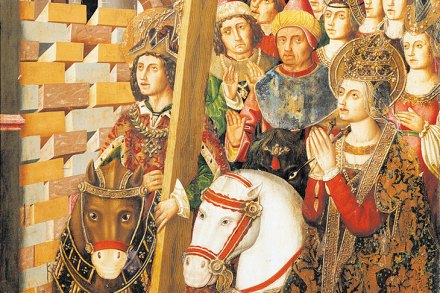
The history of an army is essentially the history of its deeds. The history of an army within an army is more intriguing. The Praetorian Guard, a modern term, was founded, or rather formalised, around 27 BC by Augustus for the protection of the emperor and his family. Hitherto, cohors praetoria had been a generic description of the body of troops detailed, ad hoc, for the protection of a general on campaign. This derived from praetorium, the general’s tent next to which they were quartered in camp, which itself derived from praetor, ‘the man who goes before others’.

Short – but far from sweet

More from Books

Like his Pulitzer Prize-winning first novel, The Sympathisers, the stories in Viet Thanh Nguyen’s The Refugees are set largely among the Vietnamese diaspora on the west coast of America, where Nguyen himself lives, having fled to the US from Vietnam with his family in 1975. They mostly feature characters juggling the lives they’ve made in their adopted culture with their memories of — and loyalties to — the old land. In one story, set in the Reagan era, a penny-pinching woman who runs her family’s New Saigon grocery store is reluctantly moved to donate money to the futile guerrilla war against communism back in Vietnam.

Undone by love

More from Books

On the Whitsun weekend of 1935 an art student called Denton Welch was knocked off his bicycle by a car and suffered catastrophic injuries, including a fractured spine. Although he made a remarkable partial recovery, he subsequently endured regular bouts of disabling illness, and would die in 1948 aged only 33. Welch continued to paint after the accident, but also began writing the autobiographical fiction for which he is now best known, publishing his first novel, Maiden Voyage, in 1943. By this time he was living in a chauffeur’s flat over a garage in rural Kent.

All in the mind’s eye

Lead book review

Everyone knows what the Rorschach tests are. Like Freudian slips, boycotts, quislings and platonic friendships, however, it was long ago forgotten that they had been named after an individual human being. Hermann Rorschach was a Swiss doctor and psychiatrist with curiosity about the visual arts, a contemporary of Freud and Jung. He created the tests in a book published in 1921, and a structure for evaluating patient responses to them before dying of appendicitis the following year. Rorschach’s life has its interests, and certainly casts some unexpected light on the Europe of his time. His father wrote an artistic treatise which sounds extraordinarily like the Bauhaus writings of Paul Klee, decades later.

Waterstones deserves to be judged by its bookshop cover-up

Let’s get one thing clear: bookshops are a good thing. Waterstones -- even putting aside the abandonment of its apostrophe -- is a good thing. James Daunt, the man who has turned Waterstone’s from a basket case into a profitable enterprise, is a good thing. But what the company has done in Southwold, Rye and Harpenden is naughty. And it’s more than just a storm in an overpriced Emma Bridgewater teacup. Waterstones has opened up shops that purport to be both local and independent, when they are neither. In Southwold, the branch is called Southwold Books, in Rye it’s The Rye Bookshop and in Harpenden, Harpenden Books. The colour-scheme, layout, and signs all look as if they belong to independent shops and no reference to Waterstones can be found in the shop.

Dead poet’s society

More from Books

Alex Salmond, former first minister of Scotland, once claimed that he could always tell Scottish fiction from English. Novels, he said, reveal fundamental differences in the values of the Scots and the English. I wonder then what he would make of Annalena McAfee’s book, Hame — about the most Scottish work of fiction that any English novelist could possibly write. So committed is the former Guardian journalist authentically to explore every aspect of life north of the Border that she learnt to speak Braid Scots — from Lallans to Doric dialects — and crafted poetry in them. Surely that makes her more Scottish than most born-and-bred Caledonians? For what drives Hame is this question of national identity and whether (like gender?) it is simply a construct.

Frontier territory

Lead book review

In Ali’s Café, just inside Turkey on the Bulgarian border, Iraqi and Syrian refugees spend their days drinking tea. Now and then, someone goes into the back room to give bundles of money to smugglers who have promised to get him into the European Union. Only when piano chords strike up on the radio does Kapka Kassabova realise what Ali’s reminds her of: Rick’s Bar in the movie Casablanca, a transit realm ‘where the homeless of the day come in search of passage’. The Syrian refugees literally walked into Kassabova’s book.

Conning the connoisseurs

More from Books

Rogues’ Gallery describes itself as a history of art and its dealers, and Philip Hook, who has worked at the top of Sotheby’s for decades, is well versed in his subject. Sadly for the prurient, this is not an exposé of the excesses of the market from one of its high priests; and Hook says that where possible he has avoided writing about the living. It is hard not to feel a bit disappointed. For an alarming moment in the introduction, it seemed as if he was preparing to write an academic treatise about how dealers influence art and taste.

All human life is there

More from Books

This book kept reminding me of Robin Williams in One Hour Photo. Just as his character spied on customers’ private lives while developing their pictures, so Chris Paling gets to know the readers at the library where he works. Unlike Williams he doesn’t follow them home at the end of the day (in fact some of the female librarians have the opposite problem), but Paling’s anonymous, functional role lets him observe without being observed. He sees the woman with two small children who takes out Is Daddy Coming Back in a Minute?, explaining sudden death to children in words they can understand. The ‘effete, shaven-headed man in a well-cut suit’ who angrily discusses his new shrink on his mobile phone.

Let me take you through the night

More from Books

As a child, I used to travel with my mother from London to Cannes, a journey that took slightly under 24 hours. The strangest part of the trip was the three or four hours in Paris, where the train trundled between the Gare du Nord and the Gare de Lyon along the Petite Ceinture, giving us a view of rundown parts of Paris which tourists never normally saw. Sometimes we would cheat and take a cab, giving us a couple of hours off the train, during which we enjoyed a relaxed steak frites in the Train Bleu restaurant with its elaborate belle époque decor. I often wondered why the train meandered so long in Paris, and Andrew Martin now provides the explanation.

The plight of women in Labour

More from Books

We’re told not to judge books by their covers, but faced with these two it’s hard not to. Harman’s is one of those thick, expensive tomes which, understandably, politicians write when they’ve had enough earache and, unbelievably, publishers keep buying for vast sums, despite the fact that a fortnight after publication you can pick them up cheaper than an adult colouring book in a remainder bin. The old saw that ‘all political careers end in failure’ might now better be: ‘All political careers end with a book on Amazon going for less than the price of the postage.

More matter with less art

More from Books

When A.A. Gill died last December, there was wailing and gnashing of teeth across the nation. I must admit this came as a surprise to me, but then I hadn’t read him for many years, having developed a ferocious dislike for the Sunday Times too long ago now to remember quite why. My memories of him were of an outrageous show pony, a wordsmith of great talent but surprisingly little taste, who essentially wrote about himself and his wonderful life (in the guise of restaurant and television reviews) in a needy, look-at-me, sub-Clarkson kind of way. He seemed to me to encapsulate everything that was wrong with the paper he wrote for, whatever that turns out to have been. But people were genuinely upset when he died, and not just because he was by all accounts a good egg.

Telling stories

More from Books

John Burnside is the author of an impressive bookshelf of elegant novels and slim, precise volumes of poetry, and like all prolific writers he has certain repeated themes. Nicely, repetition is one of his themes. He writes of the tricks of memory, and the impossibility of perfectly recalling the past. He writes of absent fathers, often, and how they are remembered by their children. His poems sound like hymns, or the blues. ‘Before the songs I sang there were the songs/ they came from,’ begins his poem ‘Death Room Blues’, and ends: ‘I’m half convinced that childhood never happened.’ Burnside’s new novel Ashland & Vine is a story about telling old stories again, and never quite settling the truth of a childhood long past.

A surreal caprice

More from Books

At the start of this novella the protagonist, Thibaut, is ambushed by Wehrmacht soldiers between the ninth and tenth arrondissements. That the year in 1950 is not the strangest aspect, as he is rescued by the appearance of the Vélo, a bicycle-like contraption with a queasily organic prow. It is, in fact, a living version of Leonora Carrington’s 1941 sketch ‘I Am an Amateur of Velocipedes’. In this initially joyous, fundamentally chilling book, the art of the surrealists has been weaponised in the fight against Nazism. Surrealism billed itself as a liberation; now is it part of the Liberation.

In the thieves’ den

More from Books

‘To get a confession from a proud male factor, it is always better to call for a poet than a priest.’ These are the wise words of William Archer, the narrator of part of The Fatal Tree and the notional editor of the rest. Mind you, he’s biased: he aspires to be a poet, though he is at best a ‘garreteer’, one of the Grub Street hacks who provide better writers than themselves with lurid copy about the early Georgian underworld they live in. Archer’s world is the ‘Hundreds of Drury’, the streets and alleys around Drury Lane where the thieves, prostitutes and con men ply their trades. Known as Romeville in the thieves’ cant that colours so much of this novel, it holds up a dark mirror to the great metropolis around it.

The Ben and Clara affair

More from Books

As a child in fascist Italy, Clara Petacci (known as Claretta) was dutifully adoring of Benito Mussolini and the cult of ducismo. She gave the stiff-armed Roman salute while at school (the Duce had declared handshaking fey and unhygienic) and sang the fascist youth anthem ‘Giovinezza’. Her father, the Pope’s personal physician, was a convinced fascist, for whom Mussolini was the incarnation of animal cunning — furbizia — and the manful fascist soul. Claretta herself would have to wait before she met the ‘divine Caesar’. One day in April 1932, while motoring from Rome to the seaside resort of Ostia, she caught sight of her idol behind the wheel of his Alfa Romeo. ‘Follow him!’ she ordered her chauffeur.

Mick Jagger’s lost memoir

Features

Ask any publisher of popular non--fiction anywhere in the world which book they would most like to sign, and it is an odds-on bet that they would eventually, mostly, come up with the same title. Obviously the Queen does not plan to reveal all any time soon. Tom Cruise would certainly be interesting if he desired to talk about the crazy, outer-space cult which rules his women and his life. But for sheer history, global presence, intelligence and insight, there really is only one chap — the guy Ben Schott recently described in this magazine as ‘the most seen person on the planet’. Yes, the old prince of darkness himself, Sir Michael Philip Jagger. Of course he’d never do it. He has said again and again, in countless interviews, that he never will.

Apple Tree Yard author: Lionel Shriver is talking out of her ‘shiny white behind’ on cultural appropriation

Pencils are being sharpened in the literary world as the row over cultural appropriation rumbles on. Last year Lionel Shriver found herself in the eye of a storm after she used her keynote speech at the Brisbane writers’ festival to complain that fear of 'cultural appropriation' was inhibiting both fiction writers who wish to write from the point of view of characters from other cultural backgrounds and members of minorities who wish to be seen as just a person. Her comments came under criticism, with some suggesting the issue was her writing rather than her decision to portray a black character in her latest book. So, can she find solidarity with the literary sisterhood? Alas not.

Three’s a crowd | 16 February 2017

More from Books

James Lasdun’s latest novel, billed as a psychological thriller, opens in Brooklyn in the summer of 2012. Charlie and his cousin Matthew are about to leave New York to spend the season in Charlie’s mountain-top residence in the Catskills, where they are to unite with Charlie’s wife, Chloe. The relationship between Charlie and Matthew is ostensibly unequal: Charlie is a wealthy former banker who feels uneasy about the morality of his sometime profession; Matthew is comparatively poor, has drifted in and out of the food industry, is haunted by the absence of his father (who disappeared when Matthew was a boy), and is creepily enraptured by Charlie’s wife.

Bedside manners

More from Books

‘A tricky part of my job,’ the GP said, scrolling through the next patient’s notes, ‘is breaking good news.’ As a medical student on placement, I listened as he told the young woman that her ‘presenting complaint’ —blurred vision, fatigue and tingling down her arms — was not in fact multiple sclerosis. The diagnosis had been made several years earlier but her latest MRI scan suggested that MS was very unlikely. Despite the GP’s prediction that this would be a complicated consultation, he still looked frustrated when the patient didn’t respond with relief to his diagnostic revision. Instead, her weariness was edged with anger. ‘If it’s not MS,’ she said, ‘why do I feel so unwell?

The classic that conquered the world

More from Books

Somewhere between his first and second drafts, Victor Hugo decided to change the title of his great novel from Les Misères to Les Misérables, shifting the focus from society’s problems to the people suffering them. And what problems they were. Hugo had never been brutally poor himself, but he’d borne witness to enough brutal poverty around him to know it was real, and to understand what it did to people. He knew, too, how ill-equipped his society was to help the poor, or to fix the causes of their predicament. Not least because in the 1840s, when he started writing Les Misères, only land-owning citizens voted, so as long as the poor didn’t create trouble they weren’t a constituency in whom politicians were especially interested.

Swash and buckle aplenty

More from Books

A feeble king and his scheming minister, a hunchback noble and the Daughters of Repentance, a botched assassination and a walled-up prisoner, some comic horse-sex, cross-dressing valets, a handful of gay jokes, a dwarf, and a literal éminence grise. The latest instalment of Game of Thrones? No, actually: a sequel to The Three Musketeers. December 1628, mere weeks after the great siege of La Rochelle, and attention has now turned to the goings-on in Italy, where France is being outmanoeuvred by Spain and the Austrian Habsburgs.

What the secretary saw

More from Books

What the secretary sawSarah Churchwell Big Bosses: A Working Girl’s Memoir of the Jazz Age by Althea McDowell AltemusUniversity of Chicago Press, £10.50, pp. 220 In 1922, writing a facetious review of her husband’s second novel, The Beautiful and Damned, Zelda Fitzgerald made an ironic reference to the fact that Scott Fitzgerald had used sections from her diary in his novel: ‘It seems to me that on one page I recognised a portion of an old diary of mine which mysteriously disappeared shortly after my marriage…’. 1922 was the same year in which Fitzgerald would later set The Great Gatsby, in part as a tribute to the other great modernist works of that literary annus mirabilis.

Everyday unhappiness

More from Books

This is an extraordinarily compelling novel for one in which nothing really happens but everything changes. Sara Baume’s narrator is Frankie, a 26-year-old art school graduate, who has fled Dublin to live in her dead grandmother’s rural bungalow. What happened to her ‘started with the smelling of carpet’ in her bedsit; she feels such a failure that she ‘can’t even do mental illness properly’. It is all ‘because of nothing… because there’s nothing right with me. Because I cannot fucking help it.’ Over the course of part of a year, she acquires a bicycle from a born-again Christian, allows her father to mow the lawn, takes care of a guinea-pig for her sister, and tries to summon the ghost of her grandmother.

Tricks of the trades

More from Books

Oddly enough, one of the most historically influential pieces of British writing has turned out to be an essay that appeared in the June 1800 issue of the Commercial, Agricultural and Manufacturers Magazine. Over the preceding decades, there’d been much anguished debate about the size of the country’s population. Many commentators were convinced that, thanks to the gin craze, it was in potentially disastrous decline. Others, led by Thomas Malthus, were convinced that it was on the potentially disastrous rise. The biggest question of all, though, was what the population actually was, with most estimates — or, as it transpired, wild guesses — ranging from four million to six million.

The nature of genius

More from Books

On 21 December 1945, Ezra Pound was confined to St Elizabeths hospital in Washington DC. He had broadcast for Rome Radio from 29 January 1942 to July 1943. To avoid his almost certain conviction for treason (and the death penalty visited on William Joyce, Lord Haw-Haw), the superintendent Winfred Overholser testified that Pound was insane and unfit to stand trial. Overholser connived with Julien Cornell, Pound’s lawyer. He elided the testimony of six psychiatrists, whose verdict was more equivocal. He concentrated instead on Pound’s brief, understandable breakdown after being kept in a cage at the Disciplinary Training Centre’s stockade in Pisa. A.