Stephen Phillips

As well as being a mythic tale, Moby-Dick is a superb guide to oceanography

From our UK edition

Anyone who has read Moby-Dick will recognise the moment, 32 chapters in, when their line of attention, hitherto slackly paying out, snags. Having spirited us briskly through Manhattan, New Bedford and Nantucket, and having flushed Ahab from his lair on to the deck of the Pequod, Herman Melville divagates into a disquisition on whale taxonomies. In Ahab’s Rolling Sea, Richard J. King asks: ‘What happens to the story if Melville had an editor who convinced him to just cut cetology?’ Melville might have died rich and the rest of us would be all the poorer. ‘Cetology,’ writes King, lodges ‘a bone in the reader’s throat’.
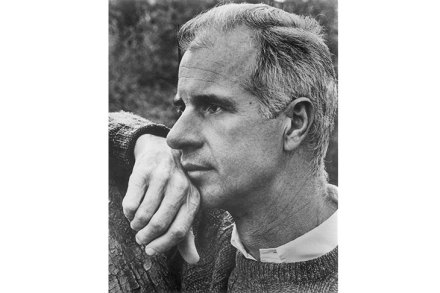

Writing that burns the eyes

From our UK edition

Of how many magazine articles can you recall where you were and what you felt when you read them? If any occur, there’s a reliable chance John Hersey’s ‘Hiroshima’ will figure among them, and not just because it will have been assigned at an impressionable age in school. For the first time in its history, the New Yorker cleared an entire issue in August 1946 to run the 30,000-word piece in full. In Mr Straight Arrow, his chronicle of Hersey’s career, the former Times Literary Supplement editor Jeremy Treglown relates an account of its reception among the international press corps in Rome — every one rapt, occupying their own cone of ‘silence... even in the bar’.

Don’t call them colonies

From our UK edition

Where other nations disbanded their empires following the second world war, America’s underwent transubstantiation, from something solid to something more ethereal. It became a shorthand, connoting an amorphous global entity and its quasi-imperial depredations: commercial infiltration, cultural indoctrination, fomenting coups, waging war. Suitably, this construct (Coca-Cola and cruise missiles) acquired a ‘logo’, writes Daniel Immerwahr — the silhouette of the continental United States sitting athwart the northern half of the Western hemisphere, as iconic as Nike’s swoosh; on the map at least, minding its own business.