Culture

Culture

The good, the bad and the ugly in books, exhibitions, cinema, TV, dance, music, podcasts and theatre.

Turandot is a disgusting opera that is beyond redemption

Opera

It’s a cynical start to the Royal Opera’s season to have this 1984 production of Puccini’s last opera Turandot. Not that a new production would improve things, whatever it was like. Turandot is an irredeemable work, a terrible end to a career that had included three indisputable masterpieces and three less evident ones, counting Il Trittico as one. Any operatic composer who gets to the stage, as Puccini had, of searching through one play or novel after another, dissatisfied with any subject he is offered, should almost certainly give up.

Mark Ravenhill’s take on Voltaire’s Candide

Theatre

Ah yes, Candide, the adventures of an innocent abroad in ‘the best of all possible worlds’, as philosophers of the 18th century liked to insist. Voltaire’s satirical demolition of the higher nonsense of his age, and of the powers of Church and state who propped themselves up with it. A novel of 1759 written, at least in part, as an outraged response to those who’d insisted that the earthquake that had razed Lisbon to the ground four years earlier was all part of God’s plan for the good of mankind. Two centuries later, a brilliant musical by Leonard Bernstein. And now, a new play by Mark Ravenhill, mitigating the theft of the title by adding ‘inspired by Voltaire’. ‘Inspired’ turns out to be the right word.

No rest for Diana – the biopic of the late princess is so inept it’s not even hagiography

Cinema

Someone who knows their Dianaology will have to fill me in – did this actually happen? The late Princess Di is walking through central Portofino in Italy. She’s being jostled on all sides by an insistent public and an even more insistent swarm of photographers, when, suddenly, the crowds part. There, huddled by his family, is a thin blind man. She reaches out to him and he reaches back, taking her hands. Then he presses at her face as though it’s Braille; trying, as movie blind-people are wont to do, to read her soul. Sunlight streams down from the heavens. We never see the man’s sight restored — perhaps that’s for the spin-off, Eyes Wide Open: The Diana Miracles — but we get the point.

Blitz Requiem première in St Paul’s

More from Arts

Of all folk memories the Blitz remains one of the most enduring. In the autumn of 1940 the Luftwaffe strafed London on 57 consecutive nights, leaving (if that is the word) 20,000 dead and whole streets pounded to rubble. ‘You do your worst,’ Churchill told the Hun, ‘and we shall do our best.’ Noël Coward put it another way: ‘Every blitz, your resistance toughening, from the Ritz to the Anchor and Crown. Nothing ever could override the pride of London town.’ London prevailed, and the spirit of the capital was captured in the memorable image of St Paul’s Cathedral standing proudly untouched amid the smoke and fire of a city under nightly bombardment. Francis Warner was only three when Hitler’s hordes came calling that September.

Poker

More from Books

To Dad You wonder if it’s worth the gamble getting up out of your armchair onto your bad leg, to stoke a little life back into the fire.

Gregory Doran interview: ‘I wanted some big hitters,’ says the RSC’s new supremo

Arts feature

Gregory Doran has famously long glossy locks and is widely known to be a nice guy and an incurable Shakespeare nut. He has now taken over the reins at the Royal Shakespeare Company, with which he’s been associated for 26 years, working on both sides of the footlights, first as an actor and then a director. If you think he’s in the wrong job, blame Eileen Atkins. He first went to Stratford as a schoolboy to see her in As You Like It. ‘I went dancing out of the theatre and as we went back up the M6 in my mum’s beige Mini, apparently I turned to her and said, “That’s what I want to do when I grow up”.’ In fact, Doran, 55, has been putting on shows ever since the placenta hit the pedal bin, to use Maureen Lipman’s happy phrase.

Under the Greenwood Tree – an exhibition worth travelling for

Exhibitions

A mixed exhibition of paintings, drawings and prints devoted to the subject of the tree might sound an unexciting event, filled with what Johnny Cash memorably described as ‘hopeful stars of flickering magnitude’, but actually in this case the reverse is true. The show has been divided into two halves, the first of which deals with a historical survey of the tree in past art, the section which is herewith under review. The sequel, focusing on the tree in contemporary art, will be at the museum from 12 October – 23 November. Readers who have to travel any distance, and may thus be limited to a single visit, should choose with care which portion of the show they think they’d most like to see.

Charles Moore’s notes: The corruption of the BBC – and what was in my GQ goodie bag

The Spectator's Notes

‘Corruption’ is a subtle word, because it describes a process rather than an event. It does not merely mean bad behaviour: it means behaviour that becomes rotten out of something which was once good. That is why it often afflicts high-minded organisations more than ordinary businesses. People who think they are collectively moral are more self-deceiving than the average market trader. Hence the current embarrassments of the BBC about huge pay-offs.

tennis

Poems

I have preferred the practice wall and not the netted court a decent racquet and a ball the steady thump of steady thought and no one else at all.

Immigrant songs: Radio 2’s My Country, My Music

Radio

Five women, five very different stories of arriving in the UK, often unwillingly and always alone. How did they cope with the loneliness, the poverty, the loss of everything they once knew? What do they now think of the country that has become their adopted home? Jeremy Vine talks to them next week in a new lunchtime series on Radio 2. In My Country, My Music (produced by Chris Walsh-Heron) Vine and his five guests try to work out which country they now belong to, not through work, beliefs, hobbies or family but through the music they listen to. By putting music centre-stage, as the focus, the heart of the conversation, some unusual perspectives and unexpected connections emerge. Prepare for some surprises.

The Wipers Times – 100 years on, this newspaper still lives

Television

Funny what rises from the rubble. In 1916 British army officer Captain Fred Roberts was searching the bombed-out remains of Ypres. Among the ruins was a printing press. Soon words and sentences were flying from the old machine — cheeky, irreverent, bold. It was brazen of Roberts to start a satirical newspaper right on the front line, whose writers would be his men, soldiers who could not pronounce the name of the Belgian town they were in. (They called it ‘Wipers’.) Thus The Wipers Times was born. ‘Has your boy a mechanical turn of mind?’ ran a front-page headline of an early issue. ‘Then buy him a Flammenwerfer.

White House Down is Roland Emmerich’s Hedda Gabler

Cinema

Just do it, quoth the Nike advert — and these men just did it. Grass, asphalt, fear, pain, doubt and limitation; all surpassed in the pursuit of human excellence. The racing driver James Hunt and the baseball player Jackie Robinson may have practised different sports, but they were both champions. And, with Rush and 42, they both have fine-looking films dedicated to them this week. Cinemagoers who want to tread the contours of greatness, and understand its peaks and troughs, need look no further. Hollywood has it covered. But for those of you who just want to see some stuff blow up and some bad guys capped, then how about the movie I actually ended up watching? Roland Emmerich’s White House Down.

Did the Proms’ Billy Budd turn a mystery into a mess?

Opera

The many opera performances at the Proms this year have all been so successful, especially the Wagner series, that I hope it doesn’t require a centenary to include them in future seasons. One of the things that has made them so vivid to the audiences in the Albert Hall has been the immediacy of the contact between singers and public, despite the hall’s vast spaces. It would be nice, but vain, to think that the present breed of directors, with their concepts and conceits, might learn that the simpler the productions they mount, the more their audiences are likely to respond to the works; but the tendency in opera houses is to regard the opera as written by the librettist and composer as mere raw material to be twisted into any shape that might make it relevant and shocking.

Theatre review: Fleabag’s scandalous success

Theatre

Suddenly they’re all at it. Actors, that is, writing plays. David Haig, Rory Kinnear and Simon Paisley Day are all poised to offer new dramas to the public. But someone else has got there first. You may have spotted Phoebe Waller-Bridge playing a secretarial cameo in The Iron Lady. She’s a rangy Home Countries brunette with rosy lips, large inviting eyes and an angular, forthright face that suggests intelligence, amusement and a hint of subversive sexual power. Her immaculate skin is as white as a snowdrop. All in all, she’s perfectly set up for a steady career in frocks and pearls playing Downton gold-diggers and hyperventilating Jane Austen virgins. But she seems to want more, something wilder, something weirder, from her profession.

Pop: You’d love Love and Money, too – if only you’d heard of them

Music

How and when do you become ‘a fan’, exactly? You can usually spot pop stars who are losing touch with reality when they start talking about ‘the fans’ as some kind of independent entity, rather than just a load of people who like their songs. For the music obsessive, though, there’s a simple definition. You’re a fan if you buy someone’s new record without even thinking of listening to it first. Fandom accepts no caution. It only ever hopes for the best. It can take the disappointment of underachievement; it might even half-expect it. Fans have a right to criticise the objects of their affection; in fact, no one has more of a right. It’s a matter of ownership, of pride and, at its extreme, of mild derangement.

A world-class orchestra in the heart of São Paulo’s Crackland

Arts feature

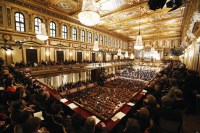
São Paulo has a concert hall that London’s orchestras would kill for. It was originally a railway station, a mighty space bounded by Corinthian pilasters in the style of a French palace, built by Brazilian coffee barons. Now the tracks are buried beneath 800 seats on the main floor, plus another 700 on the balconies and mid-air boxes facing the stage. But it’s the ceiling that produces gasps, or, in the case of a children’s concert I attended, earsplitting squeals of wonder. You’d think Superman had arrived. You see, the ceiling is made up of 15 huge, lavishly decorated panels that match the walnut floor. And they move! Up and down, independently, like monster elevators. Which, given that they weigh 7.5 tons each, is disconcerting.

Laura Knight was an artist skilled in the ways of the world

Exhibitions

The popular conception of Dame Laura Knight is of an energetic woman piling on the paint in the back of a huge and antiquated Rolls-Royce at Epsom Derby, the door propped open to the view, or charging off in pursuit of gypsies, clowns or ballerinas. A widely popular and successful artist, she painted people in action in a robust, realistic style, and was able to compete with men on their own terms, managing to get herself elected to that hitherto almost entirely masculine preserve, the Royal Academy. But wasn’t there something slightly mannish about her?

Blue blood on blue blood

The People’s Princess is back in the papers, thanks to the latest film about her life, and one minor royal couldn’t resist re-opening old wounds. According the New York Post, Lady Pamela Hicks, Prince Philip's cousin, began gently: ‘[Diana] had enormous charisma, she was beautiful, [and] she was very good at empathy with the general crowd.’  But, Lady Pamela said, ‘she had no feeling at all for her husband or his family.’ And there was more: ‘She was really spiteful, really unkind to him — and, my God, he’s a man who needs support and encouragement. [The marriage] absolutely destroyed him. He looked grey and ghost-like. Now of course he’s blossomed again. [She] made everybody believe she’d been thrown to the wolves.

Mid-term Break

Poems

I sat all morning in the college sick bay Counting bells knelling classes to a close. At two o’clock our neighbors drove me home. In the porch I met my father crying — He had always taken funerals in his stride — And Big Jim Evans saying it was a hard blow. The baby cooed and laughed and rocked the pram When I came in, and I was embarrassed By old men standing up to shake my hand And tell me they were ‘sorry for my trouble,’ Whispers informed strangers I was the eldest, Away at school, as my mother held my hand In hers and coughed out angry tearless sighs. At ten o’clock the ambulance arrived With the corpse, stanched and bandaged by the nurses. Next morning I went up into the room.

After watching Bad Education, Big School is as embarrassing as watching your dad trying to DJ

Television

You know you’re getting old when TV starts getting nostalgic about eras during which you were already feeling old and nostalgic. Take Pogs, the subject of one of those ‘Whatever happened to them, eh?’ moments in Badults (BBC3, Tuesday), an amiable sitcom about twentysomething flatmates. Pogs were these collectable discs originally made from fruit-juice bottle caps (passion fruit, orange and guava) that were a massive fad in the mid-Nineties. Tragically, though, the reason I know this is not that I played with them myself but that my stepson Jim the Rat did. How depressing is that? What it means is that even the generation below me, Jim’s, is already beginning to feel sufficiently past it to start lamenting its lost youth.

Farewell to a natural born broadcaster

Radio

‘He was a natural broadcaster,’ said Nick Higham, after the death last week of the rugby player and sports broadcaster Cliff Morgan. I wondered what he meant. ‘Natural’ as in born to the task? Or ‘natural’ as in his ability to communicate as if chatting directly to you, and only you, with no pretension or affectation, just a desire to tell a good story, to convey his enthusiasm? I still miss Morgan on Saturday mornings. He had such a warm voice, and something more: a real and genuine interest in the stories behind the athletes, tennis stars, rugby players, basketball champions, wrestlers, rowers, cyclists, swimmers, gymnasts, equestrians he chatted to on Sport on Four, which disappeared from the airwaves in 1998.

At home with President Nixon

More from Arts

The most paranoid of presidents, Richard Nixon must have been feeling unwell when he allowed three of his closest aides to shoot personal Super 8 footage of their time in the White House. Bob Haldeman, John Erlichman and Dwight Chapin — all of whom later went to prison for their involvement in the Watergate affair — together shot more than 200 rolls of film between 1969 and 1973, the highlights of which form the backbone of a new documentary Our Nixon, and show us a team of go-getting young Republicans you wouldn’t recognise from Oliver Stone’s murky biopic. As the director Penny Lane says: ‘There aren’t any bad guys in home movies.

Musicians are roasting at the Proms; freezing at the Bachathon

Music

Gossip that an orchestral player fainted while performing in the Albert Hall during the recent heatwave points to a strange lacuna in the policing of concert conditions. The unions who like to stipulate how professional musicians are treated — Equity and the MU — have long made a big song and dance about minimum temperatures in the workplace. If the temperature falls below the agreed level, we are all entitled to walk out, without any further questions asked, since obviously the management is trying to save money on heating bills, to the detriment of the workers’ health. But global warming has produced a different set of difficulties.

About Time review: If Richard Curtis is brilliant at anything, it’s Upper Middle Class Lifestyle Porn

Cinema

The easiest thing would be to sneer at Richard Curtis’s new film About Time, and so I will a little, or maybe significantly. It’s hard to know at this point, as I’m up here, at the beginning, and the end is down there, at the bottom, and who knows what will happen in between. It’s as much a mystery to me as to you. However, pre-sneering, in whatever amount, I should make clear that if you have enjoyed Curtis’s previous films— Four Weddings, Love, Actually, Notting Hill, but not The Boat That Rocked, which we’ll pretend never happened, as that’s best all round — you will enjoy this. It’s more of the same, pretty much, as our bumbling hero searches for love, bumblingly.

Do I wish I’d gone to see Peter Grimes on the beach at Aldeburgh? No

Opera

With a tidal wave of Peter Grimeses about to engulf us — performances in London, Birmingham and Leeds in September alone — there is also, from 5 September, the film of the celebrated Peter Grimes on Aldeburgh Beach at more than 80 cinemas in the UK.  The film was made in June during the three live performances that occasioned ecstatic reviews from all who saw and wrote about them. I didn’t go to any of them, for rather cowardly reasons. But now, having seen the film of the occasion, do I wish I had?

From our archive: Toby Young interviews Sir David Frost

Sir David Frost, one of Britain's greatest broadcasters, has passed away today at the age of 74. From our archive, here is Toby Young interviewing Frost in 2007 following the release of Frost/Nixon, the film chronicling his series of interviews with Richard Nixon. As Toby reveals, Frost was revelling in the new found interest of his broadcasting legacy. Sitting in one of the green rooms at Yorkshire Television on a Saturday afternoon in Leeds, it’s difficult to reconcile the man I’m watching on the monitor with the David Frost of legend. He’s recording four back-to-back episodes of Through the Keyhole to be broadcast on BBC2 later this year and he’s finding it difficult to muster much interest in his current guest, a former soap star called Lee Otway.