Culture

Culture

The good, the bad and the ugly in books, exhibitions, cinema, TV, dance, music, podcasts and theatre.

The false paradise of Metroland

Arts feature

Gaily into Ruislip Gardens runs the red electric train… Near the end of the Metropolitan Line, where London dwindles into woods and meadows, stands a Tudor manor house, built within the moat of a motte-and-bailey castle. Now a quaint museum, charting the history of the farms that once surrounded it, this modest landmark shares its name with the local Tube station, Ruislip Manor. A century after they built it, the railway that runs through here still feels out of place. There are fields on one side, suburban semis on the other. Welcome to Metroland, the bizarre no-man’s-land between town and country, created by the Metropolitan Railway, which celebrates its 150th birthday this year.

Is the best Australian art yet to come?

Exhibitions

Astonishingly, the last major survey show of Australian art in this country was mounted more than half-a-century ago. Then it was the innovative writer, critic and museum director Bryan Robertson who staged Recent Australian Painting at the Whitechapel Art Gallery in 1961, a show he consolidated by monographic exhibitions of Sidney Nolan, Roy de Maistre and Arthur Boyd, also at the Whitechapel. Later Robertson also wrote extensively about Brett Whiteley, but his one-man Australian project was not taken up by other curators. Although Nolan and Boyd have had their supporters here (particularly Nolan), Australian art has for far too long remained not just a closed book but an unknown quantity in the UK, too.

Poem: Intern

Poems

Tell me, do you wonder why the lionfish ignores you? Why your face droops into a puddle on the ground is wiped up, wrung out to flavour coffee in a foam paper cup? Well tonight take a step forward, seize life, apply yourself! on the company website to become a lionfish or a paper cup or, failing that, the dishcloth that squeezed your face out.

Autumn shake-up in Radios 2 and 3 scheduling

Radio

This time round in the autumn shake-up of the schedules it’s Radios 2 and 3 who are on the frontline of change. They have had to face ‘tough decisions’ and to address ‘the financial challenges due to the licence-fee freeze’. Radio 3 has lost most of its ‘live’ Saturday-night transmissions from the Metropolitan Opera in New York, on the grounds that they cost too much to set up. It’s also given the chop to one of my favourite weekend programmes, World Routes, because of the ‘high costs’ of sending its presenter Dr Lucy Duran to far-flung places round the globe in search of unusual music. But this was never travel for the sake of it.

‘Atlantis’ shows our civilisation is doomed

Television

This week saw the final episode of possibly the greatest television series ever. Breaking Bad wasn’t made by the BBC, of course. Nor, so far as I know, did it make any attempt to buy the broadcast rights. That’s because, obviously, the Beeb has far more important, special things to spend your compulsory licence fee on, in keeping with the Reithian tradition. Stuff like Atlantis (BBC1, Saturday). Atlantis was designed to fill the Saturday evening family entertainment slot that has previously been occupied by Merlin. And I do mean ‘designed’. It’s so crudely manufactured it makes One Direction look like Led Zeppelin.

Can you trade love for wealth? The economics of Breaking Bad

Television

It has been the social-science equivalent to the Large Hadron Collider, the most expensive and most awe-inspiring experiment of our time. Like Cern’s particle collider, it started in 2008 and this week, just six months after the Geneva researchers confirmed that they had found the Higgs Boson, it, too, has reached a conclusion. Walter White (above), hero of Vince Gilligan’s Breaking Bad, is...(spoiler averted). When Breaking Bad hit our screens, it dumbfounded viewers and critics alike with the sheer complexity of its narrative and aesthetics. The reviews were mixed and its future uncertain. The social experiment that the series set out to explore was strikingly simple: take an ordinary, law-abiding citizen and have him dabble in crime.

I watched Filth from behind my hands. It’s ghastly and unpleasant, but what I saw of it was brilliant

Cinema

People are generally saying Filth fully fulfils the promise of its title and is not for the faint of heart or queasy of stomach or lily of liver and, alas, I am all three, in spades. (My liver is, in fact, so lily-ish it may be a wonder of medical science.) Rape. Anal Sex. Violence. Drink. Drugs. Masturbation. Vomiting down yourself. There’s a part of me that would like to say that’s the average Saturday night in our house, but the truth is we generally watch The X Factor and record Strictly. So I endured this film, from behind my hands, rather than enjoyed it, but in the enduring, was there some reward, as can sometimes happen? We can work that out as we go along. No advantage in rushing such things.

Carlos Acosta’s Don Quixote lacks the wow factor

More from Arts

Superstar Carlos Acosta makes little or no reference to Don Quixote’s established history in his programme note about the genesis of his new ballet. As a dancer hailing from Cuba, he is certainly familiar with the work’s performance tradition, but a greater historical awareness would probably have helped Acosta rethink his realistic approach to the 1869 work. However, history is frequently frowned upon in today’s culture. Don Q, as it is affectionately known, is regarded by dance highbrows as the compendium of all those theatrical and choreographic conventions that give ballet a bad name.

The peril with Brecht is that he will always be Brecht

Theatre

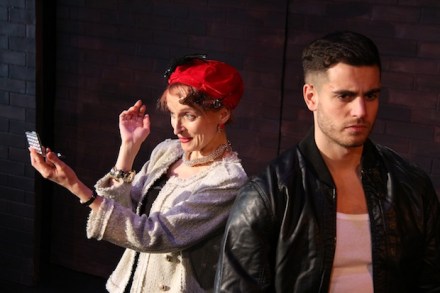
Brecht in the West End? Quite a rarity. Jonathan Church’s zippy and stylish version of The Resistible Rise of Arturo Ui arrives from the Chichester Festival garlanded with plaudits. Brecht’s wartime allegory was intended as a warning to America that its idolisation of gangsters made it vulnerable to a fascist takeover. Ui begins as a petty criminal mocked by Chicago’s established hoodlums. To revive his fortunes, he orders his thugs to vandalise grocery shops and to extract protection money from their owners. This brings him into conflict with Chicago’s mighty Cauliflower Trust. A huge warehouse belonging to a leading merchant is burned to the ground and Ui orchestrates a show trial that enables him to abolish the civil authority and seize control of the city.

Does London really need another concert hall?

Music

Does London need another concert hall? Or, to put it more precisely, does London need another chamber music hall? The recent opening of Milton Court in the Barbican begs this question: a pertinent one since we already hold the world record for full-time concert spaces of fewer than a thousand seats, and must come equal first for symphony-size halls. We also, with the Royal Albert Hall, hold the world record for a jumbo-size venue, fully twice the capacity of a normally large auditorium such as, for example, the one in the Sydney Opera House. But even in these financially difficult times there remains a strong thirst for expanding our cultural resources.

Chris Ingram: from messenger boy to museum benefactor

Arts feature

Chris Ingram is a silver-haired, incisive man, with an air of quiet authority and decided opinions about the art he so passionately collects. A media entrepreneur who started work at 16 as a messenger boy in an advertising agency, Ingram has the strength of his convictions. Over the past dozen years he has built up a remarkable collection of some 500 paintings, drawings, prints and sculptures, of which 350 belong in the category described by auctioneers as Modern British. (Or, in other words, 20th century rather than contemporary.) He began by buying for the home and consulting his wife’s taste as well, but branched out when he bought for the office.

Jeff Koons’s work is childish — just like us

Arts feature

The contrast could not have been more acute. It came the day after a press release from Christie’s New York pinged into my inbox announcing the forthcoming sale of Jeff Koons’s ‘Balloon Dog (Orange)’ on 12 November. Even by current auction-house standards, the hype was of heroic immoderation but it was the novel brazen pandering that shocked me. It is a moot point whether Mr Koons’s monumental party balloon — sleekly engineered in high chromium stainless steel and more than three metres long and some three and a half metres high — is indeed ‘the most beloved of all contemporary sculptures’, or whether the auction itself will be a ‘landmark’ event ‘set to make history’.

Henry van de Velde — the man who invented modernism

Exhibitions

In the Musée du Cinquantenaire, a grand gallery on the green edge of Brussels, those bureaucratic Belgians are welcoming home a prodigal son. Henry van de Velde — Passion, Function, Beauty is a celebration of the 150th birthday of Belgium’s most prolific polymath, yet a lot of people here in Brussels scarcely seem to know his name. While Victor Horta is fêted as the father of Art Nouveau, his great rival, van de Velde, is frequently forgotten. It’s ironic that this prophet of modern design wasn’t honoured in his own country until he’d made his name in Germany, the nation that invaded his homeland twice in the course of his long career.

English embroidery: the forgotten wonder of the medieval world

Arts feature

Think of an art at which the English have excelled and I doubt you would come up with the word ‘embroidery’. As I muttered when my agent asked whether I should like to make a film for BBC4 about the golden age of this forgotten but brilliant native art form: ‘Embroidery? What, like sewing?’ But no, not like sewing. Or, actually, only a little bit. During the ‘high’ Middle Ages, English embroidery was one of the most desired and costly art forms in Europe. It was known as opus anglicanum or ‘the work of the English’ — a generic name that instantly conjured notions of craftsmanship, beauty, luxury and expense in the minds of those who heard it.

The boom in private museums

Arts feature

In the past ten years museums of modern and contemporary art have proliferated around the world. New institutions have appeared in Los Angeles, Venice, Doha and Beijing. Even Camden has seen a burst of activity — the Dairy Art Centre opened in April of this year, spread over the 12,500 sq ft of a former milk depot, with an exhibition of the Swiss artist John Armleder. A similar size space, The David Roberts Art Foundation (Draf), opened last year in a mews near the Mornington Crescent end of Camden High Street. They joined the Zabludowicz Collection, which has been housed in a former Methodist chapel on Prince of Wales Road since 2007.

Being a ‘National Treasure’ appears to be a license to talk rot

Take, for instance, the curious case of Sir David Attenborough. The poor booby is another neo-Malthusian. Which is another reminder that expertise in one area is no guarantee of good sense in another. As I wrote in The Scotsman this week: Attenborough is a supporter of Population Matters, a creepy outfit who have previously suggested Britain’s optimum population lies around the 20 million mark. Let’s rewind the clock to 1850 then. Like other Malthusians, Population Matters is coy about how it proposes to reduce Britain’s population to this “sustainable” level. Emulating China’s one-child policy may be tempting, but will not reverse the terrifying tide of prosperity and population growth now threatening our planet.

A modern take on Victoriana

More from Arts

Britain is still an essentially Victorian country (see Daily Mail for details). So it’s no surprise that we keep returning to the period for inspiration. Victoriana: The Art of Revival at the Guildhall Art Gallery (until 8 December) is a collection of modern pieces channelling the age when corsets were tighter than George Osborne’s purse strings. Many of them pick up on the era’s sinister undertones. The blurb for Dan Hillier’s engraving ‘Mother’ (a woman with octopus tentacles instead of legs, above) talks of ‘prim order barely concealing a dark underbelly of animalistic impulse’. There’s also a wedding cake made from human hair and a wing-back chair adorned with stuffed ferrets.

Downton Abbey is now a weird parallel universe of the royal family. Except with less action

Television

Are you following the world’s most watched aristocratic family? If you recall, they recently took into their ranks a member of the middle classes. The family, headed by a matriarch, is as dysfunctional as any other. But they do live in a palatial home and have a coterie of servants. Their sense of fashion is unerring. There are worries about the future and about inheritance. A boy, George, has been born. Downton Abbey — now a global phenomenon — caters to our insatiable curiosity about the royal family. The more we see of Queen Elizabeth, Charles, William and Kate at processions, and so forth, the more it leaves us wanting. How do these blue bloods actually live? Downton takes us there.

Music at Mass is theological warfare by other means

Music

How many battles have been fought over sacred music throughout history? The noise you make when you worship is a big deal: those who control it can shape everything from clerical hierarchy to intimate spirituality. And there are patterns. Deep suspicion of music is the mark of the puritan. Fundamentalist Sunni Muslims teach that all music except for chanted Koranic passages is forbidden; instruments in particular encourage lust. Strict Calvinists take a similar line. Even the Catholic Church considered banning original compositions during services after the Council of Trent. Legend has it that polyphony was saved only by Palestrina’s Missa Papae Marcelli of 1567, which demonstrated that rich harmony could also highlight the words of the text.

Why do people talk such nonsense when describing opera? American Lulu and Le Nozze di Figaro reviewed

Opera

Why would anyone want to adapt Berg’s Lulu, a masterpiece even if a problematic one? According to John Fulljames, who is the producer of the version of Lulu that Olga Neuwirth has come up with, ‘the Lulu plays now stand neutered within the familiar history of male authored texts which define women from a male perspective...Neuwirth turns this on its head. For the first time, Lulu is allowed to tell her own story...We [the audience] listen and watch but do nothing and so become complicit in her nightly repeated murder.’ How can people talk such nonsense?

Barking in Essex: a hit with hen-night hysterics

Theatre

How appropriate. Barking in Essex, a farce about gangsters, has been dishonestly billed as ‘a new comedy’. The script was written in 2005 by Clive Exton (1930–2007), who pre-dates Woody Allen by half a decade. The storyline — thieves quarrel over stolen loot — is a trusty antique featured in ‘The Pardoner’s Tale’ and in Tarantino’s Reservoir Dogs. The plot moves fast. We open in a monstrously tacky mansion where a criminal matriarch, Emmie Packer, is in a flap. She’s just informed her son Darnley, and his wife, Chrissie, that she’s blown three million quid from a bank heist and the robber is on his way to claim the loot. Run for it! A pretty young lawyer, Allegra, arrives.

Woody Allen’s new film will so knock your socks off, you will never retrieve them again

Cinema

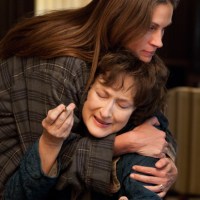
Blue Jasmine is the latest film from Woody Allen who, at various stages of his career, has been declared on-form, off-form, sliding-from-form, returning-to-form and, for all I know, as I don’t follow these matters closely, wearing form like a carnival hat with tinkling bells, but there is no need to bother with any of that. All you need know is Blue Jasmine is brilliant. It’s brilliantly written, directed and observed; it’s brilliantly watchable, if not mesmerising; and brilliantly performed, particularly by Cate Blanchett, who will knock your socks off, and may knock them off so explosively there is every chance you will never retrieve them again. (They might be knocked off all the way to kingdom come, for example.

Spectator Play: The highs and the lows of what’s going on in arts this week | 20 September 2013

Yorkshire, says William Cook, is the sculpture capital of Britain. It was the birthplace of ‘Britain’s greatest sculptors, Barbara Hepworth and Henry Moore’ – but is this just coincidence, or ‘is there something about Yorkshire that makes great sculpture happen here?’ In this week’s lead Arts feature, he visits the ‘stunning, 500 acre’ Yorkshire Sculpture Park, ‘adorned with works by every sculptor you can think of’, which, on a sunny day, is ‘a great artwork in its own right’. It’s one thing to produce a biopic. It’s another to produce a hagiography.

Yorkshire: England’s sculptural heartland in the north

Arts feature

I am standing on the deserted shop floor of a Victorian mill in Wakefield, with the industrial history of Yorkshire spread out before me like a map. Down below, the River Calder, once so busy, is now a leisurely, peaceful place. Children play beside the water. There are fishermen on the banks. It’s a lot prettier than it used to be. It’s also a lot less businesslike. But among these redundant warehouses, a strange renaissance is taking place. This derelict mill reopened last month — not as a factory but as a new annex of the Hepworth, a museum that has welcomed nearly a million visitors in its first two years. Incongruously Yorkshire, a county built on hard graft, is becoming increasingly renowned as a centre of the sculptural arts.

David Tress: an artist of independent spirit

Exhibitions

Like all artists of independent spirit, David Tress (born 1955) resists categorisation. He has been called a Romantic and a Neo-Romantic, a mixture of Impressionist and Expressionist, a traditionalist and a modernist, yet not one of these labels quite fits. He is all and none, drawing his inspiration from the great traditions of western art but principally from the British landscape that continues to evoke a response in him that can only find outlet through drawing and painting. Tress is a landscape painter and draughtsman of great poignancy, imbuing his dramatically coloured and vigorously constructed works with an emotional intensity that makes them difficult to ignore.