Culture

Culture

The good, the bad and the ugly in books, exhibitions, cinema, TV, dance, music, podcasts and theatre.

The Venice Film Festival from your desk

More from Arts

Venice may be the oldest film festival in the world but it is still breaking new ground. This week film-lovers across the globe will sit down in the comfort of their own homes to watch films that are being streamed live from the Lido. It is the second year of Venice’s Web Theatre; this offers members of the public the chance to buy tickets to stream films  — picked largely from the festival’s Horizons section — at the same time as festival attendees see them on the big screen (www.labiennale.org for details). Horizons, though not the main category in the festival, still has some worthwhile films to watch. Wadjda, the hit Saudi Arabian film, was one of last year’s gems.

The sight of a rose-and-pistachio cake with lychee flavouring, strewn with petals, makes Clarissa Tan’s heart lift

Television

I’m not crazy about cookery shows. I suspect they indicate how little we are cooking, rather than how much. We’re fascinated with celebrity chefs because we think they’ve mastered something exotic and foreign to us — no surprise their shows are often slotted next to travel programmes. Looking at Jamie Oliver potter about his kitchen, we smugly feel we’ve given some time to cooking, though in reality we’ve done no such thing. On the whole, I think you are better off making yourself some buttered toast than spending an hour watching Anthony Bourdain experiment with spring rolls in Hanoi. The Great British Bake Off (BBC2, Tuesdays) is different.

Chimerica is a triumph

Theatre

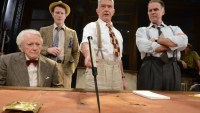
Chimerica. The weird title of Lucy Kirkwood’s hit play conjoins the names of the eastern and western superpowers and promises to offer a snapshot of both nations just as the baton of economic primacy passes from America’s wizened youth to China’s reborn antiquity. The script has an unusually complex set of creative ambitions. It takes the formula of the romantic comedy, gives it a bittersweet twist, and plants it in the arid terrain of international politics. And it starts as a whodunnit. Joe Schofield, a fêted American photo-journalist, was in Tiananmen Square in 1989 when he shot a few frames of the unknown citizen who halted a Chinese tank in its tracks. Scroll forward 23 years and Joe believes Tank Man is living undercover in America.

At last Alfred Munnings is being taken seriously again

Exhibitions

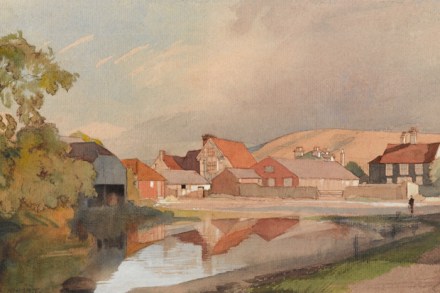
Sir Alfred Munnings (1878–1959) did himself a grave and lasting disservice when he publicly attacked modern art in a bibulous after-dinner speech at the Royal Academy in 1949. He had been president of the RA for five years, pipping Augustus John to the post, but the controversy he stirred up (he called Picasso and Matisse ‘foolish daubers’) led to his resignation. The echoes of his rant linger on more than half-a-century later, constituting for many the most memorable thing about him. Like Canute, Munnings could not stem the tide, and Modernism for a time swamped and eroded his reputation.

Second city blues

Arts feature

Why are clever-clever people so rude about Birmingham? Bruce Chatwin dismissed his hometown as absolutely hideous, Kenneth Tynan called his birthplace a cemetery without walls. Britain’s second city has always been belittled, not least by those who’ve left it, and now the old slights have been revived in the current debate about HS2. Never mind the pros and cons of that controversial high-speed railway — it’s the destination which really gets London’s goat. If HS2 went to Liverpool we’d be sure to mind our p’s and q’s, but Brum has always been an easy target. As Londoners never tire of telling one another, ‘Fancy forking out all that cash, just to make it a bit easier to get to Birmingham.

The whizz stirrer-up

Exhibitions

‘Professor’ Bruce Lacey (born 1927) is one of those figures who has existed effectively on the periphery of the art world for more than half a century. Part licensed jester, part society’s conscience, Lacey operates best on the fringes, stirring things up, provoking thought and challenging preconceptions, a lightning conductor for comment and criticism. Before this exhibition, I associated him principally with the Kitchen Sink painters (John Bratby used to describe him as ‘a whizz’) and the type of idiosyncratic humour best exemplified by the Bonzo Dog Doo-Dah Band.

End

Poems

We learn how every item is its own army the day we split the house down parting lines; the bookcases ready to be divided: the little troops that stand with their stiff spines.

Tom Stoppard’s Pink Floyd play gives Radio 2 a dark side

Radio

How many listeners, I wonder, actually tuned in to Darkside as it went out on air on Radio 2, after dark, curtains closed against the pale moon waning? One listener for sure at 10 o’clock on Monday night was David Gilmour, Pink Floyd’s guitar man and co-creator of the band’s mega-successful ‘concept album’ The Dark Side of the Moon, which inspired the play. Gilmour told the playwright Tom Stoppard that he wouldn’t listen ‘until it was actually going out on radio’. He wanted to catch ‘the extra vibe’. He may be a rock superstar but he’s still in thrall to radio: ‘There it is being listened to at that moment by all those people.’ Stoppard agreed.

Heaven

More from Books

Perhaps Heaven is like being foreign abroad where even the groceries appear exotic. All is before you exactly as it seems. Everything is as false and true as dreams. The language excludes you, familiar and strange, though all is apparently recognisable, all absent and correct in the world as it is. You are learning to call things by another name. The money looks like works of art, pastel coloured, value grown abstract and meaningless with beauty. Relax on these caféd squares, inspect the view, experience a larger meaning escape you. Look, the lake is furrowed with the long white wakes of steamers and ferries, clear despite the haze. A silent, pale, triangular sail tacks its way to a blurred destination. The car ferry hoots. A baby is fractious or sound asleep.

London life

More from Arts

Whoever coined the phrase ‘nothing is ever black and white’ had quite obviously never stepped over the threshold of Tate Britain this summer. Another London (until 16 September), a selection of photographs taken by some of the 20th century’s most celebrated photographers, including Henri Cartier-Bresson and Irving Penn, is a two-tone world; a black and white sea of parks and landmarks, crowds and individuals; London’s many faces in the last century (Wolfgang Suschitzky’s ‘Lyons Corner House, Tottenham Court Road’, 1934, above). There’s something unnerving about seeing London, a city recognised for its vibrancy and multicoloured diversity, depicted in stark monochrome.

Against the odds

Radio

Just in time for the Paralympics the veteran broadcaster and campaigner for disability rights, Peter White, has launched a special Paralympian series of his No Triumph, No Tragedy programme (Radio 4), the title of which should probably be reversed. On Sunday he talked to Margaret Maughan, the first Briton to win a gold medal at the Paralympics. She broke her back in a road accident in Malawi, where she was teaching, but only a year later she triumphed at Rome in the first international games for the disabled to be held alongside the Olympics. Maughan had discovered that although she had always been hopeless at sport she was rather good at archery. In Rome she hit her target spot-on. How did you get there?

Six hours with Stockhausen

Opera

Arriving for the world première of Stockhausen’s opera Mittwoch aus Licht (Wednesday from Light), we were greeted by the sight of two Bactrian camels, delightful and patient creatures, standing almost immobile for at least an hour while many visitors inspected them, before leaving in Joseph’s Amazing Camels coach. The one we saw later on stage was a pantomime camel, out of which, unzipped, a man stepped, after the animal had done an elaborate dance and been offered champagne. Zany and utopian, this is characteristic Stockhausen as I remember his works from the 1970s, before his long semi-eclipse, as people lost patience with his pretensions, his extreme prolixity, the tiresomeness of his childish sense of humour, the sheer datedness of what he was producing.

Racking up the tension

Cinema

Berberian Sound Studio is a film about a man who can’t get his expenses repaid and hurts a lot of vegetables — don’t worry, the RSPCV is on to it — although I suspect there may be rather more to it than this. I suspect there are hidden meanings. I suspect there are references to those nasty Italian giallo films of the Sixties and Seventies. I suspect it is, at least in part, a love letter to old, analogue sound technology. This is, in short, one of those arthouse tarts, always winking and hitching its skirt to those in the know. Yes, annoying for those not in the know — stop winking! Stop hitching your skirt! Have you no pride? — but I wouldn’t write it off all the same. It’s brilliantly creepy, whatever.

Money and the Flying Horses

More from Books

Intriguing, the oaten seethe of thoroughbred horses in single stalls across a twilit cabin. Intimate, under the engines’ gale, a stamped hoof, a loose-lip sigh, like dawn sounds at track work. Pilots wearing the bat wings of intercontinental night cargo come out singly, to chat with or warn the company vet at his manifests: four to Dubai, ten from Shannon, Singapore, sixteen, sweating their nap. They breed in person, by our laws: halter-snibbed horses, radiating over the world. Under half-human names, they run in person. We dress for them, in turn. Our officer class fought both of its world wars in riding tog: Luftwaffe and Wehrmacht in their jodhpur pants.

Birds in the Blue Night

Poems

Not birds I know, dank-feathered, inky-eyed, spinning in a ring until one breaks free, flies in. And already I am out of bed and on the path to my father’s room, the whole house sleeping but for him, his old face stunned in the white light webbed on the wall and I say Dad, the bird in my room. Each time he rises, my shadow on the carpet follows where he passes, watches in the doorway as he softly coos and scoops the bird into his palms, strange trophy thrown out into the night again.

Martha Wainwright’s family affair

More from Arts

Martha Wainwright was keeping it in the family at the Union Chapel in Islington last week. Arcangelo, the singer-songwriter’s three-year-old son, joined her on stage and had the audience eating out of the palm of his tiny hand; the spectral presence of her mother, the folk legend Kate McGarrigle, was never far away; and the evening was peppered with references to intense sibling rivalry with her irritatingly talented brother Rufus. Wainwright stole the show, though. A gutsy set drew mostly on her recent album Come Home to Mama, a paean to motherhood written in the aftermath of her mother’s death and the scarily premature birth of her son. She effortlessly seduced the audience with a combination of whip-smart humour, smutty talk and an endearing line in self-deprecation.

A painful but brilliant film: Deborah Ross on Maisie’s betrayal

Cinema

What Maisie Knew is an adaptation of the Henry James 1897 novel, updated to Manhattan in the now, and is described in the bumf I received as ‘heart-warming’, which is utterly strange, as it’s a child-caught-in-the-middle drama, and just so painful. It’s compelling. It’s exquisitely done. It’s brilliantly acted. (According to the most recent figures,  the chances of Julianne Moore turning in a duff performance are 0.00 per cent.) But it’s not a comfortable watch, which should not put you off, of course. There must be discomfort at the cinema just as there is discomfort in life, as Socrates might have said, if he had lived to experience film.

The problem with self-portraits: Ruth Borchard competition and Stranger reviewed

Exhibitions

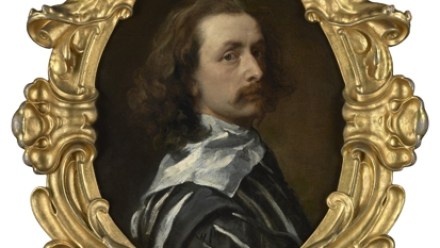
My wife says you can always tell a self-portrait by the quality of its self-regard. There’s something about the eyes and mouth (though not invariably flattering or admiring) or the set of the chin that give the artist away. Perhaps it’s simply that the artist is more interested in depicting the self than anyone else; or that the degree of self-awareness is inevitably deeper. Some of the great paintings have been self-portraits, from Rembrandt to van Gogh, and when they’re good they’re always worth looking at. So it was with optimism in my heart that I made my way to Kings Place to view the results of the second bi-annual Ruth Borchard Self-Portrait Competition.

The best satire at the Edinburgh Festival Fringe

Theatre

Politics is everywhere in Edinburgh. It’s embedded in the architecture of the streets. The New Town, built in the latter half of the 18th century, is a granite endorsement of the Act of Union, a stone pledge of loyalty to Britain’s new Germanic monarchy in London. The layout forms an oblong grid. The horizontals of George Street, Princes Street and Queen Street intersect at right angles with Charlotte Street and Hanover Street. This makes the approximate proportions of a flag. There are rumours that a scheme was proposed to dig two diagonal avenues, meeting in a central X, which would have turned the New Town into a colour-free Union Jack. My hunch is that this is a fantasy dreamed up retrospectively by ingenious nationalists.

Tell me a story! Anne Fine, Amanda Mitichison, Terence Blacker and Keith Crossley-Holland on the joy – and importance – of reading aloud

Arts feature

A dark afternoon in December, aged about ten, I was in a class waiting for double geography. Mr Blake breezed in, told us to put our books away and, as a treat, he read us a story. It was ‘Oh, Whistle, and I’ll Come to You, My Lad’, the famous ghost story by M.R. James. Heads resting on our arms, we listened to this chilling tale of a scholar who takes a winter holiday at an English seaside town, finds a whistle buried in the sand engraved with the inscription of the story’s title, and makes the mistake of blowing it. An evil thing is summoned — a flapping, sheet-like, blind thing with a ‘horrible, an intensely horrible, face of crumpled linen’. Once heard, never forgotten.

Fish oil, exercise and no wild parties

Poems

My lifelong friend, dear heart, these days you’re losing the plot: you’re a fish in a bucket, open-mouthed, flopping about in a panic, bereft of your sheen, all confidence gone. Examined in action on a black and white screen, every movement recorded, you’re haplessly tethered, chaotically jumping, locked into a pulse of your own. Tracked by the inks on that turning drum we see what will come if that spidery record persists Slow down then, no coffee, resist the enticement of alcohol, not even a thimbleful and I will net you, my flailing fish, land you without a splash into calm waters, weaving upstream, steady and breathing. Till the hook’s savage grab lands us both on a slab.

Only Evan Davies can keep his guests in order

Radio

It must have sounded like such a great idea. To gather a group of thinkers, agitators, experts, intellectuals and media people round a large table, mike them up, ply them with drink, choose a presenter from the radio hall of fame to act as monitor and shut the studio door. Then switch on the red light, and cross your fingers they’ll not run out of conversation before the hour’s up. Summer Nights was introduced as ‘a first’ for Radio 4 — ‘live’ late-night conversation on topics ranging from sex to politics via fracking and the fear of boredom. I was really looking forward to the two-week season. Could it be a chance for Radio 4 to break out, shed some of its aura of certainty? Would we become eavesdroppers on some really stimulating conversation?

Tippett’s Midsummer Marriage is an opera of exuberant genius — but forget about the text

Opera

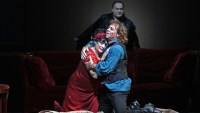
Whenever Michael Tippett’s first opera, The Midsummer Marriage, is revived, there is a chorus of voices, including mine, complaining that it should be done much more often, for it is a work of exuberant genius, full of wonderful musical invention, and life-affirming in the way that Britten’s operas never are (with, I think, the exception of Albert Herring). Yet the Prom performance, semi-staged, it was claimed, but rather less than that, did make clear, while doing justice to Tippett’s score, why Marriage is always likely to be something of an outsider.

The Email About Writing the Poem

More from Books

I’ve been occupying myself trying to write a long-ish poem. It’s an odd sensation writing a poem. You’re trying to make something come out of nothing, and you have an idea of what it could be, of stray lines and thoughts, and it takes shape as you do it, and you have to somehow notice what you’ve done and see how it tells you what you are engaged in and what clue it gives on proceeding. Even then of course you have no guarantee of the finished thing being a ‘success’ or that anyone else will like it or get it; or, in fact, that it qualifies as finished.

Kuma would shine at any time of the year

Cinema

Mid-August is a hopeless time for films; so hopeless, useless and bleak, if I don’t use three words when one would have done, I am just never going to fill up this space. The assumption is people don’t wish to visit the cinema on summer evenings, or they are on holiday (I wish!), so the studios put out all their rubbish. This week sees the opening of Bachelorette (a Bridesmaids rip-off), Planes (a Disney film, originally intended for DVD only) and The Lone Ranger, which is said to be so lousy, terrible and awful the producer is going to be hung from a lamppost on Sunset Boulevard, as a warning to all other Hollywood producers.

State-sponsored cultural renaissance in revolutionary Mexico

Exhibitions

Revolution shook Mexico between 1910 and 1920, but radical political change was not mirrored in the art of the period. In this exhibition, we do not see avant-garde extremes, but witness instead a deepening humanism, as if for once art was interlocking with human need. The cultural renaissance that followed was state-sponsored, and artists were employed by the Ministry of Education to promote the revolution. This was political art at its best, and three artists were active at its heart: los tres grandes, Diego Rivera, José Clemente Orozco and David Alfaro Siqueiros. Their most significant achievements were murals, which remain firmly in place on Mexican buildings and thus are difficult to make an exhibition about.