Culture

Culture

The good, the bad and the ugly in books, exhibitions, cinema, TV, dance, music, podcasts and theatre.

Ornithology

More from Books

‘The Wood Thrush can sing a duet by itself, using Two separate voices,’ as opposed To the whip-bird, one cry, two creatures And nothing between them no, not even if you listen On Point Sublime we are one, we are one.

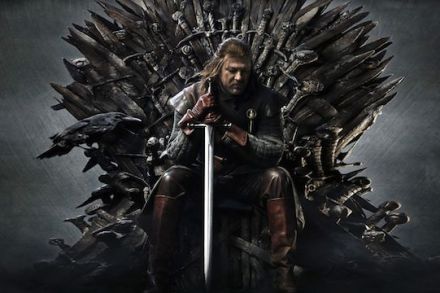
The Three Musketeers is a triumph – because, like Game of Thrones, no one is safe

Television

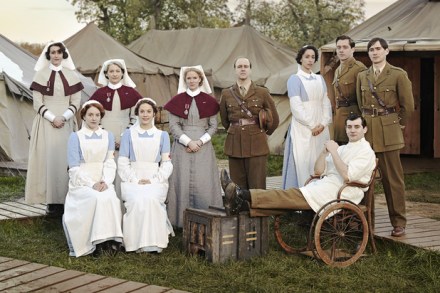
‘Pshaw!’ That was my first reaction to news of the BBC’s new ten-part Sunday night adaptation of The Three Musketeers. After all, wasn’t it about a fortnight ago I was in the Gaumont in Redditch watching the classic 1973 movie version that had just come out with Michael York (and Oliver Reed and Roy Kinnear...)? And wasn’t it roughly the day before yesterday that I remember tut-tutting and refusing point-blank to go to see the 1993 Hollywood bratpack travesty with those upstarts Charlie Sheen and Kiefer Sutherland? This is what happens when you get old: time compresses; there’s nothing new under the sun; everything people younger than you do seems somehow to be a damned impertinence.

Two women, ages 94 and 83, completely own The Archers

Radio

You might think the main storyline in The Archers is all about Helen’s affair with dastardly Rob. (What does she see in him? It’s so obvious he’s a mean-spirited control freak.) Or the new ‘voice’ for Tony, as David Troughton takes over from Colin Skipp, who has played the part for more than 40 years. But actually the real drama in the past fortnight has been swept along by the 94-year-old actress who plays Peggy Woolley and by her younger sidekick Jill Archer played by the 83-year-old Patricia Greene. Together they’ve provided a masterclass on how to act on air, with their distinctive voices, precisely calibrated characters and ability to make us believe in them.

If you can figure out the mind-boggling plot of Ciphers — join Mensa

Theatre

Here’s a heartwarming tale from the London fringe. A company named Above the Stag was merrily plying its trade at a small pub attic in Victoria. Then in March 2012 a bulldozer squashed the pub flat. In its place rose a glittering steel tower full of geeks, screens, beeps and loot. Undeterred by demolition trucks and by dollar-gobbling speculators, Above the Stag began searching for a new arena. After a difficult year cadging empty spaces from nearby theatres, the company has now found a permanent home beneath a Vauxhall archway. Good news: London’s theatreland is expanding even when freeholders are literally whipping the land from under its feet.

Goodbye, Claudio Abbado. You helped us glimpse eternity

Music

Fellini’s credo ‘the visionary is the only true realist’ could also be applied to the life of Claudio Abbado, who died earlier this week in Bologna at the age of 80. It would be wrong to think of Abbado as a dreamer, for conducting at the angelic heights to which he ascended is a matter of serious thought, but he had the gift, rarer than is commonly supposed, of liberating musicians. Being liberated, they gave performances of such beauty and emotional power that those who heard them will consider their lives enriched; in many cases transformed.

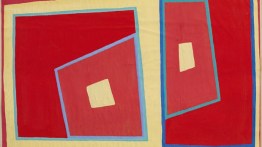
Painting Now doesn’t represent painting now. Thank goodness

Exhibitions

The death of painting has been so often foretold — almost as frequently as its renaissance — that any such prediction today is nothing short of foolhardy. Of course, painting is alive and well and living in London, but you wouldn’t know that from the current exhibition of five artists at Tate Millbank. (By the way, this is a paying display, the regular admission fee being £10. Not surprisingly, it was deserted when I visited. This sort of show, to do its job properly and communicate to the public at large, should be free.) According to the press release, each of the five artists ‘has adopted an approach to painting that both exploits and subverts its conventions’. I wish.

Leipzig and Dresden are both staging Elektra. Which city wins?

Opera

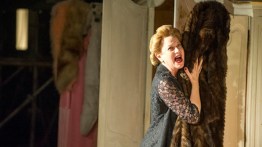
Yet more performances of Elektra, Richard Strauss’s setting of Hugo von Hofmannsthal’s ramped-up, neurosis-riddled 1903 reworking of Sophocles, are unlikely to force any anniversary-year reassessments of the composer. But the piece’s current ubiquity does reflect the fact that we’re now relatively well off for singers equipped to tackle the fearsome title role. At their head, arguably, stands the German soprano Evelyn Herlitzius. She’s yet to make her Covent Garden debut, inexplicably, but her riveting performance galvanised the opening night of the first high-profile new production of the work in 2014, at Dresden’s Semperoper, where it shocked and awed its first audience 105 years ago.

Is Hollywood finally waking up to the talents of women? Nah

Arts feature

There is, we all know, only one anniversary that matters this year: 20 March 2014, 50 years since The Twilight Zone episode ‘The Masks’ was first beamed into America’s cathode-ray tubes. Bunting will be stretched from television screen to television screen in celebration. Champagne will be spilt over remote controls. After all, ‘The Masks’ isn’t just a particularly fine episode of a particularly fine show. It is also the only episode — of 156, if we don’t count the two revival series made in later decades — to be directed by a woman. Ida Lupino.

Dasha Zhukova’s publicity stunt

We think we’re immune to whatever the art world can throw at us. A urinal here, an unmade bed there, a dead shark to the head. But occasionally we forget our indifference, and become very worked up. Hurrah! Proof we aren’t all suffering from a prolonged bout of cultural nonchalance. Dasha Zhukova – Roman Abramovich’s art-collecting girlfriend, who runs the contemporary gallery Garage in Moscow – has angered people by being photographed on what looks like a black woman leaning back, naked, and with a cushion balanced strategically on her voluptuous bosom. Of course, she isn’t actually sitting on a real black woman with a voluptuous bosom, but rather a polyvinyl sculpture by the Norwegian artist Bjarne Melgaard.

After Sherlock, TV will never be the same again

Television

You know the holiday season is over when, instead of being torn between The X Factor and Strictly Come Dancing on a Saturday night, you have to choose between The Voice and Splash!. The good news for The Voice is that pint-sized superstar Kylie Minogue has joined its judging panel. In the season opener, competition hopeful Leo Ihenacho (formerly of the band The Streets) picked Kylie to be his mentor, as he used to fantasise about her when he was a boy. The premise of The Voice is that the judges, who have their backs turned to the stage, aren’t influenced by the aspirants’ looks, age or dress. In return, contestants seem to choose as their coach the judge they think is most, well, hot. Anyway, I’m afraid the amateur-diving platform Splash!

Would you have been let in to an ’80s club? 

More from Arts

People will go to extraordinary lengths to get into a nightclub. Nowadays you must wear something tight, and look slinky. But, as Club to Catwalk: London Fashion in the 1980s at the V&A shows (until 16 February), a handful of Eighties doormen were into something a bit more deviant. The combination of a new London Fashion Week, a vibrant club scene and a coterie of ambitious designers emerging from the London art schools was potent. On Thursdays and Fridays, St Martin’s was deserted. Everybody was at home working on their costumes for the weekend. Over two floors, a mixture of clubbing outfits and catwalk designs are showcased. There is a mirror with the slogan ‘Would you let you in?’ stamped across it.

When did you last hear a news report you could trust completely? 

Radio

‘It put a lot upon us,’ said Christopher Jefferies’s aunt. ‘The ripples went on and did not stop for a long time.’ She was talking about the after-effects of the media witchhunt that skewered her nephew after his arrest in connection with the death of the Bristol landscape architect Joanna Yeates in December 2011. Jefferies was depicted as being almost certainly guilty because of his long, hippie-like hair, his bachelordom, his love of poetry and ‘culture’, his brusque refusal to speak to the press. Yet his only link with the crime was that he owned the flat in Clifton where Yeates lived. Saturday night’s Archive on 4 (Radio 4) reminded us of what happened to Jefferies and his family, and of some uncomfortable truths.

Fists of cash, hookers and a candle in your bum palls after a while

Cinema

Martin Scorsese’s The Wolf of Wall Street will set the cat among the pigeons as a number of films do. 12 Years A Slave set the cat among the pigeons with some critics claiming it was ‘torture porn’ and other people taking to the blah-blah-blah and jabber-jabber-jabber of the Twittersphere to say they had no intention of seeing anything ‘so harrowing’. (Luckily for them, I plan to open shortly a specialised cinema, The Comfort-Zone Cinema, possibly on the Finchley Road, which will never show anything upsetting, and Hello, Dolly! every other Tuesday.) This time out, the blah-blah jabber-jabber will, I imagine, take the following form: does Wolf exult in the excesses it intended to satirise? Does it get off on its own virulent misogyny rather than indict it?

The play to watch if your country is breaking up

Theatre

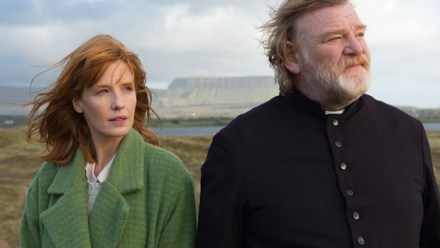
Of all the West End’s unloved venues the loveliest is the Arts Theatre. It specialises in creaky off-beat plays like Only Our Own by Ann Henning Jocelyn. We’re in Connemara, in the west of Ireland, in the early 1990s. A family of Anglo–Irish toffs are struggling to cope with their status as universal pariahs. Wherever they go they’re out of place. Catholic Ireland resents them. In England, their spiritual home, they feel like aliens. Titania, a narky teenager, is baffled by her parents’ religious prejudices and she merrily announces her involvement with a boozy local bumpkin. He’s Catholic, naturally. This prompts a bombshell of a speech from Titania’s grandmother, Lady Eliza, who witnessed a village insurrection in 1922 when she was just 11.

Alan Sorrell, oddly original and shamefully neglected (till now)

Exhibitions

Rediscovering the unduly neglected is one of the chief excitements of those who curate exhibitions and write books. And there’s nothing I enjoy more than saluting the achievement of those who bring back to our attention an artist who – for one reason or another – has slipped off the art world radar. Before this exhibition and, more importantly, the book accompanying it, Alan Sorrell was only a name to me, with a few rather vague visual connotations. Now I can put definite images to the name and begin to build a context for his work. For anyone interested in the broader picture of 20th-century British art, the current Sorrell initiative is of real interest and value.

American Night

Poems

All in the half-dark, we watch the dead playing the parts of the living, in roles we have seen before: The Quiet Man, or The Song of Bernadette. A stranger in a blue Thames van came from somewhere to the west as night drew in, to unload the big, flat cans with reels in them and tramp up the unpainted stairs to the organ-loft in the Church Hall. But I don’t remember seeing this film before: which must be right because I can’t recall what happens next, or even whether it has a happy ending.

At Kew

More from Books

To Occupation Road again, a whole year nearer my own retirement now. The track slopes down past the Record Office to the river. I am looking for any of the soft fruit canes my grandfather planted, but find instead a stag beetle upside down on the tarmac, struggling like a memory, the feelers at full stretch. Maybugs! she shudders. The pathway ends at the Thames, where I note flood defences, vaguely recall the waterworks, and suddenly they have found me as a train breaks through the overgrown embankment. I want to look up and see my father at the glass, returning, and wave to him.

Bye-bye Bric, hello Mint — are Mexico, Indonesia, Nigeria and Turkey really the new boom economies?  

Radio

New year new ideas as we woke up on Monday morning to find ourselves in Lagos with Evan Davies trying to convince us that Nigeria really is undergoing an economic earthquake. It’s part of a week-long campaign by Radio 4 to make us believe that the next economic leaders among world nations will be Mexico, Indonesia, Nigeria, Turkey. These new Mint countries are destined, we are told, to take over from the Bric countries, now deemed passé after just a decade in the limelight generated by the economist fashionistas. It’s stimulating stuff for this hibernating time of year.

Deborah Ross: 12 Years a Slave harrowed me to within an inch of my life

Cinema

Steve McQueen’s 12 Years a Slave goes directly to the heart of American slavery without any shilly-shallying — unlike The Butler, say, or even Django Unchained — and is what I call a ‘Brace Yourself’ film, as you must brace yourself for horror after horror, injustice after injustice, shackles, muzzles, whippings, rapes, hangings. You will be harrowed to within an inch of your life, as perhaps is only right, given the subject matter, but you will not wish to flee your seat. You will recoil. You will flinch. You will say to yourself, ‘Oh no, not again.’ But the story will seize you with such a visceral power you will be rooted to the spot. I know I was and I’m not easy to root. Mind everywhere, usually.

All I want next Christmas is new Christmas songs 

Music

Three months until spring. Four months until the start of the cricket season. And only nine months until the radio starts playing ‘Merry Xmas Everybody’ again. Or have you heard enough of Christmas songs by now? Many of us had heard enough of them by Christmas 1988. Every October they return. The first strains of Shakin’ Stevens emerging tentatively from high street shops. Shane MacGowan and Kirsty MacColl, still bickering. Greg Lake, possibly alone now in believing in Father Christmas. Roy Wood’s enormous beard, wishing it could be Christmas every day. And for three months of every year his wish is granted. Millions of Britons suffer the consequences.

Overrated Strauss vs underrated Gluck

Opera

This is the first of my more-or-less monthly columns, the idea of which is to report on operatic events other than those that take place at the two major London venues, with occasional trips to those areas (i.e., everywhere other than London) where the annual government grant for the arts is £4.80 per head, while in London it is £69.00. This fact was widely reported a few weeks ago, but while I thought for an hour or two that it might lead to a revolution, there was no widespread articulate reaction to it of any kind, nor, so far as I know, any indication that this gross inequity would be addressed. So if conspicuous consumption is what you’re after, you’ll know where you have to be. That’s not my main topic for this particular column, however.

Art shows you simply mustn’t miss in 2014

Arts feature

One of the great treats of the exhibiting year will undoubtedly be Henri Matisse: The Cut-Outs (17 April to 7 September) at Tate Modern. The last phase of Matisse’s productive career was devoted to making extraordinarily vivid images from painted paper cut with scissors, as the physical effort of wielding a paintbrush became too much for him. Matisse’s greatest strengths were as draughtsman and colourist, and the cut-outs combine these skills in abundant measure, releasing a new sense of joyous celebration almost unmatched in the history of art. The largest ever exhibition of the cut-outs, the Tate’s show will feature 120 works, many seen together for the first time. Unmissable.

Time to Go

Poems

Feeling my age, too soon too tired, Whatever gifts I had no more required, I am a hireling called in to be fired. Time was I was ambitious, heretofore. Not any more, not any more. Ridding myself of papers, pots, coins, books, No longer vain about what had been looks, The broth boiled over by too many cooks. Time was I kept some goods held back in store. Not any more, not any more. Taking my time over this last short walk, Not hearing what I say, or how I talk, Pushing my knife against my trembling fork. Time was I knew when I’d become a bore. Not any more, not any more.

Why is there no God in the British Library’s latest exhibition?   

More from Arts

Georgians Revealed: Life, Style and the Making of Modern Britain at the British Library (until 11 March) would have you believe that the religious life was not a feature of Georgian Britain. God is an invisible force in this exhibition and the viewer has to know a fair amount about the period’s history to see Him at work among the exhibits. Josiah Wedgwood’s famous anti-slavery medallion is shown; but there is nothing about the non-conformist religious tradition that inspired him and other abolitionists. The decision to ignore that religious past means that the viewer cannot learn about the century-long tension between the established Church of England and the other protestant churches; the resolution of which helped to form the basis of our tolerant, liberal society.

Dayshifts

More from Books

The Man in the Moon will come on Tuesday. He will wear his grey hat and be travelling alone. Take his luggage and his staypress suits — and, Should he speak, converse about the ocean, Women or the rush on the delivery wards. I assume he’ll take the Penthouse Suite. Do check the ice-tray in the minibar. Make sure the curtains have been drawn, And say I’m sorry that I could not stay — It’s too long since we both worked the night.