Culture

Culture

The good, the bad and the ugly in books, exhibitions, cinema, TV, dance, music, podcasts and theatre.

WNO’s production of Schoenberg’s Moses und Aron is an overwhelming experience – but make sure you close your eyes

Opera

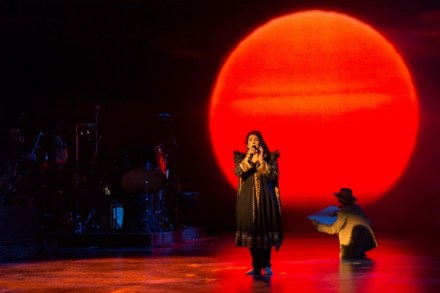
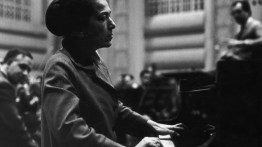
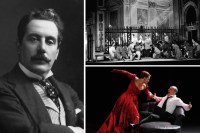
On paper, Moses und Aron might seem intractable and abstract: a 12-tone score setting a libretto that meditates on God, faith, the essential inadequacy of language to express the ineffable, and a great deal more. Put it in the theatre, as Welsh National Opera has done as the first part of its ‘Faith’ mini-season, and it’s an overwhelming experience, compelling because of, rather than in spite of, its subject matter and musical methods. And just over 80 years after Schoenberg stopped work on it (he left it incomplete, having written only a fragmentary text for the third act), its themes are as pertinent as ever.

Joan Littlewood has a lot to answer for – but Fings Ain’t With They Used T’Be’ makes up for it

Theatre

Joan Littlewood’s greatest disservice to the theatre was to champion ‘the right to fail’, which encouraged writers and directors to inflict a thousand shades of bilge on play-goers for many decades. But she deserves a place in the pantheon for an inspired decision taken in 1959. Offered a new play about Soho’s underworld, written by the ex-con Frank Norman, she invited a young pop composer to turn it into a larky musical. Fings Ain’t Wot They Used T’Be opened at Littlewood’s East End lair and transferred to the Garrick where it ran for nearly 900 performances. The young composer was Lionel Bart.

When Van Gogh lived in London

More from Arts

Eighty-seven Hackford Road, SW9, is unremarkable but for a blue plaque telling the world that Vincent van Gogh once lived there. The building has been empty since 2012 but now the Dutch artist Saskia Olde Wolbers has filled it with voices. ‘Yes, these Eyes are the Windows’ (until 22 June) is an Artangel-commissioned installation that explores the line between fact and fiction by telling the story of this terraced house from when a 19-year-old van Gogh was a tenant there in the 1870s to the present day. As a visitor, you enter a dimly lit hallway. You are held there for what can be only a few minutes but feels much longer. Already the tension is palpable. A door opens, seemingly of its own accord, and you step into an eerie parallel universe.

Original Sin

More from Books

When first they ushered me into that hall To take my place on a cheap fold-out seat, My eyes clamped shut, and so missed all The conjured stillness of the school: young feet Unshuffled, heads dropped down in donned respect, And teachers, too — attendant, cramped in rows Of less observant hush. A time to reflect On whispers, echoed hymns, light-cold windows. In truth, I pitied most the ones on-stage: for though I felt secure behind my teen- Devout, dismissive, atheistic rage, I couldn’t quite pretend I hadn’t seen the way they thumbed the book — unsure of it, The prayer, the weary Morning, all. Please sit.

Wolf Hall and Bring Up The Bodies: ‘a major theatrical event – don’t settle for one, see both’

In Hilary Mantel’s Tudor England, it never stops raining. As she writes in her evocative programme note for the RSC stage adaptation of  Wolf Hall, she first envisaged the life of Henry VIII’s political fixer, Thomas Cromwell, as 'a room: the smell of wood smoke, ink, wet dogs and wet wool, and the steady patter of rain'. I’d heard, correctly, that Jeremy Herrin’s production was every bit as close and claustrophobic as Mantel’s novel. So as I set off, it seemed a disadvantageous prospect to spend a day of blazing summer sunshine cooped up with six hours of theatre, reviewing the double bill of Wolf Hall, and its sequel, Bring Up The Bodies.

I can’t recall a time when the destruction of a structure made so many people so distressed

It really is rotten luck, and also cruelly ironic. Just as Glasgow was done debating how best to demolish its hideous Red Road flats, its most beautiful building, Glasgow School of Art, goes up in smoke. No one hurt, apparently, which is a relief, but an awful lot of artwork lost, a unique archive and a precious library. However it’s the actual building which everyone seems most upset about. Indeed, I can’t recall a time when the destruction of a single structure made so many people so distressed. It shows we can love or hate a building, like a person. It shows architecture really matters. So why does Charles Rennie Mackintosh’s masterpiece matter so much?

Expecting opera critics to be uniformly kind to singers defeats the point of their existence

Should fat be an issue in opera? Are our opera critics overgrown schoolboys with a body fixation? To judge from reports and editorials in print and online over the last two days, you can answer ‘no’ and ‘yes’ respectively. Simple? No, not really. On Monday morning, the critics of various national newspapers published reviews of Glyndebourne’s new production of Der Rosenkavalier. These reviews included comments about the physical appearance of Tara Erraught, the young mezzo-soprano cast as Octavian. These comments have been widely disparaged and taken as evidence of ‘body shaming’ on the part of ‘male, middle-aged critics’.

P.J. O’Rourke interview: ‘Telling jokes and lying about politicians – what’s the difference?’

P.J. O'Rourke’s chickens are giving him trouble. ‘Two of them aren’t laying eggs right now,' he explains. But he doesn’t know which ones. ‘I’m not sure who’s the guilty party.' We’re driving to the field where his trees are harvested for timber and where he and his father-in-law have built a one-hole golf course. ‘How to Drive Fast on Drugs While Getting Your Wing-Wang Squeezed and Not Spill Your Drink’ this isn’t.

Polly Teale interview: Cuts are making the theatre ‘a place where you can only survive if you are from a privileged background’

Arts feature

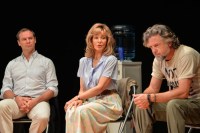
I spend an hour with the theatre director Polly Teale. She’s 50ish with a tall, willowy physique and strong, aquiline features. Her hair is arranged in a combed bob whose flicky fringe overhangs her bright, deep-set eyes. She’s easy-going and so good-natured that at one point she asks me about myself — a courtesy few interviewees extend to journalists. But she’s focused, almost obsessively, on her current job and she steers all my questions back to her upcoming production of Bakersfield Mist, by the LA writer Stephen Sachs. The story has elements of mystery, comedy and class war. It’s set in a trailer park in Bakersfield, a ruined backwater 60 miles from LA, whose name is shorthand in America for ‘the scrapheap’.

Josef Albers: roaring diagonals and paradisiacal squares

Exhibitions

Josef Albers (1888–1976) is best known for his long engagement with the square, which he painted in exquisite variation more than a thousand times. A German–American painter, he trained in Berlin and Munich before enrolling at the Bauhaus (the leading modernist art and design school) in 1920. He was a student there for three years and a teacher for ten (longer than anyone else), his chosen craft was stained glass, and his teaching ranged from typography to furniture. In 1933 he moved to America and began to teach at Black Mountain College in North Carolina. Among his students was Robert Rauschenberg, who acknowledged Albers as ‘the most important teacher I’ve ever had’.

We’re very lucky Philip II was so indulgent with Titian

Exhibitions

In Venice, around 1552, Titian began work on a series of six paintings for King Philip II of Spain, each of which reinterpreted a scene from Ovid’s Metamorphoses. The resulting work proved to be the apogee of his career and became what may be the most influential group of paintings in post-Renaissance European art. Studied, absorbed and channelled by successive generations of artists, from Velázquez and Rubens through to Gainsborough and latterly Freud, the impact of these works and their stylistic legacy was profound.

Monty Don, Kirstie Allsopp and Bear Grylls – we get the TV shows we deserve

We’re now on day three of the Chelsea Flower Show, and this year the BBC have taken their coverage to the max. As well as the quotidian hourly slot with Monty Don, Joe Swift and newcomer Sophie Raworth, in the week preceding the show we were also treated to the daily Countdown to Chelsea. What is it that makes the public so interested in gardening that we are willing to watch so much of it? Gardening is, for the most part, about scrabbling around in the mud and digging up weeds. But that’s the point. If this were a country where the majority of people earned their keep by growing plants – ie arable farming – it’s unlikely that watching other people do the same would make for enjoyable viewing.

Norman Thelwell: much more than a one-trick pony

More from Arts

‘The natural aids to horsemanship are the hands, the legs, the body and the voice.’ But a Thelwell pony sometimes required some, er, additional aids. Norman Thelwell’s first pony cartoon was published in Punch magazine in 1953 and struck a nerve with readers; so much so that the editor asked Thelwell for a double-page spread of ponies. ‘I was appalled. I thought I’d already squeezed the subject dry,’ he later recalled. But of course he hadn’t, and Penelope and her pony Kipper went on to become his most popular characters. It may be in pony cartoons that Thelwell found his niche, but he wasn’t just a one-trick pony.

When Virginia Woolf’s husband ruled Sri Lanka’s jungles

Radio

Tucked away in the schedules, just before midday, just after midweek (on Thursday), just four lines in the Radio Times, was one of those radio gems. Nothing remarkable on the surface, but every so often sparkling with insight, or a different way of seeing. Woolf in the Jungle (produced by Dan Shepherd) took us to Sri Lanka (or rather Ceylon) in 1904 when a young Leonard Woolf arrived on the teardrop island, with his wire-haired terrier Charles, 70 volumes of Voltaire, and absolutely no political, business or legal experience. He had been sent out to work as an officer in the Ceylon Civil Service, and very soon was posted to Hambantota in the south-east of the island, which he governed, single-handedly, for three years before returning to England.

So Dylan Thomas was a drunk: does this TV drama have anything else to say?

Television

According to its executive producer Griff Rhys Jones, A Poet in New York (BBC2, Sunday) sought to rescue Dylan Thomas from the ‘forces of sanctity and hagiography that now hover over his shade’. Instead, we’d be reminded that he was ‘a hollering bohemian roustabout’ — which is presumably Griff’s longhand for ‘a drunk’. By that measure, the programme was a triumphant success, even if fewer people may have been startled by the revelation of Thomas’s booziness than Griff seems to think. As a piece of television, though, it suffered badly from the decision to concentrate on Thomas’s alcohol-laden final days in New York, which inevitably led to a lack of dramatic variety.

Avoid the latest commercial juggernaut and go off-road with Run & Jump

Cinema

When you see the latest corporate entertainment juggernaut hurtling at you, what are your options? When I saw X-Men: Days of Future Past (what?) hurtling at me, I thought: I can either jump aboard or I can swerve off-road. In this instance, I chose to swerve off-road — I’ve seen Godzilla; I’ve done my time — and although it could have ended in disaster, and I could have been hurled into a ditch or something, it actually worked out great, as I swerved off-road straight into Run & Jump, which is a lovely film, just lovely, and although nothing gets blown up, it does star Maxine Peake, whose performance may very well blow you away.

Memo to Nick Payne: filling your plays with cosmic chit-chat doesn’t make you intelligent

Theatre

How do you write a play? Here’s one theory. Put a guy up a tree, throw rocks at him, get him down again. It’s a good working template. Nick Payne’s latest script, Incognito, uses a different scheme. You put 21 guys up a tree, set them jabbering for 90 minutes and then go home. This cumbersome structure is greatly damaged by the decision to hire just four actors to play all 21 characters. And the locations, covering six decades, leap so often between Britain and America as to induce dizziness and possibly vomiting. There are no changes of costume, or set, to indicate where you are. You just have to guess. One storyline involves a camp young Brit with chronic amnesia. Another traces a Scottish physicist who is turning, rather grandly, into a lesbian.

Romeo, Juliet and Mussolini

More from Arts

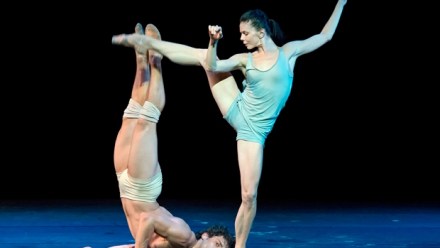
George Balanchine’s Serenade, the manifesto of 20th-century neoclassical choreography, requires a deep understanding of both its complex stylistic nuances and its fascinatingly elusive visual metaphors. Many recent stagings have failed to meet such criteria,  but not the performance I saw last week. Things did not exactly start especially well, as the opening group of ladies with raised arms lacked ‘magic’ evenness. But as soon as both Marianela Nuñez and Lauren Cuthbertson darted on stage, the whole performance became incandescent. The two artists, perfect modern-day incarnations of Balanchine’s female ideal, were soon joined by the equally superb Melissa Hamilton and the neoclassical perfection of Matthew Golding.

I could be dead soon. What should I listen to?

Music

If I live as long as my father, I’ll be checking out on 9 December 2017. Since every man in my family drops dead of a heart attack at a ridiculously young age, it’s not inconceivable. I mean, obviously the chances of me dying on precisely that day are tiny, but it’s my ballpark figure. This faces me with big questions. Given that I’m probably croaking soon anyway, should I try smack? (I mean, try it properly: the only time I was handed a heroin pipe, by a professor, I was far too scared to inhale.) Do I need to worry about my miserably empty pension pot? Is there a God? And if there is, should I stop being so monstrously selfish? Big questions, as I say, but I still shunt them to the back of my mind.

How the Suzuki method changed my life

Columns

Do you ever wonder, as your little darling balks at doing her violin or piano practice again, what all the pain is for? All those battles, and then when she escapes your clutches she’ll give it up. In later life the blanket of amnesia will fall over those childhood years and it might be as if she’d never played at all. I learnt the violin by the Suzuki method from the age of three until about 14. It was a newish fad back then in London, although Shinichi Suzuki, the movement’s founder, was in his eighties and had been teaching in Japan since the war. Suzuki’s idea was simple and had come to him as he watched toddlers learn to speak: start a child young enough and he will learn music the way he does language — naturally and easily.

What makes art art? And why gaming may not make the grade

Every now and then, you’ll come across an article which puts a case for something or other being taken seriously as an 'art form'.  Designing computer games, cake-making, upholstery, you name it, sooner or later it’ll be up there with painting the Sistine Chapel. And the more elaborate or intricate the process of production, the more earnest the appeals of the writer seeking artistic validation. And sometimes the article will even come right out and say it: ‘This [insert the thing being promoted as a Serious Artistic Endeavour] is art. It’s as much art as Turner’s late paintings, which were once dismissed as "soap suds and whitewash” by the sneering cock-eyed art critics of the day.

A photographer sheds new light on Constable Country

Arts feature

The phrase ‘Constable Country’ summons up a quintessentially English landscape: river and meadows, open vistas bordered by trees, the greens and golds of cultivated acres, with the wide (and often blustery) skies of East Anglia over all. John Constable (1776–1837) is one of our greatest artists and certainly one of the most popular. His vision of rural England has become a cherished ideal of how landscape should look, and is as much a state of mind as a real place. In actuality it is based around the village of East Bergholt where Constable was born, in the Essex–Suffolk border country, and extends through Dedham Vale and the valley of the river Stour.

What was Allen Ginsberg doing in Wales? LSD

Exhibitions

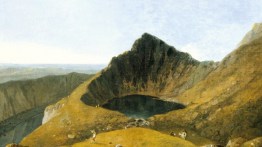
‘Valleys breathe, heaven and earth move together,/ daisies push inches of yellow air, vegetables tremble,/ grass shimmers green...’ The characteristic undulations of the voice of the Beat poet Allen Ginsberg greet the visitor on entering Wales Visitation: Poetry, Romanticism and Myth in Art at the National Museum Cardiff. Bearded and mellifluous, projected to mythic proportions across a vast expanse of wall, Ginsberg is seen reading his poem ‘Wales Visitation’ on American television in 1968, telling less of visits than of visions. What was the Blakeian, Buddhist, drug-sampling poet doing in Wales? LSD.

When Raquel Welch danced on a table at Cinecittà

Exhibitions

Before there was Hello!, OK! and Closer, there was Oggi. Oggi was the magazine my Italian mother used to flick through on the long dark English winter evenings. Its celebrity photo spreads were for her the armchair equivalent of the Italian national pastime, the ‘passeggiata’. The Years of La Dolce Vita, revisited in a new exhibition at the Estorick Collection, were the glory years of Oggi. The show draws on an archive of more than a million images taken by Marcello Geppetti (1933–1998), the street photojournalist ranked by American Photo ‘the most undervalued photographer in history’.

A Waiting for Godot that’ll make you laugh as much as it’ll make you despair

I have to remind myself that Waiting for Godot is a confounding piece of theatre. It’s supposed to be. The famous repudiations Beckett made to its interpreters, the ignorance he professed of its characters, were more than just cryptic obfuscation. ‘The only thing I’m sure of,’ he is said to have said, ‘is that they’re wearing bowlers.’ Likewise his sole description of the set: ‘A country road. A tree.’ All deliberately, maddeningly vague. And the tradition since has often been to treat the play as virtually untouchable, to dismiss any thought of embellishing Beckett’s wasteland with new ideas. So Vladimir and Estragon have always been imagined, by director after director, in bowler hats.