Jacob Willer

Science may say this is a Caravaggio but my eyes think otherwise

From our UK edition

Last month a painting that had been found in an attic in 2014, supposedly by Caravaggio, was put up for sale in an auction in Toulouse. The vendors must have known there was little interest, as they accepted a pre-emptive offer for an undisclosed amount. Surely it wasn’t what they were hoping for; but they will have done well enough so there's no need to feel sorry for them. It’s just business. But what about the painting? Why does it look so different – to put it politely – from everything that is known to have come from Caravaggio’s hand? Do our eyes deceive us, or have so many esteemed scholars misled us? Partly, I suspect, they misled themselves, by taking documentary and scientific clues for evidence, or even proof.

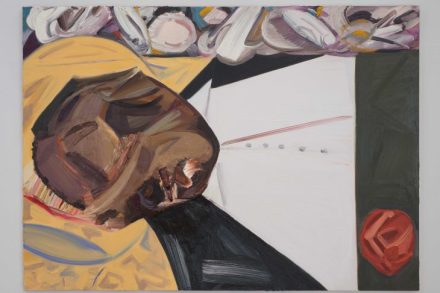
Both sides are missing the point in the row over Dana Schutz’s painting

From our UK edition

'Let the people see what I have seen', said the mother of Emmett Till. In 1955 her son, a 14-year-old black boy from Illinois, was falsely accused of flirting with a white woman, tortured, murdered and dumped in a river by the woman’s husband and his half-brother, both of whom were summarily acquitted by a white jury. The photographs taken of Till's corpse – battered and bloated beyond recognition – succeeded in shaming and inflaming a nation: he became an icon of the civil rights movement. The recent police shootings caught on camera, and the response from Black Lives Matter, gave Dana Schutz – a New York-based painter of considerable talent – the idea of bringing up Till again.

Was Kenneth Clark wrong not to ‘understand’ the value of abstract art?

From our UK edition

Kenneth Clark's view of culture may by now be 'outmoded', but I was surprised to read that it was also 'narrow'. An exhibition at Tate Britain about Clark’s influence, Looking for Civilisation, and the BBC's threatening to remake the Civilisation TV series, have given rise to some depressing comment. Much mention is made of Clark's 'stiff' presenting style; he mostly stood in front of the camera, rather than walking to and from it as one must now. I assume we are being encouraged to take this as the sign of regrettably rigid thinking. But Clark knew where he stood. And that is at the root of the problem. 'I believe that order is better than chaos, creation is better than destruction. I prefer gentleness to violence.