Culture

Culture

The good, the bad and the ugly in books, exhibitions, cinema, TV, dance, music, podcasts and theatre.

Apocalypse now | 29 December 2016

Music

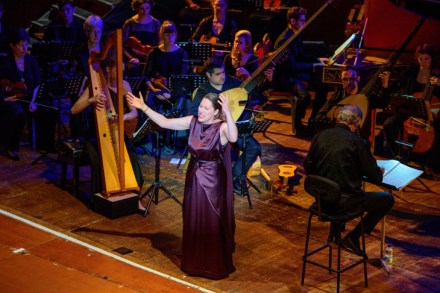
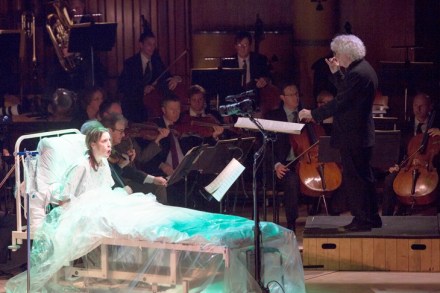
Gerald Barry loved playing organ for Protestants as they allowed him a lie in. Then they found out he wasn’t Protestant and sacked him. When he moved to a Catholic church, he was forced up at the crack of dawn, so he punished the congregation by not giving them the chance to breathe between verses. He has a similarly cruel approach to the singers in his latest opera Alice’s Adventures Under Ground, whose voices he puts through the wringer, compelling them to squawk or chunter — or recite the ‘Jabberwocky’ in German. Barry has to be one of the most enjoyably contrary composers alive, but he is also, I fear, a sociopath, and I’m not sure the two things are entirely unrelated.

Weird and wonderful | 29 December 2016

Television

As you’ve probably noticed, TV critics spend a lot of their time trying to identify which other programmes the one they’re reviewing most resembles. Sadly, in the case of BBC2’s The Entire Universe, this noble quest proved futile. Written and emceed by Eric Idle, the show did contain plenty of familiar television elements: songs, dance troupes, Warwick Davis making jokes about how small he is, a lecture by Professor Brian Cox on the nature of the cosmos. Yet the way it mixed them together was so unprecedentedly odd that it may well have made the average Boxing Day viewer feel they must be drunker than they thought.

Chance would be a fine thing | 29 December 2016

Radio

It’s been a turbulent year, and not just in the outside world. Inside radio, digital is changing not just when and how we listen but content, too. Classic FM overturned its daily schedule in the run-up to Christmas to stage an all-Mozart day with nothing but the virtuoso’s works for 24 hours. It was a bold step by the commercial station, reliant on advertisers (and therefore listener figures) for its survival. How many non-Mozart-enthusiasts would be turned off by such a monothon?

All bark and no bite

Cinema

A Monster Calls is a fantasy drama about a young boy whose life is crap, basically. His mother is sick. His father has scarpered. He is being bullied at school. He may also have an itch he can’t get at, for all we know. (Always hateful, that.) But he finds an ally when the ancient yew tree he can see from his window morphs into the giant tree monster who’ll take him on a journey of ‘courage, faith and truth’. This has its visually wondrous moments, and the lead (Lewis MacDougall) is a true find, but there’s too much bark, too little bite. This is no Pan’s Labyrinth, for example. Wish that it were, but it is not. Based on the bestselling book by Patrick Ness, and directed by J. A.

The Netflix revolution: Why British TV struggles to keep up

There have been two revolutions in television during my lifetime. The first happened in 1975 when Sony launched its Betamax video system — which allowed viewers to record shows and see them when they wanted. Of course, Betamax was found to be clunky and unreliable and it was soon replaced by VHS but, without realising it, the networks had lost control of their audience. No longer would we watch the films they wanted us to watch when they wanted us to watch them. Never again, as the technology spread, would the whole nation come together as one to find out what the newscasters had been up to on Morecambe and Wise. The second revolution has been even more profound — and it’s happening right now. It can be defined in one word: Netflix.

The genius of George Michael, 1963-2016

A couple of weeks ago, George Michael announced he was collaborating with another songwriter, Shahid Khan, and for his fans (myself included) it was set to be a highlight for 2017. The strange thing about his music was that it just got better, even if his newer releases had only a fraction of their earlier profile. Some of his greatest songs (like Waltz Away Dreaming with Toby Bourke, above) are hardly known at all. He'd go through quiet phases, followed by an creative bursts and he might well have managed one again. But about an hour ago, it was announced that he has died, aged just 53. George Michael's voice could be recognised, instantly, anywhere.

Ringo’s no joke. He was a genius and the Beatles were lucky to have him

We’re closing 2016 by republishing our ten most-read articles of the year. Here’s No. 9: James Woodall on celebrating the musical contribution made by the forgotten Beatle: Ringo Starr ‘He was the most influential Beatle,’ Yoko Ono recently claimed. When Paul and John first spotted him out in Hamburg, in his suit and beard, sitting ‘drinking bourbon and seven’, they were amazed. ‘This was, like, a grown-up musician,’ thought Paul. One night Ringo sat in for their drummer Pete Best. ‘I remember the moment,’ said Paul, ‘standing there and looking at John and then looking at George, and the look on our faces was like ...what is this? And that was the moment, that was the beginning, really, of the Beatles.

My one wish for my daughter

My mother loved to show films for special occasions with an old-fashioned home screen and a cine camera. All the chairs set up like a cinema. The Lady Vanishes at Christmas, Oh, Mr Porter for New Year and assorted Agatha Christies for birthdays. For my tenth birthday, I asked for a cowboy film. I was a little obsessed with cowboys — the drama, the heroism, the good vs bad. As my guests sat down and the movie flickered to life I saw that not only had my mother found a cowboy movie but miraculously the hero was a cowgirl. Annie Get Your Gun. I had got my wish...until she opened her mouth. It was a musical and of course, with a girl as the lead, it would have to be a musical.

O come, let us adore him

Arts feature

On 27 July 1613 a man prostrated himself in the church of San Pedro Mártir in Toledo, having first made a solemn declaration: ‘I, Juan Bautista Maíno, make profession and promised obedience...’ Thus he became a Dominican friar. At the time, Maíno was halfway through painting ten canvases for the high altar of this very same church. Two of these, the most glorious and seasonally apposite, are currently on loan from the Prado and on show in Room 1 at the National Gallery (until 29 January). They open a window on to a little-known episode in Spanish art — and the spiritual life of an intriguing man.

The Dwelling

More features

Charlie Zailer wasn’t sure if she’d won or lost. On the victory side of the equation, she’d managed to avoid spending Christmas Day with her sister, and she’d successfully blamed it on work. Her ‘Sorry, but I have to go in for at least a few hours’, delivered in a tone that suggested it was the fault of someone intransigent in a position of authority, had been accepted without question. On the defeat side, here she was: at work, by choice, with a cold steak-and-potato pasty in her bag as a Christmas dinner substitute, struggling to communicate with a stranger who’d judged her to be not worth speaking to. Was it her karmic comeuppance for avoiding her so-called loved ones at Christmas?

All about my father

More from Arts

My father had many faces. There was much that made up the man. If you think you ‘know’ John R. Cash, think again. There are many layers, so much beneath the surface. First, I knew him to be fun. Within the first six years of my life, if asked what Dad was to me I would have emphatically responded: ‘Dad is fun!’ This was my simple foundation for my enduring relationship with my father. This is the man he was. He never lost this. To those who knew him well — family, friends, co-workers alike — the one essential thing that was blazingly evident was the light and laughter within my father’s heart. Typically, though his common image may be otherwise, he was not heavy and dark, but loving and full of colour. Yet there was so much more....

Rock’s quiet right-wingers

Columns

They will be sitting there right now, listening tearfully to the song for one last time on their dinky little iPods, before deleting it for ever. ‘-Heathcliff — it’s me, Cathy, I’ve come home, so co-wo-wo-wold, let me into your window.’ No, Kate. You are never coming in through our windows again. What about the cuts? What about the refugees? What about Brexit? How could you? The window is closed, double-glazed and with a mortice lock. ‘Wuth-ering Heights’ — which once I loved — is dead to me. Also that one about going up a hill or something. That’s gone too. Die, Bush, die.

Angst and cant

Theatre

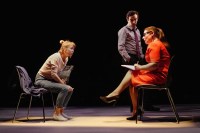
What if? is the engine of every great story. What if the toys came to life when their owner left the room? What if the prince’s uncle killed the king, seduced the queen, and stole the crown? Lucy Kirkwood asks: what if an elderly atomic physicist volunteered to take charge of the team decommissioning a stricken nuclear power plant in order to spare the lives of younger workers? Quite a complicated set-up. The play takes an hour to reach its starting point. First it feels like an oldies love triangle with a post-apocalyptic twist. We’re in a farmhouse near the site of a nuclear disaster. Rose, a wrinkly beauty, arrives unexpectedly and is greeted by fun-loving Hazel. Both are retired physicists who worked at the plant but haven’t met for 38 years.

Gardeners’ world

Opera

For the past few weeks I have been working my way through Decca’s gigantic set of every note Mozart wrote and quite a few that he probably didn’t — 220 CDs in a monumental hernia-inducing box. Chronological listening is not recommended. Mozart was technically a phenomenon, of course, but he didn’t reach maturity of expression, with one or two extraordinary exceptions, until he was in his early twenties. La finta giardiniera (or Die Gärtnerin aus Liebe, in the composer’s singspiel version — both are included in the Decca set) was written when he was 18, by which time he was exceptionally fluent in composition. Uncut it lasts three and a half hours — why do people always go on about how long Wagner’s operas are?

Cosy catastrophe

Television

When I was a child in the 1970s, the two big excitements of the run-up to Christmas were first the chocolate Advent calendar which, somehow, I managed to smuggle past the prison-guard inspection at my Colditz-like prep school; and second, browsing the Radio Times to see what televisual delights the Christmas hols had in store. Now I hardly bother with chocolate —unless it’s Artisan du Chocolat, in which case, yes please. And I find Christmas TV, all Christmas TV, even if it’s a Nick Park animation that has never been on before, so intrinsically depressing that I just want to string myself up from one of the giant black hooks hanging from our kitchen ceiling. They have been used for this very purpose once before, by one of the previous tenants.

The descent of man

More from Arts

Why do humans want to build robots? It seems, on the face of it, to be a suicidal endeavour, destroying jobs and, ultimately, rendering our species redundant as more intelligent and effective beings take over. Lacking, as we now do, an agreed metaphysical justification for human specialness — for example, the soul — it must only be a matter of time before we submit to the machine ascendancy. So far, it has been a subtle, incremental process that conceals any wider significance. Take satellite navigation. This was first introduced in the 1980s and is now more or less universal. Maps have become quaint. As a result, we walk or drive without a visual model of where we are. This may be a small loss of human agency but it’s a loss nonetheless.

Northern exposure | 8 December 2016

Radio

In this season of watching and waiting as we approach Christmas and year’s end, radio has a precious role. At the switch of a button you can be taken straightaway into another kind of life, a different world, where present realities are not relevant or can at least be made to feel less imperative. While the screen can transport you to places you’ve never been, its visual escapism never quite overwhelms the imagination in the way that words, sound effects, music will do if subtly shaped into audio magic. Who needs images when in an instant you can be taken in your imagination to the wilds of northern Finland, crunching through the snow, wind whistling in the background, breath sharp on the lungs in the freezing air? In Burn Slush!

Brahms’s benders

Music

‘Brahms and Liszt’ is a lovely bit of rhyming slang, but it doesn’t have the ring of authenticity. Can you really imagine cockney barrow boys whistling tunes from the Tragic Overture and the Transcendental Études? Also, the Oxford English Dictionary reckons it only dates back to the 1930s. It always made me snigger, though, because it conjured up an implausible vision of pompous beardy Johannes and the social-climbing Abbé rolling around legless. Not so implausible, it turns out. The other day I was reading a review of a new life of Liszt by Oliver Hilmes that reveals ‘hair-raising episodes of drunkenness’ in his later years.

Making America crass again

More from Arts

Elsie de Wolfe was the pioneer interior designer whose motto was ‘plenty of optimism and white paint’. She banished brown Victoriana from America. And her work on Henry Clay Frick’s private apartments introduced new American money to old French furniture. If only she were with us today. For his first television interview as president-elect, Donald Trump appeared, imperiously, sitting on a golden throne in the style of Louis Quinze. My vision may well have been blurred by circumstances beyond, but I think there were period-incorrect wall and ceiling paintings on classical-allegorical themes in the background. All of this on cantilevered decks behind mirrored glass about 200 metres above Fifth Avenue.

Trivial pursuits | 1 December 2016

Exhibitions

Robert Rauschenberg, like Autolycus in The Winter’s Tale, was a ‘snapper-up of unconsidered trifles’. Unlike Shakespeare’s character, however, he made them into art. Rauschenberg’s most celebrated piece, ‘Monogram’, on view in the grand retrospective of his work at Tate Modern, comprises, among other bits and pieces, a rubber shoe heel, a tennis ball, and a car tyre-plus-oil paint on stuffed angora goat. Next to it is another amalgam from the mid-Fifties, incorporating ‘paint, paper, fabric, printed paper reproductions, sock and army-issue flare parachute on canvas’.

Instant gratification

Arts feature

Instant photography already existed long before Edwin Land, the ingenious inventor and founder of Polaroid, went for a walk with his daughter in Santa Fe in 1943. ‘Why can’t I see the pictures now?’ she asked her father on the way home. But the photographic systems available at that time were really just ‘experimental portable darkrooms’ rather than truly ‘instant cameras’. Only a few hours after his daughter’s question, Land got hold of a patent lawyer and by Christmas the first test versions of ‘Polaroids’ had been developed in the lab. Land was an incredible visionary. He was not just researching an innovative film system. He was on the hunt for a completely new tool for life.

All I want for Christmas

Cinema

Comfort and joy. That’s what the song talks about, and that’s what the classic Christmas movies deliver. Whether it’s Die Hard (1988) or It’s a Wonderful Life (1946), Home Alone (1990) or White Christmas (1954), we enjoy these films, in part, because they are so comfortable. Time and tradition have made them as familiar as carols, mince pies, woolly jumpers, and avoiding the lancinating gaze of your least favourite aunt over the sprouts. But, at the end of 2016, perhaps we can upset the usual way of things. The Christmas holiday should also be a time for Christmas Holiday, Robert Siodmak’s chilly noir from 1944.

From first to last

Opera

As the dreaded season of goodwill approaches, the Royal Opera has mounted two revivals of pieces that are interestingly contrasted: Puccini, in the first characteristic and successful opera of his career, though with a lot still to learn, and Offenbach, with the incomplete last work of his career, but a radical departure from all the successes he had had before, and a work that is ultimately a noble flop. Les Contes d’Hoffmann is one of the Royal Opera’s most venerable productions, dating from 1980 and having its eighth revival, with William Dudley’s elaborate sets.

Closing credits

Television

BBC1’s The Missing has been one of the undoubted TV highlights of 2016. Yet, even thrillers as overwhelmingly thrilling as this one have been known to blow it in the concluding episode, when the biggest revelation of the lot turns out to be that the writers couldn’t really answer all the questions that previous episodes had so intriguingly raised. And of course, The Missing had raised more than most, with its fiendish plotting ranging across three timeframes — until last week, that is, when it added a fourth. So could Wednesday’s finale possibly avoid giving us that sense of outraged disappointment that comes from realising we’ve spent weeks looking forward to a full-scale solution that never quite comes?

On the road | 1 December 2016

Radio

‘We’re going to get lots of negative attention from environmentalists,’ he cackled, great puffs of blue-grey smoke emerging from the exhaust of his two-stroke car. Will Self was crossing Tower Bridge in a Trabant, that most potent symbol of the East German socialist state, bending almost double to fit himself round the steering wheel (he’s six foot five inches in his socks) and cursing the lack of wing mirrors. Things could only get worse as he and his old friend Michael Shamash set off on their 700-mile trek across the Channel to Zwickau, in the former GDR, home of the Trabant car. Imagine trying to merge on to a German autobahn in a car made of resin and cotton that has no mirrors and starts vibrating in an ‘ugly way’ as soon as you reach 80km/h.

Of ice and men

Theatre

An ice floe. Two anglers. Months to kill. That’s the premise of Nice Fish by Mark Rylance and Louis Jenkins. The off-beat script is full of bleak and quirky insights. Rylance, who stars as the bungling Ron, admits that sometimes he gets so bored he bangs nails through frozen bananas. His pal compares dogs with wolves by observing that wolves are pessimists, jaws low to the ground, like homeless scavengers, whereas dogs are chin-up go-getters, natural corporate players, keen to win promotion in a worldwide enterprise called ‘Man’s Best Friend’. There’s a piece of obsessively nerdy rhetoric about 36-hour fishing permits which sounds like Peter Cook at his best. These treats appear early on.