Culture

Culture

The good, the bad and the ugly in books, exhibitions, cinema, TV, dance, music, podcasts and theatre.

Impaired vision

Television

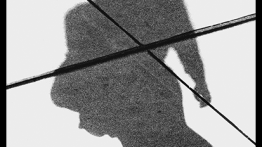
With the Shannon Matthews story, it’s not easy to accentuate the positive — but BBC1’s The Moorside (Tuesday) is having a go nonetheless. Although touching at times, the result ultimately proves a rather awkward watch. Shannon was nine when she went missing from the Moorside estate, Dewsbury, in February 2008. Her mother Karen made a tearful televised appeal for the return of ‘my beautiful princess daughter’, but ended up serving four years in jail for being an accomplice in Shannon’s kidnapping. With her chaotic taxpayer-funded life, and her seven children by five fathers, Karen was duly turned into a sort of anti-poster girl for the tabloids. The Moorside itself became a symbol, including for David Cameron, of ‘our broken society’.

Timeless and dated

Theatre

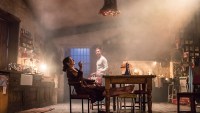
Tennessee Williams’s breakthrough play is a portrait of his dysfunctional family. A young writer, Tom (Williams’s real name), lives with his effusively domineering mother and his painfully coy sister, Laura. Mother, once a famous beauty, gets Tom to find an eligible chap for Laura. Tough call. Beautiful Laura has a deformed ankle and she’s just flunked out of secretarial college after suffering the embarrassment of vomiting over her type-writer. She now pines away at home forming sterile friendships with a colony of animal statuettes lodged in a glass case. This set-up has the delicious simplicity of a comedy sketch. The conflict between the unstoppable mother and the self-effacing daughter promises fun galore.

Age concern | 9 February 2017

Music

Brahms didn’t always have a beard. The picture in the London Symphony Orchestra’s programme book showed him clean-shaven, and rightly. The beard didn’t reach its final imposing form until 1878, around the time Brahms started sketching his Second Piano Concerto. (‘Prepare your wife for the grisly spectacle,’ he wrote to his friend Bernhard Scholz, ‘for something so long suppressed cannot be beautiful.’) But this concert opened with the First Piano Concerto, premièred in January 1859 when the composer was still a few months short of his 26th birthday. Younger, in fact, than tonight’s conductor — the 26-year-old Alpesh Chauhan — and not much older than the soloist, Benjamin Grosvenor.

Mother superior

Cinema

Unlike with buses, you wait ages and ages for one fabulous film as framed by the older female perspective to come along and then there’s absolutely no saying when the next one will be, or if there will ever be another. (Indeed, a recent study of 2,000 films found that women in the 42–65 age bracket are given less and less to say while dialogue for men of the same age actually increases.) So don’t let this pass, and don’t do so having dismissed it as ‘a feminist film’ because it’s emotionally smart about everybody. It just takes in that portion of the human race usually left out, is all.

Saint Joan is the perfect religious play for our ignorant era

The chief appeal of Saint Joan, which I saw last night at the Donmar, is that it is a brilliant vehicle for a young actress. Gemma Arterton is great, if a little too mature and attractive to convey teenage innocence. Otherwise, I don’t quite see the point of George Bernard Shaw's play, and wonder why it is regularly revived in our time. Does it have anything intelligent to say about religion? It romanticises a medieval mystic who took up arms – which has rather little to do with contemporary Christianity. At one point it suggests that her stubborn individualism is the source of Protestantism, but this is muddled in various ways.

Hull’s a poppin’

Arts feature

In early January, lastminute.com recommended its top 15 destinations for 2017. In 12th spot, just above Montreal, Croatia and Japan, was Hull. And if you’re tempted to opt for a snooty chuckle at this point, my advice would be to go to Hull — because, judging from my recent experience, even on a cold January weekend, the place is buzzing with a hugely infectious, if still slightly bashful, sense of rediscovered civic pride. ‘I’ve lived here for 50 years,’ one man told me, ‘and this is the greatest thing that’s happened to the city in my time.’ The ‘this’ he’s referring to is, of course, Hull’s status as the UK City of Culture for 2017.

Seeing everything in black and white

Exhibitions

Two divergent approaches to printmaking are on view in an exhibition of graphic work by Francis Bacon and Lucian Freud at Marlborough Fine Art, Albemarle Street. For the former, media that depend on line, such as etching, were of little interest, since — as his friend Freud would point out — Francis couldn’t draw very well. But, Freud would add, Bacon’s painting was so brilliant that he made you forget that limitation. Bacon’s prints were essentially reproductions of his oils, signed and numbered by the artist. The etchings Freud made in the last three decades of his life were not like that at all. Though the models for the etchings were often the same as those for his paintings, his approach was entirely distinct.

Sign of the times

Radio

As if on cue, The World At One on Monday (Radio 4) ended with a short (too short) interview with an Austrian documentary film-maker who recently made a film about Brunhilde Pomsel, secretary to Hitler’s propaganda minister, Joseph Goebbels. The announcement of her death in Munich, aged 106, prompted the conversation, which happened to follow all the stories about the repercussions of President Trump’s executive order banning those from certain countries from entering the US. The significance was not lost on the ever-astute Martha Kearney. Florian Weigensamer described Pomsel in great age as ‘just incredible’. She was ‘quick-witted, funny, a great storyteller’. But, said Kearney, ‘She was working at the heart of the Nazi machine, wasn’t she?

Metal fatigue

Cinema

‘All that glisters is not gold,’ wrote Shakespeare (The Merchant of Venice), and you have to hand it to the guy, as he’s nailed it on the head. This Gold certainly glisters. You look at the poster and think: ‘Oh, yes. Glistery.’ It’s directed by Stephen Gaghan, who wrote and directed the terrific Syriana. It stars Matthew McConaughey. It’s based on a true mining scandal that is as outrageous as it is fascinating. But this Gold is not gold.

Notes on a scandal | 2 February 2017

Opera

Kids: who’d have them? Certainly no one who has ever been to the opera. If they’re not murdering you, they’re betraying you, defying orders or throwing themselves into the arms of the nearest unsuitable suitor. What happens when that suitor is a god, or — god forbid — their own brother or sister? Answers came on the back of two very different operatic postcards this week. At the Barbican, bathtime gone bad. A claw-foot bath sits centre stage, a cold, white womb in which monstrous twins writhe in fleshy ecstasy. Backs arched, legs flexed into Priapic verticals, they coalesce the clenching pulse of orgasm and the surging agony of childbirth into a single, exquisitely choreographed moment.

Playing dead

Theatre

It could be the nuttiest idea ever. The protagonist of this American musical is Death, who secretly reprieves a beautiful Italian princess, Grazia, and spends the weekend at her father’s palace where a house party is in full swing. The dad knows the gatecrasher’s identity. But Death introduces himself to the others as a suave Russian duke. All the womenfolk promptly fall in love with him, including Grazia, who sets out to bag the mysterious foreigner. Where can this strange plot go next? Nowhere. Once Grazia learns that Death has come to terminate her existence the story will end. So the script is padded out with additional entanglements between a sprawling crew of sub-personalities.

The only way is up | 26 January 2017

Arts feature

Michael Andrews once noted the title of an American song on a scrap of paper: ‘Up is a Nice Place to Be.’ Then he added a comment of his own: ‘The best.’ This jotting was characteristic in more than one way. A splendid exhibition at the Gagosian Gallery, Grosvenor Hill, London, makes it clear that Andrews was — among other achievements — a supreme aerial painter. No one else has better caught the sensation of floating, to quote another song from the Sixties, up, up and away. It was also typical of Andrews that his addition to that title was only two words — but it makes a big difference. His paintings are like that. At first, there may seem not to be much there. ‘Lights VII: A Shadow’ (1974) is almost a painting of nothing at all.

Sloppy seconds

Cinema

Danny Boyle introduced T2 Trainspotting at the screening I attended and said that, throughout filming, he’d seen the cast looking at him and what these looks were saying was: ‘It had better not be shite, Danny.’ This may sum up all our thinking, pretty much. It had better not be shite, Danny. Danny, do what you have to do but, we beg you, don’t make it shite. Once more, with extra feeling: don’t, don’t, don’t make it shite, Danny. And? I take no pleasure in saying it (seriously, hand on heart) but this sequel is, in fact, quite shite.* I won’t bore on about the original film, even though some of us are still recovering from it — oh God, Dawn, the dead baby — and may never recover from it, and this may be part of the problem.

Amphibious assault

Theatre

David Spicer’s farce Raising Martha opens with a skeleton being disinterred on a frog farm by animal-rights activists. They hope to force the frog farmer, an ageing dope fiend, to set his amphibious livestock free. Got all that? It’s complicated. And there’s more. The skeleton turns out to be the long-dead mother of the farmer, who alerts his shifty brother and calls in the cops as well. A loquacious twerp, Inspector Clout, arrives to investigate and the tangled narrative starts to unfold. This is an uneven play but the good bits are excellent. Stephen Boxer is amusingly deranged as the hallucinating frog man. The animal-rights activists are wittily portrayed as misanthropic nuisances.

Snow blindness

Opera

Rimsky-Korsakov’s The Snow Maiden has not received a professional staging in the UK for 60 years. Think about that for a moment, and what it says about British operatic priorities. Sixty years of Massenet and early Verdi, of Manon Lescaut and Donizetti ‘rediscoveries’. Not that those aren’t worth having, as part of a healthy and balanced operatic diet. But the fact that during those six decades no major company showed any curiosity about an acknowledged masterpiece by one of the 19th century’s most prolific and original musical dramatists is perverse, to say the least.

Bruckner by numbers

Music

It used to be said that Bruckner composed the same symphony nine times, whereas, thanks to the comparative frequency of performances now, we know that his nine numbered symphonies are as different from one another as Beethoven’s nine. Nothing could make that clearer than the performances of the Fifth and the Ninth given by the Philharmonia Orchestra under Andris Nelsons, three days apart, at the Royal Festival Hall. The Fifth, as befits its stature and length, was given alone. It is Bruckner’s most demanding symphony both to listen to and to conduct. Nelsons is still, I think, at an early stage in his Brucknerian pilgrimage, and his account of the work was not a complete success, but then very few are.

Wall eyed

More from Arts

Any impressively long wall is bound to cause us to recall the midfield dynamo and philosopher John Trewick. In 1978 Big Ron Atkinson took his bubble-permed West Bromwich Albion team to China on some sort of goodwill tour. The lads’ diplomacy evidently rested in their feet, for when Trewick was asked by the BBC crew documenting the tour what he thought of the Great Wall, he replied: ‘When you’ve seen one wall you’ve seen them all.’ Good try, John, but not quite accurate. He would, however, have been on the money had he alluded to the common state of mind among men who commission immense walls (paranoiac) and to the loss of life that is, without exception, occasioned by the construction of the things (considerable).

Ideal homes

Arts feature

Artists, poets and philosophers have not paid much attention to Milton Keynes ...although comedians have. This urban experiment has been mocked by lazy satirists who find ambition derisory and concrete cows hilarious. Milton Keynes is 50 this year and it has an honourable place in the history of that ancient chimera, the Ideal City. It was conceived in a decade when the improving influence of the ‘white heat of technology’ could be cited without irony (or embarrassment). In those days, technology involved calorific value, not cold, invisible bytes. The name sounds like an ad-man’s invention. But until 23 January 1967, when the new city was designated, Milton Keynes was an old, quiet Buckinghamshire village near Bletchley, one of 15 that were absorbed into the whole.

Is Maria Balshaw such a good choice for Tate? I tremble for the art I love

The last couple of years have seen changes at the top of all of London's major art musuems. In 2015 we saw new leadership at the British Museum and the National Gallery. This year it's the turn of the Victoria and Albert Museum and the Tate. The change at the top of the Tate is particularly momentous. When the last director Nick Serota was appointed Mrs Thatcher was Prime Minister and there was no Tate Modern. Furthermore the directors of Tate Modern and Tate Britain who report to the overall boss are themselves new appointments and almost all senior curators have been appointed since 2012. If there is an institution in flux, it's the Tate.

Acting with a capital ‘A’

Cinema

Let’s be clear: Jackie is a better performance than it is a film, although I suspect the performance will carry the day, even if that performance is Acting with a capital ‘A’. Was I riveted by Natalie Portman as Jackie Kennedy? I was. She has the look. She has the posture. She has the breathy, Marilyn Monroe-ish voice. But was I aware it was Natalie Portman, Acting? Always. And there isn’t much else here. Jackie never adds up to a whole, or anything near; we don’t penetrate ‘the myth’, and there is no real drama. So it’s disappointing albeit with a small ‘d’ because there are worse disappointments in life, and also the clothes are rather good.

The xx: I See You

Music

The xx is a trio of Londoners whose eponymous first album, released in 2009, has defined the way pop music sounds today. I remember knowing, when it came out, that I was listening to something both distinctive and familiar, which is usually an indicator of success. The schtick was to plunder various music canons which they were way too young to have heard first hand — Nineties house and rave, lachrymose mainstream Eighties synth-pop, angst-ridden shoegazing — strip it down and mix it all up with very clever beats, provided by the genuine talent of Jamie Smith. ‘Radically pleasant’ is what I thought at the time, a little sniffily, and also somewhat precious.

Spot the ball

Radio

The purest form of radio is probably sports commentating, creating pictures in the mind purely through language so that by some magic the listener believes that they were there, too, when Geoff Hurst scored that final goal, Shergar ran out the field at Epsom, Mo Farah sped ahead on Super Saturday. As Mike Costello said last Thursday on Radio Five Live’s celebration of 90 years since the first outside broadcast from a rugby match on 15 January 1927, ‘We’re all blind when we listen now, just as we were back in the 1930s.’ The technology has changed radically but radio still relies on the skill of an inspired individual to communicate the atmosphere, the tension, the thrill of seeing something extraordinary happening in a sports arena.