Books and arts – 30 March 2017

The good, the bad and the ugly in books, exhibitions, cinema, TV, dance, music, podcasts and theatre.
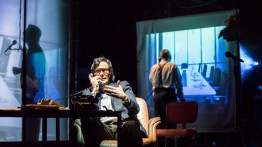
BREAKING NEWS: ‘Enjoyable play found at Royal Court.’ Generally, the Court likes to send its customers home feeling depressed, guilty, frightened or suicidal. And, generally, it succeeds. The Kid Stays in the Picture is based on the memoirs of Hollywood super-mogul Robert Evans. Director Simon McBurney uses artful lighting and complex staging effects to disguise the fact that this is just a glorified book-reading of the kind broadcast by Radio 4 every day of the week. The performers are concealed by deep shadows or behind screens and this threatens to break a basic rule of live theatre: an actor who can’t be seen can’t be heard. But the performers are audible enough and one of them, Danny Huston, has a wonderfully gnarled and leathery voice.
Opera is littered with the bodies of abandoned women. Step over Dido and Gilda, and you’ll still stumble into Donna Elvira, Euridice, Elisabeth, Ariadne, Alcina. The list goes on. Pop music might have ‘50 Ways to Leave Your Lover’, but opera has 500. Call it chauvinism or voyeurism if you like, but opera’s women are at their most powerful in despair, even death. Their anguish might be aestheticised, but it shouts louder and more truthfully than the corpses of the endless female victims of television’s police procedurals, as two arresting performances attested this week. It’s her feet you notice first. Flexing and arching convulsively, rubbing up against one another as though to scrape flesh from bone.
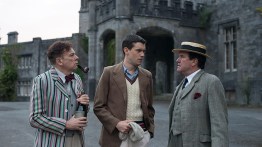
Jack Whitehall could have been perfectly awful as Paul Pennyfeather in Decline and Fall (BBC1, Fridays). He has spent most of his career comically playing up to a common person’s idea of what a posh person looks like: the stand-up who went to the same public school (Marlborough) as Kate Middleton; JP, the Jack-Wills-wearing yah character from Fresh Meat, who went to Stowe; Alfie, the impeccably upper-middle-class, Mumford & Sons-loving history teacher, in Bad Education. But Evelyn Waugh’s class humour is more sophisticatedly snobbish than that, written for a more discerning audience in the days — sigh — when even semi-educated people knew the order of precedence between a duke, a marquess, an earl and, say, a common-or-garden baron.
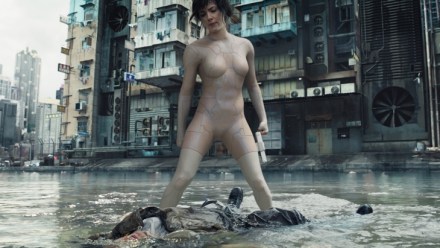
Ghost in the Shell is the Hollywood live-action remake of the 1995 Japanese anime of the same name and it’s set at a time in the future when, it would appear, the world is populated by blandly one-dimensional characters. Evil is perpetrated by our old friend, Corporate Evil Man — yes, still — and everyone communicates via dialogue so stilted and ham-fisted it makes you die inside a little. That said, at the media screening I attended we were all given a free bag of high-end crisps, so it wasn’t two hours totally wasted. (I do really like crisps, high-end or otherwise.) The film stars Scarlett Johansson, who looked liked being an interesting actress for a while but these days? Not so much.

In a world where politicians can turn into newspaper editors and former newspaper editors can seize the most coveted job in radio news, it should not be at all surprising that a former shadow chancellor and Labour MP known for his bullish manner has morphed into a chatshow host on radio. Not only that, he’s rather good at it. Ed Balls’ Dream Dinner Party (Radio 4, Thursday) takes the time-worn formula of putting together a fantasy guest list, seating them round the same table, and waiting for the fireworks to go off, and triumphantly revamps it for the digital age.
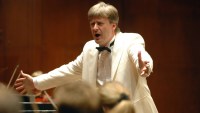
It’s always promising when the orchestra won’t fit on the stage. For the UK première, some 97 years after it was written, of the Danish composer Rued Langgaard’s Sixth Symphony (The Heaven-Rending), the BBC Scottish Symphony Orchestra filled every available inch of platform space, with four additional trumpeters perched in the choir seats. Everything was set for what the conductor Thomas Dausgaard described, pre-concert, as a ‘cosmic struggle between good and evil’. And god knows, it certainly made a fantastic noise. In a venue as compact as Glasgow City Halls, the onslaught of two sets of timpani had an almost physical impact. You felt the air wobble.

The new film The Lost City of Z is being advertised as based on the true story of one of Britain’s greatest explorers. It is about Lt-Col Percy Fawcett. Greatest explorer? Fawcett? He was a surveyor who never discovered anything, a nutter, a racist, and so incompetent that the only expedition he organised was a five-week disaster. Calling him one of our greatest explorers is like calling Eddie the Eagle one of our greatest sportsmen. It is an insult to the huge roster of true explorers. Had the advertisement been about a soap powder, it would fall foul of the Trade Descriptions Act. Percy Fawcett joined the army immediately after school, with a commission in the artillery in 1886. The next 20 years involved garrison duty in Ceylon and postings in Malta and England.
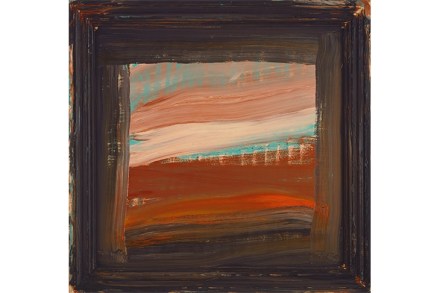
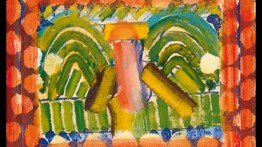
Over 20 years ago I wrote about Giambattista Tiepolo in The Spectator. Shortly afterwards I went to visit Howard Hodgkin in his spacious, white, light-filled studio close to the British Museum. It turned out that he had read my column and was pleased that someone had been discussing this 18th-century Venetian, who was just his idea of what a painter should be: a subtle master of colour, poetic, sensual, a bit neglected — in other words, much as he saw himself. The real subject matter of an artist such as Tiepolo, I suggested that day, is not really the Madonna or the apotheosis of some minor aristocrat. It is something more elusive and personal — such as the painter’s feelings about the charm of dogs, naked bodies or dreams of flying. ‘Yes,’ answered Hodgkin.
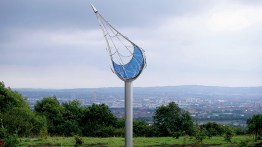
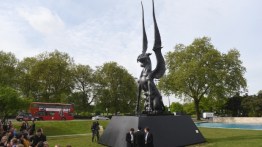
Imagine climbing the hills that surround Belfast and stumbling upon this 11-metre-high steel bollock. ‘It will be visible from a number of different points throughout the city,’ coos the Arts Council. Haven’t the people of Northern Ireland suffered enough? ‘Origin’ is the winner of our second What’s That Thing? Award for the worst new public art of the past year. The creators claim the six-metre ‘raindrop’ stuck on top of a five-metre pole represents the ‘elegant flow’ of the Farset River and ‘appears to hover’. Hover? Do you think they know what the word means? Clumsy, aggressive, cheap-looking (despite costing £100,000), it’s the very opposite of a raindrop.
Two films for you this week, one of which is surprisingly good and one of which does not surprise in the least. Shall we be unsurprised first? OK, Another Mother’s Son, set during the second world war on Nazi-occupied Jersey, is based on the true story of Louisa Gould, who took in an escaped Russian PoW for the course of the war. Louisa Gold, what a mensch — she would later be named a ‘Hero of the Holocaust’. But it’s the kind of story that has been told countless times (I blame Anne Frank), and here it’s told in such a perfunctory, plodding way that it brings nothing new to the party. It’s simply as if an episode of Bergerac had developed ideas above its station — or a fancy for jackboots.

There was a nasty sound of pens being sharpened last week as Royal Ballet runaway Sergei Polunin prepared to unveil his latest venture. The reviews were as dire as the show but the overriding mood was one of regret that so great a talent should have lost its way. Project Polunin’s triple bill was cannily timed to coincide with the release of the documentary film Dancer, which follows the young Ukrainian prodigy’s progress after his snap resignation from the Royal Ballet in 2012. The film’s director, Steven Cantor, had no dance background and was a pushover for all the bravura party tricks that dominate the movie’s dance footage.

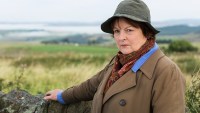
As we know from all those newspaper articles and actress interviews, there’s a scandalous lack of high-profile British TV dramas starring women over 40. Indeed, if it wasn’t for No Offence, Unforgotten, Silent Witness, Last Tango in Halifax, The Fall, NW, Agatha Raisin, Broadchurch, Happy Valley and Apple Tree Yard, there’d really only be Vera, which returned to ITV on Sunday. The Vera in question is DCI Vera Stanhope, who, in the teeth of fierce competition, may well be the most implausible cop on television — even if she does fit snugly into a thriving sub-genre featuring sharp but kindly policewomen whose male colleagues spend much of the time shaking their heads in disbelieving admiration.

No one should complain that My Country; a work in progress is a grim night out. It’s rare for a good play to be written by royal command. The co-authors are the Queen’s personal minstrel, Carol Ann Duffy, and the director of her Royal National Theatre, Rufus Norris. These inspiring artistes have sent their vassals beyond the security of London to annotate ‘the words of people across the UK’ in the hope of understanding a humanitarian disaster: Brexit. The show makes its prejudices clear by dedicating the script to a Remain voter, Jo Cox, who was murdered by a Leave supporter. And it promotes the view, common among Remainers, that Brexit is a crisis caused by thick proles.

Girls creator Lena Dunham has received criticism from all sides. Detractors on the right see her as an exhibitionist provocateur. Those on the left see her as a privileged narcissist, who can’t help but see feminism through a white middle-class prism — and who unforgivably rooted for Hillary Clinton over Bernie Sanders. The HBO show that made Dunham’s name, which she has written and starred in since her early twenties, is on its final season. It has portrayed the young lives and friendships of four millennial women trying to succeed, or just subsist, in New York, and how their dreams either lose grandeur when they come true or don’t come true at all.

When Wireless Nights hit the Radio 4 airwaves in the spring of 2012, I was not at all sure about Jarvis Cocker’s particular, not to say eccentric, manner of presentation, butting in, making his presence felt, never letting us forget that it’s his programme, he’s in charge. His coy comments were too self-conscious for my taste. He didn’t sound natural; his after-dark meanderings felt too contrived. Now I realise I had completely missed the point. Cocker’s deliberate mannerisms, his upside-down way of looking at things, his curiosity and desire to share with us his thoughts are all very much part of who he is, and once you get used to his style of delivery it all becomes very beguiling.

There’s a moment in the finale of Beethoven’s Appassionata sonata when the frenzied piano writing turns unexpectedly jolly. The late Antony Hopkins described it as a bit of an anticlimax, ‘a little too near to the traditional Gypsy Dance that appears so often in the less probable 19th-century opera’. I’m not sure whether I agree — but one thing I can tell you is that this is the perfect moment to tap the Uber icon on your phone if you want to be whisked away during the first burst of applause, before the pianist has had the chance to play an encore. That’s the effect Maurizio Pollini’s playing has on me.
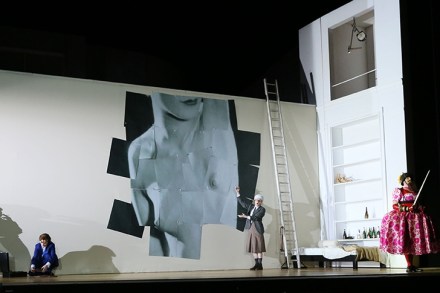
Ceci n’est pas une Partenope. Forget the warring classical kingdoms of Naples and Cumae: this is surrealist Paris in the 1930s and imminent invasion is the stuff of conversational parenthesis, barely worth interrupting a rubber of bridge for, let alone an embrace. Man Ray, Lee Miller and their androgynous associates slink and affect their way around a monochrome salon with its suggestively curved central staircase, offering up the performance of themselves as a living exhortation to make art, not war. As a response to Handel’s most Shakespearean of comedies, Christopher Alden’s production is inspired — more now, if anything, than in 2008 when it was new.
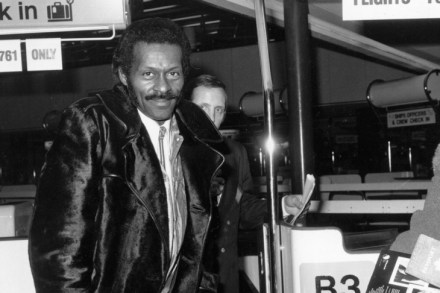
Belatedly, goodnight to Chuck Berry. Almost everything that has been worthwhile in rock music for 60-odd years has derived from his clever, knowing, mix of cracker-country and black blues. Most of the guitar solos you ever heard had their roots in that raucous and effective two string – E and b – chiming of Chuck’s: 'like he was ringin’ a bell.' I can’t think of anyone who was more influential within the confines of that most conservative of mediums, rock n roll. Dylan, maybe, later, I’d grant you. Berry took the best riffs from the dead old blues giants and made them effervesce, allied them to a country bass motif and invented a genre which appealed to black and white alike.
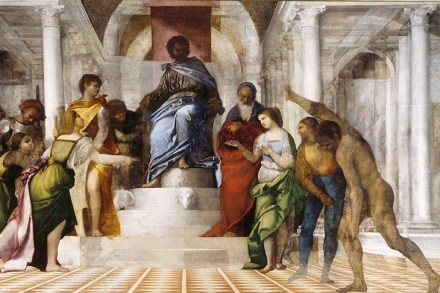
Only once did Michelangelo sign a sculpture. It was the ‘Pietà’ of 1497–1500, and he did so using an incomplete sentence in the past imperfect: ‘Michelangelo Buonarroti the Florentine was making…’. The implication was that actually completing a perfect masterpiece was an unattainable goal, so instead he just had to leave off (a great many artists still feel the same about finishing a picture). The ‘Pietà’ is included in Michelangelo & Sebastiano, a remarkably ambitious new exhibition at the National Gallery: not, of course, the original marble, which remains in St Peter’s, but a plaster cast from 1975.
Wouldn't it be nice, in these divided times, for humanity to have a common enemy – preferably an inanimate one. Welcome to the What’s That Thing? Award. We’re in our second year, hunting down the most execrable new pieces of public art that have appeared in the past year in this country and this time we've teamed up with the Architecture Foundation. The prize grew out of a report I wrote six years ago when we were at peak public-art-as-urban-panacea and every council was desperately clambering over itself to add a bit of swanky tat to their portfolio of local amenities.
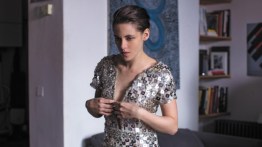
Creaking doors, rustling leaves and leaky taps make up the soundtrack of Olivier Assayas’ improbable horror film Personal Shopper. But the most unnerving (and grating) sound in this supernatural fashion show are the iMessage alerts that may or may not be coming from the beyond. If that sounds ridiculous, that’s because, like so much else in this baffling film, it is. Assayas has made some excellent films over the past two decades and more, and I think his nosedive with Personal Shopper can be explained by his latest muse, Kristen Stewart. Sure, she’s pretty – if that emaciated-junkie look turns you on. But why the former Twilight star has turned Assayas’ head is simply beyond me.
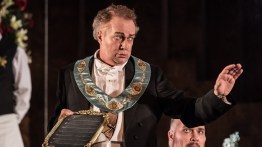
I don’t think that I have left a theatre many times feeling as depressed and irritated as after the Royal Opera’s Die Meistersinger, in the new production by Kasper Holten. The run of the Royal Opera’s recent productions of Wagner — appalling Tristans, a dire succession of Parsifals, mediocre Rings — hadn’t prepared me for so deep an abyss of irrelevant idiocy as this. I thought I had reached the stage where, having seen so many fearful operatic productions of works I love, I was able to enjoy myself purely on account of the music, almost inured to what I was seeing.
The exit signs were switched off and the stalls were in utter darkness. One by one, 15 invisible dancers, their joints attached to tiny spotlights, began to colonise the far end of the hall, forming fresh constellations with every pose. The audience smiled in wonder, like tots at a planetarium. Tree of Codes, which had its London première at Sadler’s Wells last week, was originally commissioned in 2015 for the Manchester International Festival. It combined the talents of Wayne McGregor, resident choreographer of the Royal Ballet, mixer and DJ Jamie xx and the Danish/Icelandic artist Olafur Eliasson.


To cut to the chase, my ten-year-old daughter really liked Beauty and the Beast. And given you’re probably going to be watching this as a child’s plus-one, I’d say hers is the view that matters. Her favourite character was Le Fou, the baddie’s gay sidekick, though I’m not sure she realised. But then the gay scene that Disney’s been making such a fuss about, in which the adorably camp and chubby Josh Gad gives Luke Evans — the fabulous Gaston — a bit of a shoulder massage when they’re relaxing at the inn, honestly isn’t such a big deal. Sorry. This would be a digression, except that there’s been so much baggage piled on to B and the B that the ideology is what you end up looking out for.

Down the Mighty River with Steve Backshall (BBC2) was perfect Sunday-night TV — one of the most enjoyable adventure travelogues I’ve watched in ages. So I was quite surprised to see it reviewed lukewarmly by another critic. One of the critic’s objections was that the scene where Backshall spots a bird of paradise through his binoculars by the Baliem river in Papua New Guinea was a bit crap. Why couldn’t we have seen it in loving close-up detail, as you would on a David Attenborough? But this is precisely what I loved about the documentary. It had a roughness, an unpredictability, a spontaneity that you rarely find on TV any more.
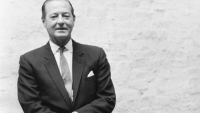
It is often said that Terence Rattigan’s ‘thing’ was his homosexuality and that his disguising of it coloured everything he wrote. But he had, I think, another secret up his sleeve that is still little known. He was a tailgunner in the RAF. Indeed the service was his family and a thread of blue serge runs through his career. He died in 1977, aged 66. After Harrow and Oxford, the war rudely interrupted his dazzling entrée as a dashing young Thirties playwright. After basic training, Rattigan was assigned as a wireless operator and airgunner to a squadron of Sunderlands, hunting enemy submarines in the Atlantic. One moment he was banking nice fat royalties from West End hits such as French Without Tears.
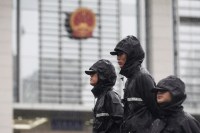
It was the crime story that showed us just how much China has changed since its years of social, political and economic isolation. The discovery on 16 November 2011 of the dead body of the British businessman Neil Heywood in Room 1605 of the Lucky Holiday Hotel in the Chinese city of Chongqing was not in itself so shocking. Sordid maybe, as it was declared by the Chinese authorities that he had died of excessive alcohol consumption. But nothing more than that. The revelations that followed, though, transformed the case into an international cause célèbre, the inner workings of Chinese politics unravelling before the greedy eyes of the foreign media. Heywood, it has been suggested, was if not a spy then at least an ‘informer’ working for the British government.