Andre Van Loon

Love me, or go to hell

From our UK edition

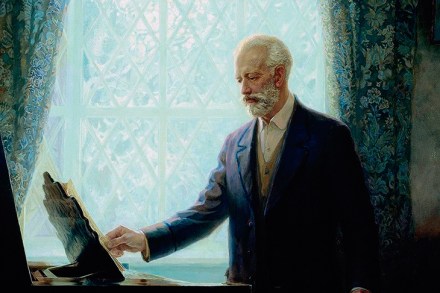
This is a wonderful and moving book of correspondence and biographical documents promising one Tchaikovsky in its subtitle and introduction, but actually delivering another — and thank the musical gods for that. Nothing here is horrid or even secret; the Russian edition was published in 2009 and has been used by English-speaking authorities since. And yet it claims to ‘unlock’ scandal: Pyotr Ilyich Tchaikovsky often swore in his letters (shock!), had many homosexual encounters, including one-night stands (covered in previous biographies) and felt at home in the upper echelons of the 19th-century Russian autocracy.
Bolsheviks on board

From our UK edition

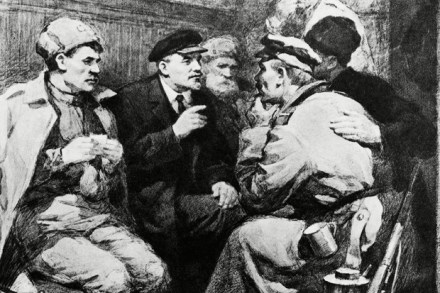
Full allowance must be made for the desperate tasks to which the German war leaders were already committed… Nevertheless it was with a sense of awe that they turned upon Russia the most grisly of weapons. They transported Lenin in a sealed truck like a plague bacillus from Switzerland to Russia. As so often, Churchill has the best lines. Here he is about one of the most famous episodes in European history: the safe passage given to Lenin by a Germany desperate for victory in the first world war. As long as German high command could dream up ways to eliminate the threat from either the West or East, there was hope it would not suffer defeat. Lenin, as Churchill wrote, was imperial Russia’s ‘Vengeance’.

Fleeing Mother Russia

From our UK edition

‘Ah! Scrubbing the deck! My childhood dream! As a child I had once seen a sailor hosing the deck with a large hose while another sailor scrubbed away with a stiff, long-handled brush with bristles cut at an angle. I had thought at the time that nothing in the world could be jollier.’ This is Russian writer Teffi accepting her enforced labour on board a refugee ship fleeing Bolshevik Russia. Moments before, a dispossessed landowner has proclaimed his right to idleness — ‘Hire someone! Do whatever is necessary! If you prefer all this socialist nonsense, then what are you doing on this ship?

The elite who tried to save Russia

From our UK edition

The veteran Russian historian Dominic Lieven’s new study of Russia’s descent towards the first world war is deeply researched, highly valuable in its focus on Russia, and unfailingly well-written: more proof of Lieven’s profound knowledge of the Russian empire. One of his earlier works, Russia’s Rulers Under the Old Regime (1989), focused on the 150 men who ran Russia until 1917. Towards the Flame shares that work’s careful attention to a tiny elite of well-educated, cosmopolitan, mostly aristocratic men. With breathtaking directness, he says that fewer than 50 men (and it was all men) in Europe in 1914 took the decisions that led their countries into war.

The prophet Tolstoy and his dodgy vicar

From our UK edition

One fine day in June 1896, a lone Russian nihilist visited Leo Tolstoy on his country estate. Come to hear the master, the stranger questioned Tolstoy about his latest beliefs. Satisfied, he left later that day. But then he returned with a written confession. He was an undercover policeman, sent to check on what Tolstoy was up to. Deeply ashamed of his deception, he begged for forgiveness. This vignette, recounted by Alexandra Popoff in her new book about Tolstoy’s later life, perfectly captures the author’s power. Whether through his fiction or radical Christianity, Tolstoy could fascinate and compel in equal measure. Though the government spy was dismissed for his bungling, it is hard to imagine his regret at being seen as himself by the literary master turned prophet.