Stuart Ritchie

Stuart Ritchie is the author of Science Fictions: How Fraud, Bias, Negligence, and Hype Undermine the Search for Truth.

The vagaries of laboratory experiments

From our UK edition

One usually likes to think that scientists know what they’re doing. Here’s something that might shake your confidence. In bio-medical research, scientists often use cell lines. These are in vitro cells, originally taken from a human or animal donor, which can be experimented on to help develop new drugs or treatments. The problem is that, according to one review, in ‘at least 5 per cent’ of studies, the scientists have totally mixed up where the cells came from. This means that in at least one in 20 studies that were sent off for peer review the scientists were completely confused about the most basic element of their research. They thought, for instance, they were doing research on lung cells when they actually had pancreatic ones.


Stuart Ritchie, Mary Wakefield and Toby Young

From our UK edition

This week: Stuart Ritchie asks whether we should worry about declining sperm counts (0:29). Mary Wakefield wants to end the term ‘making memories’. (9:00), and Toby Young shares his disastrous Airbnb winter break (15:10). Produced and presented by Natasha Feroze.

How worried should we be about falling sperm counts?

From our UK edition

Here’s a jolly thought to start the year: humanity is on its way to extinction due to a drastic decline in sperm counts. Men’s reproductive health is in such a parlous state that it won’t be long until nobody can conceive a child unassisted. That, anyway, is the argument that’s become a perennial: every year or so – most recently just at the end of 2022 – a new sperm-counting study emerges and reignites the fears that we’re biologically condemned to extinction. How anxious should we be? Here’s the story so far. In 1992, a seminal study was published in the British Medical Journal that claimed to show ‘evidence for decreasing quality of semen during [the] past 50 years’.

The Lancet, China and the origins of coronavirus

From our UK edition

Right from its first issue in 1823, the Lancet was more than just an ordinary medical journal. Its founding editor, the dyspeptic surgeon and coroner Thomas Wakley, purposefully gave the journal the name of a sharp scalpel that could cut away useless, diseased tissue: he used it as a campaigning organ, to push back against injustice, bad ideas and bad practice. What bothered Wakley most was the establishment. Not only did the Royal College of Surgeons care little about quacks and snake-oil salesmen, but its members were also engaged in corruption and nepotism, ensuring that their cronies got the best positions and filling their pockets with lecture fees.

Rules of behaviour

From our UK edition

It’s the constant dilemma of the pop science author: how to write something flashy enough to grab readers, but solid enough that it won’t be embarrassing in a few years when the science has moved on. Full scientific rigour entails tedious jargon and even more tedious equations, and nobody wants that. But neither should the messy, uncertain world of scientific research be oversimplified. In his lengthy new book, Behave, the Stanford neuroscientist primatologist Robert Sapolsky walks this tightrope as he explains the biology of humanity’s ‘best and worst’ behaviours. Behave is a crammed compendium of scientific findings, organised in an ingenious way.

How the Lancet lost our trust

From our UK edition

Right from its first issue in 1823, the Lancet was more than just an ordinary medical journal. Its founding editor, the dyspeptic surgeon and coroner Thomas Wakley, purposefully gave the journal the name of a sharp scalpel that could cut away useless, diseased tissue: he used it as a campaigning organ, to push back against injustice, bad ideas and bad practice. What bothered Wakley most was the establishment. Not only did the Royal College of Surgeons care little about quacks and snake-oil salesmen, but its members were also engaged in corruption and nepotism, ensuring that their cronies got the best positions and filling their pockets with lecture fees.

The Christmas Special

From our UK edition

49 min listen

How will the UK's economy recover from Covid-19, and what has the pandemic revealed about the West? (01:20) Was 2020 the year we dealt a mortal blow to future viruses? (15:05) And finally, what makes Mary Gaitskill a brilliant writer, and why does Elif Shafak work to heavy metal music? (29:25)With The Spectator's political editor James Forsyth, deputy political editor Katy Balls, writer and biologist Matt Ridley, behavioural psychologist Dr Stuart Ritchie, The Spectator's literary editor Sam Leith and writer Elif Shafak.Presented by Lara Prendergast. Produced by Max Jeffery and Sam Russell.

How to win over vaccine sceptics

From our UK edition

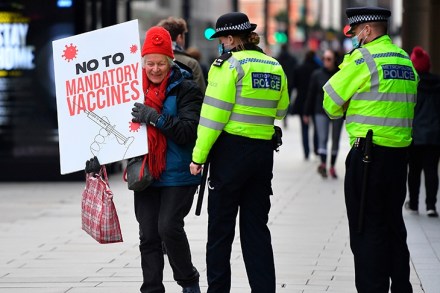
We have a vaccine. In fact, we have three — and more are on the way. While we still need to scrutinise the full data from the Pfizer, Moderna and AstraZeneca trials, the initial reports are stunning: vaccines that in some cases exceed 90 per cent effectiveness, and might be ready within weeks. Previous surveys showed a big appetite for the vaccine, but more recent ones are concerning. According to YouGov, only 67 per cent of British people say they’d be ‘likely’ to get the Pfizer virus, with 21 per cent saying they’d be ‘fairly’ or ‘very’ unlikely to. Other polls also find that scepticism towards the vaccine is increasing.

Vital statistics

From our UK edition

Scientists, it turns out, are really bad at statistics. Numerous studies show that a startling proportion of academics consistently misunderstand the statistics they’re using, and the conclusions that can be drawn from them. A computer algorithm that highlights basic statistical errors was recently set loose on a huge sample of published research papers in psychology  and found that almost half contained a mathematical mistake; 13 per cent had a serious screw-up that meant their reported results might have been completely wrong. If scientists — who use statistics all day to analyse their experiments — are so innumerate, what hope is there for everyone else? Enter Sir David Spiegelhalter, Winton professor for the public understanding of risk at Cambridge University.

It’s in the memes

From our UK edition

The greatest of Bach’s 224 cantatas is BWV 109, ‘Ich glaube, lieber Herr, hilf meinem Unglauben’. Its subject — the title translates as Mark 9:24, ‘I believe, dear Lord, help my unbelief’ — is that strange cognitive dissonance of believing something yet not believing it at the same time. Daniel Dennett’s new book, From Bacteria to Bach and Back, is aimed at those who suffer from this intermittent unbelief, though not about God — Dennett is, after all, one of modern philosophy’s most prominent atheists — but about his specialist subject: evolution by natural selection. Of course, most educated people nowadays accept Darwin’s great insight.

Principles of heredity

From our UK edition

Darwin came tantalisingly close to understanding them, 20th-century eugenicists obsessed over them, and with modern science, we are poised to control them as never before. Genes are a constant source of fascination, yet ignorance and misunderstanding plague almost every public discussion of their effects on our health and behaviour. How useful it would be, then, if there was a clear, accurate, and up-to-date pop science book on genetics, a book that recounted the history of genetic science and reflected on its implications for the future of medicine and society. This is the goal of the new book by oncologist-biologist Siddhartha Mukherjee. It is a lofty goal, and Mukherjee attempts it with lofty language.